
change management description
What Exactly Is Change Management? Defining the Core Concept
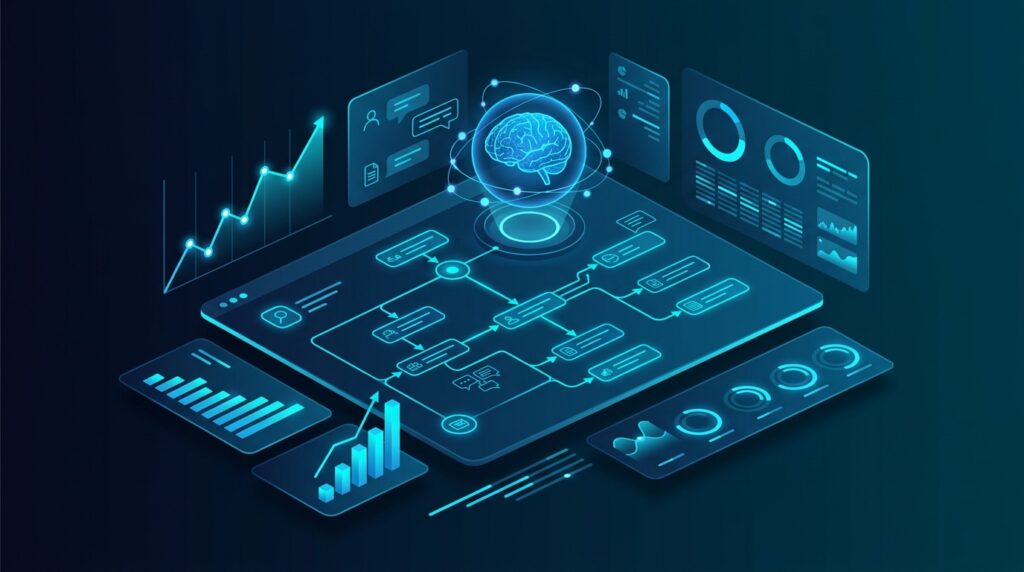
A change management description covers the structured approach organizations use to transition individuals, teams, and entire companies from current states to desired future states. It focuses on the people side of transformation, ensuring adoption and minimizing resistance during organizational shifts.
Beyond Simple Adjustments: Understanding the Scope
This discipline extends beyond basic procedural updates. It includes systematic planning, communication strategies, training programs, and culture change initiatives. Organizations implementing AI automation, for example, must address employee concerns, redesign workflows, and establish new performance metrics while maintaining operational continuity.
The Human Element: Why People Are Central to Change
Successful transformation hinges on human psychology and behavioral adaptation. People naturally resist unfamiliar processes, technologies, or organizational structures. Effective change management addresses emotional responses, provides clear reasons for modifications, and creates support systems that guide employees through transition periods. This human-centered approach separates change management from purely technical implementations.
Change Management vs. Project Management: A Clear Distinction
Project management focuses on deliverables, timelines, and resource allocation. Change management concentrates on adoption, engagement, and sustained behavioral shifts. While projects have defined endpoints, change management often continues after technical implementations conclude, ensuring lasting organizational transformation.
Key Insight
Organizations with formal change management processes are six times more likely to meet project objectives than organizations without structured approaches. This statistic shows why change management is a business imperative, not an optional add-on.
The Business Imperative: Why Organizations Cannot Afford to Ignore Change
Why is change management important becomes evident when examining failure rates of organizational initiatives. Research shows that 70% of transformation efforts fail due to inadequate attention to the human side of change. Companies investing in structured change management often see stronger ROI, faster adoption rates, and reduced employee turnover during transition periods. This becomes especially critical when implementing sophisticated technologies like AI automation systems across real estate, recruitment, fundraising, and hospitality sectors.
Key Types of Business Change
Anticipatory Change: Proactive Evolution for Competitive Advantage
Types of change management include anticipatory modifications, where organizations initiate transformations before external pressures demand action. These strategic moves position companies ahead of market trends, technological shifts, or regulatory requirements. Real estate agencies implementing AI lead-qualification systems before competitors exemplify anticipatory change, securing first-mover advantages in client acquisition and operational efficiency.
Reactive Change: Responding Effectively to Market Shifts
Reactive transformations occur when external forces require immediate organizational adjustments. Economic downturns, regulatory updates, or competitive disruptions trigger these urgent adaptations. Hospitality businesses pivoting to contactless service models during health crises represent common change management examples. Success depends on rapid assessment, clear communication, and swift implementation of new processes while maintaining service quality.
Incremental vs. Strategic Change: Fine-Tuning vs. Reinvention
Incremental adjustments involve gradual improvements to existing systems, processes, or capabilities. Strategic transformations represent fundamental shifts in business models, organizational structures, or operating approaches. Recruitment firms that gradually automate candidate screening show incremental change, while a complete redesign of talent acquisition workflows represents strategic transformation.
Each approach requires different timelines and resources. Incremental changes can be tested and refined over weeks or months. Strategic overhauls demand extensive planning and may take years to fully implement.
The Role of AI Automation in Driving Change
Artificial intelligence acts as both catalyst and facilitator across transformation categories. AI systems predict market trends that support anticipatory changes, provide rapid analysis during reactive situations, and support both incremental improvements and strategic overhauls. Fundraising organizations using AI for donor prospect identification can evolve workflows while keeping relationship-building as the priority.
The Engine of Adoption: Core Principles for Successful Change
Clear Communication: The Foundation of Trust and Understanding
The 5 key principles of change management start with transparent, consistent communication throughout transformation. Stakeholders need clear reasons for modifications, expected outcomes, and explanations of personal impact. Effective messaging addresses concerns early, sets realistic timelines, and provides regular progress updates.
Visible Sponsorship: Leadership’s Role in Championing Change
Executive commitment signals priority and resource allocation for transformation initiatives. Leaders must participate in communications, remove barriers, and model desired behaviors. When recruitment agency directors use new AI candidate-matching systems, employees are more likely to view the change as legitimate and supported.
Essential Framework
The concept of change management centers on structured stakeholder engagement, practical training programs, and ongoing measurement. These elements work together to create adoption patterns that last after the initial rollout.
Stakeholder Engagement: Empowering Those Affected by Change
Successful transformations involve affected groups in planning, testing, and refinement. Employee input surfaces obstacles, improves solution design, and builds ownership of new processes. This collaborative approach reduces resistance while increasing adoption across the organization.
Training and Support: Equipping Your Team for the New Reality
Skill development ensures employees have the competencies needed for new workflows. Training should cover technical skills, behavior changes, and ongoing support. Real estate teams adopting AI property valuation tools need software training and guidance on interpreting automated insights while maintaining client relationships.
Measuring Progress: Tracking Adoption and Impact
The 7 steps of change management end with systematic measurement of outcomes. Key performance indicators track adoption rates, productivity gains, error reduction, and employee sentiment. Quantifiable metrics validate whether the transformation is working in practice and identify areas needing refinement.
Integrating AI Automation: Change Management for the Future of Business
Addressing the “People Side” of AI Adoption: Overcoming Resistance
AI implementation can trigger job displacement fears, technology intimidation, and workflow disruption concerns. Effective change management addresses these anxieties through direct communication about AI’s assistive role rather than employee replacement. Teams should understand how automation handles routine tasks so they can focus on strategic and relationship-driven work.
Accelerating ROI: How Effective Change Management Supports AI Investments
Organizations with structured change management achieve faster AI adoption than those implementing technology without a people-centered plan. Proper preparation, training, and support shorten the time to consistent usage while increasing utilization rates. This speed translates into quicker value realization from AI investments across business functions.
Industry Spotlight: Change Management in Real Estate, Recruitment, Fundraising, and Hospitality
Each industry faces unique adoption barriers requiring tailored approaches. Real estate professionals need confidence in AI property analysis accuracy. Recruitment teams need evidence that automated screening improves candidate quality. Fundraising organizations must trust AI prospect identification while preserving donor relationships. Hospitality businesses need guest experience integration without losing personal service.
Strategic Implementation
Change management definition by authors typically emphasizes systematic approaches over ad hoc implementation. Structured methods support measurable results, sustained adoption, and organizational resilience across transformation initiatives.
Vynta AI’s Approach: Strategic Partnership for Smooth AI Integration
Successful AI automation needs technical rigor paired with disciplined change support. Organizations benefit from partners that understand both system design and human adoption requirements. This dual focus supports smoother rollouts, higher usage rates, and durable operating improvements across real estate, recruitment, fundraising, and hospitality.
Beyond the Basics: Advanced Strategies for Sustained Change

Building a Culture of Continuous Improvement
Organizations that sustain performance build capabilities treating ongoing transformation as normal operating conditions. This cultural shift requires leadership follow-through, employee empowerment, and disciplined learning across change initiatives. Over time, teams become more comfortable with evolution and less likely to treat updates as disruptions.
The Feedback Loop: Learning from Every Change Initiative
Post-implementation reviews capture insights for future efforts. Documenting what worked, what slowed adoption, and employee experiences creates organizational memory that improves future execution. This learning orientation turns each initiative into practical guidance for the next transformation.
Future-Proofing Your Organization Through Agile Change Capabilities
Market volatility demands agility in response to technology shifts, competitive pressure, and economic change. Companies with mature change capabilities can adjust quickly while keeping operations steady. This agility matters as AI automation continues evolving and requires periodic updates and expanded capabilities across business functions.
The most resilient organizations don’t just manage individual changes. They build change into their DNA.
Frequently Asked Questions
How would you describe change management?
Change management is a structured approach organizations use to transition individuals, teams, and entire companies from a current state to a desired future. It focuses on the human element of transformation, ensuring adoption and minimizing resistance during organizational shifts. This discipline includes systematic planning, communication, training, and culture change initiatives to guide employees through new processes or technologies.
What are the core principles for successful change management?
Successful change management relies on several core principles. Transparent, consistent communication is foundational, providing a clear rationale and addressing concerns early. Visible sponsorship from leadership is also essential, demonstrating commitment and modeling desired behaviors. The process also centers on structured stakeholder engagement, practical training programs, and ongoing measurement to ensure lasting adoption.
What is the difference between change management and project management?
While complementary, change management and project management have distinct focuses. Project management concentrates on deliverables, timelines, and resource allocation to complete a specific initiative. Change management, conversely, centers on the human side, focusing on adoption, engagement, and sustained behavioral shifts within the organization. Change management often continues after a project’s technical implementation to ensure lasting transformation.
Why is change management important for businesses today?
Change management is a business imperative because a high percentage of transformation efforts fail due to inadequate attention to the human side. Organizations with formal change management processes are significantly more likely to meet their project objectives. Investing in structured change management leads to stronger ROI, faster adoption rates, and reduced employee turnover during transition periods, especially when implementing new technologies like AI automation.
What are the different types of organizational change?
Organizations encounter various types of change. Anticipatory change involves proactive transformations initiated before external pressures demand action, positioning companies ahead of trends. Reactive change occurs when external forces necessitate immediate adjustments, such as market shifts or regulatory updates. Additionally, change can be incremental, involving gradual improvements, or strategic, representing fundamental shifts in business models or structures.
How does AI automation support change management initiatives?
AI automation can act as both a catalyst and a facilitator for change. AI systems can predict market trends to support anticipatory changes or provide rapid analysis during reactive situations. For instance, Vynta AI Agents can automate routine tasks, freeing human teams to focus on strategic aspects of transformation and relationship building. This allows for smoother transitions and more effective resource allocation during periods of change.
How can you describe change management skills for a resume?
When describing change management on a resume, focus on your ability to guide people through organizational transitions. Highlight experience in developing communication plans, designing training programs, and fostering adoption of new processes or technologies. Mention your capacity to minimize resistance, build support systems, and ensure sustained behavioral shifts, demonstrating a human-centered approach to transformation.