

AI-Powered Fundraising Platform options
Best AI-Powered Fundraising Platform Options 2026
The fundraising environment has shifted dramatically. Mid-market organizations now face a choice: continue manual outreach that limits growth, or deploy AI agents that systematically identify, engage, and convert donors or investors at scale. The right AI-powered fundraising platform options can triple touchpoints without adding headcount, but selecting among dozens of vendors requires understanding which tools deliver measurable ROI versus those that simply automate existing inefficiencies.
This comparison examines platforms built for organizations raising $500K to $50M annually—the sweet spot where generic CRM tools fall short but enterprise solutions demand excessive resources. We’ll focus on deployment speed, donor retention metrics, and total cost of ownership to help you make a commercial decision grounded in business outcomes, not marketing promises.
Top AI-Powered Fundraising Platforms for Mid-Market Teams
Vynta AI Agents: Rapid Deployment for Investor Outreach
Best for: Organizations needing systematic investor or donor outreach operational within 30-90 days.
Vynta AI specializes in fundraising automation for teams that lack internal AI resources. The platform deploys industry-trained agents that handle investor identification, personalized outreach sequencing, and follow-up coordination. Unlike generic tools requiring months of configuration, Vynta’s vertical focus means agents understand fundraising workflows from day one. You’ll manage three times more touchpoints per team member while maintaining the human relationships that actually close deals. Integration with existing CRM systems supports unified data flow without ripping out current infrastructure.
Fundraise Up: Machine Learning for Donation Optimization
Best for: Nonprofits optimizing online donation forms and payment processing.
Fundraise Up applies machine learning to donation page optimization, testing variables like button placement and suggested amounts to increase conversion rates. The platform processes transactions with ~4% processing fees and offers A/B testing capabilities that can lift donation values by 15-20% for organizations with substantial web traffic.
Pros
- Automated donation page optimization based on donor behavior patterns
- Integrated payment processing reduces technical complexity
- Real-time analytics dashboard for campaign performance tracking
Cons
- Transaction fees compound quickly on high-volume campaigns
- Minimal investor outreach capabilities beyond donation collection
- Requires substantial web traffic for meaningful optimization insights
Bloomerang and GoodUnited: Donor Retention Focus
Best for: Nonprofits prioritizing long-term donor relationship management over investor acquisition.
Bloomerang targets donor retention with predictive analytics that flag at-risk supporters, while GoodUnited specializes in social media donor engagement. Both platforms report 78% donor retention rates compared to industry averages of 45%. Strong choices for organizations with established donor bases needing systematic relationship management rather than aggressive growth.
Pros
- Purpose-built for nonprofit donor lifecycle management
- Predictive analytics identify retention opportunities before donors lapse
- Social media integration captures engagement across modern channels
Cons
- Won’t work for for-profit fundraising or investor relations
- Setup demands 3-6 months for full data integration
- Monthly subscription costs increase with database size
Enterprise Options like Salesforce NPSP: When Scale Demands Complexity
Best for: Large organizations with dedicated IT teams and complex multi-program fundraising needs.
Salesforce Nonprofit Success Pack offers extensive customization for organizations managing multiple campaigns, grant tracking, and program outcomes simultaneously. Implementation typically requires 6-18 months and five-figure consulting budgets. Appropriate when organizational complexity justifies the investment. Mid-market teams often find the platform’s power comes with operational overhead that delays results—sometimes indefinitely.
How AI Drives Fundraising Results: Key Features and Metrics
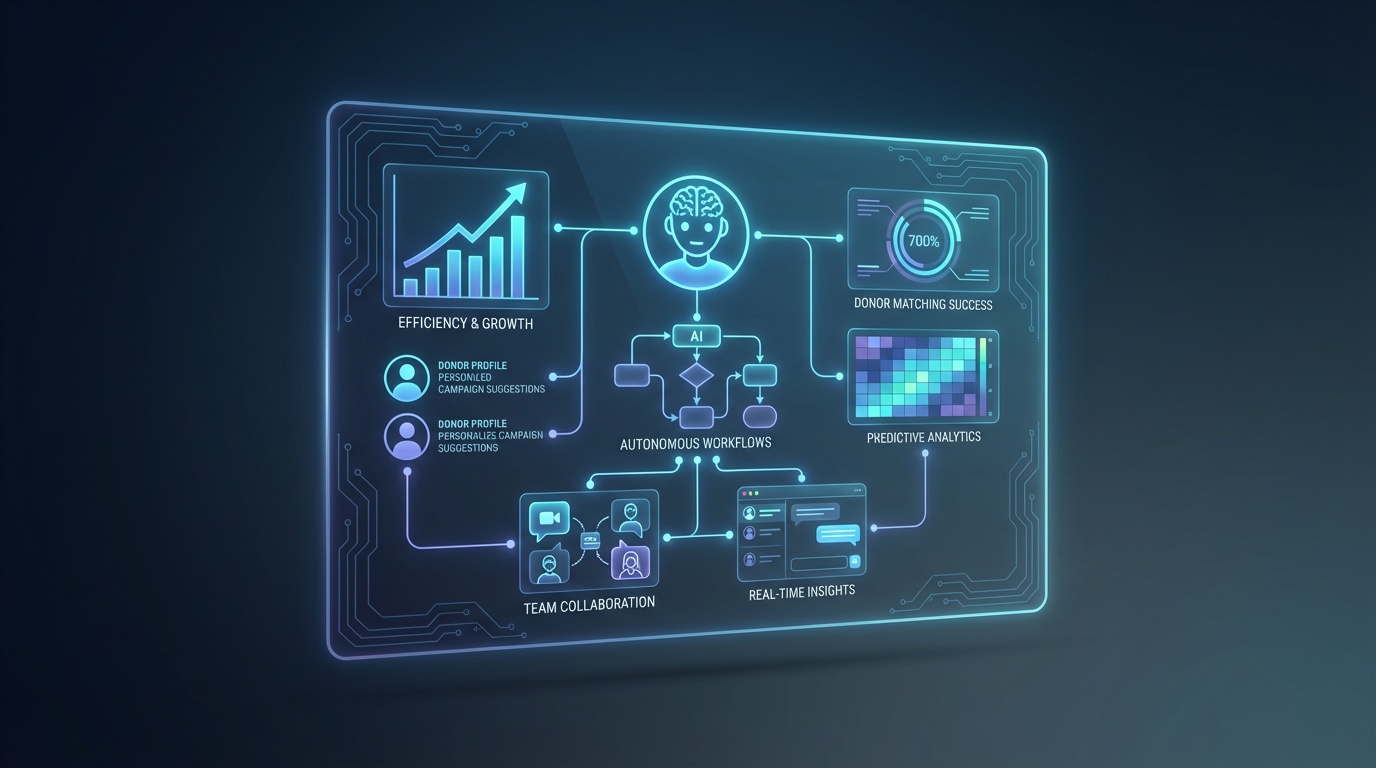
Donor Matching and Personalization with Predictive Analytics
Predictive analytics transforms how fundraising teams identify and prioritize prospects. AI-powered fundraising platform options analyze historical giving patterns, engagement behavior, and demographic data to score donor likelihood and recommend optimal outreach timing. Organizations using these systems report 25% higher success rates by focusing human effort on prospects most likely to convert.
The technology surfaces patterns invisible to manual review. Correlating social media activity with major-gift potential. Identifying donors at risk of lapsing before they disengage. Personalization engines adapt messaging based on individual donor preferences, past interactions, and communication channel effectiveness. Instead of generic email blasts, AI agents craft tailored appeals that reference specific interests or previous contributions—allowing small teams to deliver the individualized attention traditionally reserved for major donors.
Campaign Automation Multiplies Outreach Capacity
Automated campaign management handles routine touchpoints across email, SMS, and social channels while maintaining context across conversations. The systems track engagement signals and trigger appropriate follow-ups, ensuring no prospect falls through communication gaps. What used to take months now happens in weeks.
Campaign automation extends beyond initial contact to nurture sequences, event invitations, and post-donation stewardship. AI monitors response patterns and adjusts cadence automatically—backing off when prospects show disinterest or accelerating when engagement spikes. This dynamic approach reduces the spam perception that plagues rigid automation while maintaining consistent presence.
Integration with CRM Systems for Unified Data Flow
Modern AI fundraising platforms connect directly with existing CRM infrastructure, eliminating manual data entry and synchronization errors. Vynta AI Agents integrate with Salesforce, HubSpot, and specialized nonprofit CRMs to maintain unified donor records across systems. This connectivity enables real-time reporting on campaign performance and donor journey analytics without forcing staff to toggle between platforms.
Cross-system integration proves particularly valuable for organizations operating across multiple verticals. A real estate development firm raising capital for projects can use the same AI infrastructure that powers property lead qualification, maintaining consistent data standards and reporting frameworks. This architectural approach reduces training requirements and operational complexity compared to standalone fundraising tools. See how our Agentic Systems for Real Estate apply this same approach.
Security, Compliance, and Scalability for Growing Organizations
Security and compliance capabilities separate professional AI-powered fundraising platform options from consumer-grade automation tools. Systems must handle payment card data, maintain GDPR and CCPA compliance, and provide granular access controls for team members. Vynta AI Agents include built-in compliance frameworks that adapt to organizational requirements without custom development, reducing legal and technical overhead for teams lacking dedicated IT security staff.
Pros
- Enterprise-grade security protocols protect sensitive donor financial data
- Automated compliance tracking for tax receipting and reporting requirements
- Scalable architecture handles volume spikes during campaign launches
- Audit trails document all donor interactions for regulatory purposes
Cons
- Initial security configuration demands technical expertise
- Compliance features often need customization for specific jurisdictions
- Advanced security options typically locked behind premium pricing tiers
Pricing Models, Fees, and Total Cost Comparison
Transaction Fees and Subscription Tiers Across Platforms
Pricing structures vary dramatically across AI-powered fundraising platform options. Fundraise Up charges about 4% per transaction plus standard payment processing fees, positioning itself as a premium solution for organizations prioritizing conversion optimization. Bloomerang operates on subscription tiers ranging from $125 to $500 monthly based on contact volume, with no transaction fees but limited AI capabilities at lower tiers. GoodUnited targets social media fundraising with custom enterprise pricing that typically starts at $2,000 monthly.
Vynta AI Agents deploy on a subscription model tailored to outreach volume and integration complexity, typically delivering faster ROI than percentage-based fee structures. Organizations processing significant donation volume can see transaction fees compound quickly, while subscription models provide predictable monthly costs that scale with business growth rather than revenue fluctuations.
Hidden Costs: Deployment Time and Training Requirements
Implementation timelines represent substantial hidden costs often overlooked in initial platform evaluations. Salesforce NPSP implementations typically require 6-18 months with dedicated consultants, translating to six-figure professional services fees before the first automated campaign launches. Training requirements add ongoing costs as staff turnover necessitates repeated onboarding cycles for complex enterprise systems.
Contrast that with rapid deployment models. Vynta AI Agents become operational in 30-90 days with minimal technical resources, reducing opportunity cost and accelerating time to value. Teams lacking internal IT departments generate results within the first quarter rather than requiring multi-year transformation initiatives.
ROI Breakdown: 70% Faster Setup with Mid-Market AI Agents
| Platform | Deployment Timeline | Pricing Model | Best For |
|---|---|---|---|
| Vynta AI Agents | 30-90 days | Subscription based on volume | Mid-market teams needing rapid deployment |
| Fundraise Up | 2-4 months | 4% transaction fee | High-volume donation processing |
| Bloomerang | 1-2 months | $125-$500/month tiers | Donor database management |
| Salesforce NPSP | 6-18 months | Custom enterprise pricing | Large nonprofits with IT resources |
Organizations using Vynta AI Agents report 70% faster setup compared to enterprise alternatives, compressing implementation from quarters to weeks. This acceleration translates directly to revenue impact—teams generate investor touchpoints during periods when enterprise platforms remain in configuration. The cost differential becomes particularly pronounced for organizations under $10 million annual revenue, where enterprise consulting fees consume a disproportionate share of the budget.
Custom Pricing for Nonprofits vs. For-Profit Fundraising
Pricing models often differentiate between nonprofit charitable giving and for-profit capital raising. Traditional platforms like Bloomerang focus exclusively on nonprofit use cases with pricing optimized for donation processing. Vynta AI Agents serve both nonprofit donor management and for-profit investor outreach, providing consistent infrastructure across organizational types. This flexibility proves useful for hybrid models like social enterprises or accelerators managing both charitable programs and investment activities.
Cost Reality Check: A mid-market fundraising team processing $2 million annually pays about $80,000 in transaction fees at 4% pricing versus $30,000 to $50,000 for subscription-based AI agents with comparable capabilities. The crossover point typically occurs around $750,000 in annual processing volume, making subscription models more economical for established organizations.
Real-World Use Cases: AI in Fundraising and Parallel Verticals
Nonprofit Donor Management and Startup Investor Matching
A regional nonprofit deployed Vynta AI Agents to automate donor re-engagement campaigns, achieving 78% retention rates compared to 65% industry averages. The system identified lapsed donors showing renewed social media engagement with organizational content, triggering personalized outreach sequences that converted 40% back to active giving status. This pattern recognition capability exceeded manual review by surfacing behavioral signals across multiple digital touchpoints.
Parallel applications in startup fundraising demonstrate cross-vertical AI capabilities. A technology accelerator uses similar infrastructure to match startups with appropriate angel investors based on sector focus, check size preferences, and portfolio composition. The system processes 300 investor profiles against 50 startup cohort members, generating qualified introduction requests that convert at 25% to initial meetings—compared to 8% for broadcast outreach.
Parallels in Real Estate Lead Qualification and Recruitment Screening
AI-powered fundraising platform options share architectural similarities with lead qualification systems in real estate and candidate screening in recruitment. A commercial real estate firm raising development capital applies the same Vynta AI Agents used for property buyer qualification to investor prospecting. The system scores accredited investors using criteria parallel to buyer qualification metrics, including liquidity signals, investment timeline, and property type preferences.
Recruitment agencies benefit from similar pattern recognition capabilities when matching candidates to opportunities. The technology evaluates communication responsiveness, engagement depth, and qualification fit using algorithms applicable across fundraising, sales, and talent acquisition verticals. This cross-industry applicability reduces implementation risk for organizations operating in multiple sectors.
Hospitality Upsell Automation: Lessons for Fundraising Campaigns
Hospitality upsell automation provides useful parallels for fundraising campaign optimization. Hotels using AI agents to recommend room upgrades and ancillary services based on guest booking patterns achieve 30% higher per-guest revenue. The same behavioral analysis applies to fundraising, where AI identifies donors likely to increase contribution levels based on engagement intensity and life event signals like career changes or liquidity events.
Timing optimization transfers well across verticals. Just as hospitality systems identify optimal moments for upgrade offers based on guest satisfaction signals, fundraising AI determines ideal solicitation timing based on donor engagement patterns and external triggers. This strategic approach to campaign timing improves response rates while reducing donor fatigue from poorly timed appeals.
Choose and Implement the Right AI Fundraising Solution
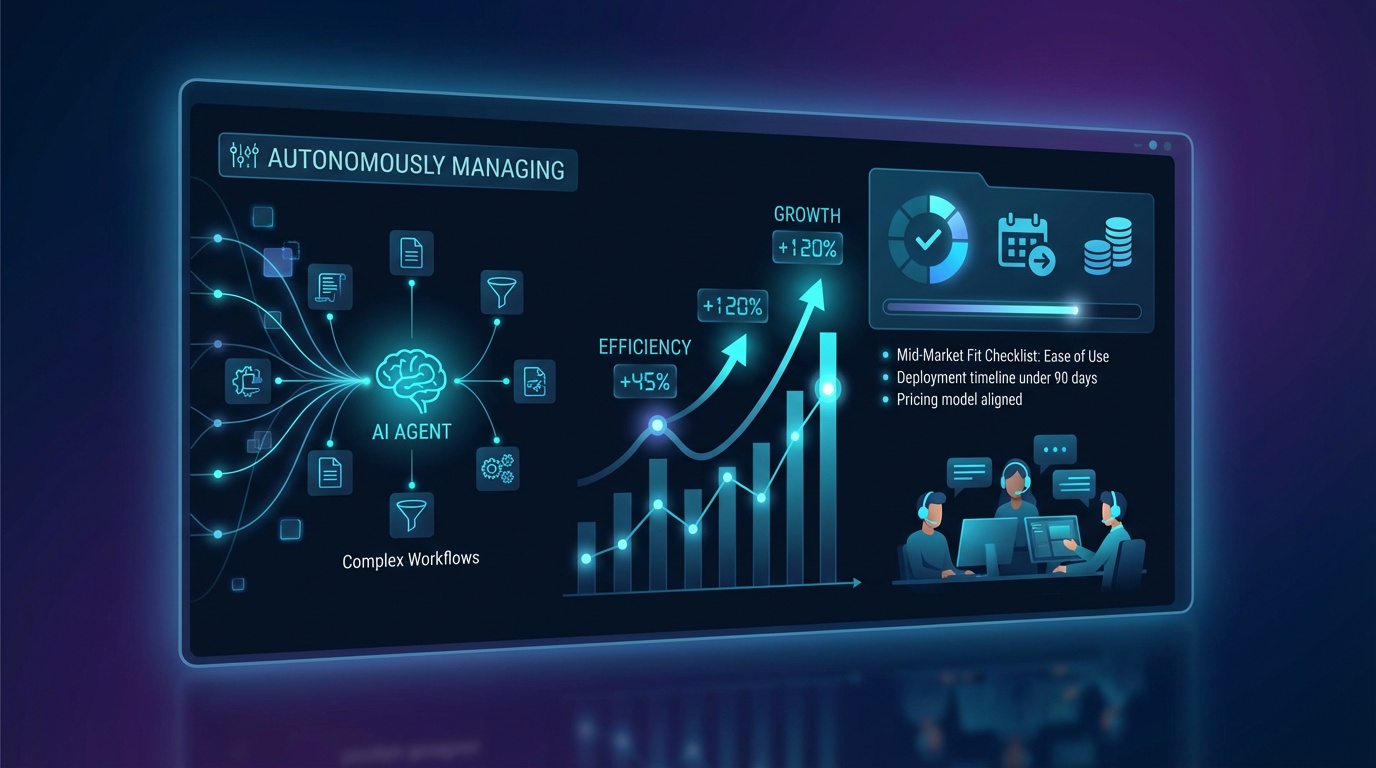
Mid-Market Fit Checklist: Ease of Use and Vertical Specialization
- Deployment timeline under 90 days without dedicated IT staff
- Pricing model aligned with organizational revenue scale
- Integration capabilities with existing CRM infrastructure
- Industry-specific templates for fundraising workflows
- Transparent reporting on donor engagement and conversion metrics
- Vendor responsiveness and mid-market customer support quality
Organizations at this scale require AI-powered fundraising platform options designed for teams without enterprise IT departments. Vertical specialization matters—generic automation tools require extensive customization to handle fundraising-specific workflows like tax receipting, recurring donation management, and major gift cultivation sequences. Vynta AI Agents include pre-configured fundraising workflows that go live quickly rather than requiring months of consultant-driven configuration.
Overcoming Adoption Barriers in Traditional Teams
Resistance to AI adoption typically stems from concerns about technology replacing human relationships in donor stewardship. Successful implementations position AI as supporting relationship managers, handling routine touchpoints while freeing staff for high-value interactions. We’ve seen organizations pilot AI systems on lower-tier donor segments before expanding to major gift programs, building internal confidence through measurable results.
Training requirements represent another adoption barrier for teams accustomed to manual processes. Platforms that require technical expertise for routine operations face utilization challenges as non-technical staff default to familiar manual methods. User interface simplicity and pre-built templates speed adoption by reducing learning curves and showing value quickly.
Next Steps: Deploy AI Agents for Quick Wins
Ready to Scale Fundraising Without Adding Headcount? Vynta AI Agents deliver measurable improvements in investor outreach and donor retention. Our mid-market-focused approach eliminates enterprise complexity while providing industry-specific automation for fundraising teams. Contact us to discuss your requirements and implementation timeline.
Organizations evaluating AI-powered fundraising platform options should prioritize rapid deployment and measurable outcomes over feature checklists. Vynta AI Agents focus on quick wins like automated re-engagement campaigns and prospect scoring that demonstrate ROI within the first quarter. This approach builds organizational confidence in AI capabilities while generating immediate business value, creating momentum for expanded automation initiatives across marketing and operations functions.
For those seeking a broad overview of fundraising, understanding the traditional frameworks can enhance strategy development alongside AI tools.
With the rise of digital platforms, online fundraising techniques have become necessary for reaching diverse donor bases rapidly and efficiently.
Nonprofit organizations are encouraged to explore detailed guidance on online fundraising best practices to maximize campaign impact while maintaining compliance and donor trust.
Frequently Asked Questions
What is the best AI for fundraising?
The best AI for fundraising depends on your organization’s specific goals. Vynta AI Agents are ideal for rapid investor or donor outreach, becoming operational in 30-90 days. Fundraise Up excels at optimizing online donations with machine learning. For long-term donor retention, Bloomerang and GoodUnited are strong choices, while Salesforce NPSP suits large organizations with complex, multi-program needs.
How can AI be used in fundraising?
AI transforms fundraising by identifying and prioritizing prospects through predictive analytics, analyzing historical data and engagement patterns. It also automates campaign management, handling routine touchpoints across various channels like email and SMS. This approach allows teams to deliver personalized messaging and increase investor interactions without adding staff.
What kind of organizations benefit from AI fundraising platforms?
AI-powered fundraising platforms are particularly valuable for mid-market organizations raising $500K to $50M annually. These tools help organizations that find generic CRM solutions insufficient but enterprise systems too resource-intensive. They enable systematic identification, engagement, and conversion of donors or investors at scale.
How does Vynta AI support investor outreach?
Vynta AI Agents specialize in fundraising automation for mid-market teams, deploying industry-trained agents for investor identification, personalized outreach sequencing, and follow-up coordination. Our vertical focus means agents understand fundraising workflows from day one. This approach allows teams to manage three times more touchpoints per team member while maintaining human relationships.
What advantages do machine learning tools offer for online donations?
Machine learning tools, like Fundraise Up, optimize online donation forms by testing variables such as button placement and suggested amounts to increase conversion rates. They process transactions efficiently and provide real-time analytics for campaign performance. This data-driven approach can significantly lift donation values for organizations with substantial web traffic.
How do AI platforms help improve donor retention?
Platforms focused on donor retention, such as Bloomerang and GoodUnited, use predictive analytics to flag at-risk supporters early. They also specialize in social media donor engagement to maintain connections. These systems provide systematic relationship management, leading to significantly higher donor retention rates compared to industry averages.
What factors should mid-market teams consider when selecting an AI fundraising platform?
Mid-market teams should prioritize deployment speed, ensuring the platform can be operational quickly. Evaluating donor retention metrics and the total cost of ownership is also important for a sound commercial decision. It is key to select tools that deliver measurable business outcomes, not just automate existing processes.