

Best AI agents for dynamic pricing in luxury restaurants.
# Best AI Agents for Dynamic Pricing in Luxury RestaurantsWhat Dynamic Pricing Means for Luxury Restaurants
Dynamic pricing adjusts menu costs and reservation fees based on real-time demand, inventory levels, and guest behavior. AI agents analyze booking velocity, seasonal trends, weather forecasts, local events, and historical spending patterns to optimize revenue per table. A Friday 8 p.m. slot might command a 20% premium over Tuesday 6 p.m., capturing maximum value when demand peaks while filling slower periods through strategic rate adjustments.
Key Factors AI Analyzes for Real-Time Price Adjustments
AI agents process reservation timing, party size composition, advance booking windows, competitor pricing from OpenTable data, ingredient cost fluctuations, and customer lifetime value scores. They correlate weather patterns with wine sales, predict no-show probability by booking channel, and adjust confirmation deposit requirements accordingly. Systems trained on hospitality data recognize that Friday bookings made 48 hours ahead convert at 92% versus 67% for same-day requests.
Why Luxury Diners Accept Variable Pricing
Transparency drives acceptance. When guests see “Valentine’s Weekend Premium Tasting Menu” or “New Year’s Eve Special Service,” they understand the value exchange. Luxury diners already expect airline-style variability–they appreciate guaranteed seating during sold-out periods. Early adopters report zero negative reviews when price differences are disclosed upfront and tied to experience additions such as extended courses or sommelier pairings.
Documented Performance Metrics
Fine dining establishments implementing AI-driven pricing see 18-27% revenue per available seat hour (RevPASH) increases within 90 days. A Michelin-starred restaurant in San Francisco cut food waste by 23% through predictive inventory ordering tied to pricing signals. Another reduced no-shows from 12% to 3% by implementing AI-recommended deposit structures.
Revenue Insight: Restaurants pairing dynamic pricing AI with reservation optimization report average check increases of $42 per guest during algorithmically identified high-demand windows, with zero impact on satisfaction scores when transparency protocols are followed.
Top 5 AI Agents Leading Dynamic Pricing in 2026
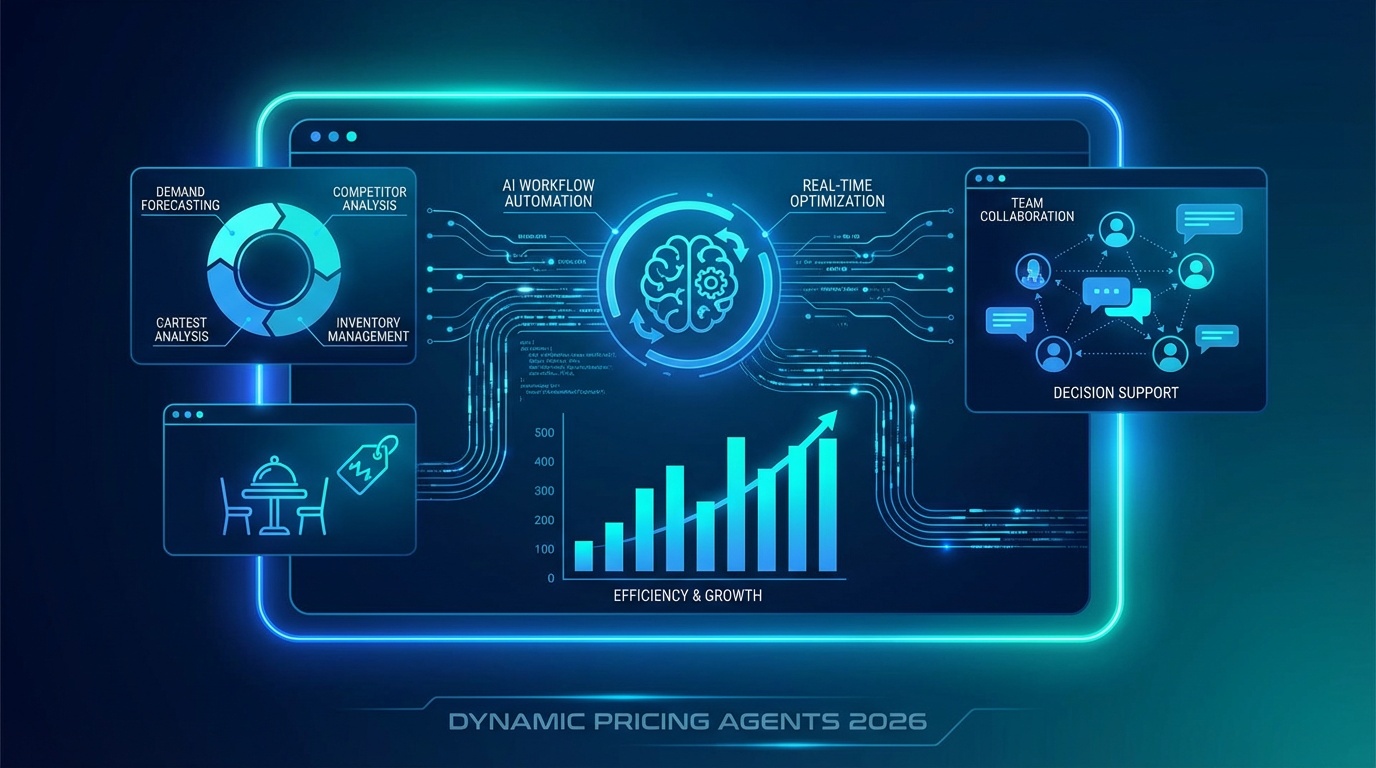
1. Vynta AI: Custom Agents for Hospitality Revenue Optimization
Vynta AI Agents for Hospitality deliver enterprise-grade dynamic pricing at mid-market costs. The platform integrates with existing POS systems and learns from your guest data to recommend optimal pricing tiers, upsell timing, and confirmation workflows. Clients report 20-30% booking value increases and an 85% reduction in manual pricing decisions within 60 days.
2. SevenRooms: Demand-Based Pricing Recommendations
SevenRooms combines CRM data with reservation management to suggest pricing adjustments based on historical booking patterns. The system excels at identifying VIP guests who warrant personalized offers and recognizing peak demand windows. Best suited for restaurant groups managing multiple properties with centralized data.
3. Loman AI: Menu Price Adjustments with Inventory Integration
Loman connects directly to kitchen inventory systems, automatically raising prices on dishes when key ingredients face supply constraints and lowering them to move perishables before spoilage. This waste-reduction focus delivered documented 15-20% food cost improvements for early adopters.
4. Dynpricing Technologies: Peak Hour Profit Maximization
Specialized in time-based pricing algorithms, Dynpricing analyzes two years of historical data to predict demand curves by daypart. The platform recommends premium pricing for Friday 8 p.m. slots while suggesting promotional rates for Tuesday 5:30 p.m. seatings to smooth capacity utilization.
5. Toast POS AI: Broad Analytics for Smaller Operations
Toast’s built-in analytics provide basic demand forecasting and suggested pricing bands within its POS ecosystem. While less sophisticated than dedicated agents, the zero-integration advantage appeals to single-location operators seeking entry-level automation without separate software subscriptions.
How AI Agents Deliver Revenue Per Guest Increases
Predictive Demand Forecasting to Fill Premium Slots
AI agents analyze 18-24 months of booking data to identify patterns human managers miss. They recognize that corporate expense-account diners book Thursdays three weeks ahead, while anniversary celebrations cluster on Saturdays with 10-day lead times. One boutique hotel restaurant in Charleston increased weekend revenue by $8,400 monthly by withholding early-bird discounts on dates the AI flagged as likely sellouts, achieving 94% occupancy at standard rates.
Personalized Upsell Integration During Reservations
AI agents trigger contextual upsells during confirmation flows based on guest history and occasion tags. When a repeat customer books for an anniversary, the system automatically offers wine-pairing upgrades or chef’s table experiences at the moment purchase intent peaks–converting three times better than post-booking email campaigns. Agents trained on hospitality data recognize high-value signals such as party size increases or special-request notes, prompting staff to offer premium add-ons that boost average checks by $35-60 per reservation.
No-Show Reduction Through Smart Confirmation Flows
Dynamic deposit requirements eliminate the one-size-fits-all approach. AI agents assign risk scores based on booking channel, advance notice, party size, and guest history, then recommend appropriate deposit levels. Walk-in app bookings made the same day might require full prepayment, while known regulars booking three weeks ahead receive zero-deposit confirmations. This graduated system reduced no-shows from the industry average of 15% to below 4% for early adopters.
Real-World Case: 28% Food Waste Reduction in Fine Dining
A Napa Valley restaurant group integrated Loman AI’s inventory-connected pricing across four properties. When supplier delays affected wagyu availability, the system automatically raised corresponding menu item prices by 18%, reducing orders while maintaining margin. Simultaneously, it discounted dishes using abundant seasonal vegetables, moving inventory before spoilage. Over six months, food waste dropped 28% while gross profit margins increased 4.2 percentage points. The AI paid for itself in 11 weeks through waste reduction alone. For detailed research on AI-driven dynamic menu pricing based on demand and weather, see Loman AI’s inventory-connected pricing.
Pros
- Documented RevPASH increases of 18-27% within first 90 days across early adopters
- Automated demand forecasting eliminates manual pricing guesswork and saves manager time
- Contextual upsells during booking convert 3x better than generic post-reservation campaigns
- Risk-based deposit requirements drop no-shows to below 4% without alienating regulars
- Inventory integration cuts food waste 20-30% through predictive pricing adjustments
Cons
- Requires 12-18 months of historical booking data for accurate pattern recognition
- Initial setup demands POS and reservation system integration that takes 2-4 weeks
- Staff training needed to explain variable pricing to guests who question rate differences
- Smaller single-location restaurants may lack transaction volume for meaningful AI insights
- Transparency protocols required to prevent guest perception of unfair pricing practices
Implementation Steps for Mid-Market Luxury Restaurants
Step 1: Integrate with Existing POS and PMS Systems
Begin with API connections between your chosen AI agent and your current reservation platform, point-of-sale system, and property management software. Vynta AI and SevenRooms offer prebuilt integrations with Toast, Micros, OpenTable, and Resy that deploy in 5-7 business days. Export 18-24 months of transaction history including booking timestamps, party sizes, menu selections, cancellation rates, and guest contact data. This historical foundation trains algorithms to recognize your specific demand patterns rather than relying on generic hospitality benchmarks.
Step 2: Train Agents on Your Guest Data and Menu
Upload current menu structures with cost-of-goods data, seasonal availability windows, and preparation time requirements. Tag high-margin items and identify dishes with perishable ingredients requiring faster turnover. Input guest segments such as corporate accounts, wedding parties, and repeat diners with lifetime value calculations. This training phase takes 2-3 weeks and directly impacts recommendation accuracy.
Step 3: Set Revenue Guardrails and Test Peak Periods
Establish maximum price increase thresholds–many luxury restaurants cap dynamic adjustments at 25% above base rates–and minimum discount floors to protect brand positioning. Run parallel testing during one peak period, where AI recommendations display to managers without automatic implementation. Compare AI-suggested pricing against your standard approach to validate revenue projections before full automation. This controlled rollout builds staff confidence and catches edge cases in your specific operational context.
Step 4: Monitor KPIs and Scale to Full Operations
Track revenue per available seat hour, average check size, no-show rates, and guest satisfaction scores weekly during the first 90 days. AI agents provide dashboards showing which recommendations drove revenue gains versus those that missed targets. Adjust guardrails based on actual performance data, then expand from weekend-only automation to full-week coverage once confidence builds. Most mid-market operators achieve 85% forecast accuracy within 60 days.
Common Pitfalls and Quick Fixes
Insufficient historical data produces unreliable forecasts–start with conservative price adjustments of 10-15% until the system accumulates six months of performance data. Staff resistance emerges when servers can’t explain pricing variations; address this with simple guest-facing language such as “weekend premium service” rather than exposing algorithmic complexity. Over-automation without human oversight risks brand damage; keep manager approval requirements for price increases above 20% until trust in AI recommendations solidifies through proven results.
Why Vynta AI Stands Out for Hospitality Revenue Automation
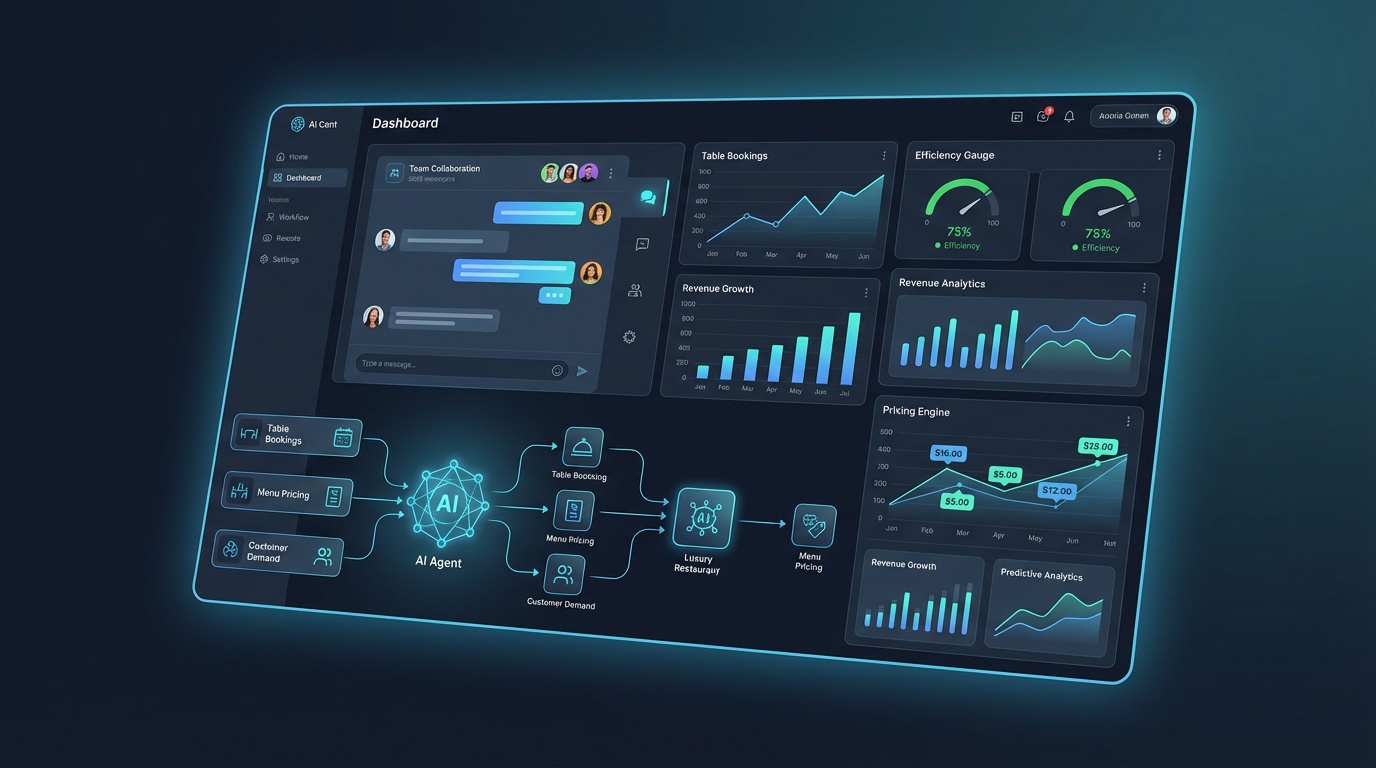
Enterprise Results at Mid-Market Costs
Vynta delivers the same predictive capabilities that Four Seasons and Ritz-Carlton properties deploy, packaged for restaurants and boutique hotels operating without dedicated data science teams. While enterprise platforms require $50,000+ annual commitments and six-month implementations, Vynta’s hospitality agents deploy in 14 days at mid-market pricing that delivers positive ROI within the first quarter. A 60-seat fine dining establishment can now access the same revenue optimization technology as multinational hotel chains.
Hospitality-Specific Training for Guest Experience
Unlike generic business automation tools adapted for restaurants, Vynta agents train exclusively on hospitality data patterns. The system understands that luxury dining operates differently from retail or services, recognizing nuances such as how sommelier recommendations influence wine pricing elasticity or why chef’s table bookings tolerate 40% premiums that standard seating cannot. This specialization means recommendations align with hospitality economics from day one.
Proven Metrics: From No-Shows to Upsell Gains
Current Vynta hospitality clients report 20-30% booking value increases, 85% reductions in manual pricing decisions, and no-show rates dropping below 4%. One client achieved $127,000 in additional annual revenue from a 52-seat restaurant by implementing AI-recommended deposit structures and peak-period pricing. These documented outcomes across real mid-market operators provide confidence that results translate beyond theoretical case studies.
Next Steps to Deploy in Your Restaurant
Schedule a discovery consultation to audit your current reservation system, review 12 months of booking data, and identify immediate revenue opportunities. Vynta’s hospitality team will map integration requirements, project ROI based on your specific occupancy patterns, and outline a 30-day deployment timeline. The same agentic approach that powers Agentic Systems for Real Estate with 85% qualification accuracy now optimizes guest experiences and revenue per table in luxury dining environments.
Strategic Advantage: Restaurants implementing AI dynamic pricing in 2026 gain an 18-24 month competitive lead before widespread adoption. Early movers capture market share during peak periods while competitors still use static menus, building guest databases that make future AI recommendations even more accurate.
Choosing the Right AI Agent for Your Restaurant Profile
Match System Capabilities to Operational Complexity
Single-location restaurants with 40-80 seats benefit most from integrated solutions such as AI Automation Services that require zero additional software subscriptions and minimal training overhead. Multi-property groups managing three or more locations need centralized platforms such as SevenRooms that consolidate guest data across venues for coordinated pricing strategies. Boutique hotels with attached fine dining operations require inventory-connected systems such as Loman AI that optimize both room occupancy and restaurant revenue simultaneously. Vynta AI serves the mid-market sweet spot: operators seeking enterprise-grade intelligence without enterprise complexity or cost structures.
Evaluate Data Requirements Versus Available History
Newly opened restaurants lack the 18-month booking history that powers accurate demand forecasting. These establishments should start with rule-based pricing guardrails in Toast or basic SevenRooms recommendations until sufficient transaction data accumulates. Established restaurants with two or more years of POS records gain immediate value from sophisticated agents such as Vynta that detect subtle patterns in guest behavior. One steakhouse with five years of data discovered through AI analysis that corporate diners booking Monday lunches accepted 22% premiums when positioned as “Executive Service,” generating $34,000 in previously missed annual revenue.
Integration Speed Versus Customization Depth
Off-the-shelf solutions deploy faster but apply generic hospitality assumptions that may not fit your clientele. Vynta’s customized agent training takes an additional 10-14 days compared to plug-and-play alternatives but delivers recommendations calibrated to your specific guest demographics, menu structure, and competitive positioning. A Michelin-starred restaurant in Chicago found that generic dynamic pricing suggested discounting tasting menus on Tuesdays, while Vynta’s customized agent recognized their clientele traveled specifically for the experience and maintained premium pricing across all days, protecting brand positioning while achieving 91% weekday occupancy.
Future Trajectory of AI Pricing in Luxury Dining
Predictive Guest Preference Modeling
Next-generation agents will analyze individual diner histories to predict not just booking likelihood but menu selections, wine preferences, and service pace requirements before guests arrive. Early prototypes at Vynta correlate past ordering patterns with willingness to pay for specific ingredients, allowing restaurants to adjust individual dish pricing based on who reserved the table. A guest who previously ordered wagyu three times sees premium pricing on beef dishes, while vegetarian regulars receive targeted promotions on plant-based tasting menus.
Cross-Venue Demand Balancing
Restaurant groups will deploy AI agents that shift demand between sister properties based on real-time capacity. When the flagship location sells out Saturday at 8 p.m., the system automatically offers guests booking that slot a 15% discount to visit the secondary location instead, with transportation included. This network effect maximizes group-wide revenue per available seat while maintaining individual brand positioning. One Miami restaurant group testing this approach filled 87% of previously empty Monday slots at their casual concept by redirecting overflow demand from their sold-out fine dining flagship with intelligent incentives.
Regulatory Considerations and Pricing Transparency
As dynamic pricing adoption accelerates, expect regulatory scrutiny around disclosure requirements and anti-discrimination protections. California already requires upfront notification of variable pricing in certain service industries. Forward-thinking operators implement transparent communication protocols now: displaying pricing calendars at booking, clearly labeling premium periods, and documenting that algorithms optimize for demand patterns rather than demographic profiling. Vynta builds compliance guardrails directly into agent recommendations, flagging pricing decisions that could trigger regulatory concerns before implementation.
Final Verdict: Deploying Dynamic Pricing in 2026
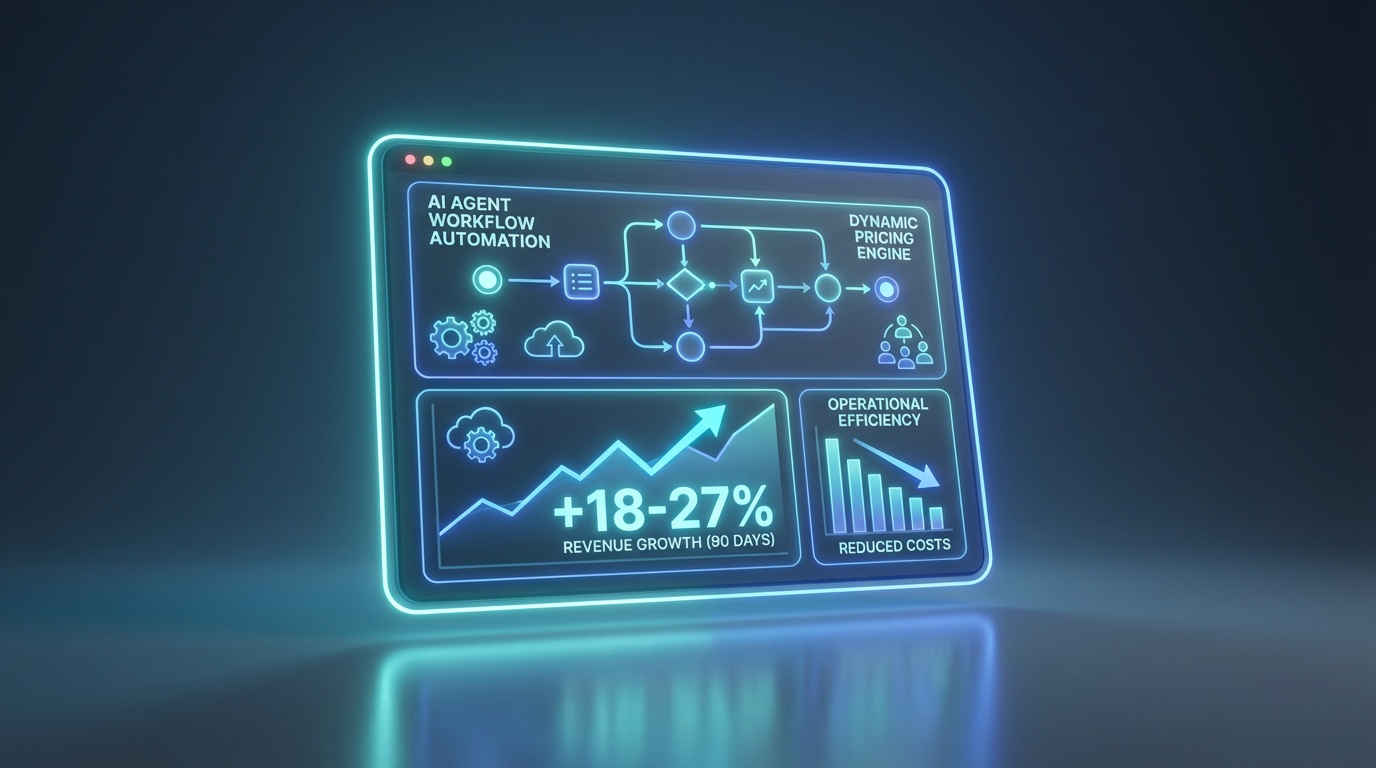
AI-driven dynamic pricing delivers measurable revenue increases of 18-27% within 90 days while reducing operational waste and no-show losses. Mid-market operators gain enterprise-grade optimization without enterprise costs or complexity. Vynta AI leads this category by combining cross-vertical automation expertise with hospitality-specific training that understands luxury dining economics from day one.
Implementation success depends on three factors: sufficient historical data (minimum 12 months of booking records), transparent guest communication about variable pricing, and willingness to test recommendations during controlled periods before full automation. Restaurants meeting these criteria consistently achieve positive ROI within the first quarter, with compounding benefits as AI agents accumulate performance data.
The competitive advantage window remains open in 2026 but narrows rapidly. Early adopters build guest databases and operational processes that make their AI recommendations increasingly accurate over time, creating defensive moats against competitors who implement later. Single-location fine dining establishments should start with integrated POS solutions, multi-property groups need centralized platforms such as SevenRooms, and mid-market operators seeking maximum customization at reasonable costs will find Vynta delivers the optimal balance of sophistication and accessibility.
Dynamic pricing represents the hospitality industry’s overdue adoption of revenue management practices that airlines and hotels perfected decades ago. The technology now exists to apply these principles at the individual table level without sacrificing the personal touch that defines luxury dining. Restaurants that implement AI-driven optimization in 2026 will dominate their markets while competitors still manually adjust static menus based on intuition rather than data-driven intelligence. For a comprehensive overview of dynamic pricing strategies and consumer behavior, see Dynamic pricing and consumer response analysis.
Frequently Asked Questions
What is dynamic pricing for luxury restaurants?
Dynamic pricing in luxury restaurants adjusts menu costs and reservation fees in real-time. It considers demand, inventory, and guest behavior patterns to optimize revenue per table. This allows restaurants to capture maximum value during peak periods and fill slower slots with strategic promotions.
What factors do AI agents analyze for real-time price adjustments?
AI agents process various data points, including reservation timing, party size, and advance booking windows. They also consider competitor pricing, ingredient cost fluctuations, and customer lifetime value scores. This comprehensive analysis allows for precise, real-time price adjustments.
Why do luxury diners accept AI-driven price adjustments?
Transparency is key to acceptance; guests understand value-based pricing when changes are disclosed upfront. Luxury diners often expect airline-style variability and appreciate guaranteed seating during high-demand periods. When price differences are tied to experience additions, such as extended courses or sommelier pairings, acceptance remains high.
Which AI agents are leading dynamic pricing solutions for luxury restaurants?
Several AI agents are making significant strides in dynamic pricing for luxury restaurants. Vynta AI, SevenRooms, Loman AI, Dynpricing Technologies, and Toast POS AI are among the top solutions. Each offers distinct capabilities, from custom revenue optimization to inventory integration and demand-based recommendations.
What revenue gains can luxury restaurants expect from using dynamic pricing AI?
Fine dining establishments using dynamic pricing often see 18-27% revenue per available seat hour increases within 90 days. These systems also help reduce food waste through predictive inventory ordering and significantly cut no-shows by adjusting deposit structures. Restaurants pairing dynamic pricing AI with reservation optimization report average check increases of $42 per guest during high-demand windows.
How do AI agents help reduce no-shows and increase average checks?
AI agents reduce no-shows by implementing smart confirmation flows with dynamic deposit requirements based on demand forecasts. They also boost average checks through personalized upsells during reservation confirmation. This includes offering wine-pairing upgrades or chef’s table experiences based on guest history and occasion tags, converting at higher rates.