

For mid-market businesses striving to grow, optimizing conversion rates isn’t just a goal; it’s the engine that drives revenue and operational efficiency. In today’s competitive digital environment, relying solely on traditional automation or manual efforts means leaving significant opportunities on the table. The challenge is often not a lack of leads, but the inability to effectively engage, qualify, and convert them at scale, especially when resources are constrained. This is where a new class of AI emerges, offering a transformative approach to turning prospects into loyal customers.
Agentic AI represents a significant leap forward, moving beyond simple task automation to intelligent, autonomous decision-making. It’s designed to understand context, adapt to dynamic situations, and act proactively to achieve specific business objectives. When applied to conversion rate optimization (CRO), this means a more sophisticated, human-like approach to sales, marketing, and operations, capable of delivering measurable business outcomes. Understanding what distinguishes agentic AI is the first step toward unlocking its full potential for your business.
What Makes Agentic AI Different for Conversion Rate Optimization?
Agentic AI vs. Traditional Automation: Autonomy and Adaptability
Traditional automation tools, while valuable, operate on predefined rules and scripts. They execute tasks sequentially based on triggers, but lack the capacity for independent reasoning or adaptation when faced with novel situations. Generative AI, on the other hand, excels at creating content or synthesizing information but typically requires human direction for complex decision-making and execution. Agentic AI bridges this gap by incorporating autonomy, allowing AI agents to perceive their environment, make independent decisions, and take actions to achieve defined goals without constant human intervention.
This autonomy is key for conversion rate optimization because customer journeys are rarely linear. Agentic AI can analyze a prospect’s behavior in real-time. Across multiple channels like website visits, email interactions, or chat inquiries. And dynamically adjust its approach. If a lead shows signs of hesitation or interest in a specific product feature, an agentic AI system can instantly pivot its communication strategy, offer relevant content, or schedule a follow-up, a level of responsiveness that rule-based systems cannot replicate and that human teams might struggle to deliver consistently at scale.
Why Agentic AI Excels at Real-Time Decision Making
The effectiveness of agentic AI in improving conversion rates stems directly from its ability to make informed decisions in real-time. Unlike systems that rely on batch processing or delayed analysis, agentic AI agents are designed for continuous operation and immediate response. They can process incoming data streams. Such as a website visitor’s click patterns, a prospect’s recent inquiry, or a change in market conditions. And instantly formulate an optimal course of action.
This capability is transformative for CRO. For example, an agentic system can detect a high-intent visitor on a product page and immediately trigger a personalized chat interaction offering specific information or a limited-time discount. If that interaction reveals a common objection, the AI can instantly adapt its response or escalate to a human sales agent with pre-qualified context. This proactive, adaptive decision-making ensures that every prospect interaction is optimized for conversion at the precise moment it matters most, significantly improving the chances of a successful outcome.
| Feature | Traditional Automation | Generative AI | Agentic AI |
|---|---|---|---|
| Decision Making | Rule-based, predefined logic | Content generation, information synthesis | Autonomous, context-aware, goal-oriented |
| Adaptability | Low; requires manual reprogramming | Moderate; can adapt output based on prompts | High; learns and adjusts strategy dynamically |
| Real-time Action | Limited to predefined workflows | Can generate responses quickly, but not typically execute complex actions | High; capable of independent, real-time execution and strategy adjustment |
| Goal Achievement | Executes tasks | Assists with tasks, generates ideas | Proactively pursues defined objectives |
| CRO Application | Automates repetitive tasks (e.g., email sequences) | Generates personalized content (e.g., ad copy, email subject lines) | Manages entire lead qualification, engagement, and conversion pathways autonomously |
How Agentic AI Boosts Conversions Across Key Industries
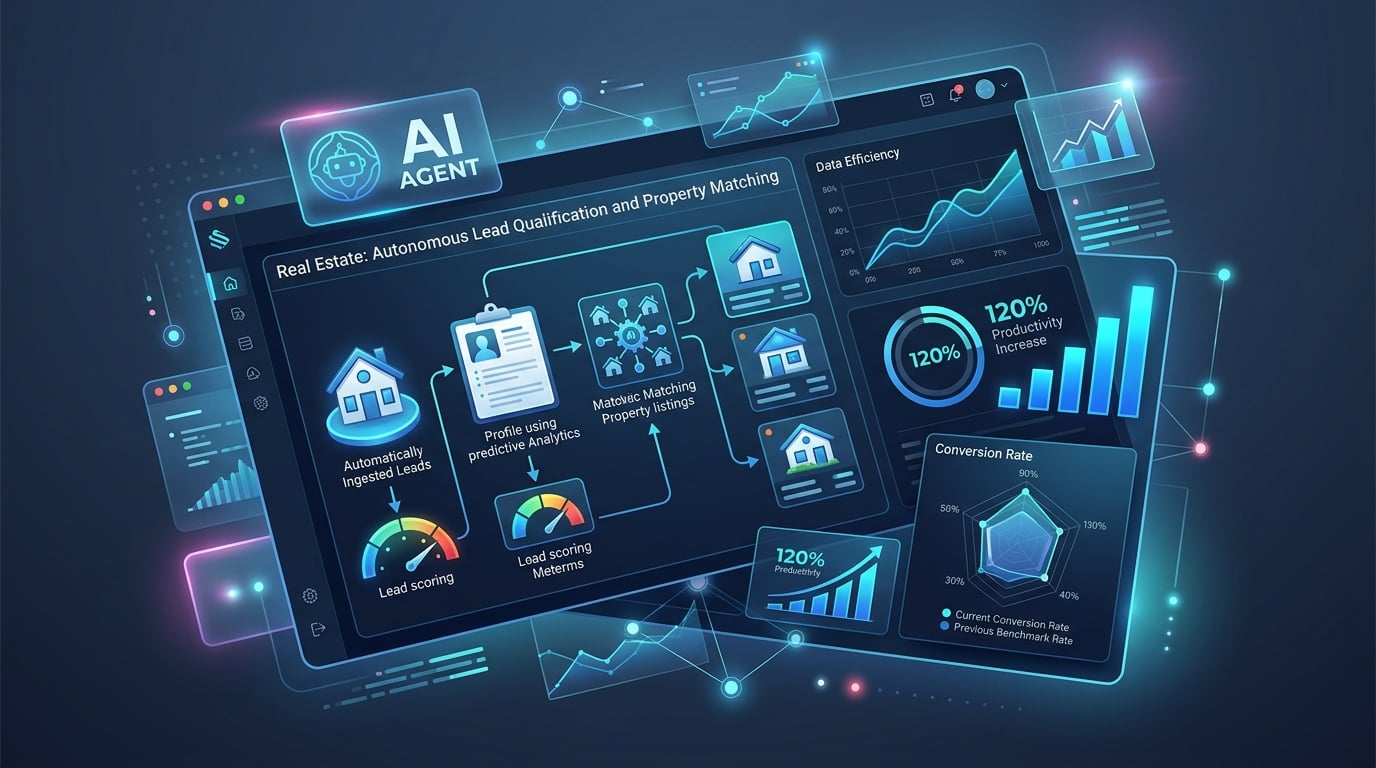
Real Estate: Autonomous Lead Qualification and Property Matching
The real estate sector thrives on rapid lead response and precise property matching. Agentic Systems for Real Estate exemplify how agentic AI transforms this vertical. These systems handle inquiries instantly, 24/7, across multiple channels like WhatsApp, SMS, and email. They go beyond simple chatbots by performing AI-driven qualification, understanding prospect needs, budget, and preferences. This autonomous qualification process significantly reduces response times to under 60 seconds, a critical factor in converting time-sensitive inquiries.
Furthermore, agentic AI automates property matching using advanced algorithms, suggesting relevant listings, including virtual tours, tailored to each prospect’s profile. Calendar coordination for viewings and personalized follow-ups are also managed, freeing up agents to focus on high-value interactions. This automation leads to a qualified pipeline increase of up to 3x and a conversion rate of 85% for these qualified leads. Agent productivity is maximized by automating 80% of tasks, saving over 20 hours per week, and resulting in over 30% more deals closed.
Recruitment: Intelligent Candidate Screening and Engagement
For recruitment agencies, finding and engaging the right talent quickly is paramount. Agentic AI can automate the initial stages of candidate sourcing and screening, identifying promising candidates from large pools based on complex criteria that go beyond keywords. These AI agents can engage potential candidates conversationally, assessing their skills, experience, and interest in specific roles. This intelligent screening ensures that recruiters’ time is focused on the most qualified and motivated individuals.
By handling initial outreach, scheduling assessments, and providing role-specific information, agentic AI accelerates the hiring process. It can manage personalized communication flows, keeping candidates informed and engaged throughout their journey. This not only improves the quality of hires by ensuring a better fit from the outset but also enhances the candidate experience, which is increasingly important for employer branding and attracting top-tier talent. The efficiency gained allows agencies to manage a higher volume of requisitions without proportionally increasing headcount.
Fundraising: Predictive Investor Outreach and Donor Management
Fundraising organizations face the challenge of identifying and cultivating relationships with potential donors and investors. Agentic AI can analyze vast datasets to identify prospects with the highest propensity to give, based on their financial capacity, philanthropic interests, and past engagement patterns. These AI agents can then automate personalized outreach, crafting messages that align with individual prospect motivations and donation histories.
Beyond initial contact, agentic AI supports ongoing donor management by tracking engagement, reminding development officers of key follow-up opportunities, and even personalizing stewardship communications. This systematic and data-driven approach ensures that no potential supporter is overlooked and that relationships are nurtured effectively. By optimizing outreach and engagement strategies, agentic AI helps organizations build stronger pipelines and secure the funding necessary to achieve their mission, leading to greater campaign success and sustained financial growth.
Hospitality: Personalized Guest Experiences and Upselling Automation
In hospitality, guest satisfaction directly impacts repeat business and revenue. Agentic AI can personalize the guest experience at every touchpoint, from pre-arrival communication to post-stay follow-up. AI agents can manage booking inquiries, offer tailored recommendations for rooms or amenities based on guest preferences, and handle service requests efficiently. This level of personalized attention, delivered at scale, elevates the guest experience beyond standard service levels.
Moreover, agentic AI can intelligently identify opportunities for upselling and cross-selling. For example, an AI might notice a couple booking a standard room and proactively offer a room upgrade with a better view or a package including a spa treatment, timed perfectly within their booking or pre-arrival communication. This automation not only drives additional revenue but does so in a way that feels helpful and relevant to the guest, rather than intrusive. The result is increased guest loyalty, higher satisfaction scores, and a greater lifetime value from each patron.
Agentic AI’s ability to autonomously manage complex workflows, adapt to user behavior, and make real-time decisions is what makes it the best agentic AI for improving conversion rates? across diverse industries. It moves beyond task execution to strategic action, delivering tangible improvements in lead qualification, candidate engagement, donor outreach, and guest experience, all while maximizing operational efficiency and driving revenue growth.
3 Agentic AI Capabilities That Directly Impact Conversion Rates
For businesses focused on growth, understanding the specific mechanisms through which agentic AI drives conversions is key. It’s not just about adopting new technology; it’s about using intelligent systems that can autonomously act to improve engagement, qualification, and ultimately, sales. These capabilities move beyond simple automation to proactive, strategic execution, directly impacting your bottom line. By focusing on these core functions, mid-market SMEs can identify the most promising areas for AI integration to achieve measurable business outcomes.
The true power of agentic AI in conversion rate optimization lies in its ability to mimic and surpass human-level decision-making and execution in complex, dynamic scenarios. It’s about creating autonomous agents that can understand context, adapt to individual user behavior, and take precise actions to guide prospects through the funnel more effectively. These are the features that distinguish advanced AI solutions and offer a tangible competitive advantage by improving how you connect with and convert potential customers. This section details three capabilities that are foundational to achieving better conversion rates.
1. Autonomous Lead Scoring and Nurture Automation
Effective lead scoring and nurturing are cornerstones of high conversion rates, but they are often resource-intensive and prone to human error or delay. Agentic AI revolutionizes this by autonomously analyzing prospect data from various touchpoints. Website interactions, email engagement, social media activity, and CRM entries. It assigns dynamic scores based on a deep understanding of intent and fit, far beyond simple demographic or firmographic matching. This real-time scoring allows businesses to prioritize outreach efforts with precision.
Once scored, the AI can then initiate automated, yet highly personalized, nurture sequences. These sequences are not static email blasts; they are adaptive workflows where the AI adjusts content, timing, and channel based on the lead’s ongoing behavior and score fluctuations. For example, if a lead shows renewed interest in a specific product feature after an initial outreach, the agentic system can automatically deliver targeted content, schedule a relevant webinar invitation, or prompt a follow-up from a sales representative with specific talking points. This continuous, intelligent nurturing ensures that leads remain engaged and are moved through the sales pipeline at an optimal pace, significantly increasing the likelihood of conversion.
2. Personalized Multi-Channel Engagement at Scale
Today’s customers interact across numerous channels. Websites, social media, email, SMS, and messaging apps. Providing a consistent, personalized experience across all these touchpoints is a significant challenge for most organizations. Agentic AI excels at this by orchestrating a unified engagement strategy. It can initiate conversations, respond to inquiries, and deliver tailored messages through the channels where each prospect is most active and receptive, ensuring a seamless and relevant experience.
The AI’s ability to maintain context and adapt messaging across these channels is paramount. For example, an agentic system can begin a conversation via website chat, then follow up via email with relevant resources, and later send a reminder via SMS about an upcoming meeting. Each interaction is informed by the previous ones, creating a cohesive journey. This level of personalization, delivered consistently and at scale, builds stronger relationships, fosters trust, and guides prospects more effectively toward a purchase decision. It’s about meeting customers where they are with the right message at the right time, driving higher engagement and conversion rates.
3. Real-Time A/B Testing and Campaign Optimization
Optimizing marketing campaigns and conversion funnels traditionally involves manual A/B testing, which can be slow and require significant analytical expertise. Agentic AI transforms this process by enabling continuous, real-time optimization. AI agents can autonomously test variations of landing pages, ad copy, email subject lines, and call-to-action buttons, analyzing performance data instantaneously.
Based on these real-time analyses, the AI can dynamically allocate resources to the best-performing variations, pausing underperforming elements and scaling successful ones. This iterative process happens continuously, ensuring that your campaigns are always operating at peak efficiency. For example, if an AI detects that a particular headline on a landing page leads to a higher sign-up rate, it can automatically prioritize that headline and test new variations inspired by its success. This dynamic, data-driven approach ensures that conversion rates are constantly being improved, maximizing ROI and reducing wasted marketing spend. The ability to perform this hyper-optimization autonomously makes it the best agentic AI for improving conversion rates? for businesses that need to adapt quickly in competitive markets.
Core Agentic AI Capabilities for Conversion Rate Optimization
Pros
- Autonomous lead scoring and dynamic prioritization of high-intent prospects.
- Automated, personalized nurture sequences that adapt to individual lead behavior.
- Seamless, context-aware engagement across multiple communication channels (email, SMS, chat, etc.).
- Real-time A/B testing and dynamic reallocation of resources to optimize campaign performance.
- Consistent, high-quality customer interactions at scale, improving user experience.
- Proactive identification of upsell/cross-sell opportunities based on real-time data.
- Reduced response times to inquiries, capturing leads more effectively.
- Increased agent productivity by automating repetitive qualification and engagement tasks.
Cons
- Requires clear goal definition and training data for optimal performance.
- Initial setup and integration may require technical expertise and time investment.
- Over-reliance without human oversight can lead to missed nuanced opportunities or ethical concerns.
- Performance is dependent on the quality and comprehensiveness of data inputs.
- Potential for unexpected behavior if not properly monitored or if external factors change drastically.
- May require ongoing adjustments to strategies and parameters as business objectives evolve.
These core capabilities. Autonomous lead nurturing, personalized multi-channel engagement, and real-time campaign optimization. Represent the vanguard of AI-driven conversion rate improvement. By implementing solutions that excel in these areas, businesses can achieve a significant uplift in their sales and marketing effectiveness. The strategic application of agentic AI empowers teams to focus on complex problem-solving and relationship building, while the AI handles the precision, scale, and speed required for modern conversion optimization. For example, Agentic Systems for Real Estate leverage these very capabilities to automate lead qualification and property matching, demonstrably increasing pipeline value and closing rates for agencies.
How to Choose the Right Agentic AI Solution for Your Business
Factors to Consider: Industry Specialization, Integration, and Scalability
Selecting the appropriate agentic AI platform requires a careful evaluation of its ability to address your specific operational challenges. Generic tools often fail because they lack the domain-specific knowledge necessary to navigate industry nuances. A solution built for the real estate sector must understand property listings and buyer preferences, while a recruitment tool must accurately parse resumes. Prioritizing industry specialization ensures the AI understands your unique workflows from the start.
Integration capabilities remain equally critical for long-term success. Your chosen AI solution must slot seamlessly into your existing technology stack, including customer relationship management systems and marketing automation platforms. Data must flow bidirectionally and securely, preventing the creation of isolated data silos. A reliable integration layer ensures that every interaction captured by the AI is automatically logged, providing a unified view of your customer journey.
Scalability is the final cornerstone of a reliable AI investment. As your business grows, your tools must handle increased volumes of inquiries without degrading performance or requiring constant manual intervention. Agentic Systems for Real Estate demonstrates the importance of scalable architecture by processing thousands of property inquiries simultaneously while maintaining rapid response times. Request clear documentation on system capacity when evaluating vendors.
The Role of Human Oversight in Agentic AI Workflows
Agentic AI is designed to augment human capabilities rather than replace them entirely. Human oversight remains an essential component of any automated workflow, providing strategic direction and quality assurance. While AI agents excel at executing repetitive, high-volume tasks, human experts are indispensable for managing high-stakes negotiations and navigating edge cases that require emotional intelligence. This collaborative model ensures your organization maintains complete control over its brand voice.
Defining clear boundaries for AI autonomy is a key step in successful implementation. AI agents should handle initial lead qualification, appointment scheduling, and routine follow-up reminders. Human team members should focus on reviewing qualified leads, conducting in-depth consultations, and closing deals. By establishing these boundaries, you create a balanced workflow that maximizes efficiency. The technology handles the heavy lifting, allowing your professionals to dedicate their time to activities that directly drive revenue.
This human-in-the-loop approach also mitigates the risks associated with fully autonomous systems. Regular audits of AI performance, combined with direct feedback from your sales and marketing teams, allow you to identify areas for improvement and refine the system’s decision-making processes. Continuous monitoring ensures that the AI remains aligned with your business objectives, delivering consistent results over time.
Essential Criteria for Selecting an Agentic AI Partner
- Evaluate the platform’s industry-specific features and domain knowledge.
- Verify seamless integration capabilities with your existing CRM and marketing stack.
- Confirm system scalability and capacity to handle increased operational volumes.
- Assess the level of human oversight and control built into the workflow.
- Review the vendor’s commitment to data security and compliance standards.
- Ensure the solution provides transparent performance metrics and reporting tools.
- Check for dedicated support and training resources to facilitate adoption.
- Confirm the ability to customize AI behaviors to match your brand voice.
Getting Started with Agentic AI: A Practical Roadmap for Mid-Market SMEs
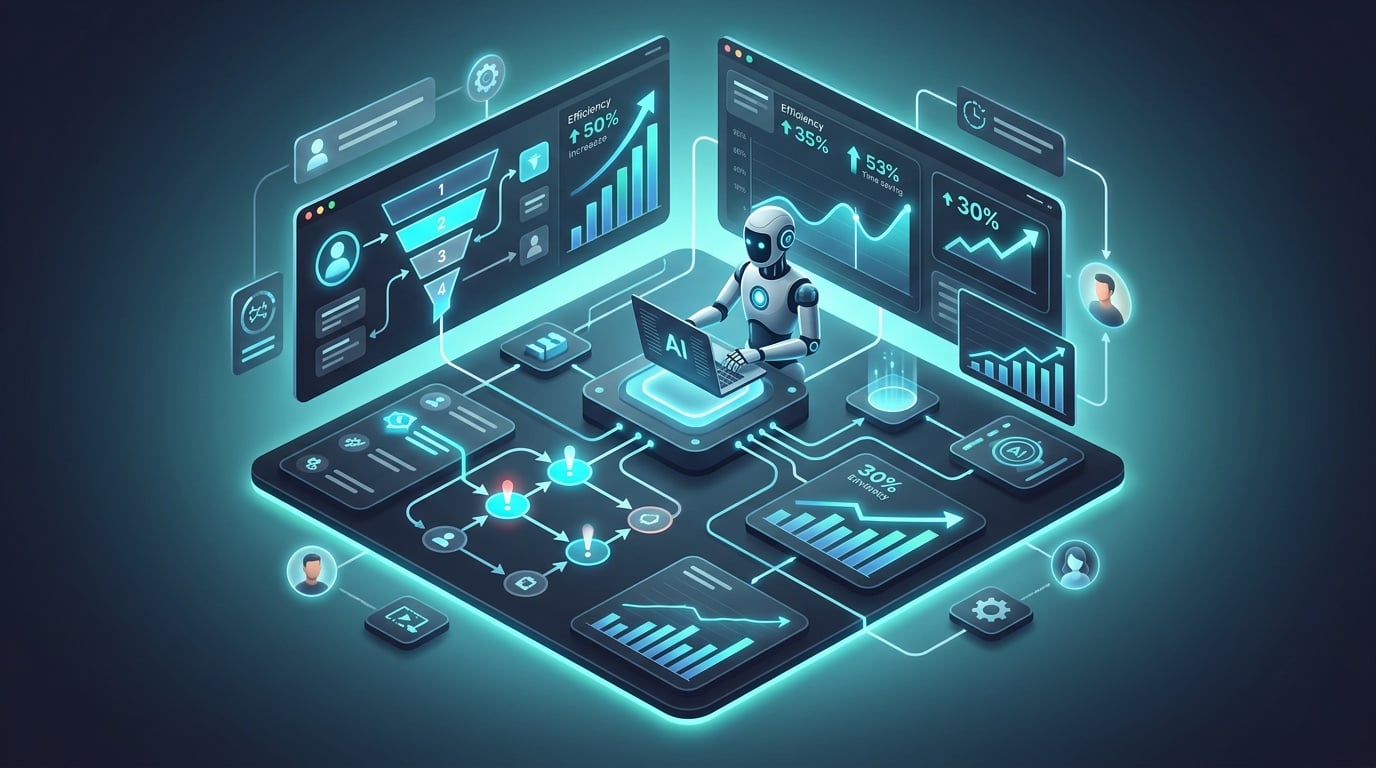
Step 1: Audit Your Conversion Funnel for High-Impact Opportunities
Before deploying any new technology, conduct a thorough audit of your current conversion funnel to identify specific bottlenecks. Analyze data from your website analytics and sales reports to pinpoint exactly where prospects drop off or stall. Common friction points include slow response times to inbound inquiries or a lack of personalized engagement during the qualification process. Understanding these pain points allows you to target AI automation efforts where they will deliver the most immediate impact.
Step 2: Pilot with a Focused Use Case in One Vertical
Avoid the temptation to overhaul your entire operation simultaneously. Instead, select a single, high-impact use case to serve as your initial pilot program. For a real estate agency, this might involve deploying an AI agent strictly for handling after-hours website inquiries. Similar to how Agentic Systems for Real Estate automates property inquiries, your pilot should focus on a specific, high-volume task. Establish clear success metrics for this pilot, such as response time reduction and lead conversion rates.
Step 3: Integrate with Existing CRM and Marketing Tools
Successful AI deployment requires seamless data synchronization between your new automation tools and your established platforms. Configure your agentic AI to pull relevant customer data from your CRM, ensuring that every interaction is logged accurately. This integration prevents data silos and empowers your AI to deliver highly personalized communications based on historical behavior. A well-connected system ensures that your sales teams have a complete view of every prospect, enabling more strategic engagement and confirming you have selected the best agentic AI for improving conversion rates?
Step 4: Scale with a Human-in-the-Loop Approach
Once your pilot demonstrates clear success, gradually expand the AI’s responsibilities across additional channels and use cases. Introduce the technology to new verticals while maintaining strict human oversight. Establish a continuous feedback loop where your team can correct AI mistakes and refine its decision-making parameters based on real-world results. This iterative scaling process ensures that your AI infrastructure evolves alongside your business, becoming an increasingly powerful asset for driving conversion rates and operational efficiency. For organizations seeking the best agentic AI for improving conversion rates?, this structured, human-centric approach guarantees sustainable growth and long-term success.