
automation in business
What Exactly Is Automation in Business and Why It Matters Now
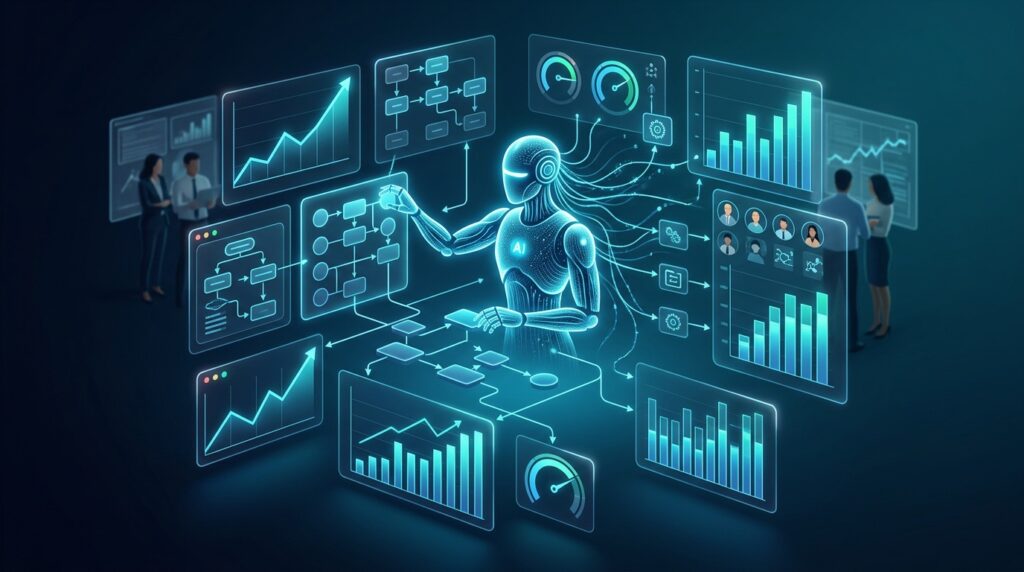
Automation in business means using technology to execute repetitive tasks, make decisions, and manage workflows without constant human intervention. Unlike simple task automation, modern business automation combines AI agents, intelligent workflows, and system integration to transform operational processes across industries such as real estate, recruitment, fundraising, and hospitality.
Defining Automation Beyond the Buzzwords
Business automation transforms manual, time-consuming processes into intelligent systems that operate with minimal human oversight. This goes far beyond basic scheduling tools or email templates. Effective automation includes AI agents that qualify leads, screen candidates, manage donor communications, and optimize guest experiences while learning from each interaction.
The technology handles workflow management, exception scenarios, multi-channel communication, and performance intelligence that delivers predictive insights. When implemented correctly, these systems don’t just save time. They improve decision quality and business outcomes.
The Core Problem: Manual Processes Strangling Growth
Mid-market businesses hit the same wall: growth ambitions crash into operational reality. Real estate agencies burn hours qualifying leads that won’t convert. Recruitment firms manually sift through hundreds of resumes for each position. Fundraising organizations can’t maintain donor relationships at scale. Hospitality businesses struggle to deliver personalized service without matching headcount to guest volume.
Key Insight: Companies using intelligent automation report 25% to 40% efficiency gains within six months, freeing teams to focus on revenue-generating activities that require human expertise.
The Vynta.ai Perspective: Industry-Specific AI Agents
Our AI Automation Services build custom AI agents that understand how your industry actually works. Instead of generic automation tools, we create solutions tailored to real estate lead workflows, recruitment candidate evaluation, fundraising relationship management, and hospitality guest experience optimization.
This specialization means faster implementation, higher team adoption, and measurable ROI within weeks rather than months. We augment human capabilities instead of replacing the expertise that differentiates your business.
Beyond Basic Bots: The Spectrum of Business Automation Technologies
From Simple Scripts to Smart Agents
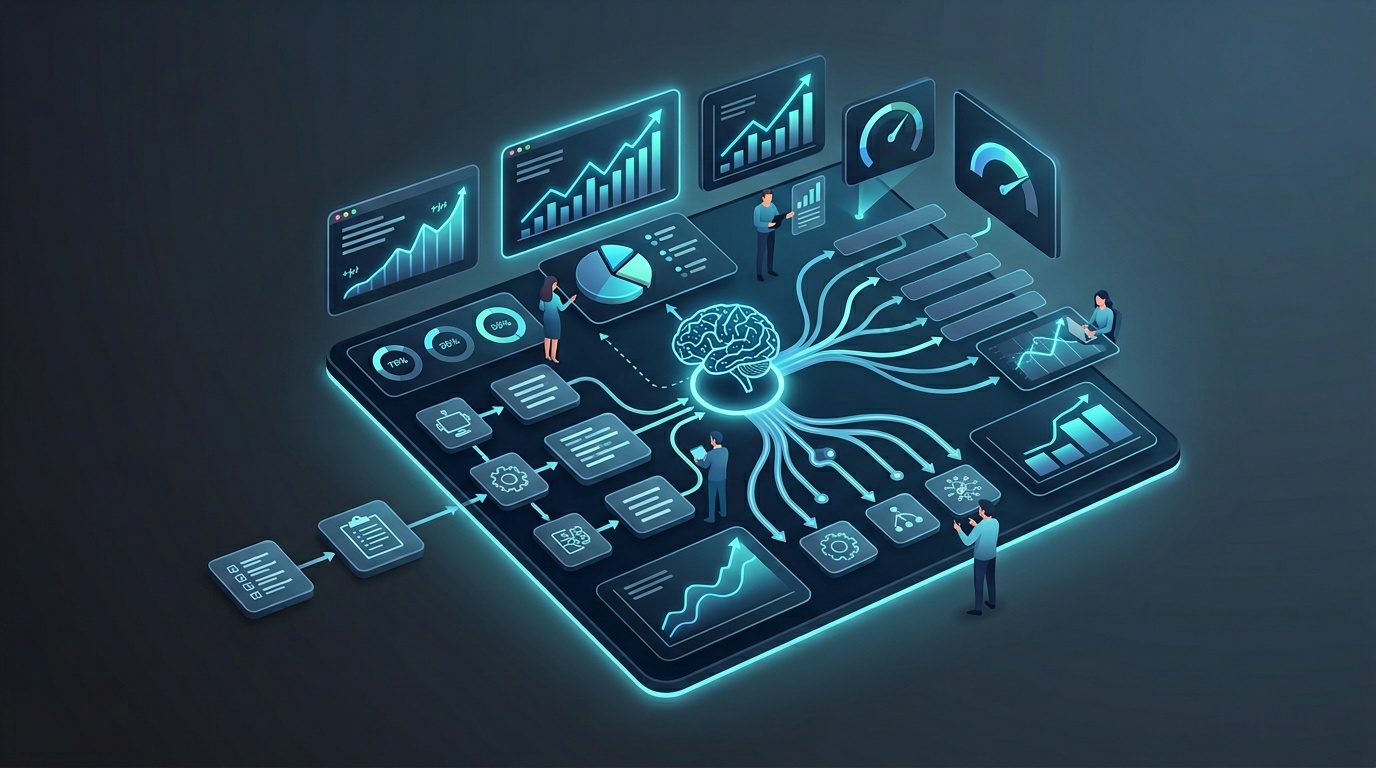
Business automation spans a wide range. Simple robotic process automation (RPA) handles basic, rule-based tasks like data entry or file transfers. AI agents represent the advanced end. They make complex decisions, process natural language, and adapt based on interactions.
Here’s the difference: intelligence and adaptability. RPA follows predetermined scripts. AI agents interpret context, handle exceptions, and improve performance over time. For real estate lead qualification and recruitment screening, this intelligence makes the difference between generic responses and contextual decision-making.
| Technology Type | Capabilities | Best Use Cases | Learning Ability |
|---|---|---|---|
| Basic RPA | Rule-based task execution | Data entry, file processing | None |
| Workflow Automation | Multi-step process management | Approval workflows, notifications | Limited |
| AI Agents | Decision-making support, natural language | Lead qualification, candidate screening | Continuous improvement |
Why Smart Automation Changes Everything
Intelligent automation combines AI capabilities with business process management to create systems that learn and adapt. This enables nuanced decisions that traditional automation can’t handle. Evaluating lead quality from conversation context, or matching candidates based on cultural fit indicators.
This technology tackles automation scenarios that previously required human judgment. Fundraising organizations can automate donor segmentation based on giving patterns and communication preferences, while hospitality businesses personalize guest interactions at scale without sacrificing service quality.
Vynta.ai’s Specialization: Custom AI Agents That Understand Your Business
We build AI agents that speak your industry’s language. These agents integrate with existing systems while providing intelligent automation matched to specific business needs. Our approach includes custom AI agent development, system integration, and workflow optimization designed for measurable impact.
Rather than forcing generic solutions, we develop agents using the terminology and decision patterns of each industry. Real estate agents understand property matching criteria, recruitment agents recognize quality candidate signals, and hospitality agents support guest experience touchpoints that drive satisfaction and revenue.
Driving Real Business Results: Automation’s Impact Across Key Verticals
Real Estate: Turning Lead Chaos Into Qualified Opportunities
Real estate agencies using automation in business see dramatic improvements in lead conversion rates. AI agents qualify prospects by analyzing inquiry patterns, budget signals, and timeline indicators from initial conversations. This screening lets agents focus on clients ready to take action.
Property matching automation goes beyond basic search filters. The system learns preferences from viewing behavior and feedback, then surfaces properties aligned with actual needs. Agencies report 30% faster deal cycles when automation handles initial matching and follow-up.
Recruitment: From Resume Mountain to Quality Matches
Recruitment firms use automation to transform candidate screening from a time-intensive bottleneck into an efficient qualification system. AI agents analyze resumes, conduct initial assessments, and support preliminary skill evaluations through conversational interfaces that feel natural.
Interview scheduling automation coordinates calendars across multiple stakeholders while maintaining candidate engagement. The system manages rescheduling, sends preparation materials, and collects feedback. Reducing time-to-hire by 40% while improving candidate experience scores.
Fundraising: Consistent Engagement Without Overwhelming Teams
Fundraising organizations use automation in business to maintain donor relationships without overwhelming development staff. AI agents segment donors based on giving history, communication preferences, and engagement patterns, then deliver personalized outreach with optimal timing.
Results Example: A nonprofit client using intelligent donor automation increased recurring donations by 28% while reducing manual outreach time by 60%, allowing development staff to focus on major gift cultivation.
Investor outreach automation supports complex funding cycles by tracking interaction history, scheduling follow-ups, and preparing pitch materials based on investor focus areas and portfolio preferences. This systematic approach increases response rates by 35%.
Hospitality: Scaling Personal Service Without Scaling Staff
Hospitality businesses use automation to deliver personalized service without proportional staffing increases. Guest communication systems handle reservation confirmations, special requests, and upselling opportunities through natural conversation flows that feel personal, not scripted.
- Automated reservation optimization reduces no-shows by 25%
- Intelligent upselling increases revenue per guest by 15-20%
- Personalized guest communications boost satisfaction scores by 18%
- Staff time shifts to high-touch service moments that drive loyalty
Your Automation Roadmap: From Assessment to Results
Finding Your Automation Sweet Spots
Successful automation in business starts with identifying processes that consume disproportionate time while producing standardizable outcomes. Look for repetitive tasks with clear decision criteria, high-volume activities that create bottlenecks, and workflows where human expertise adds most value after initial qualification or screening.
The best candidates combine frequency, predictability, and measurable outcomes. Lead qualification, candidate screening, donor segmentation, and guest communication are common starting points that deliver quick ROI.
Overcoming Team Resistance: Make Automation an Ally, Not a Threat
Adoption challenges usually stem from unclear value, not technology complexity. Position automation as expert support rather than job replacement. Involve staff in defining rules and exception handling so teams retain ownership and control of the process.
Implementation Strategy: Start with a single department pilot, prove measurable results within 90 days, then expand systematically. This builds confidence and refines workflows before broader rollout.
Measuring Success: Tracking Efficiency and Quality Gains
Monitor both efficiency metrics and quality indicators to capture full impact. Time savings matter, but improved lead quality, faster hiring cycles, better donor retention, and higher guest satisfaction demonstrate value beyond operational efficiency.
Establish baselines before implementation, then track conversion rates, cycle time reduction, error elimination, and team productivity. Most teams see positive ROI within 90 days when targeting high-impact processes first.
Why Partner with Vynta.ai for Your Automation Journey
Implementing automation in business requires both technical depth and industry workflow understanding. Our AI Automation Services combine custom AI agent development with industry-specific process design, creating solutions that integrate seamlessly with existing operations while delivering measurable results.
We handle discovery and assessment, structured implementation timelines, and ongoing optimization. This transforms automation from a project into an operational capability your team can scale as the business grows.
Frequently Asked Questions
What is automation in a business?
Automation in business means using technology to execute repetitive tasks, make decisions, and manage workflows without constant human involvement. Modern business automation combines AI agents, intelligent workflows, and system integration to transform operational processes. This approach helps businesses improve efficiency and focus on high-value work that drives revenue.
What are the different kinds of business automation?
Business automation exists on a spectrum, from basic robotic process automation (RPA) to sophisticated AI agents. RPA handles straightforward, rule-based tasks like data entry. Workflow automation manages multi-step processes, while AI agents provide decision-making support, natural language processing, and continuous learning based on interactions.
What makes modern business automation effective?
Effective modern business automation goes beyond basic scheduling or email templates. It includes AI agents that can qualify leads, screen candidates, and manage communications while learning from each interaction. This technology also incorporates workflow automation for exception scenarios and performance intelligence for predictive insights, improving decision quality and business outcomes.
Why is intelligent automation important for business growth?
Intelligent automation is important because it helps mid-market businesses overcome operational capacity bottlenecks that limit growth. By automating time-consuming processes, it frees teams to focus on strategic, high-value work. Companies using intelligent automation often report significant improvements in operational efficiency, allowing for scalable growth without increasing headcount at the same rate.
What business problems can intelligent automation solve?
Intelligent automation solves problems like real estate agencies spending hours qualifying unsuitable leads or recruitment firms manually screening hundreds of resumes. It helps fundraising organizations maintain consistent donor engagement and hospitality businesses scale personalized service. These systems transform manual, time-consuming processes into intelligent operations that run with limited human intervention.
How does Vynta AI approach automation for businesses?
Vynta AI focuses on building custom AI agents that understand industry-specific workflows, rather than offering generic automation tools. Our AI Automation Services develop solutions tailored to how professionals work in sectors like real estate, recruitment, or hospitality. This specialization supports faster implementation, higher adoption, and measurable ROI by augmenting human capabilities.