

automatic automation
Beyond the Buzzword: What “Automatic Automation” Really Means for Your Business
“Automatic automation” is technically redundant since automation is inherently automatic. What businesses actually seek is intelligent, AI-driven automation that adapts to changing conditions and makes decisions without constant human intervention. This shift marks the move from basic rule-based systems to sophisticated AI agents that handle complex workflows across sales, marketing, and operations.
Deconstructing “Automatic Automation”: Why It’s Redundant (and What You Actually Mean)
The term “automatic automation” repeats the same concept twice. Automation already implies automatic operation. What most business leaders really mean when they search for this term is self-managing systems that require minimal oversight. Traditional workflow tools follow rigid if-then rules, while modern AI-powered systems adapt to new scenarios and optimize performance over time.
The Core Concept: Systems That Work for You, Not the Other Way Around
Effective intelligent systems should feel invisible to your team while delivering measurable results. Instead of creating new tasks for employees to manage automated processes, strong AI integration fits into existing workflows. This means your sales team can focus on closing deals rather than updating CRM records, and your marketing team can focus on strategy rather than manually segmenting email lists.
Key Insight: The best automation multiplies human capability rather than replacing human judgment. AI agents handle routine decisions and data processing, freeing your team for strategic work that drives revenue growth.
AI-Driven Systems: The Next Step for Business Efficiency
AI agents represent the next generation of business intelligence, capable of understanding context, learning from outcomes, and making nuanced decisions. Unlike traditional tools that break when conditions change, AI agents adapt to new situations and continuously improve performance. AI Automation Services designs custom agents that handle complex workflows while maintaining the flexibility to evolve with your business needs.
The Unseen Engine: How AI Agents Drive Smarter Operations and Scale Revenue
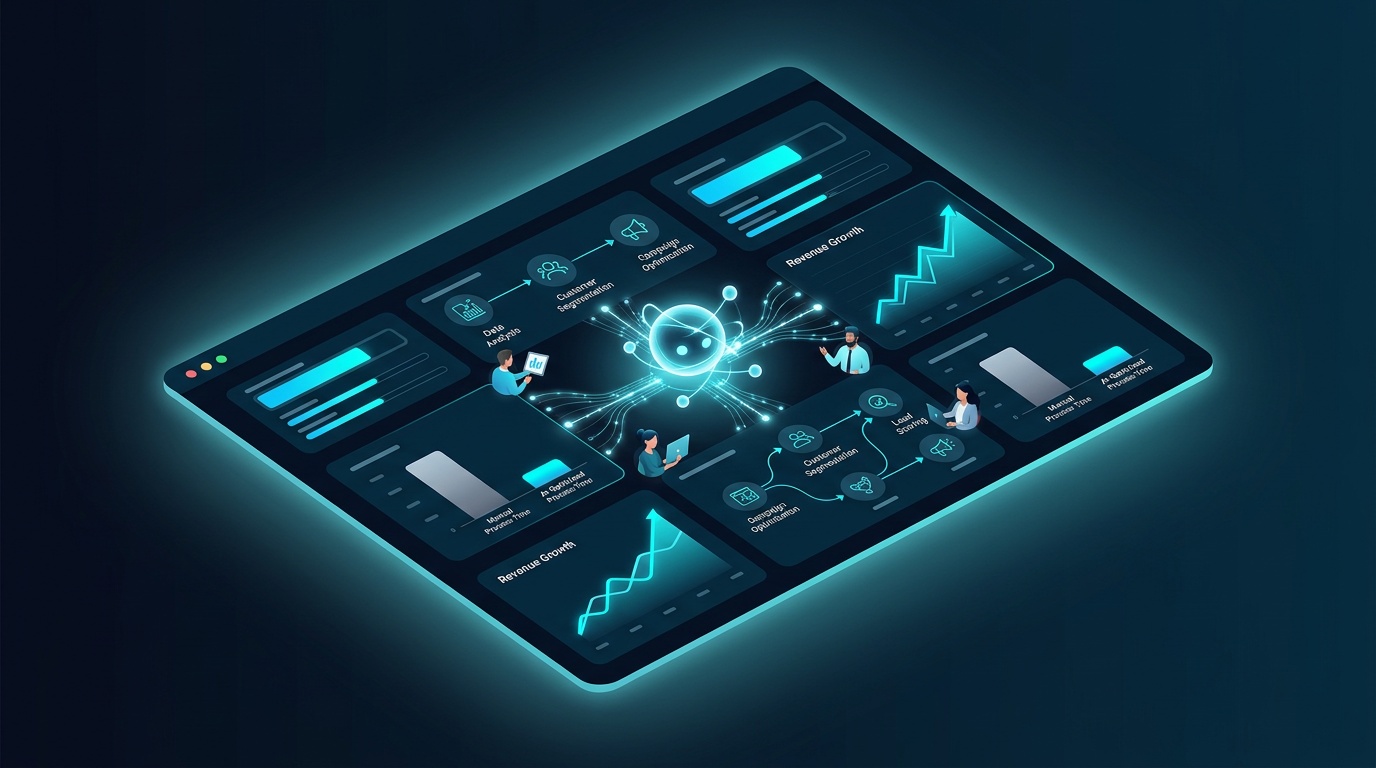
From Repetitive Tasks to Strategic Wins: The Evolution of Business Intelligence
Business systems have progressed from simple task scheduling to intelligent decision-making platforms. Early tools handled repetitive data entry and basic calculations. Today’s AI agents analyze patterns, predict outcomes, and execute complex multi-step processes with limited human involvement. This evolution turns technology from a cost-saving tool into a revenue-generating asset that can scale operations without expanding headcount.
AI Agents: Your Invisible Workforce for Sales, Marketing, and Operations
AI agents operate as specialized team members, each trained for specific business functions. Sales agents qualify leads, schedule meetings, and update customer records in real time. Marketing agents segment audiences, personalize content, and optimize campaign timing based on engagement data. Operations agents monitor workflows, detect anomalies, and trigger corrective actions before issues affect performance.
Pros
- 24/7 operation without breaks or vacation time
- Consistent performance that improves over time
- Fast data processing and decision-making
- Integration with existing business systems
Cons
- Requires initial setup and configuration time
- Needs ongoing monitoring and optimization
- May require human oversight for complex edge cases
- Requires an initial investment in custom development
Measuring Success: Key Performance Indicators (KPIs) That Matter
Effective AI implementation delivers quantifiable business improvements. Track lead response time reduction (typically 85% faster), conversion rate increases (average 40% improvement), and cost per acquisition decreases. Monitor revenue per employee growth and customer satisfaction scores to measure the human impact of AI deployment. AI Automation Services provides automated analytics with anomaly detection and predictive trend analysis to help you evaluate ROI within the first quarter after implementation.
Vertical Mastery: AI Solutions Tailored for Real Estate, Recruitment, and Fundraising
Real Estate: Qualifying Leads and Matching Properties at Scale
Real estate agencies struggle with lead qualification timing and property-matching accuracy. AI agents can assess buyer qualifications, analyze financial capacity, and match prospects with suitable properties based on preferences and budget constraints. These systems process mortgage pre-approval data, schedule property viewings, and maintain consistent follow-up communication to move leads toward viewings and offers through intelligent qualification and personalized outreach.
Recruitment: Streamlining Candidate Screening and Interview Scheduling
Recruitment firms face high candidate volumes and time-intensive screening processes. AI agents parse resumes, run initial skill assessments, and rank candidates based on role-specific criteria. The system schedules interviews, sends personalized communication to candidates, and maintains detailed candidate profiles that shorten hiring cycles while improving placement quality.
| Industry | Primary Challenge | AI Agent Solution | Measurable Outcome |
|---|---|---|---|
| Real Estate | Lead qualification speed | Fast financial assessment and property matching | 3x increase in qualified pipeline |
| Recruitment | Candidate screening volume | Automated resume analysis and skill evaluation | More than 60% reduction in the hiring cycle |
| Fundraising | Donor engagement timing | Personalized outreach and gift opportunity identification | Improved donor engagement |
Fundraising: AI-Powered Investor Outreach and Donor Engagement
Fundraising organizations need precise timing and personalization for donor communications. AI agents analyze giving patterns, identify optimal outreach timing, and draft personalized messages based on donor history and interests. The system tracks engagement levels, schedules follow-ups, and identifies major gift opportunities that improve retention and campaign ROI.
Elevating the Guest Experience: AI Solutions in Hospitality
From Reservations to Personalized Service: Optimizing the Guest Journey
Hospitality businesses require coordination across multiple touchpoints to deliver standout guest experiences. AI agents manage reservation confirmations, preference tracking, and pre-arrival communication that sets clear expectations. The system coordinates with housekeeping, front desk, and concierge teams to support personalized service delivery from check-in through departure.
Upselling Intelligence: Increasing Revenue Per Guest Through Smart Recommendations
Strategic upselling requires timing and relevant offers that add genuine value to the guest experience. AI agents analyze guest profiles, stay patterns, and real-time behavior to identify upsell opportunities. The system presents room upgrades, dining reservations, and activity bookings through personalized messages that feel helpful rather than pushy, increasing average guest spend by 25-35% through brand-safe recommendations tailored to individual guest profiles.
Guest Experience Focus: AI solutions in hospitality succeed when technology becomes invisible to guests while amplifying staff capabilities to deliver memorable, personalized service at every interaction point.
The Human-AI Partnership: Exceptional Service with Intelligent Support
Hospitality excellence depends on human connection supported by intelligent systems that anticipate needs and streamline operations. AI agents handle routine inquiries, process special requests, and alert staff to guest preferences and potential issues. This approach allows hospitality teams to focus on creating memorable experiences while ensuring guest needs are addressed proactively throughout their stay.
What sets this apart? The AI doesn’t replace the personal touch. It makes it possible at scale.
Frequently Asked Questions
What is the meaning of automatic automation?
The term “automatic automation” is actually redundant, as automation inherently implies automatic operation. What businesses truly mean is intelligent, AI-driven automation that can adapt to changing conditions and make decisions autonomously. This represents a shift from basic rule-based systems to sophisticated AI agents that manage complex workflows.
Is RPA dead or not?
RPA, or Robotic Process Automation, is not dead, but its capabilities are evolving significantly. Traditional RPA excels at automating repetitive, rule-based tasks. However, modern AI-driven automation goes beyond these rigid rules, adapting to new scenarios and learning from outcomes to handle complex, dynamic workflows.
What are the types of automation?
While there isn’t a universally agreed-upon fixed number of automation types, we see a clear progression in its capabilities. This evolution moves from basic task automation, like simple data entry, to more advanced rule-based systems, and now to intelligent, AI-driven automation. AI agents represent the next step, capable of understanding context, learning, and making nuanced decisions across complex workflows.
Is RPA considered AI?
RPA, or Robotic Process Automation, is generally not considered true AI. It follows predefined, rigid if-then rules to automate repetitive tasks. AI, on the other hand, involves systems that can learn, adapt, and make decisions based on data and context, which is what we see with advanced AI agents.
How does AI-driven automation benefit businesses?
AI-driven automation delivers significant business improvements by multiplying human capability. It frees your team from routine tasks, allowing them to focus on strategic work that drives revenue growth. This leads to benefits like 24/7 operation, consistent performance, and the ability to scale operations efficiently.
What is the difference between traditional automation and AI agents?
The core difference lies in adaptability and intelligence. Traditional automation follows rigid, predefined rules and often fails when conditions change. AI agents, by contrast, can understand context, learn from outcomes, and adapt to new situations, making nuanced decisions without constant human intervention.