

Key Takeaways
- Manual lead processing causes real estate agencies to lose 70% of prospects within the first hour.
- Recruitment firms spend excessive time screening candidates, risking the loss of top talent to competitors.
- Fundraising organizations face challenges in maintaining consistent investor follow-up.
- Hospitality businesses experience reservation abandonment due to slow response times.
- Manual processes hinder scalability and fail to keep up with growing demand across industries.
Table of Contents
Automated Funnels: Build Revenue Without Expanding Headcount
Real estate agencies processing leads manually lose 70% of prospects within the first hour. Recruitment firms spend weeks screening candidates while top talent accepts competing offers. Fundraising organizations struggle to maintain consistent investor follow-up. Hospitality businesses watch potential guests abandon reservations due to slow response times. The common thread? Manual processes that can’t scale with demand.
An automated funnel isn’t just email marketing—it’s a strategically engineered system that qualifies, nurtures, and converts prospects using industry-specific logic, integrated with your existing CRM, ATS, or PMS, powered by AI agents working 24/7. While your team focuses on closing deals, hiring talent, securing investments, or delighting guests, automation handles the repetitive qualification and follow-up work that traditionally required linear headcount growth.
This guide provides a practical roadmap to design, build, and optimize automated funnels across all stages—from awareness to retention—with clear ROI expectations and vertical-specific tactics proven in real estate, recruitment, fundraising, and hospitality sectors.
What Is An Automated Funnel? (Redefined for SME Context)

The Automated Funnel Blueprint (Beyond Generic Definitions)
Most “marketing automation” treats your funnel like a conveyor belt—pushing everyone through identical sequences. Modern automated funnels are logic-based systems where prospects enter via defined channels, each stage triggers specific actions based on behavior and qualification criteria, and progression depends on engagement rather than arbitrary time delays.
In real estate, a lead enters via property inquiry, qualification scoring determines likelihood, and if qualified, routes to agent scheduling—otherwise activates nurture sequences. Recruitment sees CV submission trigger parsing, skills matching against open roles, with qualified candidates advancing to automated interview scheduling. Fundraising identifies investors, personalizes outreach based on investment history, tracks engagement to determine meeting readiness. Hospitality captures reservation inquiries, recommends optimal rooms, deploys abandonment recovery to complete bookings.
Key Insight: Document your current funnel from initial contact to close. Identify where manual work causes delays, errors, or lost prospects—that’s where automation delivers immediate ROI.
Automated vs. Manual Funnels: The ROI Breakdown
| Metric | Manual Funnel | Automated Funnel |
|---|---|---|
| Lead Response Time | 6-24 hours | <5 minutes |
| Qualification Cost | $200-500/month (staff time) | $0 incremental (AI agent) |
| Time-to-Close (Real Estate) | 7-14 days | 3-5 days |
| Candidate-to-Interview | 3-5 days | Same day |
| Guest Upsell Rate | 15-20% | 35-45% |
| Team Hours Saved/Week | — | 20-40+ hours |
Manual processes require linear hiring as volume scales—costs grow with revenue. Automation decouples the two, reducing cost-per-stage by 60-80% while accelerating throughput by 3-5x. Calculate your current funnel cost (staff salaries ÷ monthly outputs) to quantify automation opportunity.
The Role of AI Agents in Modern Funnels
Tools like HubSpot or Mailchimp send emails. AI agents understand why they’re sending that email, to whom, and what action to take based on responses. They comprehend context (qualification criteria, conversation history), make decisions (this lead qualifies, this candidate matches), take action (send personalized follow-up, schedule interview), and continuously optimize based on conversion data.
Identify tasks requiring judgment in your funnel—lead qualification, candidate screening, investor assessment. These represent highest-ROI automation opportunities where AI agents deliver measurable business impact beyond simple email sequences.
The Stages of An Automated Funnel (Vertical-Specific Breakdown)
Stage 1 – Awareness: Capturing Prospects Across Channels
Prospects discover your brand through ads, content, referrals, or organic search. Automation opportunities include dynamic ad targeting, immediate lead capture with pre-population, instant acknowledgment sequences, and behavioral segmentation triggers.
Real estate automation delivers property recommendations based on inquiry parameters. Recruitment sends automated job alerts when candidates match open roles. Fundraising deploys personalized campaign welcome sequences. Hospitality provides automated rate recommendations and room suggestions in confirmation emails.
Quick Answer: What automation matters most at Awareness stage? Lead capture, instant confirmation, and immediate segmentation.
Stage 2 – Interest: Delivering Targeted Content & Building Engagement
Track key metrics: lead volume, cost-per-lead, source quality (which channels produce highest downstream conversion).
Prospects engage with content, explore offerings, show early buying signals through email opens, page views, and content downloads. Automation deploys behavior-triggered sequences—if prospect views pricing, send ROI comparison; if opens demo, deliver use-case video.
Real estate automation sends neighborhood insights when prospects view property photos, or buyer’s guides when viewing multiple listings. Recruitment triggers job alerts for candidates viewing descriptions repeatedly. Fundraising follows pitch deck reviews with investor materials. Hospitality deploys reminder emails with special offers for abandoned reservations.
Optimal engagement cadence runs 2-3 touchpoints weekly, adjusting based on behavior—increase frequency for high-engagement prospects, decrease for low-engagement to prevent churn. Target metrics: 25-35% email open rates, 5-10% click-through rates, tracking which content topics drive most engagement.
Quick Answer: How often should automated sequences contact prospects? 2-3x per week; adjust based on engagement behavior.
Stage 3 – Consideration: Qualification & Objection Handling
Prospects actively evaluate solutions versus competitors, requesting demos, quotes, or detailed information. Automation implements lead scoring using BANT criteria (budget, authority, need, timeline), qualification workflows routing high-scores to sales while nurturing others, and FAQ automation handling common objections 24/7.
Real estate qualification might score: (budget fit × 0.3) + (property-type match × 0.3) + (urgency × 0.2) + (engagement × 0.2). Scores >70 route to agents; 50-70 enter nurture sequences; <50 receive monthly newsletters. Recruitment auto-scores candidates on experience, skills, and salary expectations, scheduling qualified applicants for phone screens.
Key metrics include lead-to-qualified conversion rate, time-to-qualification, qualification accuracy (percentage of “qualified” leads converting), and objection resolution effectiveness.
Quick Answer: When should automation hand off to humans? When prospects meet qualification threshold OR explicitly request sales contact.
Stage 4 – Intent: Driving Urgent Action & Removing Friction
Prospects show strong buying signals—demo attendance, proposal requests, pricing inquiries, cart additions. This 24-72 hour window demands fastest response times and most frequent touchpoints. Automation deploys urgent follow-up workflows, cart abandonment sequences, incentive triggers, and social proof delivery.
Real estate sends comparable sales data and mortgage pre-qualification after property showings. Recruitment schedules technical assessments with prep materials following strong phone screens. Fundraising delivers detailed investment memos within hours of pitch meetings. Hospitality deploys SMS reminders with special offers for incomplete bookings.
Track intent-to-purchase conversion rates, average deal sizes, time-to-close metrics, and discount usage rates to optimize this critical conversion stage.
Quick Answer: Most powerful automation at Intent stage? Instant follow-up (within 1 hour) plus friction removal (1-click booking/purchase).
How Automated Funnels Work – The Operational Mechanics
Automation Types – Triggers, Actions, and Decision Logic
Modern automation moves beyond simple email sequences to sophisticated decision engines. Time-based automation triggers at intervals (“Send email 1 day after signup”), behavior-based responds to actions (“If opens email AND clicks, advance sequence”), conditional logic branches on rules (“If lead score >80, route to sales”), and event-based responds to external triggers (“When job opens, notify matching candidates”).
Real estate example: Form submission triggers budget/location check—if matches active properties, sends details plus showing scheduler; if no match, activates saved search alerts. Engagement tracking increments scores: email open (+2), property click (+5), showing scheduled (+25), automatically routing high-scorers to agents.
Map your funnel in triggers (what starts processes), decisions (what determines actions), and actions (what happens). Each decision point represents automation opportunity delivering measurable ROI.
Integration Architecture – How Automation Connects Your Systems
Integration eliminates manual data entry and ensures seamless prospect flow. CRM integration creates leads from forms, updates statuses automatically, alerts agents to qualified prospects. ATS integration pulls CVs, scores against requirements, schedules interviews via calendar systems. PMS integration updates availability, sends pre-arrival communications through guest experience platforms.
Vynta AI’s industry-specific approach provides native, pre-built integrations with exact systems mid-market teams use—zero technical overhead compared to generic platforms requiring custom API work that breaks. Audit your tech stack (CRM, email, calendar, analytics, payment) and choose platforms with native integrations to avoid expensive customization.
Personalization at Scale – The AI Advantage
AI moves beyond “dear {firstname}” to unique experiences based on firmographic data, behavioral patterns, engagement history, and predictive scoring. Generic emails convert at 2-5%; personalized emails addressing specific use cases convert at 15-25%.
Real estate AI analyzes property views, price inquiries, saved searches—if prospects consistently view 3-bedroom homes, all recommendations focus there. Recruitment AI tracks skills, work history, job alerts—if candidates haven’t applied in 30 days but viewed roles, sends targeted matches. This personalization engine transforms volume into quality conversion.
Key Insight: Personalization powered by AI increases conversion rates by delivering relevant content and recommendations at every stage of the funnel, tailored to each prospect’s unique needs and behaviors.
Real-Time Tracking & Dynamic Adjustment
Modern automated funnels continuously optimize through real-time monitoring, dynamic scoring updates, automated routing, and A/B testing automation. Systems track every action—email opens, link clicks, demo attendance—updating lead scores instantly. High-scoring leads immediately route to sales reps with alerts, while A/B testing automatically escalates top-performing subject lines and content.
Hospitality example: Monday’s upsell email tests two subject lines. Subject A achieves 25% open rate versus Subject B’s 18%. By Tuesday, the system automatically sends all subsequent emails with Subject A. When 40% of openers don’t complete upgrades, the system adjusts CTAs—changing colors, repositioning buttons. By Friday, conversion rates improve from 8% to 14%.
Set up 2-3 key metrics for daily monitoring: lead response time, qualification conversion, demo booking rates. This real-time feedback enables immediate optimization rather than waiting for monthly reviews.
Building Your Automated Funnel – The Step-by-Step Blueprint
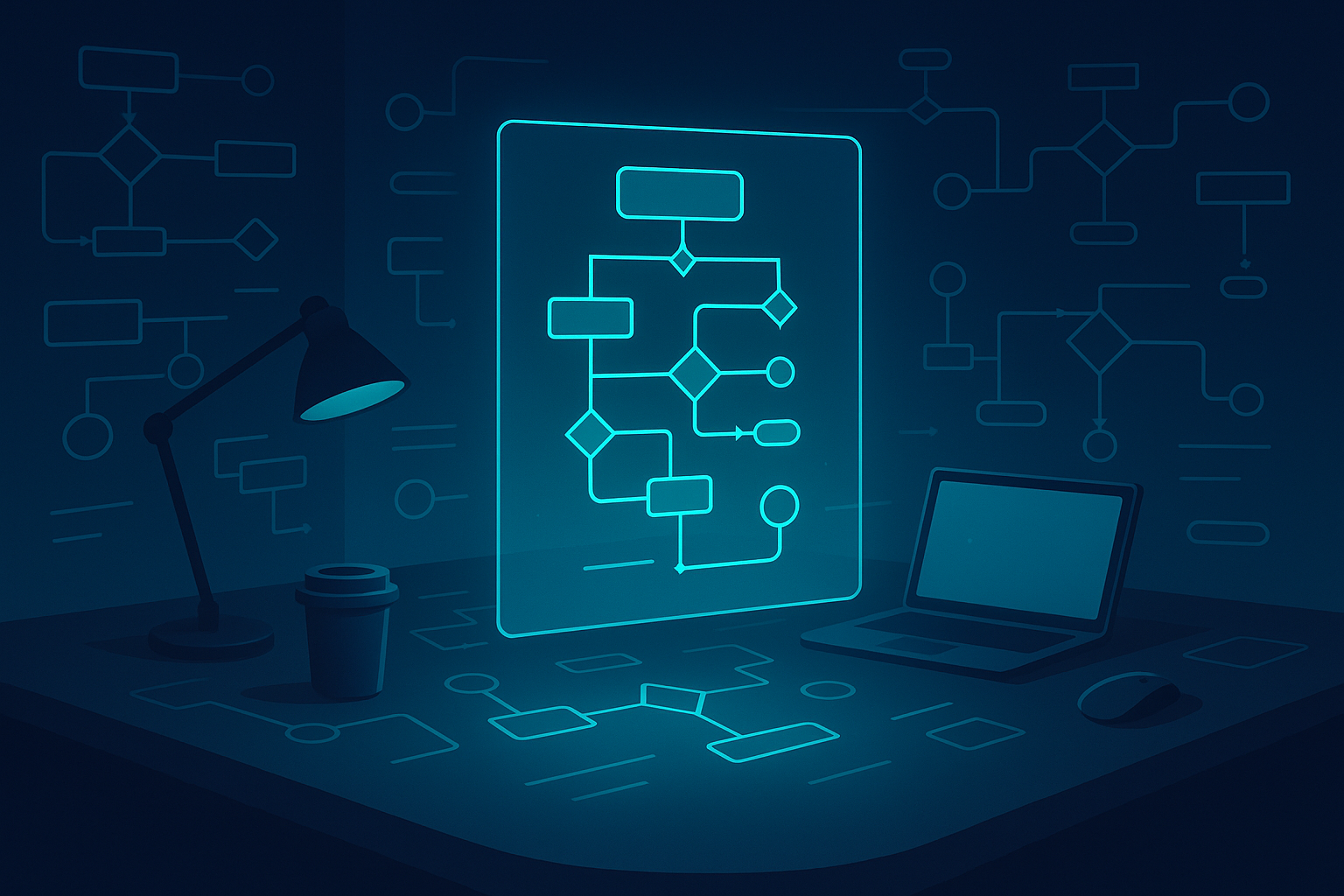
Step 1 – Define Your Prospect Journey & Success Metrics
Most automation failures start with unmapped journeys. Document how prospects move from discovery to close, identifying every interaction, decision point, and delay. Map current bottlenecks—where prospects drop off, manual work slows progress, errors create inconsistencies.
Define vertical-specific success metrics: Real estate targets lead-to-qualified time under 2 hours, show-to-close conversion of 10-15%, days-to-close under 7. Recruitment aims for application-to-interview time under 24 hours, interview-to-offer conversion above 15%. Fundraising seeks contact-to-meeting conversion exceeding 20%, meeting-to-investment rates above 15%. Hospitality targets inquiry-to-booking under 2 hours, abandonment recovery above 20%.
Implementation Checklist: Document every prospect step from awareness to close → Identify 3-5 bottlenecks → Define 3-5 key success metrics → Estimate current cost-per-stage → Set ROI target (40% faster, 30% better conversion, 20 hours/week saved)
Step 2 – Design Your Funnel Stages & Automation Triggers
Break journeys into distinct stages (Awareness, Interest, Consideration, Intent, Purchase, Retention) and identify automation opportunities for each. List manual tasks: lead capture, scoring, outreach, scheduling, document generation, follow-ups, internal alerts. Prioritize by impact and feasibility.
Design trigger rules with specific logic. Real estate example: “Prospect fills property inquiry form” triggers budget/timeline evaluation—if budget matches available properties AND timeline under 30 days, send matching properties plus showing scheduler; otherwise, activate saved search alerts. Define similar conditional logic for each automation opportunity.
Step 3 – Audit & Integrate Your Tech Stack
Inventory current tools by vertical: Real estate uses CRM (Salesforce, Follow Up Boss), lead sources (Zillow, Realtor.com), email, calendar, SMS, documents. Recruitment employs ATS (Greenhouse, Lever), job boards (LinkedIn, Indeed), scheduling tools. Map integration gaps where manual data entry occurs.
Choose integration strategy: native integrations (easiest, most reliable), API connections (requires development), middleware like Zapier (quick, moderate cost), or industry-specific solutions like Vynta AI (pre-built integrations, most reliable for mid-market). Prioritize core CRM/ATS/PMS plus email/SMS integration first.
Step 4 – Create Content & Messaging Frameworks
Develop stage-specific messaging by vertical. Real estate awareness: “Thanks for your inquiry! Here are 5 properties matching your criteria plus market insights for [location].” Consideration stage: “You’ve viewed 3+ similar homes. Let’s schedule a showing. [One-click calendar link].” Create 2-3 variants per message for A/B testing.
Include personalization tokens (names, company details, property preferences, job titles) and ensure compliance with CAN-SPAM (email), TCPA (SMS), and GDPR requirements. Plan multi-channel strategy identifying which messages send via email, SMS, phone, or chat.
Step 5 – Implement Lead Scoring & Qualification Logic
Define qualification criteria using BANT framework: Budget (loan pre-approval for real estate, fund size for fundraising), Authority (decision-maker versus influencer), Need (actual requirement for solution), Timeline (move-in date, start date, investment timeline).
Build scoring models assigning points to behaviors and attributes. Explicit scoring: form submission (+10), email open (+2), demo attendance (+25), proposal download (+15). Implicit scoring: company size match (+20), decision-maker title (+15), budget alignment (+20), timeline under 60 days (+15). Set qualification thresholds—50+ points equals sales-ready, 30-50 stays in nurture, under 30 receives long-term communication.
Step 6 – Build & Test Automation Workflows
Start with highest-impact workflows addressing biggest bottlenecks. Use visual workflow builders in modern platforms—no coding required. Build step-by-step: trigger (form submission), conditions (score thresholds), actions (send email, update status), delays (timing), branches (response handling).
Test internally using sample leads, then pilot with a controlled group before full rollout. Monitor key metrics and iterate based on real-world results to ensure your automated funnel delivers measurable ROI and operational efficiency.
Frequently Asked Questions
How do automated funnels improve lead response times compared to manual processes in industries like real estate and hospitality?
Automated funnels enable immediate engagement by instantly qualifying and responding to leads or reservation requests, eliminating delays common in manual follow-ups. This rapid response reduces lead drop-off—such as the 70% prospect loss in real estate within the first hour—and minimizes reservation abandonment in hospitality by ensuring timely communication around the clock.
What are the key differences between traditional marketing automation and the logic-based automated funnels described for SMEs?
Unlike traditional marketing automation that pushes all prospects through fixed, time-based sequences, logic-based automated funnels use behavior-driven triggers and qualification criteria to tailor each prospect’s journey. This approach ensures relevant, timely actions that reflect real engagement and industry-specific needs, improving conversion rates and operational efficiency for SMEs.
In what ways can automated funnels help recruitment firms reduce candidate screening time and prevent losing top talent?
Automated funnels streamline candidate screening by instantly assessing qualifications against job criteria and prioritizing high-potential candidates for recruiter attention. This reduces time-to-hire and keeps top talent engaged with timely communication, preventing them from accepting competing offers during lengthy manual screening processes.
How can businesses identify which parts of their current sales or engagement funnel would benefit most from automation?
Businesses should analyze funnel stages with the highest drop-off rates, longest response times, or repetitive manual tasks—such as lead qualification, candidate screening, investor follow-up, or reservation confirmations. These bottlenecks indicate where automation can improve speed, consistency, and scalability, delivering measurable ROI without expanding headcount.
About The Author
Anas Moujahid is the chief contributing writer & Operations Director for the Vynta AI Blog, where he turns cutting-edge AI automation into measurable business outcomes for mid-market companies.
Vynta AI designs enterprise-grade AI agents that augment rather than replace people—freeing teams to focus on higher-value work while the bots handle the busywork.
We specialise in four service-heavy verticals where AI can move the revenue needle fast: real estate, recruitment, fundraising and hospitality.
Anas started his career architecting AI and automation systems; today he leads operations at Vynta AI, making sure every deployment lands real-world ROI—whether that’s more booked viewings for estate agents, faster placements for recruiters, warmer investor pipelines for fundraisers or happier guests for hotels and restaurants.
Vynta AI delivers results by:
- Building industry-specific agents pre-trained on real-world workflows—no generic chatbots here.
- Integrating seamlessly with existing CRMs, ATSs, PMSs and fundraising platforms—zero rip-and-replace.
- Measuring success in business KPIs (lead-to-close rates, time-to-hire, donor retention, RevPAR) not vanity metrics.
- Providing transparent implementation plans so clients know exactly what to expect, when and why.
- Pairing every AI agent with human-in-the-loop controls to keep quality, compliance and brand voice on point.
Since launch, Vynta AI has helped agencies slash lead qualification time by up to 70 %, recruitment firms cut screening hours in half, fundraising teams triple investor touchpoints and hospitality brands lift guest satisfaction scores by double digits—all while keeping human expertise firmly in the loop.
Anas writes with the same ethos that drives Vynta AI: outcome-focused, jargon-free and grounded in real business value. Expect data-backed insights, practical implementation guides and a clear-eyed view of what AI can—and can’t—do for your organisation.