
Key Takeaways
- A restaurant management app centralizes reservations, operations, finances, and guest experiences in one platform.
- These apps offer more comprehensive features than traditional point-of-sale systems.
- They manage the entire guest journey from booking to post-visit feedback.
- Using a restaurant management app can streamline restaurant operations and improve customer satisfaction.
Table of Contents
- What Is a Restaurant Management App, and Why Does It Matter?
- Core Features Every Restaurant Management App Must Have
- How to Choose the Right Restaurant Management App for Your Hospitality Business
- All-in-One vs. Modular: Comparison of Restaurant Management App Architectures
- Real-World Use Cases: How Top Operators Use Restaurant Management Apps for Competitive Advantage
- Troubleshooting and Solving Restaurant App Implementation Challenges
- Optimizing Guest Experience and Revenue with AI Automation in Restaurant Management Apps
The Complete Guide to Choosing an App for Restaurant Management in 2025
A restaurant management app is a centralized digital solution that orchestrates reservations, operations, finances, and guest experiences from a single platform. Unlike traditional point-of-sale systems that handle transactions, these comprehensive tools manage the entire guest journey, from initial booking through post-visit feedback collection.
Modern hospitality faces unprecedented complexity: multi-channel ordering (dine-in, takeout, delivery), hybrid dining models, and chronic staff turnover rates exceeding 40% annually. Legacy systems can’t keep pace with these operational demands, forcing managers to juggle multiple disconnected tools that create data silos and service gaps.
Measurable Impact: Properties using integrated restaurant management apps report median operational efficiency gains of 12-18%, guest satisfaction score improvements up to 20%, and Revenue per Available Table (RevPAT) increases of 8-15% within the first quarter of implementation.
The distinction between a POS app and a comprehensive app for restaurant management lies in scope: while POS handles transactions, management apps encompass inventory tracking, staff scheduling, guest relationship management, and predictive analytics that drive strategic decisions rather than just processing payments.
Core Features Every Restaurant Management App Must Have
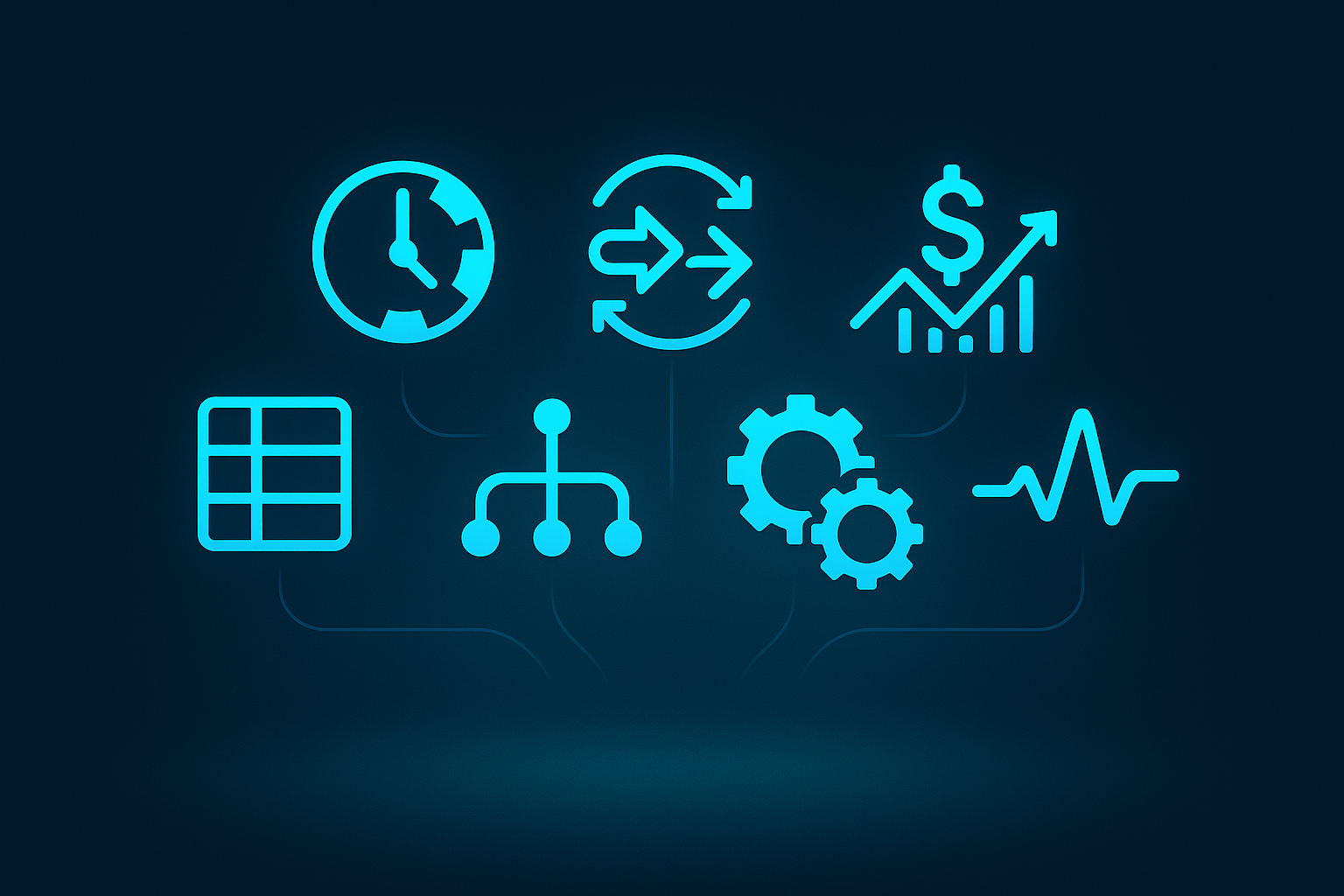
Seven non-negotiable capabilities separate effective restaurant management platforms from basic operational tools. Each feature directly impacts either revenue generation or cost reduction, the dual pillars of hospitality profitability.
Reservation & Waitlist Management must include real-time availability updates, comprehensive guest history access, and automated confirmation sequences. Table/Floor Management requires drag-and-drop floor planning with peak-time optimization algorithms. Inventory & Cost Control demands real-time tracking, customizable par levels, and intelligent low-stock alerts that prevent both stockouts and overordering.
Staff Scheduling & Payroll Integration should automate schedule creation based on historical demand patterns while enabling mobile shift swaps. Integrated Point-of-Sale & Payments must support table-side ordering, split payments, and seamless tip processing. CRM & Guest Engagement capabilities should build detailed guest profiles, track loyalty metrics, and trigger review prompts at optimal moments.
AI-Powered Features to Watch in 2025: Predictive demand forecasting, dynamic pricing recommendations, and sentiment analysis of guest feedback are becoming standard rather than premium features. However, the best implementations keep human staff in control of final decisions, AI suggests, humans decide.
Analytics & Reporting must deliver custom dashboards, real-time profitability insights, and KPI alerts that enable proactive rather than reactive management. For boutique hotels and upscale restaurants, these features directly correlate with the ability to maintain personalized service while scaling operations efficiently.
How to Choose the Right Restaurant Management App for Your Hospitality Business
Successful app selection follows a systematic five-step process that prioritizes measurable business outcomes over feature checklists. Start by mapping your unique operational requirements: hybrid dining models, event hosting capabilities, and specific upselling opportunities that define your revenue strategy.
Match app capabilities to quantifiable business goals. Rather than seeking “better organization,” target specific metrics like reducing no-shows by 25% or increasing average check size by 15% through strategic upselling. Vet vendors for proven results with case studies showing percentage improvements in guest satisfaction, operational efficiency, and revenue per guest.
Assess integration compatibility with your existing technology stack, property management systems, accounting software, and marketing platforms. Xperience ensures seamless data flow between systems, eliminating manual data entry and reducing error rates that can negatively impact guest experiences.
Pilot Day Strategy: Run a controlled one-day trial during a typical service period. Measure specific metrics like order accuracy, table turnover time, and staff task completion rates. Compare these baseline numbers against your current system to quantify potential improvements before committing to full implementation.
Evaluate vendor transparency regarding implementation timelines, ongoing support availability, and product roadmap alignment with industry trends. The best restaurant management software providers offer detailed onboarding schedules and dedicated account management rather than generic customer service.
All-in-One vs. Modular: Comparison of Restaurant Management App Architectures
All-in-one platforms consolidate reservations, POS, inventory, and analytics within a single dashboard, while modular approaches connect specialized best-in-class applications through API integrations. Each architecture serves different operational philosophies and business scales. Learn how innovative dining group solutions leverage these approaches to optimize their operations.
| Criteria | All-in-One Platform | Modular Approach | Best for Small Restaurants | Best for Boutique Hotels |
|---|---|---|---|---|
| Feature Depth | Broad, standardized | Specialized, customizable | ✓ | ✓ |
| Integration Risk | Minimal | Higher complexity | ✓ | |
| Scalability | Limited customization | Highly flexible | ✓ |
All-in-one solutions excel in deployment speed and data consistency, eliminating integration headaches that plague multi-vendor setups. However, they may sacrifice feature depth in specialized areas like advanced inventory management or sophisticated guest segmentation. Modular approaches offer best-in-class functionality in each domain but require careful API management and higher technical expertise during implementation.
| Criteria | All-in-One Platform | Modular Approach |
|---|---|---|
| Implementation Speed | 2-4 weeks typical rollout | 6-8 weeks with integration testing |
| Feature Specialization | Good across all functions | Excellent in specific domains |
| Data Consistency | Native unified reporting | Requires careful synchronization |
| Scalability Cost | Predictable per-location pricing | Variable based on module selection |
| Vendor Management | Single support relationship | Multiple vendor coordination required |
For boutique hotels prioritizing personalized guest experiences, all-in-one platforms typically provide sufficient functionality with lower operational complexity. Multi-unit restaurant groups often benefit from modular approaches that allow specialized optimization for different service formats, quick service, casual dining, and fine dining, within the same organization. Learn more about restaurant-reputation-management to see how these strategies can improve your establishment’s performance.
Real-World Use Cases: How Top Operators Use Restaurant Management Apps for Competitive Advantage

Three documented implementations demonstrate how strategic app for restaurant management deployment translates into measurable competitive advantages across different hospitality segments.
A 45-room boutique hotel in Charleston increased guest satisfaction scores from 82% to 95% within six months by implementing automated personalized welcome messaging and intelligent reservation follow-ups. The system triggered customized pre-arrival communications based on guest history, dietary preferences, and celebration occasions, creating perceived personalization at scale while reducing front desk administrative time by 40%.
An upscale farm-to-table restaurant in Portland eliminated 23% of food waste through automated inventory reordering integrated with AI-driven menu profitability analysis. The system adjusted purchasing recommendations based on weather forecasts, local event calendars, and historical demand patterns, while identifying menu items with declining profit margins before they impacted monthly performance.
Actionable Upselling Technique: Properties achieve 35% higher upgrade acceptance rates by triggering personalized offers within 30 minutes of reservation confirmation, when guest excitement peaks but before alternative research begins. Mobile-optimized upgrade prompts with visual room comparisons convert 3x better than email-based offers.
A three-location hospitality group reduced scheduling administrative time by 60% while boosting staff engagement scores from 6.2 to 8.1 through mobile shift management and peer-to-peer schedule swapping. The system automatically generated optimal schedules based on predicted demand, individual availability preferences, and labor cost targets, then enabled staff to manage coverage needs independently through secure mobile interfaces.
For a deeper understanding of the evolution and best practices in this field, see this overview of restaurant management.
Troubleshooting and Solving Restaurant App Implementation Challenges
Four predictable barriers emerge during restaurant management software implementations, each with proven resolution strategies that minimize service disruption and accelerate staff adoption.
Connectivity issues plague properties with inconsistent WiFi coverage or legacy network infrastructure. Deploy offline-capable apps with automatic synchronization, establish dedicated network zones for critical operations areas, and maintain backup mobile hotspot capabilities during peak service periods. Most modern platforms cache essential data locally, enabling continued operation during brief network interruptions.
Integration complications arise when existing POS systems, accounting software, or delivery platforms lack robust API connectivity. Prioritize platforms offering pre-built integrations with your current technology stack, budget for potential middleware solutions, and establish clear data migration timelines that avoid busy service periods.
Soft Launch Protocol: Implement new systems during historically slow seven-day periods with parallel operation alongside existing processes. Train two staff “digital champions” per shift who can troubleshoot common issues and coach colleagues, reducing management intervention by 70% during the transition period.
Staff adoption resistance typically stems from inadequate training rather than technology aversion. Create role-specific training modules lasting 15-20 minutes maximum, establish micro-incentives for early feature adoption, and demonstrate immediate personal benefits, reduced manual tasks, easier schedule management, or simplified order processing, rather than abstract operational improvements.
For more on how emerging technology is shaping the restaurant industry, see this NIST report on restaurant technology.
Optimizing Guest Experience and Revenue with AI Automation in Restaurant Management Apps
AI automation enhances rather than replaces the personal hospitality touch through intelligent task prioritization, predictive guest preference matching, and strategic upselling timing that human staff can execute with greater precision and impact.
Measurable business outcomes from AI-enhanced apps for restaurant management include median guest satisfaction score improvements of 18% within the first quarter, revenue per guest increases of 2-4x through targeted upselling recommendations, and labor cost reductions of 15-20% via dynamic scheduling that matches staffing levels to predicted demand patterns.
Implementation requires 2-4 weeks for full deployment in boutique operations, with human-in-the-loop controls ensuring service standards remain consistent. AI suggests optimal reservation spacing during peak periods, identifies guests likely to appreciate specific menu recommendations based on ordering history, and alerts staff to potential service recovery opportunities before negative experiences escalate.
Vynta Client Results: A boutique hotel restaurant achieved 30% reduction in reservation no-shows through intelligent reminder sequencing, 25% increase in wine pairing orders via preference-based suggestions, and 40% increase in guest satisfaction scores within the first quarter of implementation.
For tailored solutions or to discuss your unique operational needs, contact the Vynta team.
Frequently Asked Questions
What are the key differences between a traditional point-of-sale system and a comprehensive restaurant management app?
A traditional point-of-sale (POS) system primarily handles payment processing and basic sales transactions, while a comprehensive restaurant management app centralizes reservations, inventory, staff scheduling, guest experience, and analytics in one platform. This broader scope enables restaurants to manage the entire guest journey and optimize operations beyond just checkout.
Which core features should I look for when choosing a restaurant management app for my business?
Look for features like reservation and waitlist management, inventory tracking, staff scheduling, guest relationship management, integrated analytics, and marketing tools. These capabilities directly impact revenue growth and cost control by streamlining operations and enhancing personalized guest service.
How can AI-powered features in restaurant management apps improve operational efficiency and guest experience?
AI-powered features automate tasks such as demand forecasting, personalized upselling, and no-show prediction, allowing staff to focus on delivering exceptional service. This leads to optimized table turnover, reduced operational costs, and tailored guest interactions that boost satisfaction and loyalty.
What measurable benefits can restaurants expect after implementing an integrated management app?
Restaurants typically see operational efficiency gains of 12-18%, guest satisfaction improvements up to 20%, and Revenue per Available Table (RevPAT) increases between 8-15% within the first quarter. These results stem from streamlined workflows, better resource allocation, and enhanced guest engagement enabled by integrated management solutions.
About The Author
Anas Moujahid is the chief contributing writer & Operations Director for the Vynta Blog, where he turns cutting-edge AI automation into measurable business outcomes for mid-market companies.
Vynta designs enterprise-grade AI agents that augment rather than replace people, freeing teams to focus on higher-value work while the bots handle the busywork.
We specialise in four service-heavy verticals where AI can move the revenue needle fast: real estate, recruitment, fundraising and hospitality.
Anas started his career architecting AI and automation systems; today he leads operations at Vynta, making sure every deployment lands real-world ROI, whether that’s more booked viewings for estate agents, faster placements for recruiters, warmer investor pipelines for fundraisers or happier guests for hotels and restaurants.
Vynta delivers results by:
- Building industry-specific agents pre-trained on real-world workflows, no generic chatbots here.
- Integrating seamlessly with existing CRMs, ATSs, PMSs and fundraising platforms, zero rip-and-replace.
- Measuring success in business KPIs (lead-to-close rates, time-to-hire, donor retention, RevPAR) not vanity metrics.
- Providing transparent implementation plans so clients know exactly what to expect, when and why.
- Pairing every AI agent with human-in-the-loop controls to keep quality, compliance and brand voice on point.
Since launch, Vynta has helped agencies slash lead qualification time by up to 70 %, recruitment firms cut screening hours in half, fundraising teams triple investor touchpoints and hospitality brands lift guest satisfaction scores by double digits, all while keeping human expertise firmly in the loop.
Anas writes with the same ethos that drives Vynta: outcome-focused, jargon-free and grounded in real business value. Expect data-backed insights, practical implementation guides and a clear-eyed view of what AI can, and can’t, do for your organisation.