

app creating company
Choosing an app creating company affects more than the appearance of a digital product. It influences how quickly your team can test a workflow, how reliably staff and customers complete key tasks, and how much maintenance costs as usage grows. A polished interface has limited value if leads remain unqualified, candidate records are incomplete, donor follow-up is delayed, or guest requests still depend on manual handoffs.
Key Takeaways
- Choosing an app creating company affects more than the appearance of a digital product.
- It influences how quickly your team can test a workflow, how reliably staff and customers complete key tasks, and how much maintenance costs as usage grows.
- A polished interface has limited value if leads remain unqualified, candidate records are incomplete, donor follow-up is delayed, or guest requests still depend on manual handoffs.
This guide explains what app development companies provide, where no-code and AI tools fit, and which business measures should shape the decision. It also draws a clear distinction between a general app development provider and an AI automation partner such as Vynta AI, which focuses on connecting intelligent agents to sales, marketing, and operational workflows rather than building consumer apps for every use case.
What is an app creating company?
An app creating company designs, builds, tests, launches, and maintains mobile or web applications for a client. Its services may cover product planning, interface design, front-end development, backend services, databases, API connections, quality assurance, security, analytics, and app store deployment. Some providers write custom code; others combine low-code platforms, AI-assisted development, and reusable components.
The right delivery model depends on the application’s purpose and risk. A simple internal request form, lead tracker, or appointment tool may suit an app builder no-code platform. A customer-facing product with payment processing, sensitive records, complex permissions, or high traffic needs stronger engineering oversight. Free tools can support an early prototype, but production software still needs authentication, data protection, error monitoring, backups, accessibility, and a release process.
Vynta AI assesses software by the operational job it must complete. A real estate team may need lead routing and property inquiry follow-up. A recruitment firm may need candidate intake, screening workflows, and status visibility. A fundraising organization may need donor communication and campaign reporting, while a hospitality business may prioritise guest requests and service coordination. Vynta’s focus is AI agents and workflow automation that connect with existing systems, not generic app development for every category.
Key insight: Building an app is only one part of delivery. User adoption, workflow fit, data governance, support, and total ownership cost determine whether the product creates business value.
What are the benefits of working with an app creating company?
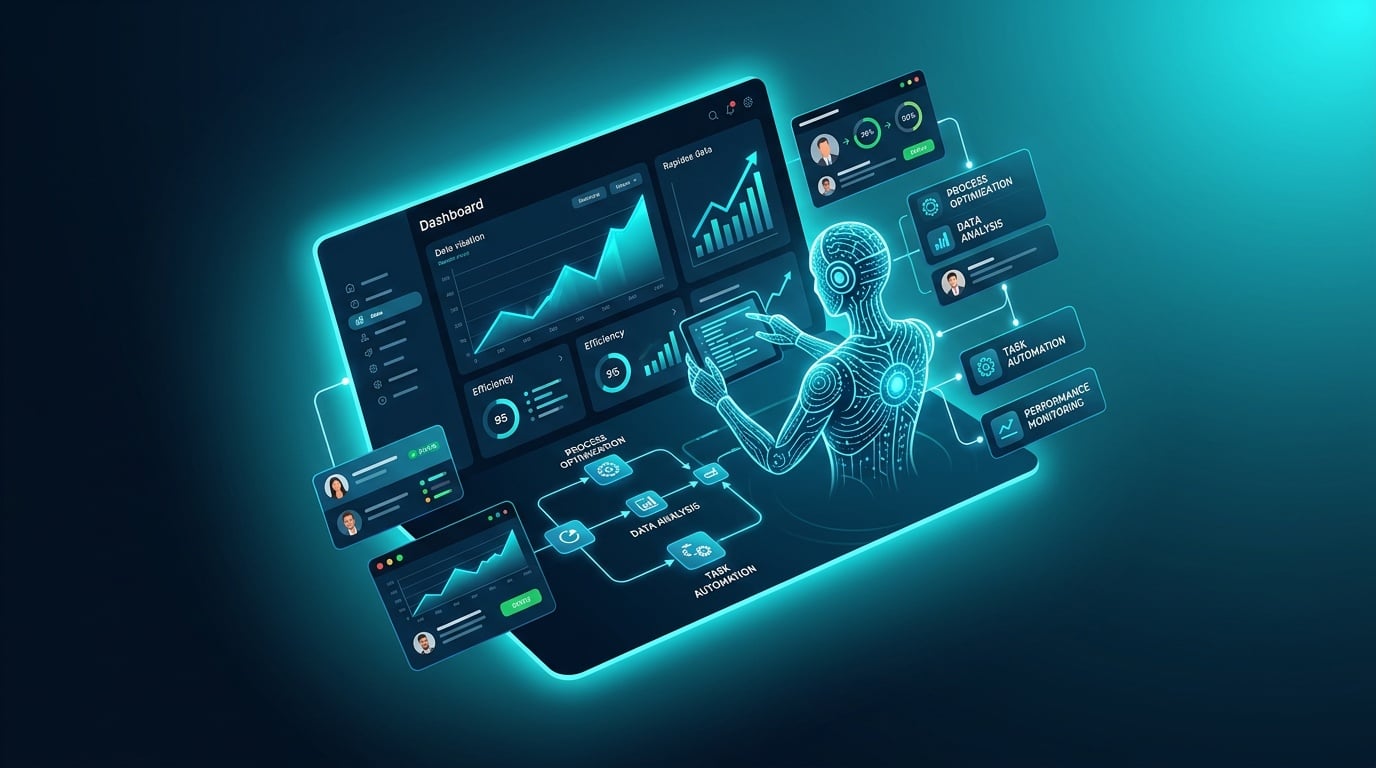
A capable development partner turns a business process into a usable digital product with defined success measures. That can reduce pressure on internal staff who lack product management, interface design, or software engineering experience. The strongest projects begin with process mapping and user interviews, then move through a focused minimum viable product, testing, launch, and performance review.
Speed is one possible benefit. An app builder free or low-cost prototype can test navigation, forms, and workflow logic before a larger investment. AI-assisted tools can generate screens and basic functions quickly, but fast production does not prove demand. Research cited by Base44 describes a customer reaching a first user after 99 days. The gap between making an application and building regular usage deserves its own plan.
Specialist support can also reduce operational risk. A no-code app builder free plan may work for a pilot with limited records and a small user group. Live use can expose problems with permissions, database queries, integrations, notifications, and mobile performance. AI app builders may add token or credit limits, making monthly costs harder to forecast. A professional team should define usage assumptions, testing procedures, monitoring, and escalation before customers depend on the product.
Measure the business result, not just the build. Relevant indicators include lead response time, completed applications, booked appointments, candidate submission speed, donor follow-up activity, guest request resolution, support volume, retention, and revenue per active account. Download volume can mislead: an app may attract thousands of downloads but few paying or returning users.
Outsourcing has limits. No provider can guarantee adoption, product-market fit, or immediate revenue. Privacy requirements, intellectual property, tax obligations, and cross-border data handling may require qualified professional advice. Before development starts, confirm ownership of the source code, design files, domain, database, integrations, and customer data. Document maintenance terms, hosting charges, third-party subscriptions, usage fees, and the process for moving the product to another team.
How should you choose an app creating company?
Choosing an app creating company starts with the business problem, not the technology stack. Record the users, essential tasks, existing systems, and measurable outcome before speaking with a provider. A real estate agency may need faster lead qualification, while a recruitment firm may prioritise candidate screening and placement visibility. Fundraising teams may need structured investor outreach, and hospitality operators may focus on guest requests. This context helps a provider recommend custom development, low-code delivery, AI-assisted workflows, or a staged combination.
Review the provider’s discovery process. It should cover process mapping, stakeholder interviews, user roles, data fields, integration requirements, privacy obligations, and acceptance criteria. Ask for a product brief defining the minimum viable product, launch assumptions, excluded features, and measures of success. A proposal focused only on screens can hide difficult work involving authentication, payment processing, permissions, analytics, APIs, databases, and mobile operating systems.
How do you evaluate platform fit and scalability?
An app builder no-code platform can suit an internal dashboard, intake form, scheduling workflow, or limited pilot. A free ai app builder may help a team turn an idea into a clickable prototype without a large initial engineering budget. Before production use, confirm data export, source code access, hosting control, user limits, API availability, backups, audit logs, and accessibility support. A platform that works for ten pilot users may need redesign when records, permissions, or transaction volume increase.
Ask how costs change as adoption grows. A free plan may restrict storage, automation runs, publishing, integrations, or team permissions. AI services may charge through credits or token consumption, which makes recurring costs less predictable as activity rises. Request a 12-month cost model covering hosting, licences, model usage, monitoring, maintenance, app store fees, payment processing, security reviews, and change requests. That figure gives a clearer basis for comparison than the initial build estimate.
What delivery governance and support should you expect?
Before signing, establish ownership and accountability. The agreement should identify ownership of source code, design assets, domains, databases, prompts, documentation, customer records, and third-party accounts. Confirm testing for performance, security, device compatibility, failed integrations, and data recovery. Ask who approves releases, how defects are prioritised, and how quickly urgent incidents receive attention. A reliable partner should provide deployment documentation and a handoff plan if your internal team or another provider takes over maintenance.
Assess whether the team understands adoption after launch. Building an application does not guarantee downloads, paid subscriptions, completed forms, or repeat usage. Request a launch plan covering onboarding, analytics events, user feedback, training, support channels, and activation tests. At Vynta AI, our enterprise AI automation work is grounded in operational measures such as response time, conversion, case completion, and staff hours saved. Choose a partner that links each feature to a business measure and explains when custom engineering is needed.
Key insight: The best provider is not necessarily the one promising the fastest prototype. It is the team that explains platform limits, total ownership cost, data responsibilities, adoption requirements, and the route from a controlled pilot to dependable production software.
Frequently Asked Questions
What is the best app development company for my business?
The right partner is one that understands your workflow, users, compliance needs, and commercial goals. Look for experience with your industry, a documented discovery process, clear ownership terms, transparent pricing, and post-launch support. Ask how the team measures success beyond delivery. Useful measures may include shorter lead response times, faster candidate processing, more completed donor actions, or quicker guest request resolution. A provider that recommends fewer features with a clear business case may be a better fit than one that promises a large feature list without adoption or maintenance planning.
Can I build an app without coding in 2026?
Yes. A no-code platform or AI-assisted builder can create prototypes, internal tools, forms, dashboards, and basic workflow applications without traditional programming. This approach works best when requirements are straightforward, data volume is limited, and integrations are standard. Technical review becomes more important for payment processing, sensitive information, complex permissions, custom algorithms, high traffic, or strict uptime expectations. Treat no-code delivery as a starting point when the application may grow beyond a controlled pilot.
Are free AI app builders reliable for production apps?
Free tools can be useful for validating a concept, testing user flows, or demonstrating an internal process. Production readiness depends on capabilities that free plans may limit, including data export, authentication, backups, audit logs, monitoring, support, integration access, and usage capacity. Review the provider’s pricing terms before launch, especially if charges increase with credits, tokens, storage, automation runs, or active users. Never place sensitive customer or employee data into a platform until security controls and contractual responsibilities are clear.
How do I get my first users after building an app?
Start user acquisition before development ends. Identify a narrow audience, recruit design partners, test onboarding with real users, and define the first action that demonstrates value. Use direct outreach, existing customer relationships, industry communities, referral programs, and targeted content instead of relying only on an app store listing. Track activation, retention, completed tasks, support requests, and paid conversion. Downloads indicate interest, while repeated usage shows whether the product solves a meaningful problem.
What are the hidden costs of no-code app builders?
Common costs include premium integrations, higher user tiers, data storage, usage-based AI fees, payment processing, custom domains, security reviews, app store accounts, migration work, and ongoing maintenance. Also account for staff training, customer support, analytics configuration, legal advice, tax administration, and future redevelopment if the platform cannot support growth. Request a full ownership estimate before committing.