

ai workflow automation platform
What AI Workflow Automation Platforms Actually Do (And Why They Matter for Mid-Market Teams)
An ai workflow automation platform connects your business systems, applies AI decision-making to complex multi-step processes, and executes tasks without human intervention. The result: your team focuses on high-value work while AI handles repetitive, rule-based operations at scale.
Beyond Simple Task Automation: How AI Workflow Platforms Handle Complexity
Traditional automation executes fixed rules. AI workflow platforms make contextual decisions: routing a lead based on behavior signals, prioritizing a candidate based on skills gaps, or adjusting a guest offer based on booking history. That distinction separates genuine business transformation from basic scripting.
Why Traditional Automation Falls Short for Scaling Operations
Robotic Process Automation (RPA) breaks when processes change. It handles structured data well but collapses with unstructured inputs–a PDF proposal, a conversational email, an inconsistent CRM entry. AI workflow platforms process these inputs intelligently, adapt to variation, and hold their accuracy as your operation scales. RPA was built for stability; AI workflow automation is built for reality.
AI Workflow Automation for Your Industry: Real Examples Across Real Estate, Recruitment, Fundraising, and Hospitality
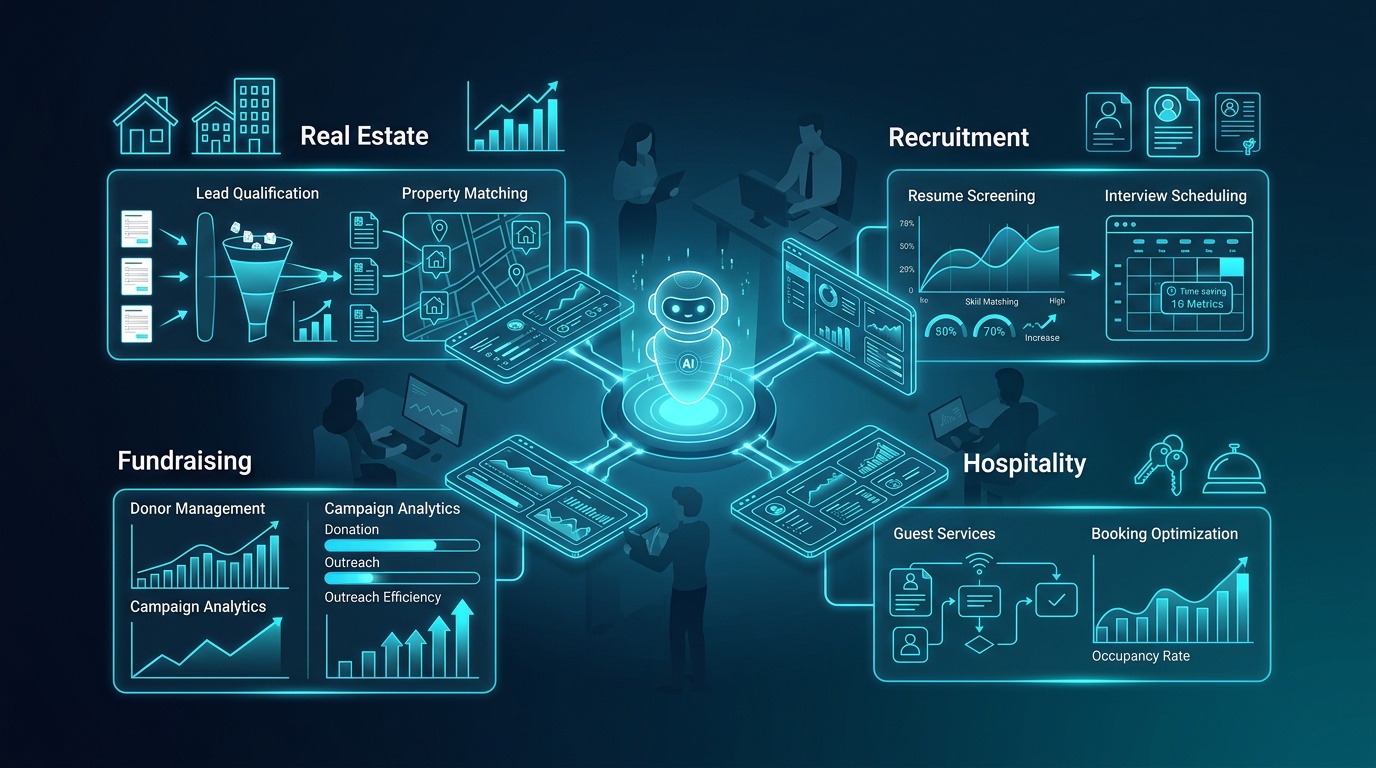
Real Estate: Automating Lead Qualification and Property Matching Workflows
A real estate agency receives 200 inquiry forms monthly. An AI workflow automation platform scores each lead by budget, timeline, and location preference, enriches the record with public data, and routes high-intent leads to senior agents within minutes. Agencies using this approach report stronger lead-to-appointment conversion rates, with qualified pipelines growing through intelligent qualification and fast engagement. See how Agentic Systems for Real Estate apply AI-driven property matching and lead routing built specifically for this industry.
Recruitment: Candidate Screening and Interview Scheduling at Scale
Recruitment firms using ai workflow automation tools reduce time-to-shortlist from days to hours. The platform parses resumes, scores candidates against role criteria, sends personalized outreach, and books interviews directly into consultant calendars. Placement rates improve because consultants spend time on relationship-building rather than administrative screening. Learn how Agentic Systems for Recruitment optimize hiring workflows with AI-powered automation.
Fundraising: Investor Outreach and Donor Management Automation
Systematic donor engagement is where many fundraising organizations quietly lose revenue. The AI-Powered Fundraising Platform automates prospect research, personalizes outreach sequences based on donor history, and triggers follow-up actions based on engagement signals. Relationships stop falling through the cracks. The spreadsheet-and-memory approach gets replaced with a process that scales without adding development staff.
Hospitality: Guest Experience Optimization and Reservation Intelligence
A boutique hotel using AI workflow automation sends pre-arrival personalization based on guest preferences, triggers upsell offers at optimal booking windows, and automates no-show follow-up sequences. Higher revenue per guest. Consistently positive reviews. No added front-desk workload. Discover how Vynta AI Agents for Hospitality streamline guest engagement and boost revenue through intelligent automation.
| Industry | Automated Workflow | Key Metric Improvement |
|---|---|---|
| Real Estate | Lead scoring and routing | 3x qualified pipeline growth |
| Recruitment | Resume screening and scheduling | 60% faster hiring cycle |
| Fundraising | Donor outreach sequences | Improved donor retention rates |
| Hospitality | Upsell and no-show management | Increased revenue per guest |
How to Choose an AI Workflow Automation Platform: What Mid-Market SMEs Should Evaluate
Low-Code vs. Code-Based Platforms: Which Is Right for Your Team?
Platform Approach Comparison
Low-Code Platforms
- Faster deployment for non-technical teams
- Lower implementation cost upfront
- Suitable for standard business workflows
Code-Based Platforms (such as the n8n ai workflow builder)
- Greater customization for complex processes
- Higher initial setup investment
- Requires technical resources or vendor support
Key Features: AI Intelligence, Integration Depth, and Governance
Evaluate whether the platform offers native AI decision-making–not just API calls–pre-built connectors for your existing CRM and communication tools, and audit logging for compliance. Mid-market teams need enterprise-grade governance without enterprise-level IT overhead. If a vendor can’t show you the audit trail, that’s a red flag worth acting on before you sign.
Avoiding Vendor Lock-In and Hidden Scaling Costs
Watch for per-workflow pricing that balloons at scale, proprietary data formats that prevent migration, and AI features gated behind premium tiers. Request a total cost of ownership projection at two times your current workflow volume before signing. Learn more about business process automation to understand how these challenges can be mitigated.
The Cost Reduction Reality: What AI Workflow Automation Actually Saves
Labor Cost Reduction Through Intelligent Task Elimination
Organizations report a 20% to 28% reduction in operational labor costs after deploying an ai workflow automation platform across core business processes. That reduction comes from eliminating manual data entry, routing, follow-up, and reporting tasks–the work that currently consumes 30% to 40% of knowledge worker time without generating proportional value.
Building Your ROI Business Case: Metrics That Matter to CFOs
Start with your baseline: hours spent on manual workflows multiplied by average hourly labor cost. Apply a conservative 25% efficiency gain. Then factor in error-related rework costs, which typically run 10% to 15% of process time. Most mid-market teams reach payback within six to nine months on a properly scoped implementation. ROI projections are developed during the discovery and assessment phase and are not guaranteed outcomes. See more on workflow management to optimize your calculations.
Common AI Adoption Concerns (And What the Data Actually Shows)

Does AI Automation Replace Jobs or Change What People Do?
The evidence is consistent: AI workflow tools shift work rather than eliminate roles. Employees freed from manual tasks report higher job satisfaction and spend more time on client relationships and strategic decisions. In recruitment, hospitality, and real estate, the human relationship remains the differentiator. AI handles the operational scaffolding so your people can focus on the work that actually requires them.
Security, Compliance, and Data Governance in Mid-Market Environments
Evaluate platforms for SOC 2 compliance, data residency options, and role-based access controls. Any ai workflow automation tools handling donor data, candidate records, or guest PII must meet GDPR and CCPA standards. Reputable platforms provide compliance documentation before contract signature–if yours won’t, that’s your answer.
Getting Buy-In from Teams Skeptical About AI
Start with a workflow your team actively dislikes: manual follow-up emails, data entry between systems, or report compilation. Demonstrating a two-hour task completed in minutes builds internal credibility faster than any executive mandate. Win one workflow first. The rest follows from there.
Getting Started: Implementation Roadmap for Mid-Market Teams
Phase 1: Identifying High-Impact Workflows to Automate First
Target workflows that are high-frequency, rule-consistent, and currently consuming skilled staff time. Lead follow-up, candidate screening, donor acknowledgment, and reservation confirmation are strong starting points across Vynta’s four verticals. If the same task runs more than ten times a week and follows a predictable pattern, it’s a candidate for automation.
Phase 2: Building, Testing, and Refining Your Automation
Run parallel processes for the first two weeks: AI automation alongside your existing manual process. Compare output quality, catch edge cases, and refine decision logic before full deployment. This approach reduces risk and builds team confidence at the same time. You’re not replacing judgment–you’re validating it.
Phase 3: Scaling Across Departments and Maintaining Governance
Document every automated workflow in a central registry. Assign ownership, set review cycles, and monitor performance against your baseline metrics. A well-governed ai workflow automation platform compounds value over time as more processes are systematized and refined.
Success Metrics to Track from Day One
Establish your baseline before automation launches. Track time per workflow, error rates, and staff hours consumed by manual tasks. Post-deployment, monitor the same metrics weekly for the first 90 days. A properly implemented ai workflow automation platform shows measurable improvement within the first billing cycle–giving you the data to justify broader rollout before anyone asks for it.
Your Next Step: From Evaluation to Measurable Results
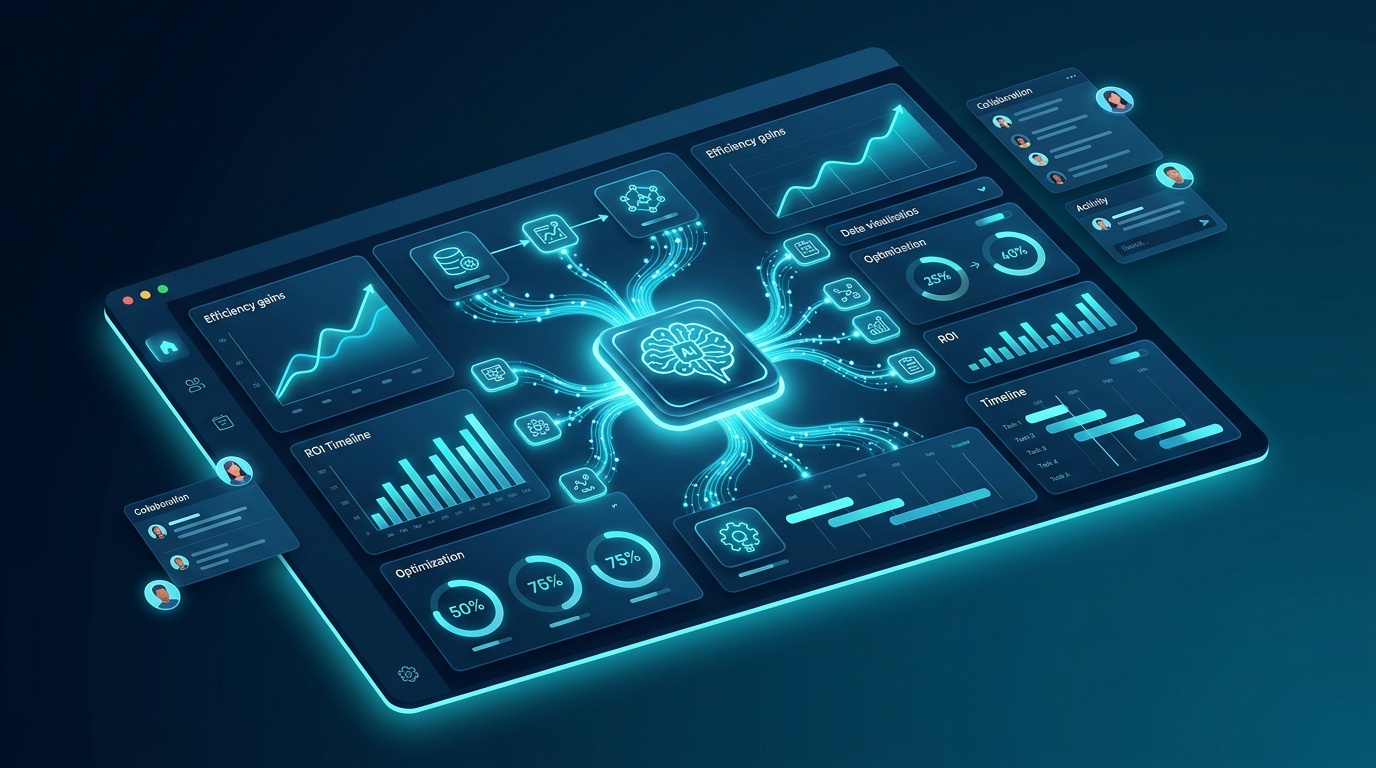
The case for an ai workflow automation platform in mid-market operations is no longer theoretical. The efficiency gains are documented, the ROI timelines are predictable, and the implementation path is clear for teams without dedicated AI resources.
What separates organizations that succeed with AI automation from those that stall is sequencing. Start with one high-frequency workflow. Measure the baseline. Deploy, compare, and refine. That first proof point funds internal credibility for broader rollout.
Across real estate, recruitment, fundraising, and hospitality, the pattern holds: teams that automate operational scaffolding redirect skilled staff toward relationship-driven work, and that shift compounds over time. A recruitment consultant who stops manually screening resumes closes more placements. A hotel manager whose reservation confirmations run automatically focuses on guest experience. A fundraising director using the AI-Powered Fundraising Platform stops losing donors to follow-up gaps and builds systematic, scalable donor relationships instead.
Industry-specific automation outperforms generic tools for a straightforward reason: the decision logic, integrations, and workflows are built for real processes–not adapted from a horizontal template designed for nobody in particular.
Three practical priorities as you move forward:
- Audit before you automate. Map your highest-frequency manual workflows and calculate the hours consumed weekly. This baseline becomes your ROI proof.
- Prioritize integration depth over feature count. A platform that connects cleanly to your CRM, calendar, and communication tools delivers more value than one with impressive AI features that sit outside your existing stack.
- Govern from day one. Document every workflow, assign ownership, and set review cycles. Automation that runs without oversight drifts from business reality over time.
The mid-market window for AI workflow adoption is open now. Organizations that build systematic automation into their operations in the next 12 months will carry structural efficiency advantages that are genuinely difficult for competitors to close. The ai workflow automation platform you choose today shapes the operational foundation you scale tomorrow.
Frequently Asked Questions
How do AI workflow automation platforms differ from traditional automation methods?
Traditional automation, like Robotic Process Automation (RPA), executes fixed, pre-defined rules. AI workflow automation platforms, by contrast, apply AI decision-making to complex processes, making contextual choices based on data and signals. This allows them to adapt and handle variations, moving beyond simple scripting to deliver genuine business transformation.
What measurable benefits can mid-market teams expect from deploying AI workflow automation?
Mid-market teams deploying AI workflow automation commonly report significant efficiency gains, often between 30% to 40%. Workers can complete tasks up to 35% faster, allowing teams to focus on higher-value work without needing additional headcount. This translates directly into improved productivity and operational flow.
Why do traditional automation solutions struggle with scaling business operations?
Traditional automation breaks down when business processes change or when faced with unstructured inputs. Solutions like RPA handle structured data well but cannot intelligently process things like a PDF proposal, a conversational email, or inconsistent CRM entries. AI workflow automation platforms overcome these limitations by processing varied inputs and adapting to changes as operations grow.
Can you provide a practical example of AI workflow automation in action for a specific industry?
Certainly. In real estate, an AI workflow automation platform can score incoming lead inquiries by budget and location, enrich records with public data, and route high-intent leads to senior agents within minutes. This approach leads to stronger lead-to-appointment conversion rates and a more qualified pipeline. For hospitality, Vynta AI Agents can automate pre-arrival personalization and upsell offers, increasing revenue per guest and improving guest reviews.
What are the key considerations for a mid-market business when choosing an AI workflow automation platform?
Mid-market SMEs should evaluate whether a platform offers native AI decision-making, not just API calls, and deep integration with existing systems. Consider low-code options for faster deployment or code-based for greater customization, depending on your team’s technical resources. It’s also important to watch for hidden scaling costs and potential vendor lock-in.
How do AI workflow automation platforms contribute to reducing a company's operational labor costs?
Organizations typically see a 20% to 28% reduction in operational labor costs after implementing AI workflow automation platforms. This reduction comes from intelligently eliminating manual data entry, routing, follow-up, and reporting tasks. These repetitive tasks often consume a significant portion of knowledge worker time, which can now be redirected to more strategic activities.