

ai reduce time to hire
The Hiring Bottleneck: Why “Faster” Is Not Always “Better” (And How AI Changes That)
AI can reduce time to hire by 40-60% through automated candidate screening, intelligent scheduling, and proactive talent sourcing. The key is balancing speed with quality to build high-performing teams efficiently.
The Cost of Slow Hiring: Missed Opportunities and Stagnant Growth
Extended recruitment cycles drain resources and create competitive disadvantages. Top candidates often accept offers from faster-moving companies within 10-14 days, while vacant positions cost organizations an average of $500 per day in lost productivity. Lengthy processes also damage employer brand perception, making future talent acquisition more difficult.
Beyond Speed: The Real Goal Is Efficient, Quality Hires
Speed alone won’t solve your hiring challenges. You need to accelerate the right hiring decisions. Quality candidates deserve streamlined experiences that respect their time while ensuring cultural fit and skill alignment. Smart automation removes administrative bottlenecks without sacrificing evaluation depth or candidate experience quality.
Key Insight: Companies using AI reduce time to hire while improving candidate quality scores by 25% through data-driven screening and personalized engagement strategies.
Introducing AI Agents: Your Strategic Partner in Talent Acquisition
Modern AI agents function as intelligent recruitment assistants, handling repetitive tasks while providing strategic insights. These systems analyze candidate profiles, predict success probability, and maintain continuous communication with prospects. Unlike basic automation tools, enterprise AI agents adapt to your specific hiring patterns and industry requirements.
This transforms recruitment from reactive posting-and-waiting to proactive talent pipeline development. Smart algorithms identify passive candidates, draft personalized outreach messages, and nurture relationships before positions open. You’ll have qualified talent pools ready for immediate engagement when hiring needs arise.
How AI Agents Streamline Recruitment Workflows to Cut Time-to-Hire
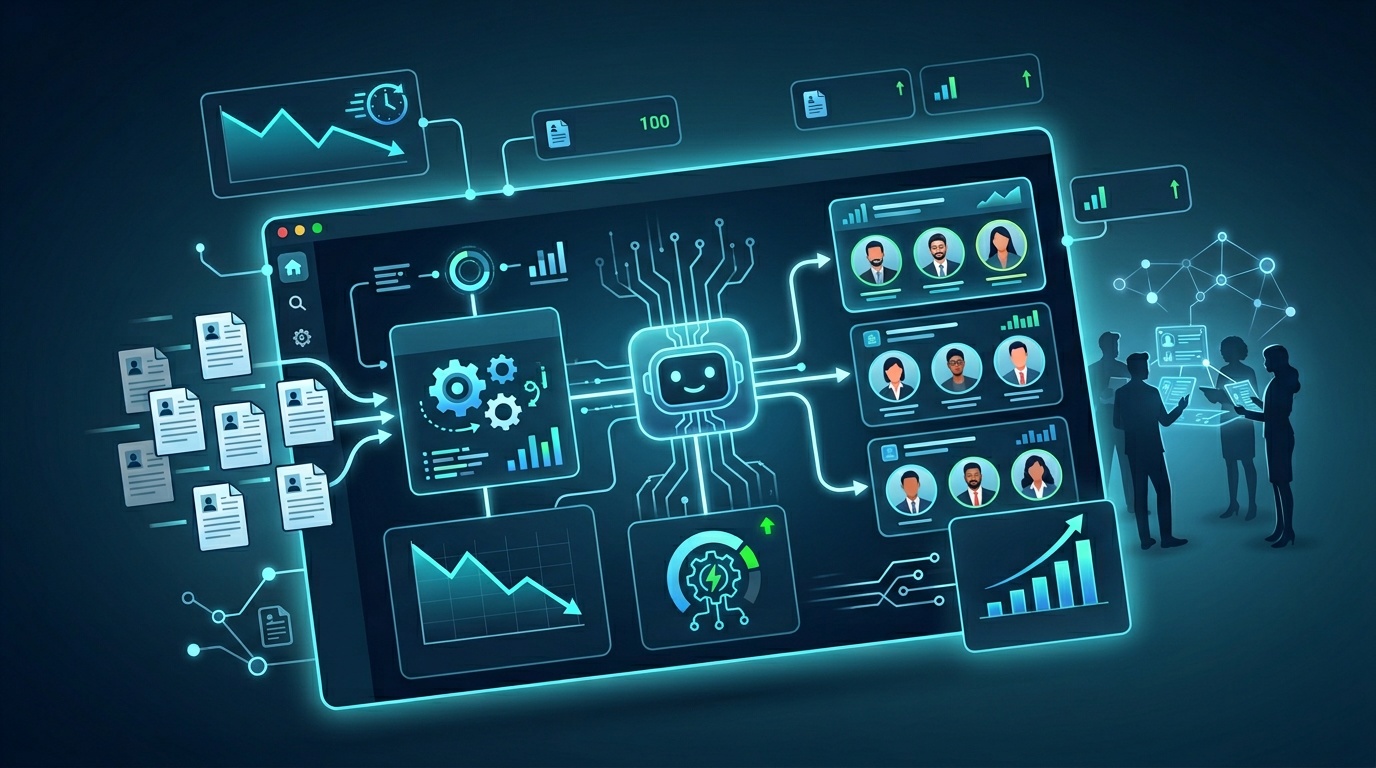
Automating Candidate Screening: From Resumes to Qualified Pools
AI-powered screening transforms mountains of applications into curated talent pools within hours. Advanced algorithms parse resumes, assess skill compatibility, and rank candidates based on your criteria. These systems evaluate technical competencies, experience levels, and cultural indicators simultaneously – eliminating the 23 hours per hire typically spent on manual resume reviews.
Intelligent screening goes beyond keyword matching. Machine learning models analyze career progression patterns, identify transferable skills, and detect high-potential candidates who might slip through traditional filters. This thorough evaluation ensures qualified applicants advance while maintaining consistent standards.
Intelligent Interview Scheduling: Eliminating Calendar Chaos
Automated scheduling coordination removes back-and-forth email exchanges that delay hiring decisions. AI agents sync with multiple calendars, propose optimal meeting times, and handle rescheduling requests instantly. This streamlined approach cuts scheduling time from days to minutes.
Proactive Candidate Outreach and Engagement: Reaching the Best Talent First
Strategic talent sourcing begins before job postings go live. AI systems identify passive candidates through professional networks, draft personalized outreach messages, and maintain ongoing relationship nurturing. This proactive approach builds talent pipelines that deliver qualified candidates immediately when positions open.
Engagement automation ensures consistent candidate communication throughout the process. Personalized updates, interview reminders, and feedback delivery happen automatically, maintaining positive candidate experiences while freeing recruiters to focus on relationship building and strategic decisions.
ATS Integration: Keeping Your Hiring Stack Connected
Modern AI recruitment tools integrate directly with existing applicant tracking systems, creating unified workflows without disrupting established processes. Data flows between platforms automatically, maintaining complete candidate records while providing advanced analytics that drive continuous improvement in hiring efficiency.
The Vynta AI Advantage: Enterprise AI for Measurable Recruitment Outcomes
Beyond Basic Automation: The Power of Industry-Specific AI Agents
Generic recruitment tools miss the nuanced requirements that define successful hires across different industries. Vynta AI’s enterprise agents understand sector-specific competencies, cultural expectations, and performance indicators that distinguish exceptional candidates from merely qualified ones. This specialized approach helps organizations AI reduce time to hire while maintaining rigorous standards for role-specific excellence.
Real Estate: Accelerating Property Manager and Agent Hires
Real estate recruitment demands candidates with local market knowledge, client relationship skills, and regulatory compliance understanding. Agentic systems for real estate evaluate licensing status, transaction history, and territory familiarity automatically, identifying agents positioned for immediate productivity. Property management searches prioritize maintenance coordination experience, tenant communication abilities, and financial management competencies.
Fundraising: Speeding Up the Search for Development Talent
Development professionals require unique combinations of relationship-building expertise, campaign management experience, and donor cultivation skills. AI-powered fundraising platforms analyze grant writing portfolios, fundraising track records, and nonprofit sector experience to identify candidates capable of driving revenue growth. This targeted screening accelerates hiring for development positions.
Hospitality: Finding Stellar Guest Service Professionals Faster
Hospitality recruitment focuses on service orientation, cultural adaptability, and operational flexibility. Vynta AI agents for hospitality evaluate customer service metrics, multilingual capabilities, and shift availability preferences to match candidates with specific property needs. This precision matching reduces turnover while keeping guest experience standards consistently high.
Measurable Impact: Vynta clients typically see 45% faster hiring cycles with a 30% improvement in first-year retention rates across multiple industry verticals through intelligent candidate matching.
Measuring Success: Key KPIs for AI-Driven Recruitment
Success metrics extend beyond speed improvements to include quality indicators and business impact measurements. Track time-to-productivity ratios, candidate satisfaction scores, and hiring manager approval ratings alongside traditional cycle time reductions. Monitor cost per hire decreases, offer acceptance rates, and source diversity improvements to demonstrate the full value of recruitment transformation.
Addressing Common Concerns: Quality, Bias, and AI Adoption
Will AI Sacrifice Candidate Quality for Speed?
Quality preservation remains the top priority in AI-driven recruitment systems. Advanced algorithms evaluate multiple competency dimensions simultaneously, often identifying qualified candidates that human reviewers might overlook due to time constraints. Machine learning models improve over time, learning from successful hire outcomes to refine future candidate assessments.
Mitigating Bias: Ensuring Fair and Equitable Hiring with AI
Properly configured AI systems can reduce unconscious bias by focusing on objective qualifications rather than demographic indicators. Regular model audits, diverse training data sets, and transparent decision criteria support fair evaluation processes. Human oversight maintains final decision authority with hiring teams, while AI provides consistent candidate rankings based on merit and role requirements.
Implementing AI: A Practical Roadmap for Mid-Market SMEs
Successful AI adoption begins with current process assessment and clear objective definition. Start with high-volume positions where efficiency gains provide immediate impact, then expand to specialized roles over time. AI automation services typically require 2-4 weeks for initial setup, with full optimization achieved within 60-90 days of consistent usage and feedback incorporation.
Human-AI Collaboration: Augmenting Your Recruitment Team
AI agents excel at data processing, pattern recognition, and administrative task automation. Human recruiters provide strategic thinking, relationship building, and nuanced decision-making. This collaboration allows recruitment professionals to focus on candidate experience, stakeholder communication, and strategic talent planning while AI handles screening, scheduling, and initial outreach.
Teams that use AI to reduce time to hire through this balanced approach consistently outperform organizations relying solely on manual processes or full automation.
Frequently Asked Questions
What are the primary ways AI helps reduce time to hire?
AI significantly reduces time to hire by automating key recruitment stages. This includes intelligent candidate screening, streamlining interview scheduling, and enabling proactive talent sourcing. By removing administrative bottlenecks, AI allows organizations to move qualified candidates through the pipeline much faster.
Beyond speed, how does AI improve the quality of hires?
AI improves hire quality by enabling data-driven screening and personalized engagement. It analyzes candidate profiles beyond keywords, identifying transferable skills and cultural fit indicators. This ensures that while we accelerate the process, we are also making smarter, more informed hiring decisions.
What are the hidden costs of a slow hiring process for businesses?
Slow hiring processes lead to significant costs, including missed opportunities and stagnant growth. Vacant positions can cost organizations hundreds of dollars daily in lost productivity. Additionally, top candidates may accept offers from competitors, and prolonged processes can harm an employer’s brand perception.
How do modern AI agents differ from basic recruitment automation tools?
Modern AI agents go beyond basic automation by acting as intelligent recruitment assistants. They adapt to specific hiring patterns and industry needs, providing strategic insights and personalized workflows. These systems analyze profiles, predict success, and maintain continuous communication, transforming reactive hiring into proactive talent development.
Can AI help identify and engage passive candidates before job openings?
Absolutely, AI is instrumental in proactive talent sourcing, identifying passive candidates through professional networks. It drafts personalized outreach messages and nurtures relationships even before positions become available. This approach builds qualified talent pools ready for immediate engagement, significantly reducing traditional sourcing timelines.
How does AI-powered candidate screening improve upon traditional resume review?
AI-powered screening transforms application review by quickly parsing resumes and assessing skill compatibility against predefined criteria. It goes beyond simple keyword matching, analyzing career progression and identifying transferable skills. This comprehensive evaluation ensures qualified applicants advance while saving significant manual review time.
How do Vynta AI agents support specialized hiring needs across different industries?
Vynta AI’s enterprise agents are designed to understand the nuanced requirements of specialized hiring across different industries. They recognize sector-specific competencies, cultural expectations, and performance indicators that define exceptional candidates. This specialized approach helps organizations reduce time to hire while maintaining rigorous standards for role-specific excellence.