
ai-powered lead generation
The Real Cost of Manual Lead Generation
AI-powered lead generation uses intelligent automation to identify, qualify, and engage prospects at scale–without adding headcount. For mid-market SMEs in real estate, recruitment, fundraising, and hospitality, that means more qualified opportunities entering your pipeline while your team focuses on closing, not chasing.
What AI-Powered Lead Generation Actually Does
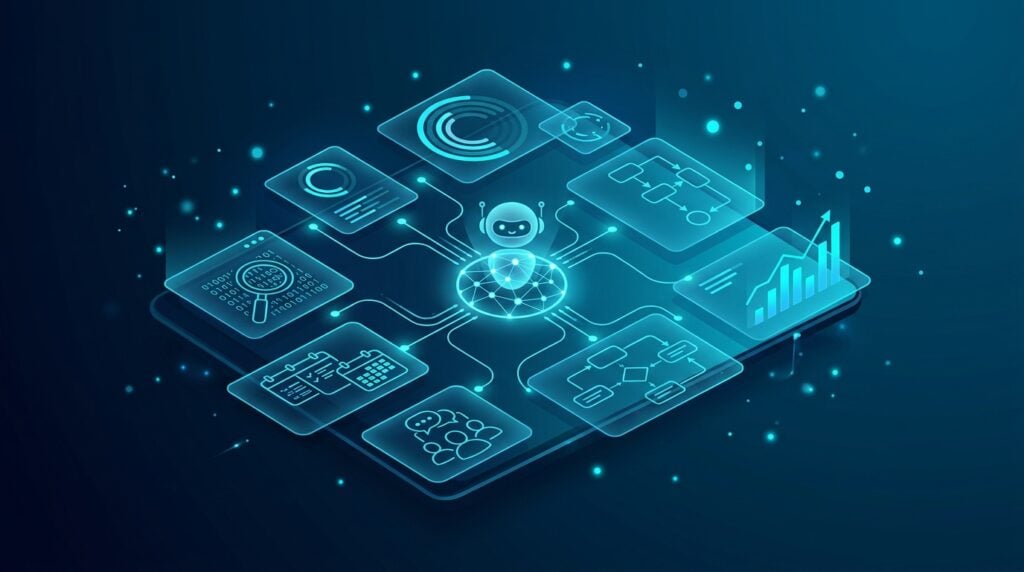
Strip away the hype. AI-powered lead generation is the systematic use of AI agents to handle repetitive, high-volume tasks your sales and operations teams currently do by hand: scoring inbound leads, sending personalized outreach sequences, following up on cold contacts, and routing qualified prospects to the right person. These aren’t futuristic capabilities. They’re deployable today.
Where Traditional Lead Generation Breaks Down
Manual lead generation scales linearly: more leads require more people. That model collapses when inquiry volume spikes, when your team is unavailable after hours, or when budget constraints prevent hiring. The result is slow response times, inconsistent follow-up, and revenue left on the table. A real estate agency that misses a Saturday evening inquiry can lose that buyer to a competitor who responded first.
How AI Agents Change the Equation
AI agents work as intelligent digital team members alongside your staff. They qualify leads against your defined criteria, personalize outreach based on prospect behavior and profile data, and escalate high-value opportunities to your human team at exactly the right moment. The output is a consistently managed pipeline that doesn’t depend on your team’s bandwidth or working hours.
Measurable Outcomes Across Four Verticals
The business case is straightforward when measured against specific KPIs. Real estate agencies report faster lead response times and higher appointment conversion rates. Recruitment firms cut time-to-shortlist significantly. Fundraising organizations using the AI-Powered Fundraising Platform systematize investor outreach that previously required a dedicated relationship manager. Hospitality operators capture upselling opportunities that front-desk staff consistently miss during peak periods.
These aren’t incremental gains. They represent a structural shift in how revenue is generated–AI handles volume and consistency while your team delivers judgment and relationship depth. That combination is where real competitive advantage is built. For SMEs without dedicated AI resources, it provides enterprise-grade lead generation capability at a fraction of what an equivalent human team would cost.
AI Agents for Intelligent Lead Qualification and Engagement
The Challenge of High-Volume Lead Handling
When inquiry volume exceeds team capacity, quality suffers before quantity does. Your best people end up working unqualified contacts while high-intent prospects sit waiting. This isn’t a hiring problem–it’s a workflow problem. And it’s solved at the process level, not the payroll level.
Automating Qualification with Precision
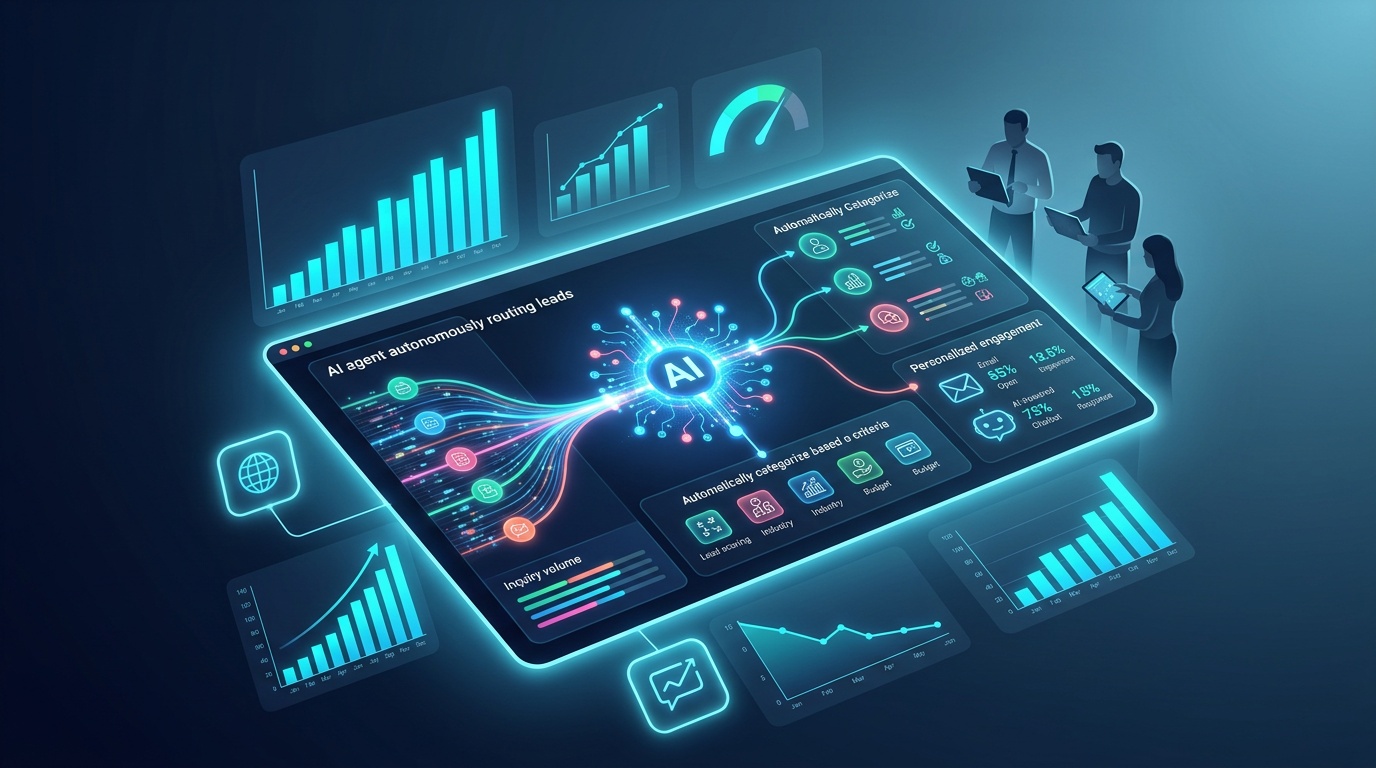
Vynta AI agents evaluate every inbound lead against your defined criteria: budget range, timeline, geographic fit, intent signals, and behavioral data. Leads that meet your thresholds are routed immediately to your team with a full context summary. Those that don’t are placed into automated nurture sequences until their profile changes. Your team only receives conversations worth having.
Qualification Looks Different in Every Vertical
A real estate agency needs to filter by purchase timeline and pre-approval status. A recruitment firm needs to assess candidate availability, salary expectations, and skills alignment before a consultant invests a single minute. Fundraising organizations using the AI-Powered Fundraising Platform qualify investor prospects by giving capacity, sector alignment, and relationship warmth before a development officer makes contact. Hospitality operators qualify group booking inquiries by event size, date flexibility, and spend potential before routing to a sales manager.
Generic automation tools apply the same logic across all these contexts. That’s precisely where they fail. Industry-specific qualification requires understanding what a “qualified lead” actually means in each vertical–and building scoring models that reflect those distinctions.
Beyond Qualification: Personalized Initial Outreach
Qualification without engagement is incomplete. Vynta AI agents send personalized outreach based on prospect behavior: a property inquiry triggers a response referencing the specific listing and neighborhood; a donor prospect receives content aligned with their stated philanthropic interests. This level of personalization–delivered at scale, within minutes of first contact–sets the tone for every subsequent interaction.
Pros of AI-Driven Qualification
- Consistent scoring criteria applied to every lead, regardless of volume or time of day
- Faster response times, often under two minutes, compared with hours using manual handling
- Human team capacity redirected to high-value conversations and relationship building
- Personalized outreach at scale without additional staffing costs
Considerations to Address
- Qualification criteria must be defined clearly before deployment; poor inputs produce poor outputs
- AI outreach requires periodic review to maintain brand voice accuracy
- Complex, high-stakes leads still benefit from early human involvement alongside AI support
Automating Your Entire Lead Lifecycle Without Adding Staff
From Awareness to Opportunity: The Full Lead Journey
Most businesses apply automation selectively–typically at the top of the funnel. The real efficiency gain comes from connecting every stage: initial identification, qualification, nurture, and conversion support. AI agents that operate across the full lead lifecycle close the handoff gaps where prospects consistently fall through.
What AI Does at Each Stage
At identification, AI agents monitor intent signals across channels and flag prospects matching your ideal customer profile. During nurturing, they deliver timed, relevant content sequences that keep prospects engaged without manual intervention. At conversion, they surface buying signals to your team with full interaction history attached–so your closer enters the conversation with context, not cold.
Scaling Operations Without Headcount Growth
This is the operational promise of AI-powered lead generation when implemented correctly. A recruitment firm processing 400 candidate applications monthly doesn’t need four additional coordinators to handle 800. The AI agent layer absorbs that volume increase. The same applies to a hospitality group expanding across three properties: guest inquiry handling scales with the business, not with the hiring budget.
Practical Integration with Existing Workflows
Vynta AI agents connect with the CRM, ATS, or property management systems your team already uses. Implementation doesn’t require replacing existing infrastructure. It requires mapping your current lead flow, identifying the highest-friction points, and deploying agents at those specific stages through a structured discovery, strategy, and implementation process. Most clients see operational impact within the first 30 days of deployment, with full workflow integration completed within 60-90 days.
Why Industry-Specific AI Automation Outperforms Generic Tools
The Problem with One-Size-Fits-All Automation
Generic automation platforms treat every lead the same way. They can’t distinguish between a motivated homebuyer and a casual browser, or between a donor prospect with genuine philanthropic alignment and someone who attended a single event. Industry-specific AI agents are trained on the qualifying signals, terminology, and conversion patterns that actually matter in your vertical. That’s not a minor refinement–it’s the difference between a useful tool and an expensive distraction.
Real Estate: Property Matching and Lead Prioritization
Vynta AI agents for real estate score inbound inquiries against purchase timeline, pre-approval status, and property criteria. High-intent buyers receive immediate, listing-specific responses. Longer-term prospects are nurtured automatically, keeping your agency front of mind until they’re ready to transact.
Recruitment: Candidate Screening and Interview Scheduling
AI lead generation for recruitment firms filters applicants by skills alignment, salary expectations, and availability before a consultant invests a single minute. Qualified candidates move directly to automated interview scheduling, compressing time-to-shortlist without sacrificing match quality.
Fundraising: Investor Outreach and Relationship Management
The AI-Powered Fundraising Platform qualifies donor and investor prospects by giving capacity, sector alignment, and relationship warmth. Development officers receive prioritized contact lists with full engagement history, so every conversation begins with context rather than cold outreach. No relationship falls dormant between personal touchpoints.
Hospitality: Guest Experience and Upselling Optimization
B2C AI lead generation in hospitality captures upselling opportunities at the inquiry stage. AI agents identify group booking potential, flag high-value guests based on spend history, and deliver personalized pre-arrival communications that increase ancillary revenue without front-desk involvement.
| Capability | Generic Automation Tools | Vynta AI Industry Agents |
|---|---|---|
| Qualification logic | One-size-fits-all scoring | Vertical-specific criteria and signals |
| Outreach personalization | Template-based, static | Behavior- and profile-driven, dynamic |
| CRM/ATS integration | Limited, requires custom development | Native connectors for industry platforms |
| ROI measurement | Generic funnel metrics | Vertical KPIs: placement rates, donor retention, booking revenue |
How to Implement AI-Powered Lead Generation: A Practical Roadmap
Start Where the Friction Is Highest
Before deploying anything, identify where your lead handling breaks down. Where do prospects wait longest for a response? Where does follow-up go inconsistent? Where does your team spend time on contacts that never convert? Those friction points are your deployment priorities–not your entire workflow. Start there, prove the ROI, then expand.
Choosing the Right AI Automation Partner
Evaluate partners on industry specificity, not feature lists. An AI lead generation agency that understands recruitment metrics will build different qualification logic than one repurposing a generic chatbot. Ask for vertical-specific case studies, not just technology demonstrations. And confirm the partner connects with your existing systems before committing to a deployment timeline–integration friction is where most implementations stall.
KPIs That Measure Real AI Performance
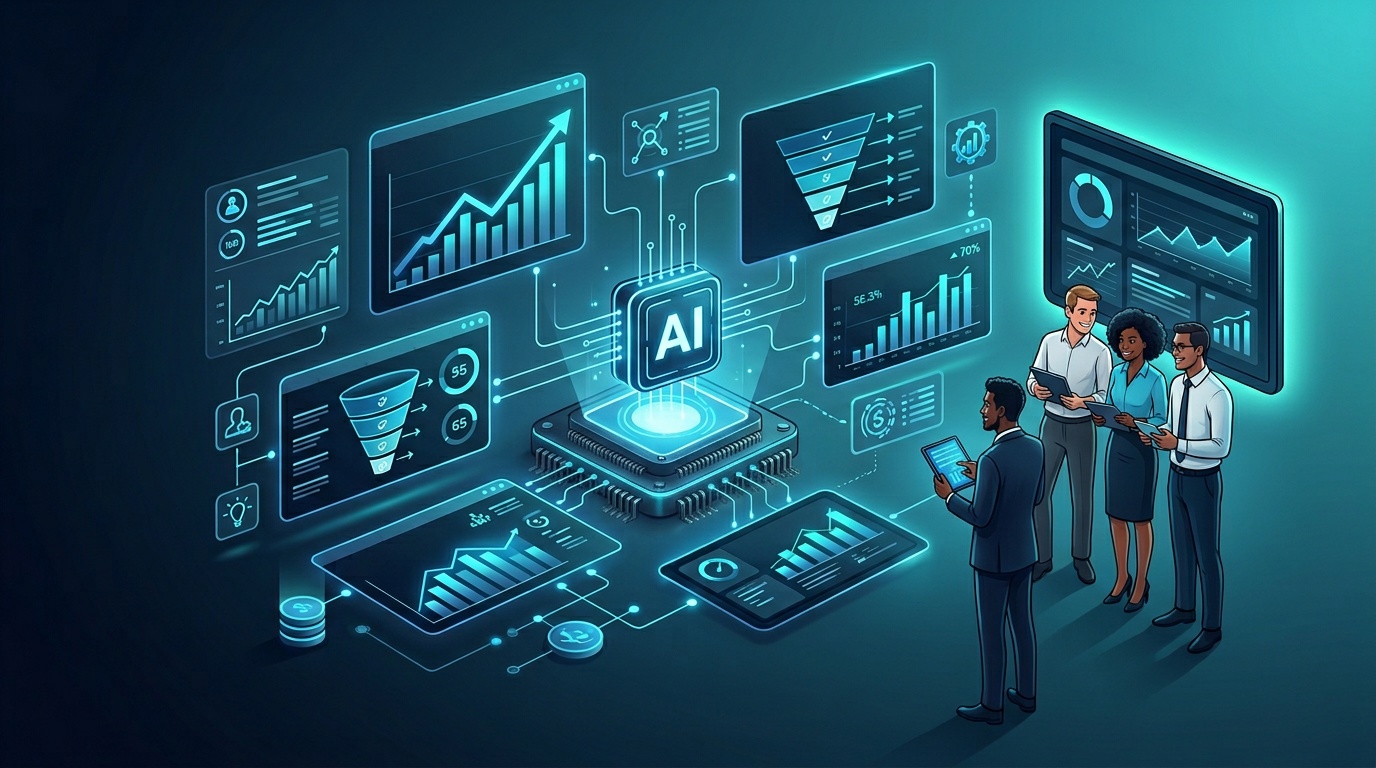
Track lead response time, qualification accuracy rate, pipeline conversion by lead source, and the ratio of human team hours spent on qualified versus unqualified contacts. These metrics show whether your AI-powered lead generation investment is producing structural change or just surface-level activity. Vanity metrics won’t tell you that. These will.
Data Security, Adoption, and ROI Justification
Data security concerns are legitimate. Confirm that any AI automation partner operates within your jurisdiction’s compliance requirements and doesn’t store sensitive prospect data beyond operational necessity. On adoption: teams accept AI agents faster when those agents reduce workload rather than add oversight tasks. Structure deployment so your team experiences relief, not surveillance. ROI projections are developed during the discovery and assessment phase, with baseline KPIs measured before and after deployment to validate outcomes.
Your Strategic Path Forward with Vynta AI
Vynta AI operates as a strategic partner across real estate, recruitment, fundraising, and hospitality–not as a software vendor handing over a login. Implementation includes workflow mapping, qualification criteria definition, system integration, and ongoing performance review. Most clients achieve measurable pipeline improvement within the first 30 days.
Frequently Asked Questions
Can I use AI to generate leads?
Yes, absolutely. AI-powered lead generation is a systematic approach to identify, qualify, and engage prospects at scale. It automates high-volume tasks that sales and operations teams typically handle manually, freeing your team to focus on closing deals. This approach is already helping mid-market SMEs across various industries.
Which AI is best for lead generation?
The ‘best’ AI for lead generation depends on your specific industry and qualification needs. Effective AI solutions are those that offer industry-specific qualification criteria and personalized outreach. Generic tools often fail because they apply the same logic everywhere, whereas tailored AI agents understand what a qualified lead means for your business.
Can ChatGPT do lead generation?
While large language models like ChatGPT can assist with content creation, AI-powered lead generation involves more than just generating text. It requires systematic automation of tasks like lead scoring, personalized outreach sequences, follow-ups, and routing qualified prospects. Dedicated AI agents are built to perform these specific, repetitive sales and operations functions at scale.
What is the 30% rule in AI?
The article does not mention a ‘30% rule in AI.’ However, it highlights that most SME sales teams spend 60-70% of their time on activities that do not directly produce revenue. AI-powered lead generation aims to reclaim this time by automating qualification and initial engagement, allowing your team to focus on high-value interactions.
How does AI-powered lead generation help businesses scale?
AI-powered lead generation allows businesses to manage high inquiry volumes without adding headcount. It ensures consistent lead qualification and engagement 24/7, overcoming the linear scaling limitations of manual processes. This means your pipeline is consistently managed, independent of your team’s bandwidth or working hours.
What kind of tasks can AI agents automate in lead generation?
AI agents systematically handle repetitive, high-volume tasks that traditionally consume sales and operations teams’ time. This includes scoring inbound leads, sending personalized outreach sequences, following up on cold contacts, and routing qualified prospects. They act as intelligent digital team members, working alongside your staff.
What are the main benefits for mid-market SMEs using AI for lead generation?
For mid-market SMEs, AI-powered lead generation translates to more qualified opportunities entering the pipeline. It frees your team to focus on closing deals, not chasing leads. Businesses see faster response times, higher appointment conversion rates, and significant reductions in time spent on administrative tasks.