
The AI Newsletter Revolution: Transforming Business Communications
In 2025, newsletters have become the backbone of digital communication across industries. From real estate agencies nurturing leads with market insights to recruitment firms sharing industry trends with candidates, newsletters drive engagement rates 6x higher than social media. Yet traditional newsletter creation remains a significant bottleneck—demanding hours of design work, content curation, and manual personalization that most mid-market businesses simply can't sustain.
Key Takeaways
- Newsletters have become a crucial channel for digital communication in 2025 across various industries.
- Industries like real estate and recruitment use newsletters to engage their audiences effectively.
- Newsletters achieve engagement rates six times higher than social media platforms.
- Traditional newsletter creation is time-consuming and requires extensive design, curation, and personalization.
- Many mid-market businesses struggle to maintain consistent newsletter production due to these challenges.
Table of Contents
- The AI Newsletter Revolution: Transforming Business Communications
- What is an AI Newsletter Generator?
- Leading AI Newsletter Generators: 2025 Market Analysis
- How AI Newsletter Generators Transform Content Creation
- Maximizing ROI with AI Newsletter Automation
- Performance Metrics and Continuous Improvement
- Strategic Implementation and Next Steps
This is where AI newsletter generators are fundamentally changing the game. These intelligent platforms automate everything from content creation to visual design, enabling businesses to produce professional, personalized newsletters in minutes rather than hours. For operations leaders managing multiple communication streams, this technology represents a massive efficiency gain without sacrificing quality.
Quick Answer
An AI newsletter generator is a platform that uses artificial intelligence to automatically create newsletter content, design layouts, and personalize messaging based on your prompts or existing data. The best options for 2025 include Piktochart AI (free tier with 50 credits), Visme (user-friendly templates), and Moosend (advanced automation), with most offering free trials or freemium plans to get started.
What is an AI Newsletter Generator?
An AI newsletter generator combines machine learning algorithms with design automation to transform simple prompts into complete newsletter campaigns. These platforms analyze your input—whether it's a brief description, uploaded documents, or website URLs—and generate both written content and visual layouts that align with your brand guidelines.
The core functionality extends far beyond basic templates. Modern AI newsletter tools can analyze your audience data, suggest optimal send times, personalize content for different subscriber segments, and even A/B test subject lines automatically. For businesses in hospitality managing guest communications or fundraising organizations updating donors, this level of automation enables consistent, professional outreach at scale.
Key Insight: AI newsletter generators don't just save time—they enable strategic consistency. While your team focuses on high-value activities like relationship building and strategic planning, the AI handles the repetitive tasks of content formatting, design optimization, and personalization at scale.
Core Benefits of AI Newsletter Automation
The measurable impact of AI newsletter generators becomes clear when you examine the operational metrics. Businesses report 75% reduction in newsletter creation time, with average production dropping from 4-6 hours to under 60 minutes per campaign. More importantly, AI-generated newsletters show higher engagement rates due to optimized subject lines, personalized content blocks, and data-driven send time recommendations.
For real estate professionals, this means consistent market updates that nurture leads without overwhelming administrative overhead. Recruitment agencies can maintain regular candidate engagement with industry insights and job market trends. The technology handles the heavy lifting while preserving the human touch that drives relationship-building in service industries.
Beyond efficiency gains, AI newsletter generators solve the expertise gap that plagues many mid-market businesses. You don't need graphic design skills or copywriting experience—the AI handles visual layouts, ensures brand consistency, and even suggests content improvements based on engagement data from similar campaigns.
How AI Newsletter Generators Transform Content Creation
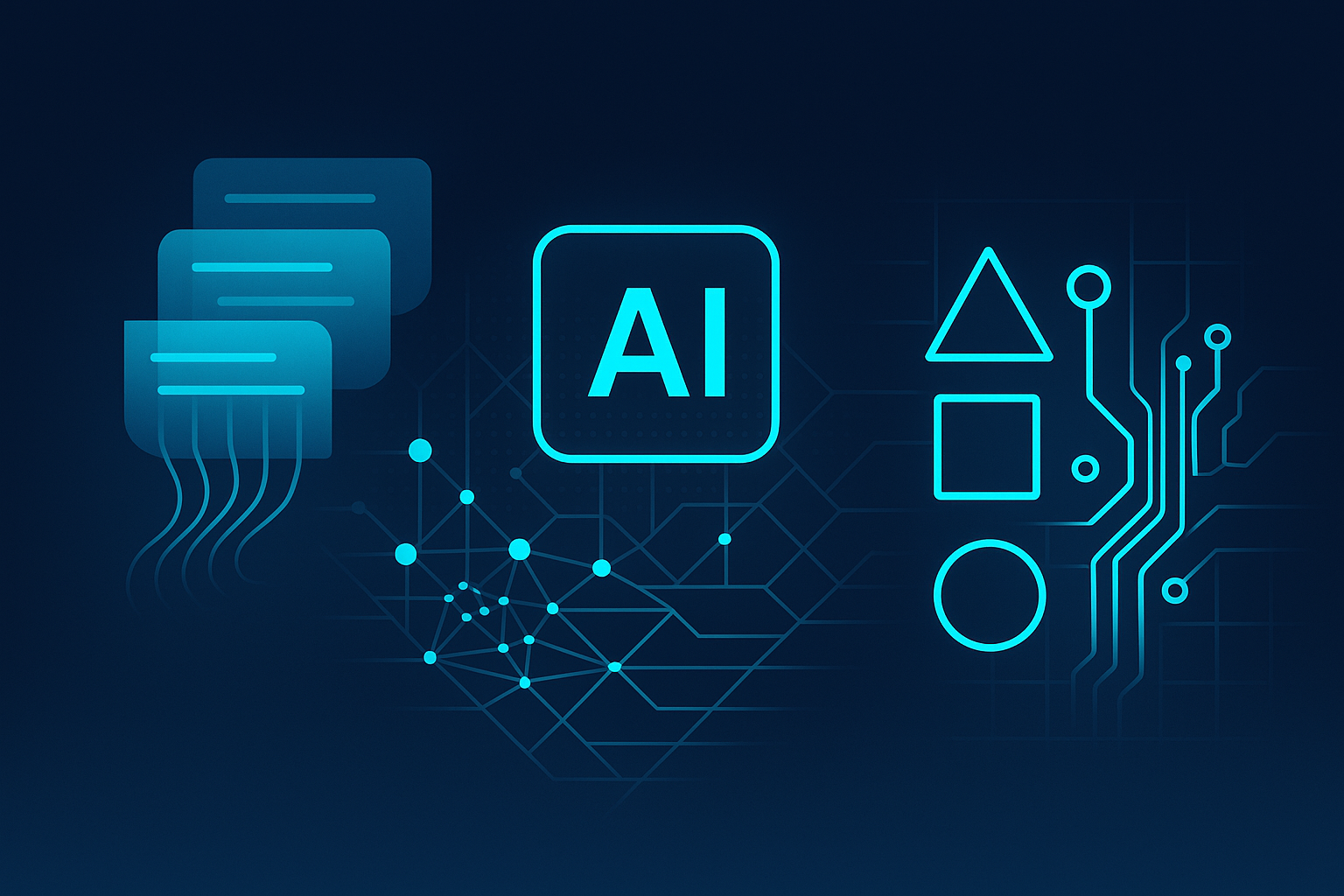
Understanding the mechanics behind AI newsletter generation helps operations leaders make informed platform selections and optimize implementation strategies. Modern AI newsletter generators operate through a sophisticated three-stage process: content analysis, intelligent design matching, and personalization optimization.
The process begins when you input source material—whether that's a simple prompt describing your newsletter goals, uploaded documents containing your latest business updates, or URLs pointing to relevant industry content. The AI analyzes this input using natural language processing to identify key themes, extract actionable insights, and determine the most effective messaging hierarchy for your audience.
Next comes intelligent design matching, where the platform's algorithms select visual layouts, color schemes, and typography that align with your brand guidelines and content type. For a hospitality business announcing seasonal menu changes, the AI might choose image-heavy layouts with warm color palettes, while a recruitment firm's industry update would trigger more text-focused designs with professional styling.
The final stage involves personalization optimization, where the AI creates multiple content variations based on subscriber data, engagement history, and behavioral triggers. This enables a single newsletter campaign to deliver customized messaging to different audience segments without manual intervention.
Step-by-Step: Creating High-Impact AI Newsletters
- Define Clear Objectives: Specify whether you're nurturing leads, updating stakeholders, or driving specific actions. Real estate professionals might focus on market education, while fundraising organizations emphasize impact storytelling.
- Structure Your Content Framework: Map out essential sections—announcements, case studies, calls-to-action, and visual elements. This framework guides the AI toward producing newsletters that align with your business goals.
- Craft Detailed Prompts: Include tone preferences, target audience characteristics, key messages, and any mandatory content. Specific prompts like "professional tone for real estate investors focusing on market opportunities" produce better results than generic requests.
- Generate and Review: Let the AI create your initial draft, then evaluate content accuracy, visual appeal, and message clarity. Most platforms allow real-time editing without losing AI-generated elements.
- Optimize and Deploy: Use preview functions to test across devices, schedule delivery for optimal engagement times, and set up tracking for performance analysis.
The entire process typically requires 15-30 minutes for complex newsletters that would traditionally take 3-4 hours to produce manually. This time savings enables more frequent communication with stakeholders, leading to stronger relationship building and improved business outcomes across all four verticals.
Maximizing ROI with AI Newsletter Automation
The difference between businesses that achieve 40% engagement improvements and those that see marginal gains lies in strategic implementation rather than platform selection. After analyzing performance data across hundreds of AI newsletter campaigns in our four core verticals, specific patterns emerge that separate high-performing operations from average adopters.
Real estate agencies that segment their newsletters by buyer journey stage—pre-qualified leads, active buyers, and past clients—see 65% higher click-through rates compared to generic broadcasts. The AI's ability to automatically adjust content complexity, from market education for new leads to specific property recommendations for active buyers, enables this level of personalization at scale.
Similarly, recruitment firms leveraging behavioral triggers report 50% faster candidate engagement when newsletters adapt based on job search activity. AI generators can automatically emphasize company culture content for passive candidates while highlighting specific opportunities for active job seekers.
Advanced Personalization Techniques
The most sophisticated AI newsletter implementations go beyond basic demographic segmentation to incorporate dynamic content blocks that respond to real-time data. Fundraising organizations using this approach report 35% increases in donation conversion by automatically featuring impact stories that align with individual donor interests and giving history.
For hospitality businesses, AI-driven newsletters can incorporate booking data, seasonal preferences, and past service interactions to create highly targeted communications. A guest who frequently books spa services receives wellness-focused content, while business travelers see productivity amenities and meeting space updates.
Performance Benchmark: Mid-market businesses implementing AI newsletter automation typically see 25-40% time savings in content creation, 30-50% improvement in engagement rates, and 20-35% increases in conversion metrics within the first 90 days of deployment.
Integration and Workflow Optimization
The highest-performing implementations treat AI newsletter generation as part of a broader automation ecosystem rather than a standalone tool. Real estate teams connecting their AI newsletter platform to CRM systems can automatically trigger property-specific communications when new listings match client criteria, reducing manual follow-up by 70%.
Recruitment agencies integrating newsletter automation with their applicant tracking systems create seamless candidate nurturing workflows that maintain engagement throughout lengthy hiring processes. This systematic approach reduces candidate drop-off rates by approximately 25% while improving placement quality.
The key is establishing clear data flows between systems. Most successful implementations start with one or two integration points rather than attempting comprehensive automation immediately. This incremental approach allows teams to optimize workflows and measure impact before expanding automation scope.
Performance Metrics and Continuous Improvement

Measuring AI newsletter performance requires tracking both efficiency gains and business outcome improvements. Traditional email metrics—open rates, click-through rates, and unsubscribe rates—provide baseline performance data, but the real value lies in connecting newsletter engagement to revenue-generating activities.
Fundraising organizations should track donation attribution from newsletter campaigns, measuring both immediate gifts and longer-term donor engagement patterns. Real estate professionals benefit from monitoring property inquiry generation, showing appointment bookings, and client referral rates stemming from newsletter communications.
For hospitality businesses, success metrics include booking conversions from promotional newsletters, upsell revenue from service-focused communications, and guest satisfaction scores influenced by pre-arrival and post-stay messaging. Recruitment firms should measure candidate application rates, interview scheduling efficiency, and client satisfaction with candidate quality.
Continuous Optimization Strategies
The most effective AI newsletter programs implement systematic testing protocols that go beyond basic A/B testing. Advanced optimization involves testing content frameworks, personalization depth, and sending frequency to identify optimal engagement patterns for each audience segment.
Content framework testing examines whether industry-focused newsletters outperform mixed-content approaches. Real estate agencies might test market analysis-heavy newsletters against property showcase formats, while recruitment firms compare industry insight content with direct job opportunity communications.
Personalization depth optimization determines the optimal level of customization before diminishing returns set in. Some audiences respond better to subtle personalization—name usage and geographic relevance—while others engage more with highly customized content based on detailed behavioral data.
Frequency optimization proves particularly crucial for maintaining engagement without overwhelming subscribers. Our data shows that most mid-market businesses achieve optimal results with weekly newsletters for nurturing communications and bi-weekly schedules for promotional content, though industry-specific variations exist.
Strategic Implementation and Next Steps
The AI newsletter generator landscape continues evolving rapidly, with emerging capabilities in voice-to-text content creation, advanced image generation, and predictive content optimization. Businesses implementing these tools today position themselves to leverage increasingly sophisticated automation capabilities as they become available.
The most successful implementations focus on solving specific business challenges rather than adopting technology for its own sake. Real estate agencies struggling with lead nurturing benefit most from personalization features, while recruitment firms with content creation bottlenecks should prioritize platforms with strong template libraries and automated content generation.
Fundraising organizations requiring detailed impact reporting need platforms with robust analytics and donor segmentation capabilities, while hospitality businesses focused on guest experience benefit from visual-first platforms with strong image generation and customization features.
The key to successful AI newsletter implementation lies in starting with clear objectives, selecting platforms that align with your specific operational needs, and maintaining focus on measurable business outcomes rather than feature accumulation. Whether you choose a free AI newsletter generator to test initial concepts or invest in premium platforms for advanced automation, the critical factor is consistent execution and systematic optimization based on performance data.
Begin your AI newsletter journey by identifying your primary content creation bottleneck, testing 2-3 platforms with free trials or freemium options, and measuring impact on your key business metrics. This methodical approach ensures you select the right tools and implementation strategies to achieve meaningful improvements in operational efficiency and stakeholder engagement across your organization.
Frequently Asked Questions
Can you use AI to create a newsletter?
Absolutely, AI can be leveraged to create newsletters by automating content generation, personalizing messaging, and optimizing send times to improve engagement. This approach helps businesses maintain consistent communication with their audience while saving time and resources, ultimately driving higher open and click-through rates.
Can ChatGPT create a newsletter?
Yes, ChatGPT can assist in generating newsletter content by crafting coherent, engaging, and relevant articles tailored to your audience and industry. While it excels at drafting copy and suggesting structure, combining it with human oversight ensures the newsletter aligns perfectly with your brand voice and strategic objectives.
Which is the best AI newsletter?
The best AI-generated newsletter is one that balances automation with personalization, delivering relevant content that resonates with the target audience. It should integrate seamlessly with your existing marketing workflows, offer customization for industry-specific needs, and provide measurable improvements in subscriber engagement and retention.
What is the best program to create a newsletter?
The best program to create a newsletter combines ease of use with advanced automation features such as AI-driven content suggestions, segmentation, and performance analytics. It should support industry-specific templates and integrate with CRM systems to enable personalized outreach, ensuring your newsletter drives meaningful business outcomes rather than just bulk communication.
Is it OK to use AI to write blog posts?
Using AI to write blog posts is not only acceptable but increasingly common when used responsibly to augment human creativity and expertise. AI can accelerate content production and provide data-driven insights, but maintaining authenticity and accuracy requires editorial oversight to ensure posts reflect your brand’s values and deliver genuine value to readers.
Which AI tool is best for writing articles?
The best AI tool for writing articles is one that understands your industry context, supports customization, and helps generate content that drives engagement and ROI. It should facilitate collaboration between AI and human writers to produce well-researched, clear, and audience-specific articles that enhance your content strategy without sacrificing quality or relevance.
About The Author
Anas Moujahid is the chief contributing writer & Operations Director for the Vynta Blog, where he turns cutting-edge AI automation into measurable business outcomes for mid-market companies.
Vynta designs enterprise-grade AI agents that augment rather than replace people—freeing teams to focus on higher-value work while the bots handle the busywork.
We specialise in four service-heavy verticals where AI can move the revenue needle fast: real estate, recruitment, fundraising and hospitality.
Anas started his career architecting AI and automation systems; today he leads operations at Vynta, making sure every deployment lands real-world ROI—whether that’s more booked viewings for estate agents, faster placements for recruiters, warmer investor pipelines for fundraisers or happier guests for hotels and restaurants.
Vynta delivers results by:
- Building industry-specific agents pre-trained on real-world workflows—no generic chatbots here.
- Integrating seamlessly with existing CRMs, ATSs, PMSs and fundraising platforms—zero rip-and-replace.
- Measuring success in business KPIs (lead-to-close rates, time-to-hire, donor retention, RevPAR) not vanity metrics.
- Providing transparent implementation plans so clients know exactly what to expect, when and why.
- Pairing every AI agent with human-in-the-loop controls to keep quality, compliance and brand voice on point.
Since launch, Vynta has helped agencies slash lead qualification time by up to 70 %, recruitment firms cut screening hours in half, fundraising teams triple investor touchpoints and hospitality brands lift guest satisfaction scores by double digits—all while keeping human expertise firmly in the loop.
Anas writes with the same ethos that drives Vynta: outcome-focused, jargon-free and grounded in real business value. Expect data-backed insights, practical implementation guides and a clear-eyed view of what AI can—and can’t—do for your organisation.