

ai lead scoring real estate
Understanding AI Lead Scoring in Real Estate: The Business Impact
AI lead scoring real estate systems analyze prospect behavior, demographics, and engagement patterns to automatically rank leads by conversion probability. This technology helps agents prioritize high-value opportunities and respond within 60 seconds to qualified inquiries, increasing conversion rates up to 85%.
What Is AI Lead Scoring for Real Estate?
AI lead scoring real estate technology assigns numerical values to leads based on their likelihood to buy or sell property. The system processes thousands of data points instantly. Website behavior, inquiry timing, budget indicators, and communication preferences. To separate genuine buyers from casual browsers. No more guessing which prospects deserve immediate attention.
How AI Spots Your Next Closed Deal
The algorithm tracks specific behavioral signals: page visit duration, property search patterns, form completion rates, and response timing. Hot leads view multiple property listings, use mortgage calculators, and respond to messages within minutes. Cold leads browse casually, avoid contact forms, and show inconsistent engagement. This distinction helps you focus effort where it counts most.
Solving Real Estate’s $10,000 Problem
The average agent spends 40+ hours monthly pursuing unqualified prospects. That’s $10,000+ in opportunity cost. Manual lead qualification creates delayed responses and missed opportunities. AI eliminates this bottleneck by categorizing inquiries in seconds, so you contact serious buyers immediately while nurturing prospects who need more time.
Your Expertise + AI Speed = More Closings
AI handles data processing and initial qualification. You handle relationship building and deal negotiation. The technology identifies which prospects warrant immediate attention, but your expertise closes deals. This partnership delivers both efficiency and service quality. Exactly what competitive markets demand.
The Data Engine: How AI Analyzes Real Estate Leads

The Complete Data Pipeline
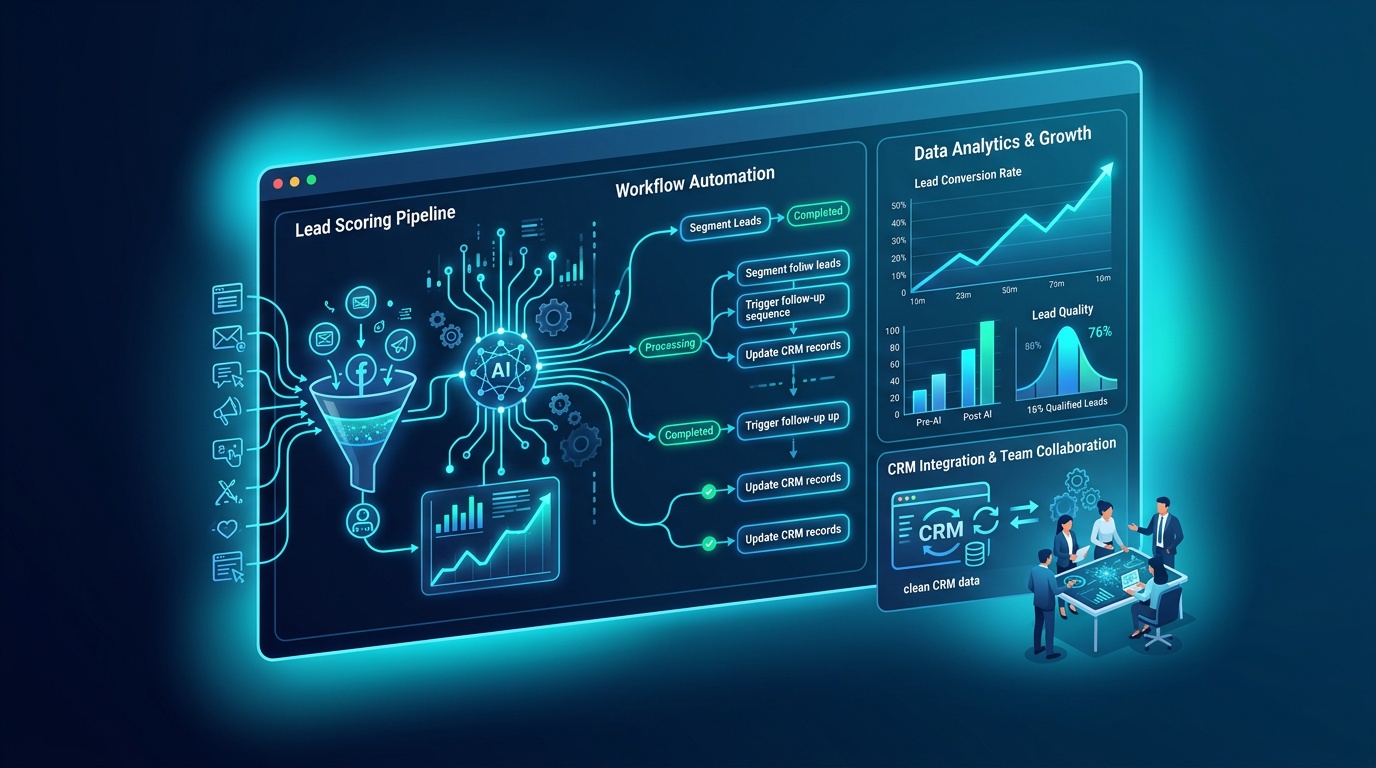
AI lead scoring real estate systems integrate multiple data streams through APIs, webhooks, and direct integrations. The pipeline includes CRM connections, website tracking pixels, social media monitoring tools, and third-party databases containing property history, demographic information, and financial indicators. Result? Comprehensive prospect profiles built automatically.
Data Sources That Actually Matter
Smart systems analyze public records, mortgage preapproval signals, property search history, social media activity, email engagement rates, and mobile app usage patterns. Additional inputs include geographic location data, inquiry time, device type, and referral sources. Each data point adds context that basic CRM fields miss completely.
Data Accuracy Impact
Clean, verified data improves scoring accuracy by 40-60%. Systems that integrate real-time property databases and validated contact information produce more reliable lead scores than systems relying only on self-reported prospect details.
Behavioral Signals That Predict Closings
Specific behaviors indicate purchase readiness: downloading property brochures, using mortgage calculators, viewing virtual tours multiple times, and sharing listings on social media. Time spent on neighborhood research and school district information signals serious interest. Financial tool usage carries 3x more weight than casual browsing in most scoring models.
Predicting the Next Move
Machine learning models identify patterns from historical transactions to predict next actions. The system detects seasonal buying trends, life-event signals, and market timing preferences. Result? You know exactly when prospects are ready to engage.
Why Clean Data = Higher Conversion
Inaccurate data distorts predictions, leading to misqualified leads and wasted effort. Strong systems validate phone numbers, verify email addresses, and cross-reference property ownership records before scoring. Regular data cleansing removes duplicates, outdated details, and incomplete profiles, supporting more dependable scoring and stronger agent trust.
Speed-to-Lead Mastery: Faster Response, Higher Conversions
The 60-Second Rule
In competitive markets, the first agent to respond wins the listing or buyer relationship 78% of the time. Motivated prospects contact multiple agents simultaneously, and delayed responses signal poor service quality. Every minute you delay costs you deals.
Instant Lead Triage
The system ranks incoming inquiries by urgency and value, sends high-priority alerts to agents, and routes routine questions to automated responses. Agentic Systems for Real Estate process leads in under 60 seconds, helping teams focus quickly on high-intent prospects while nurturing other leads automatically.
Speed-to-Lead Performance Metrics
Teams using AI lead scoring real estate systems see 45-85% improvements in qualified-lead conversion rates when response time stays under 2 minutes. Results vary by market, lead sources, and follow-up quality.
24/7 Lead Qualification
Voice AI handles initial prospect conversations, collecting budget details, timing requirements, and property preferences before human agents join the process. These systems capture after-hours inquiries and support international prospects across time zones. Agents receive clearer prospect profiles before first contact, making every conversation count.
CRM Integration That Actually Works
AI lead scoring real estate platforms sync with existing CRM systems, update prospect records automatically, and trigger follow-up sequences. Integration reduces manual data entry, limits administrative errors, and maintains consistent communication tracking. Work scored leads inside familiar tools instead of learning entirely new workflows.
ROI You Can Track
Monitor qualified pipeline growth, conversion rates by lead tier, speed-to-lead, and agent time saved through automation. When paired with consistent follow-up, AI reduces missed opportunities, increases agent throughput, and improves reporting clarity. Use controlled comparisons across channels and time periods to attribute gains accurately.
Customizing AI Lead Scoring for Real Estate Niches
Commercial vs. Residential: Different Games, Different Rules
Commercial property scoring requires different parameters than residential transactions. Business buyers focus on cash flow, zoning, tenant history, and investment returns. Models weight financial documentation, business credit, and income potential more heavily than lifestyle factors. Residential scoring emphasizes school zones, commute times, and family needs. Each segment needs models trained on its own conversion patterns.
Investor-Focused Lead Scoring
Investment-focused ai lead scoring real estate systems monitor distressed property indicators, foreclosure filings, estate sales, and other motivated-seller signals. The technology reviews comparable sales and estimates potential margins based on your defined parameters. Investor clients require distinct scoring criteria based on hold periods, yield targets, and risk tolerance.
Wholesale Operations at Scale
Wholesale operations benefit from rapid property evaluation and seller-motivation assessment. AI flags possible distress signals through public records, tax delinquency data, and life-event indicators. It scores opportunities based on equity estimates, repair-cost ranges, and local demand signals, while supporting faster prioritization for outreach and follow-up.
Niche Market Performance
Specialized configurations outperform generic scoring models by 25-40% because they align inputs, thresholds, and follow-up playbooks to the transaction type. Validate performance with ongoing sampling and closed-loop feedback from your team.
Complete Lead Management
Advanced systems pair lead scoring with property recommendations, matching buyer preferences to inventory automatically. The technology reviews viewing history, saved searches, and rejection reasons to improve suggestions over time. Messaging gets personalized by content focus, timing, and channel based on engagement patterns and stated preferences.
Human Oversight for Strategic Decisions
Include routine review of scoring outputs against local market knowledge and active client conversations. Regular calibration sessions help teams spot blind spots and adjust parameters based on what actually closes in your area. Human judgment remains necessary for unique properties, complex negotiations, and relationship-driven decisions.
Implementing AI Lead Scoring: Your Growth Partnership
Implementation Reality Check
Successful deployment requires clean CRM data, defined lead sources, and team training on AI-assisted workflows. Implementation typically spans 4-6 weeks, including integration, calibration, and onboarding. You’ll also need sufficient lead volume to evaluate performance and tune scoring thresholds over time.
Choosing Your AI Partner
Effective ai lead scoring real estate solutions fit real estate workflows and provide clear scoring explanations, reliable integrations, and ongoing support. Prioritize partners that align scoring logic to your transaction types, service areas, and follow-up standards rather than offering generic automation.
ROI Metrics That Matter
Track response time, conversion by lead score tier, agent time saved, appointment set rate, and revenue per closed transaction. Monitor false positives, missed opportunities, and client satisfaction signals. Most teams see measurable operational improvements within 60-90 days, depending on lead quality and adoption.
Your Next Steps
Audit current lead handling, document handoffs, and identify where speed and qualification break down. Then pilot a defined workflow with clear success metrics and feedback loops from agents. When you explore AI Automation Services, set clear expectations: automation handles routine work while your team owns high-stakes conversations and closing.
Frequently Asked Questions
How does AI lead scoring help real estate agents in their daily work?
AI lead scoring systems streamline an agent’s day by automatically ranking prospects based on their likelihood to convert. This allows agents to prioritize high-value opportunities and focus their efforts on serious buyers or sellers. It reduces time spent on unqualified leads, enabling more efficient relationship building and deal negotiation.
What kind of data does AI analyze to score real estate leads?
AI lead scoring systems integrate various data streams, including CRM connections, website tracking, social media activity, and third-party databases. They analyze public records, mortgage preapproval signals, property search history, and email engagement rates. This multidimensional approach creates comprehensive prospect profiles automatically.
How does AI distinguish between a truly interested real estate prospect and a casual browser?
The AI algorithm evaluates behavioral signals such as page visit duration, property search patterns, and form completion rates. A serious prospect might view multiple listings, use mortgage calculators, and respond quickly to messages. Casual browsers typically show inconsistent engagement and avoid contact, allowing the AI to differentiate their intent.
Will AI lead scoring systems replace human real estate professionals?
Absolutely not. AI lead scoring functions as a tool to augment, not replace, human real estate expertise. It handles data processing and initial qualification, freeing agents to focus on relationship building and negotiation. Human insight remains essential for understanding client motivations and market nuances.
What are the main advantages real estate businesses gain from using AI lead scoring?
Real estate businesses gain significant advantages, including increased conversion rates and improved agent productivity. AI lead scoring helps agents respond faster to qualified inquiries, which is critical in competitive markets. This systematic approach reduces the likelihood of valuable leads being overlooked.
Why is quick response time so important in real estate, and how does AI assist with this?
In competitive real estate markets, the first agent to respond often secures the client relationship. Motivated prospects frequently contact multiple agents, and delays can signal poor service. AI automates real-time lead prioritization, sending high-priority alerts to agents and routing routine questions, enabling faster engagement and improved conversion potential.