

ai for customer care
How AI Delivers Measurable Results in Customer Care for Mid-Market Businesses
AI for customer care cuts operational costs by 30-50% while accelerating response times and boosting customer satisfaction. Mid-market businesses in real estate, recruitment, fundraising, and hospitality gain 24/7 support capacity, instant responses to inquiries, and personalized engagement at scale–all without expanding headcount.
24/7 Availability Without Extra Staffing Costs
Traditional customer care demands multiple shifts to cover extended hours, multiplying labor expenses. Night-shift premiums. Weekend overtime. It adds up fast. AI agents handle inquiries around the clock with response times under 60 seconds, eliminating these costs entirely. A recruitment firm managing candidate questions across time zones or a hospitality business fielding reservation requests after hours gains continuous coverage at a fraction of traditional staffing budgets.
Cost Savings Through Automation of Routine Inquiries
Seventy percent of customer service interactions involve routine questions: pricing details, availability checks, appointment scheduling, status updates. Automating these repetitive tasks frees human agents to focus on complex negotiations, relationship building, and high-value interactions. Real estate agencies using Agentic Systems for Real Estate report 80% task automation, saving over 20 hours per agent weekly and redirecting that capacity toward closing deals.
Higher Customer Satisfaction with Personalized Responses
AI systems analyze customer history, preferences, and behavior patterns to deliver tailored responses instantly. A fundraising organization provides donors with personalized campaign updates based on past giving patterns, while hospitality managers offer guests room upgrade suggestions aligned with previous stays. This personalization at scale drives higher satisfaction scores compared to generic, one-size-fits-all support approaches.
Pros
- Instant response times under 60 seconds improve conversion rates
- 30-50% reduction in operational costs through automation
- Consistent service quality regardless of volume or timing
- Personalization at scale without manual effort
Cons
- Initial setup requires integration with existing systems
- Complex emotional situations still need human intervention
- Ongoing monitoring is needed to maintain accuracy
Scalability During Peak Demand Periods
Seasonal spikes in customer inquiries create staffing nightmares. You hire temporary workers, train them quickly, and manage inconsistent service quality. AI for customer care scales instantly without degradation in response quality. Real estate markets experience spring surges, recruitment firms face quarterly hiring rushes, and hospitality businesses manage holiday booking floods. AI handles these volume spikes effortlessly, maintaining identical service standards at 10 inquiries or 1,000.
AI Customer Care in Action: Industry-Specific Examples from Real Estate, Recruitment, Fundraising, and Hospitality
Real Estate: Automating Lead Qualification and Property Matching
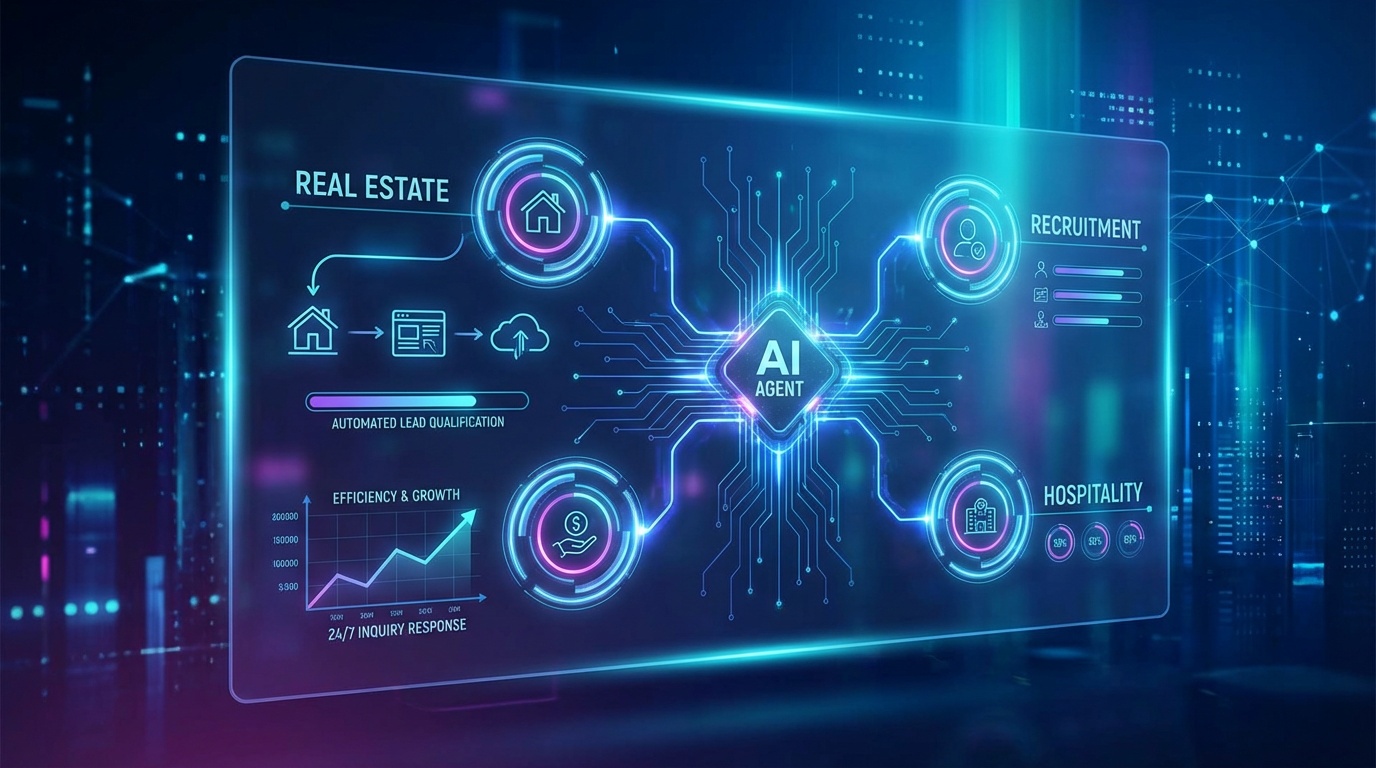
Property inquiries arrive through websites, social media, email, and phone calls at all hours. Agentic Systems for Real Estate capture leads instantly across WhatsApp, SMS, email, and website chat, qualifying prospects through intelligent conversations about budget, location preferences, and timeline. The system matches qualified leads with relevant properties using advanced algorithms, sends personalized recommendations with virtual tours, and coordinates viewing appointments automatically. This workflow increases qualified pipeline by 3x and achieves 85% conversion rates from inquiry to viewing.
Recruitment: Streamlining Candidate Screening and Interview Scheduling
Recruitment agencies spend hours screening applications, answering candidate questions, and coordinating interview schedules across multiple stakeholders. Agentic Systems for Recruitment conduct initial candidate assessments, verify qualifications, answer common questions about roles and compensation, and manage calendar coordination between candidates and hiring managers. Interview coordination runs on autopilot: scheduling, confirmations, reminders, and preparation materials all delivered automatically to candidates. This automation saves approximately 2 hours per hire and reduces hiring cycles by over 60%.
Fundraising: Managing Investor Outreach and Donor Relations
Fundraising organizations juggle donor communications, campaign updates, and investor relations across hundreds or thousands of contacts. AI systems segment audiences based on giving history, send personalized campaign updates, answer questions about fund allocation, and schedule follow-up conversations with major donors. This systematic approach improves donor retention while allowing development teams to focus on high-value relationship cultivation and strategic planning. Learn more about our AI-Powered Fundraising Platform designed to transform donor relations.
Hospitality: Optimizing Guest Experiences and Upselling Opportunities
Hotels and restaurants manage reservation requests, special accommodation needs, dining preferences, and upselling opportunities simultaneously. Vynta AI Agents handle booking confirmations, send pre-arrival communications with personalized recommendations, manage special requests, and suggest upgrades based on guest profiles. The system increases booking conversion by 50% and reduces customer inquiry abandonment by 60%. The AI agents boost average guest spend by up to 25% through brand-safe upselling tailored to guest profiles and channel specifics, while automated reminders reduce no-shows.
| Industry | Primary Use Case | Key Metric Improvement | Time Savings |
|---|---|---|---|
| Real Estate | Lead qualification and property matching | 3x qualified pipeline, 85% conversion rate | 20+ hours per agent each week |
| Recruitment | Candidate screening and interview coordination | Over 60% reduction in hiring cycle | Approximately 2 hours per hire |
| Fundraising | Donor communications and campaign updates | Improved donor retention | Significant time savings per team member |
| Hospitality | Reservation management and guest upselling | 50% booking conversion increase, up to 25% higher guest spend | Significant time savings per manager |
Real Challenges of AI in Customer Care and How to Overcome Them
Integration Hurdles with Existing CRM and ATS Systems
Most mid-market businesses operate on established CRM platforms, applicant tracking systems, or property management software. Adding AI for customer care requires smooth data flow between systems to avoid duplicate records, missed inquiries, or fragmented customer histories. Select AI solutions built with integration capabilities for common platforms used in your industry. Allocate 2-4 weeks for initial setup and testing to confirm data synchronization works correctly before full deployment.
Maintaining Human Empathy for Complex Customer Needs
AI handles routine inquiries effectively but struggles with nuanced emotional situations: a frustrated donor threatening to stop giving, a candidate facing personal circumstances affecting availability, or a guest with a serious complaint about service quality. Design workflows that escalate complex situations to human agents based on sentiment analysis or specific trigger phrases. The goal? Augmentation, not replacement. AI resolves 70-80% of routine questions while humans focus on relationship-critical interactions requiring judgment and empathy.
Data Privacy and Security in Sensitive Industries
Real estate transactions, recruitment processes, fundraising records, and hospitality guest information contain sensitive personal data subject to privacy regulations. Implement AI systems with enterprise-grade security: encrypted data storage, role-based access controls, and compliance with GDPR, CCPA, or industry-specific regulations. Conduct regular security audits and maintain clear data retention policies that align with legal requirements in your jurisdiction.
Measuring True ROI Beyond Surface-Level Metrics
Response time improvements and cost savings represent immediate benefits, but true ROI includes revenue impact: conversion rate changes, deal size growth, client lifetime value increases, and agent productivity gains. Establish baseline metrics before implementation across inquiry volume, conversion rates, average deal value, and time spent on administrative tasks. Track these same metrics monthly after deployment to quantify financial impact beyond operational efficiency. For tactical insights, explore key Customer Success Key Performance Indicators to monitor.
Advantages
- Modern AI platforms offer pre-built integrations with major CRM systems
- Clear escalation rules preserve human touch where it matters most
- Enterprise security standards protect sensitive customer data
- Comprehensive analytics reveal revenue impact, not just cost savings
Considerations
- Integration setup requires technical resources and testing time
- Training staff on when to intervene takes 2-3 weeks
- Compliance reviews add to the implementation timeline
- ROI measurement needs a baseline data collection period
Step-by-Step Guide to Implement AI Agents for Customer Care
Assess Your Current Customer Care Processes and Pain Points
Document your existing inquiry volume by channel, response times, conversion rates, and staff hours dedicated to routine questions. Identify bottlenecks: delayed responses during peak hours, missed inquiries outside business hours, inconsistent qualification criteria, or administrative tasks consuming agent time. Quantify these pain points with specific metrics to establish baseline performance and prioritize which processes deliver maximum ROI when automated.
Select Industry-Tailored AI Solutions That Integrate Smoothly
Generic chatbots lack the industry context needed for effective customer care in specialized sectors. Real estate agencies need property matching algorithms. Recruitment firms require candidate assessment capabilities. Fundraising organizations benefit from donor segmentation. Hospitality businesses need reservation management. Evaluate AI systems built specifically for your vertical with native integrations to your existing CRM, ATS, or property management platforms. Our AI Automation Services specialize in customizing AI solutions for your industry.
Pilot Test and Scale with Clear Success Metrics
Start with a controlled pilot covering one channel or customer segment. Run parallel operations where AI handles inquiries while human agents monitor quality and intervene when needed. Set specific success criteria: response time under 60 seconds, qualification accuracy above 80%, and customer satisfaction scores that match or exceed human-only baselines. Collect feedback from both customers and staff during the pilot phase to refine workflows before expanding to additional channels or inquiry types.
Implementation Reality: Successful AI for customer care deployment takes 4-8 weeks from assessment to full operation. The discovery phase identifies integration requirements, strategy development customizes workflows to your business processes, and phased implementation confirms quality standards before scaling.
Monitor Performance and Optimize for Continuous Gains
Track key performance indicators monthly: inquiry volume handled, conversion rates, average response time, escalation frequency to human agents, and customer satisfaction scores. Analyze conversation logs to identify common questions the AI struggles to answer, refine response templates based on customer feedback, and adjust qualification criteria as your business priorities evolve. AI systems improve through continuous learning from real interactions and regular optimization based on performance data.
The Future of AI in Customer Care and 2026 Predictions for Key Industries
Proactive Engagement and Predictive Support Trends
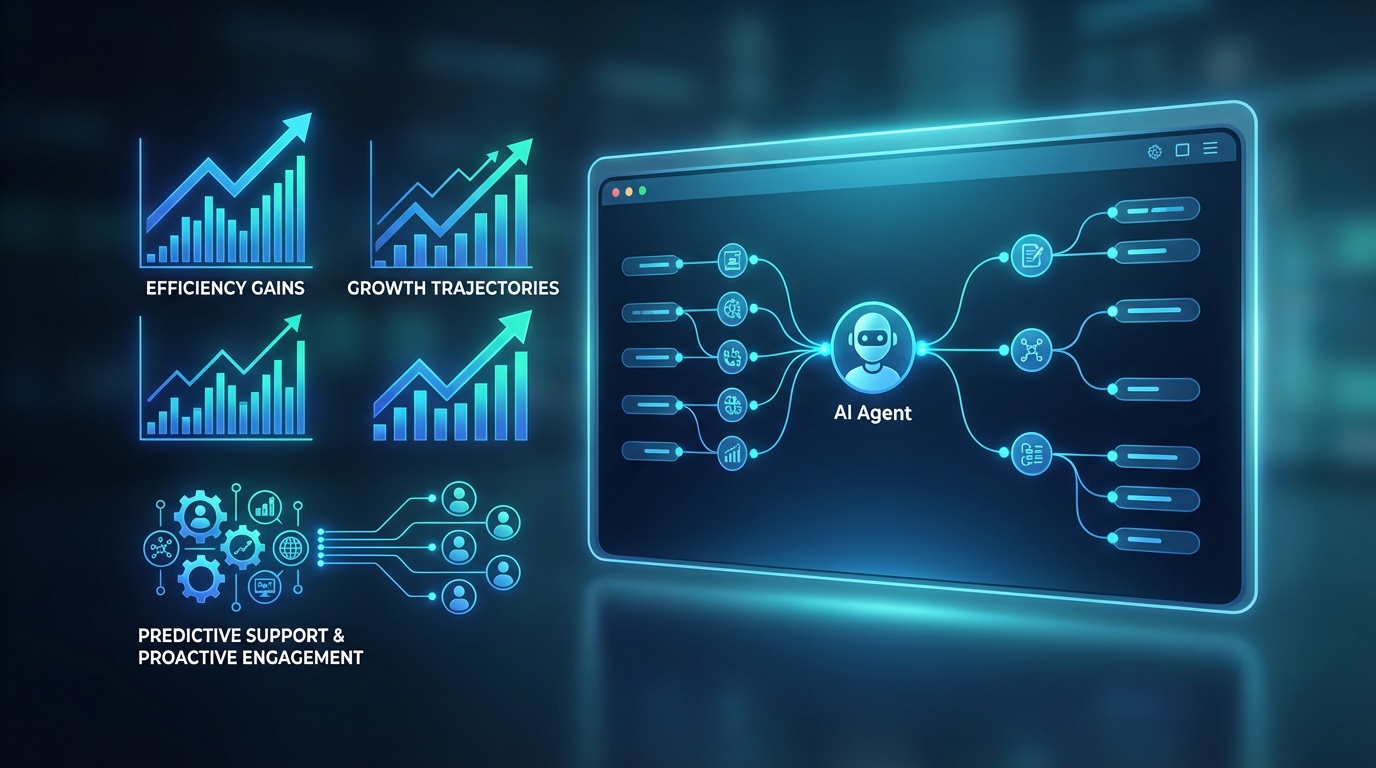
Current AI systems respond to inquiries reactively. By 2026, predictive models will anticipate customer needs before questions arise: notifying real estate clients when properties matching their criteria become available, alerting candidates about relevant job openings, reminding donors about matching grant deadlines, or suggesting restaurant reservations to hotel guests based on dining preferences. This shift from reactive to proactive support increases engagement and revenue opportunities.
Omnichannel AI Agents Across Real Estate, Recruitment, Fundraising, and Hospitality
Customers expect consistent experiences whether they contact businesses through website chat, SMS, WhatsApp, email, or phone. Unified AI agents will maintain conversation context across all channels, allowing customers to start inquiries on one platform and continue on another without repeating information. This omnichannel capability becomes standard by 2026, particularly in industries managing complex, multi-touchpoint customer journeys.
Human-AI Collaboration as the Standard by 2026
The future of AI for customer care centers on augmentation rather than replacement. AI handles routine inquiries, qualification, scheduling, and follow-ups while human agents focus on relationship building, complex negotiations, and strategic account management. This division of labor maximizes both efficiency and customer satisfaction, combining AI speed and consistency with human judgment and empathy.
Vynta.ai’s Role in Scaling Revenue Without Headcount Growth
Mid-market businesses face a growth paradox: scaling revenue traditionally requires proportional increases in staff, but tight labor markets and rising costs make headcount expansion challenging. Agentic Systems for Real Estate and similar solutions across recruitment, fundraising, and hospitality enable revenue growth without corresponding staff increases. Agencies handle more properties, convert more leads, and close more deals while maintaining existing team sizes, generating over $100k in additional revenue per agent annually through intelligent automation of time-consuming tasks.
Frequently Asked Questions
What kind of AI is most effective for customer service in mid-market businesses?
Effective AI for customer care focuses on automation, personalization, and scalability to deliver measurable business outcomes. Solutions like Agentic Systems are designed to understand specific business needs, automating routine tasks and providing instant, tailored responses. This approach leads to significant cost reductions and improved customer satisfaction for mid-market businesses.
How much of customer service can AI automate?
AI can automate a substantial portion of customer service interactions, particularly routine inquiries. Approximately 70% of customer service questions, such as pricing details or status updates, can be handled by AI agents. This automation frees human agents to concentrate on more complex issues and relationship building.
Will AI automation replace human customer service roles?
AI for customer care is designed to assist human agents, not replace them entirely. It automates repetitive tasks and provides 24/7 support, allowing human teams to focus on complex emotional situations and high-value interactions. This collaboration improves overall efficiency and customer satisfaction by optimizing human effort.
What types of customer service tasks can AI agents perform?
AI agents can perform a wide range of customer service tasks, including answering common questions, scheduling appointments, qualifying leads, and providing personalized recommendations. For example, Agentic Systems for Real Estate capture leads, qualify prospects, and coordinate viewing appointments automatically across channels like WhatsApp, SMS, email, and website chat. This automation streamlines operations across various industries.
What makes an AI solution effective for specific customer care needs?
An effective AI solution for customer care is tailored to specific industry needs and integrates seamlessly with existing systems. It should provide instant, personalized responses, scale effortlessly during peak demand, and deliver clear operational cost reductions. Our approach at Vynta AI focuses on bespoke AI agents that achieve these measurable business outcomes for our clients.
How does AI help mid-market businesses manage peak customer demand?
AI for customer care scales instantly to handle sudden surges in inquiries without compromising service quality. During seasonal spikes or hiring rushes, AI agents maintain consistent response times and service standards, whether handling 10 or 1,000 inquiries. This eliminates the need for temporary staffing and ensures continuous, high-quality coverage.