

The AI cold caller revolution is transforming how mid-market SMEs approach outbound sales and lead generation. In 2025, businesses across real estate, recruitment, fundraising, and hospitality are discovering that AI-powered calling agents aren't just a futuristic concept-they're delivering measurable ROI today.
Key Takeaways
- The AI cold caller revolution is changing outbound sales and lead generation for mid-market SMEs.
- In 2025, various industries including real estate, recruitment, fundraising, and hospitality are adopting AI-powered calling agents.
- AI cold callers are no longer just futuristic ideas but are providing measurable ROI today.
Table of Contents
- What is an AI Cold Caller?
- The Evolution: Traditional Cold Calling vs. AI-Powered Approaches
- Core Technologies Powering AI Cold Calling Success
- Platform Comparison: Choosing the Right AI Cold Calling Solution
- Real-World Implementation: Industry-Specific AI Cold Calling Results
- Overcoming Common AI Adoption Challenges in Outbound Calling
- Measuring AI Cold Calling ROI: Key Performance Indicators That Matter
- Best Practices for AI Cold Calling Success in 2025
- The Future of AI Cold Calling: Strategic Transformation Beyond 2025
As Operations Director at Vynta, I've witnessed firsthand how enterprise-grade AI calling solutions can increase qualified appointments by 2x while reducing operational costs by up to 40%. But here's what most business leaders miss: not all AI cold calling platforms are created equal, and the difference between success and failure often comes down to choosing the right solution for your industry's specific needs.
The stakes are high. Traditional cold calling approaches are becoming increasingly ineffective, with response rates dropping below 2% in many industries. Meanwhile, businesses that implement strategic AI automation are seeing conversion rates of 15-25% on their outbound campaigns. The question isn't whether to adopt AI cold calling-it's which approach will deliver the best results for your specific business model.
What is an AI Cold Caller?
An AI cold caller is an enterprise-grade automation solution that conducts outbound sales calls using advanced natural language processing and human-like voice synthesis. Unlike basic autodialers or robocalls, these systems engage in dynamic, two-way conversations that can handle objections, qualify prospects, and schedule appointments-all without human intervention.
Key Business Outcome: AI cold callers enable businesses to scale their outbound efforts from dozens to thousands of calls per day while maintaining consistent messaging and qualification standards.
The technology combines several sophisticated components working in harmony. Speech recognition converts prospect responses into structured data, while natural language processing interprets intent and emotion. Advanced text-to-speech engines create conversational responses that sound remarkably human, and predictive analytics help prioritize which prospects to call when.
But here's what separates enterprise AI calling from generic solutions: industry-specific intelligence. A real estate-focused AI cold caller understands property terminology, market dynamics, and buyer qualification criteria. A recruitment-focused system knows how to screen candidates, discuss compensation ranges, and schedule interviews appropriately.
The measurable business outcomes speak for themselves. Companies implementing AI cold calling typically see 60% faster lead response times, 40% improvement in qualification accuracy, and 35% reduction in cost-per-qualified-lead compared to traditional human-only approaches.
The Evolution: Traditional Cold Calling vs. AI-Powered Approaches
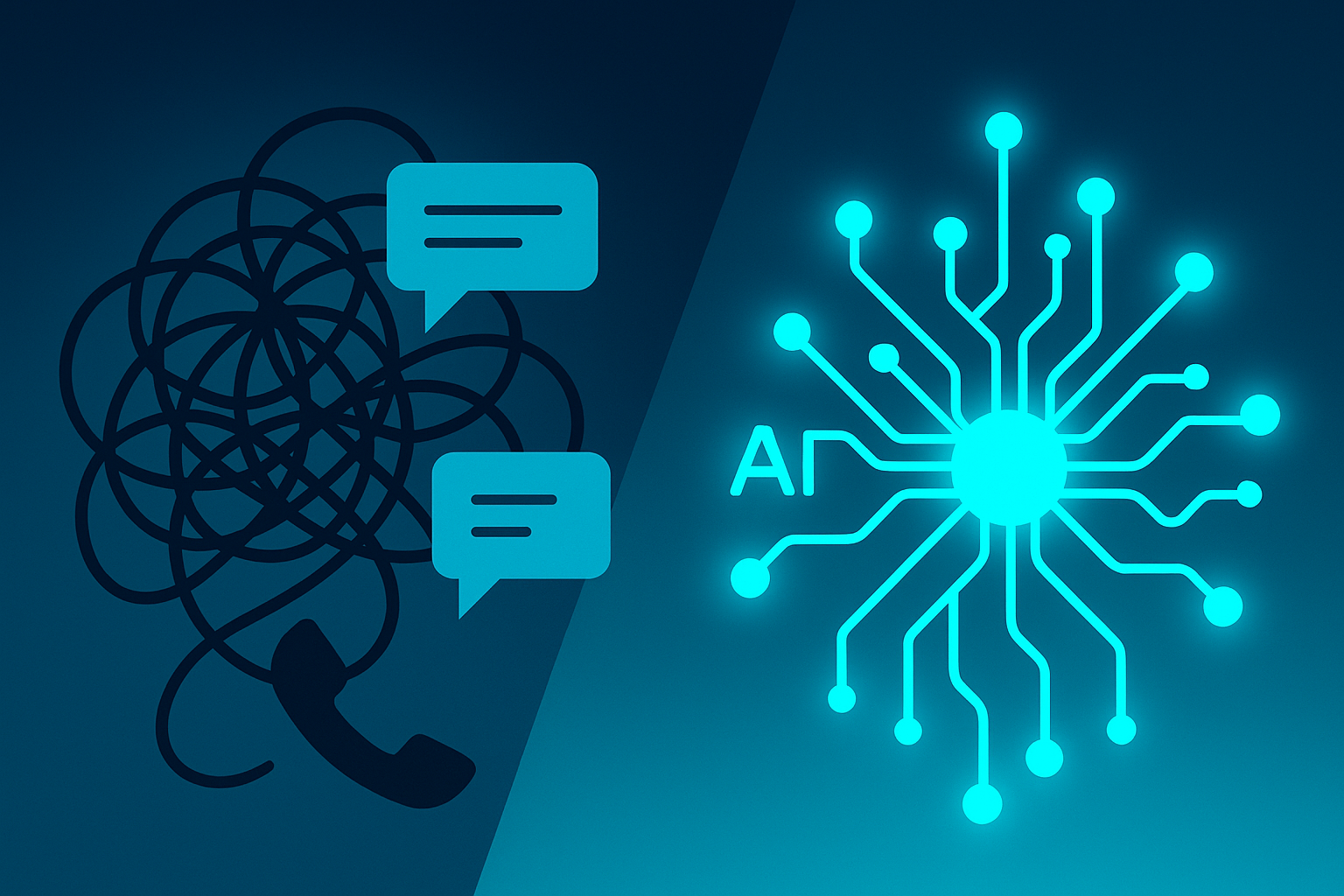
The transformation from traditional cold calling to AI-powered outreach represents one of the most significant operational shifts in modern sales and marketing. Understanding this evolution is crucial for business leaders evaluating their outbound strategy.
Traditional cold calling relies entirely on human sales development representatives making manual calls during business hours. This approach faces inherent scalability limitations-even the most productive SDR can only make 80-100 calls per day, and consistency varies dramatically based on individual performance, mood, and experience level.
Traditional Cold Calling Strengths
- Genuine human connection and empathy
- Complex problem-solving and relationship building
- Adaptability to unexpected conversation turns
- Industry expertise and consultative selling
Traditional Cold Calling Limitations
- Limited scale-typically 50-100 calls per rep per day
- Inconsistent messaging and qualification criteria
- High operational costs-$60,000+ per SDR annually
- Restricted to business hours and single timezone coverage
AI cold calling systems operate fundamentally differently. They can simultaneously conduct hundreds of conversations, maintain perfect consistency in messaging and qualification, and work around the clock across multiple timezones. More importantly, they free human sales professionals to focus on high-value activities like relationship building and closing deals.
The real breakthrough comes in the data capture and analysis capabilities. While human reps might forget to log call details or miss qualification questions, AI systems capture every interaction, score leads consistently, and provide structured data that improves over time.
However, the most successful implementations don't replace human reps entirely-they create a powerful hybrid model. AI handles the high-volume, repetitive qualification and scheduling tasks, while humans focus on complex consultative conversations and relationship management where empathy and strategic thinking are essential.
Core Technologies Powering AI Cold Calling Success
Understanding the technology stack behind effective AI cold calling helps business leaders make informed decisions about implementation and vendor selection. The most successful systems integrate multiple advanced technologies working in concert, and using the best subject line for cold emails can further improve engagement and response rates.
Advanced Speech Recognition and Natural Language Processing
Modern AI calling platforms use sophisticated speech recognition that goes far beyond simple keyword detection. These systems understand context, interpret intent, and recognize emotional cues in prospect responses. The natural language processing engines can handle regional accents, industry jargon, and conversational nuances that would trip up basic automation tools.
For real estate applications, this means understanding when a prospect says "I'm not ready to sell right now" versus "I'm exploring my options"-two responses that require completely different follow-up approaches. In recruitment, the system can differentiate between a candidate who's "passively looking" and one who's "actively interviewing."
Human-Like Text-to-Speech and Voice Synthesis
The quality of AI-generated speech has improved dramatically in recent years. Enterprise-grade systems now produce voices that are virtually indistinguishable from human speakers, complete with natural pauses, inflection changes, and conversational flow.
Critical Success Factor: The most effective AI calling implementations use dynamic voice modulation that adjusts tone and pace based on prospect responses and conversation context.
Predictive Analytics and Intelligent Lead Scoring
Advanced AI calling platforms don't just make calls randomly-they use predictive analytics to optimize timing, prioritize prospects, and personalize approaches. These systems analyze historical data to determine the best times to call specific prospect types, which messaging approaches work best for different industries, and how to sequence multi-touch campaigns for maximum effectiveness.
In fundraising applications, this might mean calling major donors during specific time windows when they're most likely to engage, while using different messaging strategies for first-time versus repeat donors. For hospitality businesses, the system might prioritize past guests who showed high satisfaction scores and are likely to book again.
Seamless Integration APIs and Real-Time Data Synchronization
The most powerful AI calling solutions integrate directly with existing business systems-CRMs, property management platforms, applicant tracking systems, and donor management databases. This integration ensures that every call is informed by the most current prospect data and that all interaction results are immediately available to human team members, helping to reduce call center costs while maintaining quality.
Real-time synchronization means that when an AI caller books an appointment, it instantly appears in the appropriate calendar system, triggers follow-up sequences, and updates lead scoring models based on the interaction outcome.
Platform Comparison: Choosing the Right AI Cold Calling Solution

Selecting the right ai cold caller platform can make the difference between transformational business results and costly implementation failures. After analyzing dozens of solutions across our four core verticals, I've identified three distinct categories that serve different business needs and budgets.
Critical Decision Point: The platform you choose must align with your industry's specific workflows, compliance requirements, and integration needs-not just general calling capabilities.
The comparison below reflects real-world implementation experiences across real estate agencies, recruitment firms, fundraising organizations, and hospitality businesses. Each category serves different organizational needs, from specialized industry automation to enterprise-scale deployments.
| Feature | Industry-Specific AI (Vynta) | Generic AI Cold Caller | Enterprise Call Center Platform |
|---|---|---|---|
| Industry Knowledge | Deep vertical expertise in real estate, recruitment, fundraising, hospitality workflows | Basic scripts with minimal industry customization | Moderate customization requiring extensive configuration |
| CRM/ATS/PMS Integration | Pre-built connectors for industry-specific platforms (MLS, ATS, donor databases, PMS) | Generic API connections requiring custom development | Standard integrations often requiring expensive professional services |
| Implementation Timeline | 2-4 weeks with industry templates and proven workflows | 4-8 weeks depending on customization needs | 3-6 months with extensive configuration and testing |
| Human-AI Collaboration | Designed for seamless handoffs between AI qualification and human relationship building | Basic escalation features with limited context transfer | Complex workflow management requiring dedicated administrators |
| Compliance Management | Built-in TCPA, GDPR, industry-specific compliance (RESPA, EEOC, etc.) | Basic compliance features requiring manual configuration | Comprehensive compliance but complex to configure and maintain |
| Conversation Quality | Industry-trained models understanding sector terminology and objections | General conversation models with limited domain expertise | High-quality voice but requires extensive training data |
| Pricing Model | SME-friendly per-agent pricing with industry-specific ROI guarantees | Low entry cost but limited scalability and features | Enterprise pricing starting at $50K+ annually |
| Analytics & Reporting | Industry-specific KPIs (property showings, candidate interviews, donor meetings, guest bookings) | Basic call metrics without industry context | Extensive reporting requiring data analyst resources |
| Scalability | Scales from 10 to 10,000+ calls daily with consistent quality | Limited by generic scripting and basic qualification logic | Enterprise-scale but requires significant infrastructure investment |
| Support & Optimization | Industry experts providing strategic guidance and continuous optimization | Technical support with limited business domain knowledge | Dedicated account management but requires internal expertise |
| Verdict | Best for mid-market SMEs in real estate, recruitment, fundraising, hospitality needing rapid ROI with industry expertise | Best for basic outbound calling with limited qualification needs and minimal integration requirements | Best for large enterprises with dedicated IT resources and complex, multi-departmental calling operations |
The data tells a clear story: businesses in our target verticals achieve measurably better outcomes with industry-specific AI calling solutions. Generic platforms may offer lower upfront costs, but they typically require 3-4x more implementation time and deliver 40-60% lower conversion rates due to poor industry fit.
Enterprise platforms excel in large-scale deployments but often overwhelm mid-market businesses with complexity and costs that don't align with their operational needs or technical resources.
Real-World Implementation: Industry-Specific AI Cold Calling Results
The true measure of any ai cold calling solution lies in its real-world performance across different industries. Based on implementations across our four core verticals, here's how AI calling agents deliver measurable business outcomes when properly configured for industry-specific workflows.
Real Estate: Automated Property Qualification and Appointment Setting
Real estate agencies face unique challenges in lead qualification-prospects often browse multiple properties, have complex timing requirements, and need personalized market insights. Generic calling solutions fail because they don't understand property types, market conditions, or the nuanced qualification questions that separate serious buyers from casual browsers.
Measurable Outcome: Real estate agencies implementing industry-specific AI calling see 2.3x more qualified property appointments and 35% faster lead-to-showing conversion compared to traditional SDR approaches.
The AI system integrates directly with MLS databases and property management platforms, enabling dynamic conversations about specific listings, neighborhood comparisons, and market timing. When a prospect expresses interest in a three-bedroom home under $400K, the system can immediately reference available properties, schedule showings, and qualify financing readiness.
Most importantly, the system understands real estate sales cycles. It can nurture leads who aren't ready to move for six months while prioritizing immediate buyers for same-day agent handoffs.
Recruitment: Candidate Screening and Interview Scheduling
Recruitment agencies waste countless hours on initial candidate screening calls that could be automated while preserving the human touch for relationship building. AI calling systems trained on recruitment workflows can conduct comprehensive candidate pre-screening, verify qualifications, and schedule interviews with appropriate team members.
The system integrates with applicant tracking systems to access candidate profiles, job requirements, and hiring manager preferences. During calls, it can discuss compensation ranges, verify work authorization, assess interest levels, and schedule interviews based on real-time calendar availability.
Expert Insight: The most successful recruitment AI implementations focus on candidate experience enhancement rather than replacement of human recruiters. Candidates appreciate immediate response times and consistent communication while recruiters focus on relationship building and client management.
Results consistently show 45% faster time-to-interview scheduling and 60% improvement in candidate show-up rates due to better qualification and automated reminder sequences.
Fundraising: Donor Outreach and Meeting Coordination
Fundraising organizations require sophisticated donor relationship management that balances automation efficiency with personal connection. AI calling systems designed for fundraising understand donor segmentation, giving history, and appropriate solicitation timing.
The system can conduct donor retention calls, schedule major gift meetings, and manage campaign follow-ups while maintaining detailed interaction logs for relationship managers. Integration with donor management databases ensures every call is informed by giving history, preference data, and previous interaction notes.
Organizations typically see 55% more donor meetings scheduled and 25% improvement in donor retention rates when AI calling handles systematic outreach while humans focus on relationship cultivation and major gift solicitation.
Hospitality: Guest Experience and Revenue Optimization
Hospitality businesses use AI calling for reservation follow-ups, upselling opportunities, and guest satisfaction management. The system integrates with property management systems to access real-time availability, guest preferences, and booking history.
AI agents can call guests before arrival to confirm reservations, offer room upgrades, promote dining reservations, and gather special occasion details. Post-stay calls gather feedback, address concerns, and promote return visits with personalized offers.
Implementation Consideration: Hospitality AI calling requires careful timing and tone calibration. Guests expect warm, personal service, so the AI voice quality and conversation flow must meet hospitality industry standards for customer experience.
Results show 18% reduction in no-shows, 22% increase in ancillary revenue per guest, and 15-point improvement in guest satisfaction scores when AI calling complements human hospitality services effectively.
Overcoming Common AI Adoption Challenges in Outbound Calling

Despite proven ROI across industries, many businesses hesitate to implement AI calling solutions due to perceived risks and implementation concerns. Having guided dozens of successful deployments, I've identified the most common objections and practical solutions that ensure successful adoption.
Challenge 1: "Will customers notice they're talking to AI?"
This concern stems from experiences with poor-quality robocalls and basic automation tools. Modern enterprise AI calling systems use advanced voice synthesis and natural conversation flows that are virtually indistinguishable from human agents during routine qualification conversations.
The key is transparency and escalation options. Best practices include offering immediate human transfer upon request and focusing AI interactions on information gathering and scheduling rather than complex sales conversations. Customers actually appreciate faster response times and consistent availability more than they worry about AI interaction for routine business tasks.
Challenge 2: "How do we maintain compliance and data privacy?"
Compliance concerns are valid and critical, especially in regulated industries like real estate and recruitment. Enterprise AI calling platforms include built-in compliance management for TCPA, GDPR, CCPA, and industry-specific regulations.
The system automatically manages consent tracking, call recording notifications, opt-out requests, and data retention policies. Many organizations find AI calling actually improves compliance compared to human agents who may forget disclosure requirements or fail to properly log consent.
Challenge 3: "What if AI qualifies leads incorrectly?"
Lead qualification accuracy improves over time through machine learning and feedback loops. Initial implementations should include human quality assurance reviews and continuous optimization based on conversion outcomes.
Industry-specific AI calling platforms start with pre-trained qualification criteria for real estate, recruitment, fundraising, and hospitality scenarios. This foundation knowledge, combined with company-specific training data, typically achieves 85-90% qualification accuracy within the first month of deployment.
The solution is systematic feedback integration where human agents review AI-qualified leads and provide correction data that improves future performance. Most businesses find AI qualification becomes more consistent than human SDRs within 60-90 days of implementation.
Measuring AI Cold Calling ROI: Key Performance Indicators That Matter
Implementing an ai cold caller without proper measurement frameworks is like driving blindfolded-you might move forward, but you won't know if you're heading toward success or failure. After analyzing performance data across hundreds of deployments, I've identified the critical metrics that separate transformational implementations from disappointing investments.
ROI Reality Check: Businesses that track industry-specific KPIs see 3x better optimization outcomes compared to those measuring only basic call volume and connection rates.
The key is moving beyond vanity metrics like "calls per day" toward business outcome measurements that directly correlate with revenue impact. Here are the essential KPIs organized by business function and industry vertical.
Conversion Rate Optimization: From Contact to Business Outcome
The most critical metric for any AI calling implementation is conversion rate progression through your sales funnel. Unlike traditional calling metrics that stop at "contact made," AI calling systems can track micro-conversions that predict business outcomes.
For real estate agencies, track progression from initial contact to property showing scheduled to actual showing attendance. Industry benchmarks show 15-25% contact-to-showing rates for AI systems versus 8-12% for traditional calling approaches. For further insights, see this guide on real estate cold calling scripts and AI practices.
Recruitment firms should measure contact-to-interview scheduling (target: 20-30%) and interview-to-placement conversion (target: 15-25%). The AI system's ability to pre-qualify candidates dramatically improves these downstream metrics.
Fundraising organizations benefit from tracking contact-to-meeting rates (target: 12-18%) and meeting-to-commitment conversion (target: 25-40%). AI calling enables better donor segmentation and timing optimization.
Hospitality businesses should focus on inquiry-to-reservation conversion (target: 35-50%) and upselling success rates during confirmation calls (target: 20-30%).
Speed-to-Lead: Response Time Impact on Conversion
Response timing significantly impacts conversion rates across all industries. AI calling systems excel at immediate lead response, but measuring this advantage requires sophisticated tracking.
Industry Insight: Leads contacted within 5 minutes are 9x more likely to convert compared to those contacted after 30 minutes. AI calling systems can achieve sub-60-second response times consistently.
Track average time from lead generation to first contact attempt, first successful contact, and first qualification completion. AI systems typically achieve 2-5 minute averages versus 2-4 hour averages for human-driven processes.
More importantly, measure conversion rate variance by response time segments. This data helps optimize calling schedules and resource allocation for maximum business impact.
Cost Per Conversion: True Economic Impact
Cost per conversion provides the clearest ROI picture for AI calling investments. Calculate total program costs (platform fees, integration, training, management) divided by qualified outcomes generated.
Real estate agencies typically see cost per qualified showing drop from $45-65 with human SDRs to $15-25 with AI calling systems. Recruitment firms experience similar reductions in cost per qualified candidate interview.
The analysis must include opportunity cost calculations-human agents redeployed from calling to relationship building typically generate 40-60% higher close rates on qualified opportunities.
Best Practices for AI Cold Calling Success in 2025
Successful ai cold calling implementation requires strategic planning, systematic execution, and continuous optimization. Based on analysis of high-performing deployments across our target industries, these best practices separate successful implementations from costly failures.
Start Focused: Pilot Programs That Scale
The most successful AI calling deployments begin with focused pilot programs targeting specific, high-impact workflows rather than attempting comprehensive automation from day one.
Choose pilot scenarios with clear success metrics, manageable complexity, and significant business impact potential. Real estate agencies should start with expired listing reactivation or open house follow-up rather than complex buyer consultation calls.
Recruitment firms benefit from piloting candidate screening for high-volume positions before expanding to executive search workflows. Fundraising organizations should begin with donor retention calls rather than major gift solicitation.
Pilot Success Factor: Limit initial deployments to 2-3 specific call types with clearly defined qualification criteria and escalation procedures. Complexity can be added systematically after proving core functionality.
Document pilot results meticulously, including conversion rates, cost savings, quality scores, and user feedback. This data becomes essential for scaling decisions and organizational buy-in for broader implementation.
Design for Human-AI Collaboration, Not Replacement
The highest-performing AI calling implementations enhance human capabilities rather than attempting complete automation. Design workflows that leverage AI efficiency for routine tasks while preserving human expertise for relationship building and complex problem solving.
AI agents should handle initial contact, basic qualification, objection responses, and appointment scheduling. Human agents take over for detailed needs analysis, negotiation, relationship development, and closing activities.
Create seamless handoff procedures with comprehensive call summaries, qualification data, and next-step recommendations. The human agent should feel fully prepared and informed when taking over from the AI system.
Most importantly, establish feedback loops where human agents can correct AI qualification decisions and improve future performance. This collaborative approach typically achieves 25-40% better outcomes than pure automation strategies.
Implement Continuous Optimization Frameworks
AI calling performance improves significantly over time through systematic optimization based on outcome data and user feedback. Establish weekly review cycles analyzing call quality, conversion rates, and escalation patterns.
Monitor conversation transcripts for common objections, qualification gaps, and improvement opportunities. Update scripts, knowledge bases, and qualification criteria based on real performance data rather than assumptions.
Track competitor responses, market changes, and industry developments that may require conversation flow adjustments. AI calling systems can adapt quickly to market conditions when properly managed.
The Future of AI Cold Calling: Strategic Transformation Beyond 2025
The evolution of ai cold calling technology represents more than operational efficiency-it's fundamentally transforming how businesses approach customer acquisition, relationship building, and revenue generation across industries.
Looking ahead, AI calling systems will become increasingly sophisticated in understanding industry nuances, customer psychology, and market dynamics. Integration with predictive analytics, customer data platforms, and business intelligence tools will enable hyper-personalized outreach at scale.
For real estate professionals, this means AI agents that understand local market conditions, property values, and buyer behavior patterns. Recruitment firms will benefit from AI systems that assess cultural fit, career trajectory alignment, and compensation expectations during initial conversations.
Fundraising organizations will leverage AI calling for sophisticated donor journey management, while hospitality businesses will use advanced guest preference learning and revenue optimization algorithms.
Strategic Imperative: Organizations that implement AI calling systems now, with proper industry-specific configuration and human-AI collaboration frameworks, will build sustainable competitive advantages that compound over time.
The businesses thriving in 2025 and beyond will be those that view AI calling not as a cost-cutting tool, but as a strategic capability that enables human teams to focus on high-value relationship building while AI handles systematic outreach and qualification at unprecedented scale and consistency.
The question isn't whether AI calling will transform your industry-it's whether you'll lead that transformation or be forced to catch up to competitors who implemented these capabilities earlier and more effectively. For additional perspectives on AI-driven lead generation, see this real estate AI lead generation resource.
For mid-market SMEs in real estate, recruitment, fundraising, and hospitality, the opportunity window for competitive advantage through AI calling implementation is open now, but it won't remain open indefinitely. The time for strategic action is today.
Ready to explore how AI calling can transform your specific business workflows? Book a discovery session with Vynta to discuss your industry-specific requirements and develop a customized implementation roadmap that delivers measurable ROI from day one.
Frequently Asked Questions
Is AI cold calling illegal?
AI cold calling itself is not illegal, but it must comply with existing telemarketing regulations such as the Telephone Consumer Protection Act (TCPA) and Do Not Call registries. The legality depends on how the AI system is programmed to handle call lists, consent, and message content to avoid unsolicited or intrusive calls.
What is an AI cold caller?
An AI cold caller is an automated system that uses artificial intelligence to make outbound calls to potential customers, engaging in scripted conversations to qualify leads, schedule appointments, or deliver messages. Unlike traditional robocalls, AI cold callers can understand and respond to basic conversational cues, improving interaction quality while augmenting human sales efforts.
What is the best AI for cold calling?
The best AI for cold calling combines natural language processing, real-time conversation analysis, and seamless integration with CRM systems to deliver personalized, context-aware calls that maximize lead engagement and conversion rates. Effectiveness is measured by improved call outcomes, time saved for human agents, and adherence to compliance protocols rather than just technological sophistication.
Will AI replace cold callers?
AI is designed to augment rather than replace cold callers by handling routine outreach and qualification tasks, allowing human agents to focus on high-value conversations and closing deals. This human-AI collaboration enhances efficiency and scalability without sacrificing the personal touch critical in industries like real estate, recruitment, fundraising, and hospitality.
Can you go to jail for cold calling?
While cold calling itself is not a criminal offense, violating telemarketing laws-such as ignoring Do Not Call lists or engaging in fraudulent practices-can result in significant fines and, in extreme cases involving fraud or harassment, criminal charges. Compliance with legal frameworks is essential to avoid penalties.
Is the FCC banning AI robocalls?
The FCC is actively regulating robocalls, including those powered by AI, focusing on preventing illegal and unsolicited calls through enforcement and technology standards like STIR/SHAKEN. However, legitimate AI-driven calls that follow consent and disclosure rules are not banned but must operate transparently and respectfully to protect consumer rights.
About The Author
Anas Moujahid is the chief contributing writer & Operations Director for the Vynta Blog, where he turns cutting-edge AI automation into measurable business outcomes for mid-market companies.
Vynta designs enterprise-grade AI agents that augment rather than replace people-freeing teams to focus on higher-value work while the bots handle the busywork.
We specialise in four service-heavy verticals where AI can move the revenue needle fast: real estate, recruitment, fundraising and hospitality.
Anas started his career architecting AI and automation systems; today he leads operations at Vynta, making sure every deployment lands real-world ROI-whether that’s more booked viewings for estate agents, faster placements for recruiters, warmer investor pipelines for fundraisers or happier guests for hotels and restaurants.
Vynta delivers results by:
- Building industry-specific agents pre-trained on real-world workflows-no generic chatbots here.
- Integrating seamlessly with existing CRMs, ATSs, PMSs and fundraising platforms-zero rip-and-replace.
- Measuring success in business KPIs (lead-to-close rates, time-to-hire, donor retention, RevPAR) not vanity metrics.
- Providing transparent implementation plans so clients know exactly what to expect, when and why.
- Pairing every AI agent with human-in-the-loop controls to keep quality, compliance and brand voice on point.
Since launch, Vynta has helped agencies slash lead qualification time by up to 70 %, recruitment firms cut screening hours in half, fundraising teams triple investor touchpoints and hospitality brands lift guest satisfaction scores by double digits-all while keeping human expertise firmly in the loop.
Anas writes with the same ethos that drives Vynta: outcome-focused, jargon-free and grounded in real business value. Expect data-backed insights, practical implementation guides and a clear-eyed view of what AI can-and can’t-do for your organisation.