
ai business automation
What AI Business Automation Means for Mid-Market Growth
AI business automation uses intelligent agents to handle repetitive sales, marketing, and operations tasks autonomously. Mid-market SMEs in real estate, recruitment, fundraising, and hospitality can achieve 30-66% productivity improvements while reducing operational costs without adding headcount. Vynta AI designs custom AI agents that integrate with your existing systems and deliver measurable ROI within weeks.
Core Components of AI Automation in Sales, Marketing, and Operations
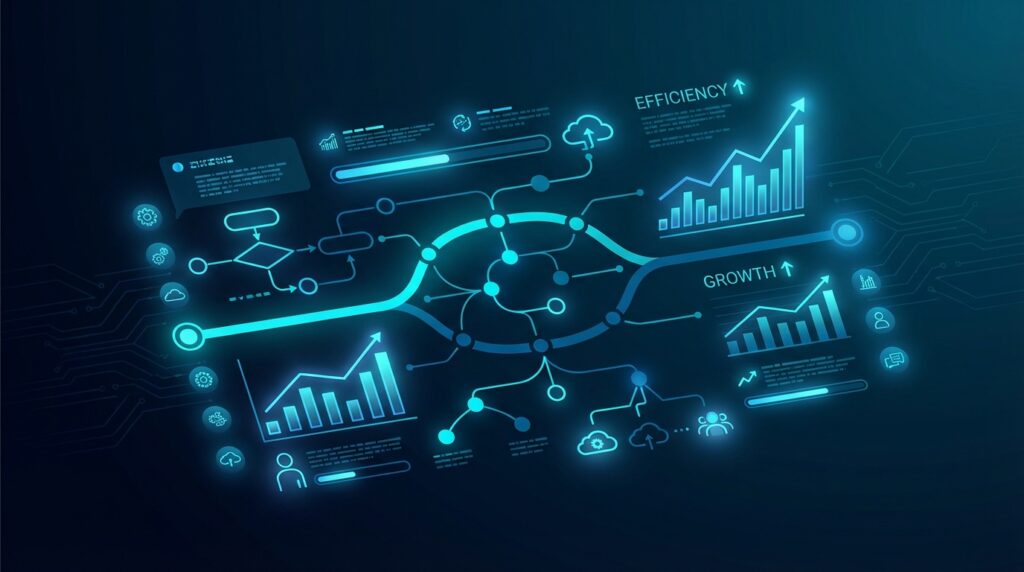
Modern AI Automation Services focus on three capabilities: intelligent workflow execution, system integration, and autonomous decision-making. AI agents qualify leads, screen candidates, schedule meetings, and personalize outreach across email, SMS, and WhatsApp. No manual intervention required. These agents connect directly to your CRM, ATS, or reservation platform to eliminate data silos and trigger actions based on real-time conditions.
The technology combines natural language processing with rules-based logic to manage exceptions. When a property inquiry arrives, the agent matches requirements to inventory, schedules viewings, and updates your CRM. When a candidate applies, the agent screens resumes against job criteria, ranks matches, and coordinates interview times. This goes beyond simple automation–agents learn from patterns and adapt responses to improve outcomes over time.
Why Mid-Market SMEs Need It Now: Time and Cost Savings Data
Deloitte research shows organizations implementing AI automation can achieve up to 66% productivity gains in core operations. PwC data indicates businesses can reduce manual processing time by 40-60%, translating to recovered staff hours worth thousands monthly.
Here’s the reality: mid-market companies face enterprise-level competition without enterprise budgets. AI business automation in real estate helps level that playing field.
ROI Reality Check: Real estate agencies report 30-50% time savings on follow-ups after deploying lead-qualification agents. Recruitment firms cut time-to-hire by half through automated candidate screening. Hospitality businesses increase revenue per guest by 15-25% with intelligent upsell automation.
The cost equation shifts dramatically. Traditional solutions often require new hires at $50,000-80,000 annually plus benefits. Custom AI agents cost a fraction while operating 24/7 with zero sick days. Small businesses historically lacked resources to build these systems. That barrier no longer exists.
Vynta AI’s Approach: Enterprise Agents Tailored for Real Results
Vynta AI develops custom AI agents specifically for real estate agencies, recruitment firms, fundraising organizations, and hospitality businesses. Our AI Automation Services start with discovery and assessment to identify your highest-value automation opportunities. We then build agents that integrate with your existing tools, deploy them in phases, and monitor performance against defined KPIs.
This service model differs from off-the-shelf software. We design workflows around your specific processes: how your agency qualifies property leads, how your recruitment team sources candidates, how your fundraising team tracks investor conversations, how your hotel manages reservation requests. Each agent receives ongoing optimization based on performance data. You get enterprise-grade automation without enterprise complexity or cost.
Real Estate: Automate Leads and Close Deals Faster
Lead Qualification and Property Matching That Drives Conversions
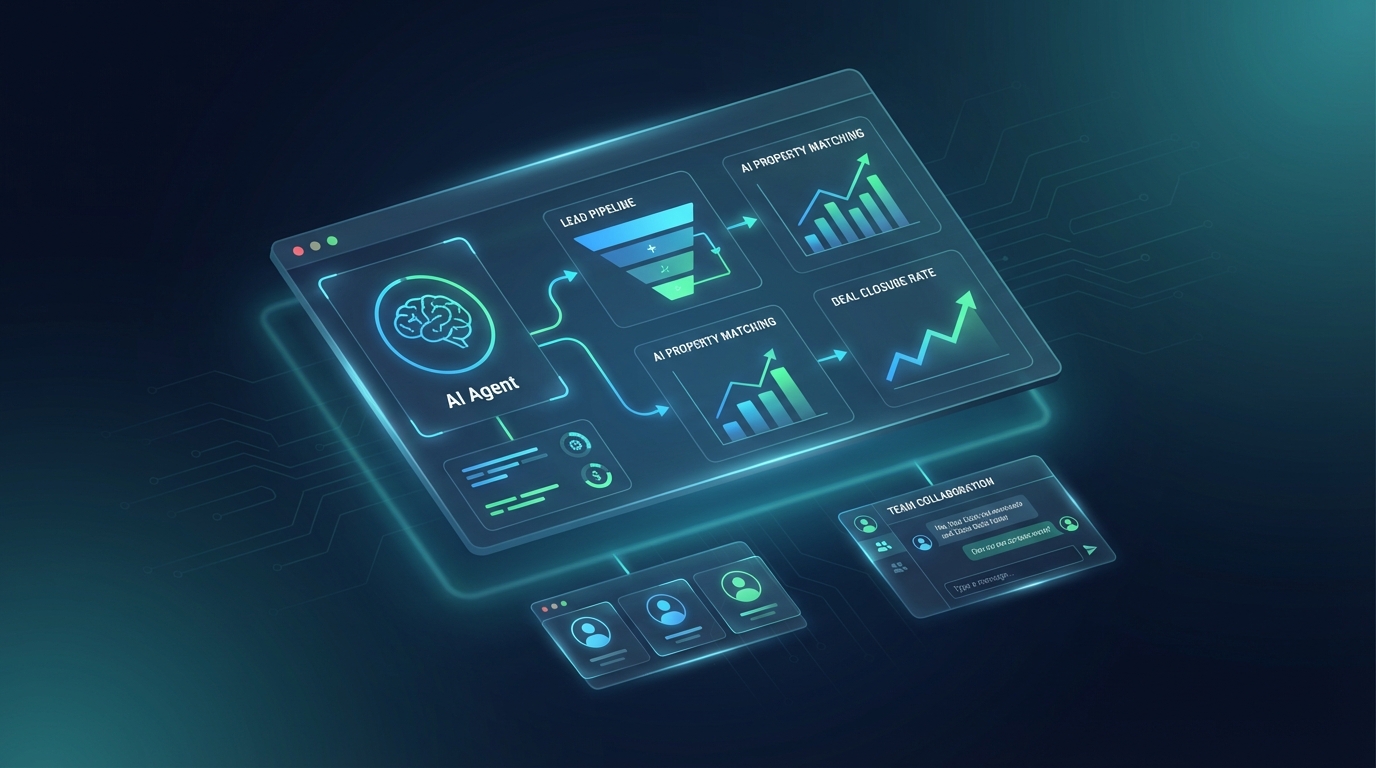
Real estate agencies lose 30-40% of potential buyers to slow response times and mismatched property recommendations. AI agents can qualify incoming leads within minutes by analyzing budget, location preferences, property type, and timing. The agent asks clarifying questions via SMS or email, scores lead quality based on predefined criteria, and routes high-intent prospects to agents immediately while nurturing lower-intent leads with relevant listings.
Property-matching automation connects lead requirements to your inventory database in real time. When a buyer searches for three-bedroom homes under $500,000 in specific school districts, the agent identifies matches, generates personalized property summaries, and schedules viewings automatically. This precision increases conversion rates by 25-35% compared to manual outreach because buyers receive relevant options while interest is highest.
CRM Integration for 30-50% Time Savings on Follow-Ups
AI business automation integrates directly with platforms like Salesforce, HubSpot, or Zoho to eliminate duplicate data entry and trigger follow-up sequences based on buyer behavior. When a lead opens a property-listing email three times, the agent recognizes high interest and notifies your sales team to call. When a viewing is scheduled, the system updates the CRM, sends confirmation messages, and adds reminders. Zero agent involvement required.
Agencies report recovering 15-20 hours weekly per agent previously spent on administrative tasks. One mid-sized real estate firm reduced follow-up response time from four hours to eight minutes using automated lead nurturing, resulting in a 42% increase in qualified appointments. The system handles routine communication while human agents focus on negotiation and relationship-building during deal stages.
Case Metrics: Higher Close Rates Without Adding Staff
Real estate agencies implementing intelligent lead qualification see 30-50% reductions in time spent on unqualified prospects. Conversion rates from inquiry to showing improve by 20-35% when AI agents provide instant, personalized responses. Close rates rise 15-25% because agents spend more time with serious buyers instead of chasing cold leads.
Revenue Impact: A 12-agent real estate firm automated lead intake and property matching, handled three times more inquiries without new hires, and closed 18 additional transactions in six months. The firm generated $270,000 in extra commission revenue while reducing cost per acquisition by 40%.
Recruitment: Streamline Hiring to Fill Roles in Half the Time
Candidate Screening and ATS Integration for Better Matches
Recruitment agencies spend 60-70% of sourcing time reviewing unqualified resumes. AI agents parse applications against job requirements, extract skills and experience data, and rank candidates by fit score within seconds. The system integrates with applicant tracking systems like Greenhouse, Lever, or Bullhorn to pull job descriptions, screen resumes automatically, and populate candidate profiles without manual data entry.
Advanced screening goes beyond keyword matching. Agents evaluate work history patterns, identify skill gaps, and flag candidates with nontraditional backgrounds who meet core requirements. This approach reduces bias while improving match quality. Recruitment directors report 40-60% fewer mismatched submissions to clients and 50% faster candidate shortlisting when AI handles initial screening.
Interview Scheduling Automation Reduces No-Shows by 40%
Coordinating interviews among candidates, hiring managers, and recruiters consumes 8-12 hours weekly for busy agencies. AI agents access calendar availability across parties, propose optimal times via SMS or email, send confirmations, and deliver reminders 24 hours before meetings. When conflicts arise, the system reschedules and notifies everyone involved automatically.
This automation cuts no-show rates by 35-40% through timely reminders and simple rescheduling. One recruitment firm reduced scheduling time from 45 minutes per interview to under five minutes, freeing coordinators to focus on candidate relationship-building. The system also tracks interview outcomes in the ATS to identify which screening criteria predict successful hires.
Placement Rate Improvements and Cost Per Hire Reductions
Recruitment agencies using AI business automation in recruitment achieve 25-40% improvements in time-to-fill metrics. Faster screening and scheduling compress hiring cycles from 45 days to 20-25 days on average. Placement rates increase 15-20% because recruiters spend more time on candidate coaching and client relationship management instead of administrative work.
Cost per hire drops 30-50% when automation handles high-volume tasks. A mid-market recruitment firm processing 200 applications monthly automated screening and interview coordination, reducing operational costs by $4,500 monthly while improving candidate quality scores by 28%. Human recruiters focus on nuanced assessments and negotiation, where their expertise delivers maximum value.
Fundraising and Hospitality: Scale Outreach and Guest Services
Fundraising: Investor Outreach and Donor Retention Automation
Fundraising organizations struggle to personalize outreach at scale. AI agents segment donor databases by giving history, interests, and engagement patterns, then generate tailored messages for each segment. The system tracks email opens, link clicks, and responses to identify warm prospects for personal follow-up. Automated sequences nurture relationships with consistent touchpoints while fundraising teams focus on major gift conversations.
Donor retention improves 20-30% when AI manages regular communication and recognition. One nonprofit automated thank-you messages, impact updates, and event invitations based on donor preferences, increasing repeat giving rates by 35%. The system flags declining engagement early, triggering re-engagement campaigns before donors lapse.
Hospitality: Reservation Management and Upsell Opportunities
Hotels and restaurants lose revenue to booking errors, no-shows, and missed upsell opportunities. AI agents manage reservation confirmations, send pre-arrival messages with upgrade offers, and coordinate special requests automatically. When a guest books a standard room, the system offers suite upgrades or spa packages via SMS at optimal times based on booking patterns.
Reservation no-shows decrease 25-35% through automated reminders and easy modification options. Upsell conversion rates increase 15-25% when AI personalizes offers based on guest history and preferences. A boutique hotel automated pre-stay communication and generated $18,000 in additional revenue quarterly from room upgrades and amenity packages, while improving guest satisfaction scores by 22%. See how Vynta AI Agents for Hospitality deliver these results.
Shared Metrics: Revenue Per Interaction Gains Across Verticals
Both fundraising and hospitality teams see two to three times higher response rates when AI personalizes outreach timing and content. Automation enables consistent follow-up that humans can’t maintain at scale. Organizations handle 50-100% more inquiries without additional staff while maintaining or improving quality. For a deeper understanding of business process improvements driving these results, see business process automation.
| Metric | Fundraising Impact | Hospitality Impact |
|---|---|---|
| Response Rate | 2.5x higher with personalized timing | 3x higher with targeted upsell offers |
| Retention/Repeat Rate | 30% donor retention improvement | 25% increase in repeat bookings |
| Revenue Per Contact | 35% higher average gift size | 20% higher revenue per guest |
| Staff Time Savings | 40% reduction in outreach administration | 50% reduction in booking coordination |
Implementation Steps and Results You Can Measure
5-Step Roadmap to Deploy AI Agents in Your Operations
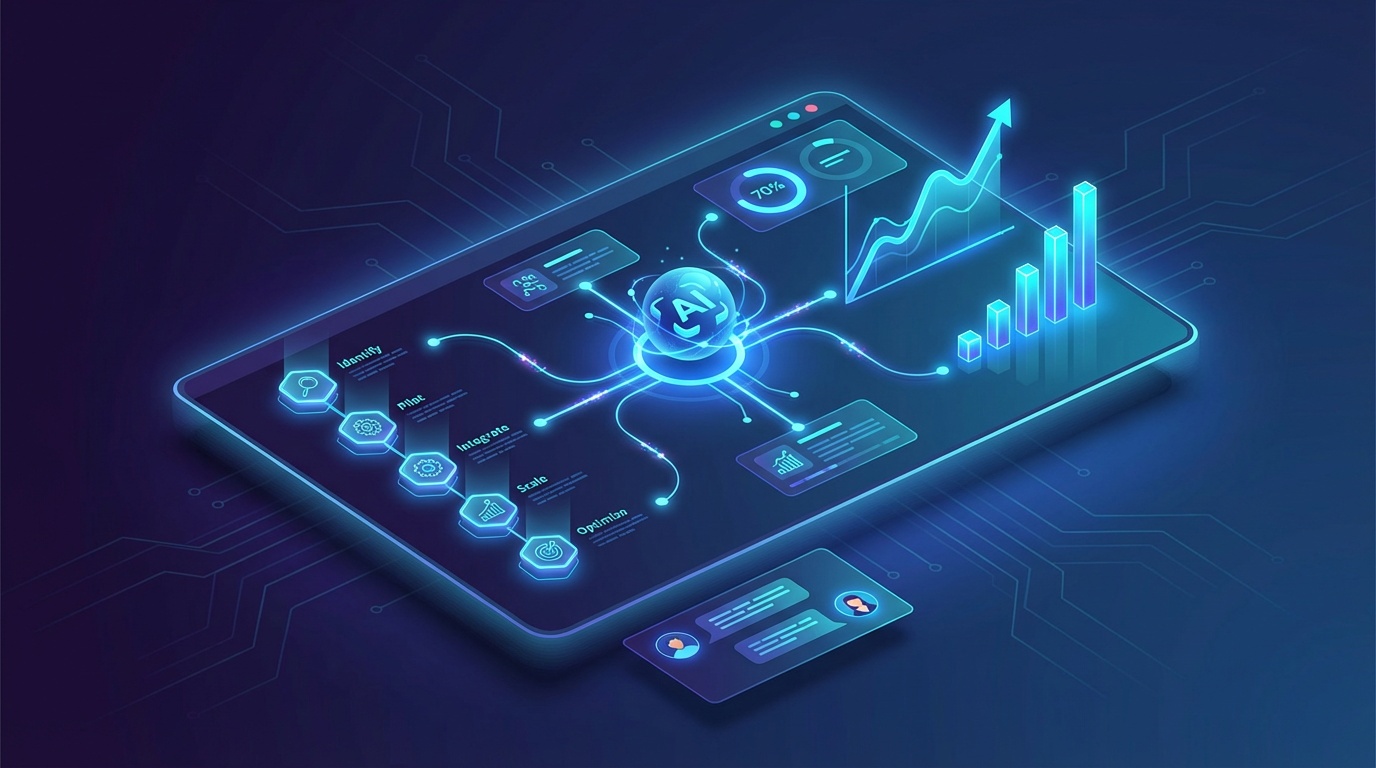
Successful AI business automation follows a structured deployment process. First, identify high-volume, repetitive workflows that consume the most staff time–lead qualification, candidate screening, donor outreach, or reservation management. Second, audit existing systems to map integration points with your CRM, ATS, or booking platform. Third, define success metrics like response time, conversion rates, or cost per transaction to track ROI.
Fourth, deploy agents in phases, starting with one workflow. Test thoroughly, gather feedback from staff, and refine before expansion. Fifth, monitor performance using defined KPIs and optimize based on results.
Vynta AI typically delivers initial automation within three to four weeks, with full deployment within eight to 12 weeks depending on complexity. For detailed economic analysis of AI impacts on firms, see the NBER paper on AI and firm productivity.
Common Concerns Addressed: Data Security and Human Oversight
Mid-market SMEs worry about data security and losing the human touch. Enterprise-grade AI agents use encrypted connections and support GDPR and CCPA compliance requirements. In most deployments, data remains in your existing systems–agents access only the information your staff already has access to. Human oversight remains central: agents handle routine tasks, while staff review exceptions and complex scenarios that require judgment. Agents flag edge cases for human decisions rather than attempting to manage every situation autonomously.
Training requirements are minimal. Most teams become proficient with agent dashboards within one week. The system learns from your corrections, improving accuracy over time without constant reprogramming. Ongoing monitoring and technical support help agents adapt as your business evolves, whether you’re scaling property listings, expanding recruitment territories, launching new fundraising campaigns, or opening additional hospitality locations. Learn more about the transformative role of AI across industries in this Brookings article on AI transformation.
Track Success: KPIs Like Time-to-Hire and Guest Satisfaction Scores
Measure impact through metrics that directly affect revenue. Real estate agencies should track lead response time (target: under five minutes), qualification accuracy (the share of agent-qualified leads that convert), and sales cycle length. Recruitment firms benefit from monitoring time-to-hire reductions, candidate quality scores from hiring managers, and cost per placement.
Fundraising organizations should measure donor outreach volume, response rates to personalized communications, and average gift size trends. Hospitality businesses gain insight from reservation conversion rates, upsell acceptance rates, no-show reductions, and guest satisfaction survey scores. Compare KPIs monthly against your pre-automation baseline to quantify ROI.
ROI Timeline: Most mid-market SMEs see measurable improvements within four to six weeks of deployment. Time savings appear first, followed by quality improvements as agents refine their understanding of business requirements.
Partner with Vynta AI for Proven Enterprise Deployment
Mid-market SMEs need AI automation partners who understand industry-specific challenges rather than generic technology vendors. Vynta AI’s AI Automation Services combine custom AI agent development, system integration with your existing tools, and workflow automation designed around real estate, recruitment, fundraising, and hospitality operations. Communication automation includes multichannel messaging and conversational AI tailored to client interactions in each vertical.
Performance intelligence includes automated analytics with predictive trend analysis and AI-generated recommendations aligned with your business model. Implementation support includes team training, ongoing monitoring, and optimization reviews to help agents deliver sustained value.
The result? Increased revenue, reduced operational costs, and improved efficiency without expanding headcount. Whether you’re qualifying property leads at midnight, screening hundreds of resumes, personalizing investor outreach at scale, or managing reservation requests across multiple channels, AI business automation changes how mid-market SMEs compete in 2026.
Frequently Asked Questions
What is AI business automation?
AI business automation uses intelligent agents to autonomously manage repetitive tasks across sales, marketing, and operations. For mid-market SMEs, this means significant productivity improvements, often 30-66%, and reduced operational costs without needing to expand headcount. It’s about empowering businesses to achieve more with existing resources.
How can AI automation help businesses increase revenue?
AI automation drives revenue growth by optimizing core processes and freeing up staff for high-value activities. For example, in real estate, our Agentic Systems convert property inquiries into viewings and sales through instant engagement and personalized follow-up, increasing qualified pipelines by 3x and conversion rates by 85%. This allows human agents to focus on negotiation and closing deals, directly impacting the bottom line.
What is the best AI automation for mid-market SMEs?
The most effective AI automation for mid-market SMEs isn’t a generic off-the-shelf product, but custom AI agents tailored to their specific workflows and existing systems. At Vynta AI, we design bespoke solutions for sectors like real estate, recruitment, and hospitality. This approach ensures measurable ROI within weeks by addressing unique operational challenges and integrating seamlessly with current tools.
Can AI be used for business automation?
Absolutely, AI is specifically designed for business automation, enabling intelligent agents to handle tasks that traditionally required manual intervention. These agents can qualify leads, screen candidates, schedule meetings, and personalize outreach across various channels. By connecting directly to your CRM or ATS, AI eliminates data silos and triggers actions based on real-time conditions, making operations more efficient.
What are the core components of AI business automation?
Core AI business automation services focus on intelligent workflow execution, system integration, and autonomous decision-making. AI agents combine natural language processing with rules-based logic to manage exceptions and learn from patterns. This allows them to adapt responses and improve outcomes, connecting directly with your existing platforms to streamline operations.