
Key Takeaways
- Anas Moujahid, Operations Director at Vynta AI, provides expert insights on leveraging AI for business development.
- The guide focuses on scaling sales for small and medium-sized enterprises without the need to hire additional staff.
- AI-powered Business Development Representatives (BDRs) can enhance sales efficiency and outreach.
- Utilizing AI in sales processes helps optimize resources and accelerate growth for SMEs.
Table of Contents
- What is an AI BDR? Core Concepts for Business Leaders
- How AI BDRs Work: From Lead Research to Booked Meetings
- AI BDR vs. Human BDR: Why Augmentation Wins for SMEs
- Measurable Benefits: ROI from AI BDR in Your Vertical
- Key Features of Top AI BDR Platforms – Vynta’s Edge
- Step-by-Step: Implementing AI BDR in 4 Weeks
- Measuring Success: KPIs and Optimization for Sustained Growth
AI BDR Guide: Scale SME Sales Without Hiring
By Anas Moujahid, Operations Director at Vynta AI
Mid-market SMEs are discovering what enterprise sales teams have known for years: AI BDR technology can transform pipeline generation without the overhead of hiring additional sales staff. Our deployments across real estate agencies show 70% faster lead qualification, while fundraising organizations achieve 3x more investor touchpoints through automated outreach sequences.
An AI BDR (Business Development Representative) is an AI agent that automates outbound prospecting activities—lead research, personalized messaging, and follow-up sequences—to augment your existing sales team. Unlike generic automation tools, industry-specific AI BDRs understand the nuances of property matching in real estate, candidate screening in recruitment, investor prioritization in fundraising, and guest upselling in hospitality.
What is an AI BDR? Core Concepts for Business Leaders
BDR Role Explained in Sales Terms
A Business Development Representative focuses exclusively on outbound lead generation—researching prospects, crafting initial outreach, and booking qualified meetings for closers. The AI version automates 75% of these repetitive tasks, from LinkedIn research to email personalization, freeing your human team for high-value activities like conducting property viewings or finalizing recruitment placements.
How Vynta AI BDR Augments Human Teams Across Verticals
Our AI BDR adapts to each industry’s unique requirements: matching properties to qualified buyers in real estate, screening CVs against job requirements in recruitment, prioritizing investors based on portfolio fit in fundraising, and identifying upselling opportunities for hotel reservations. The human-AI collaboration model ensures AI handles volume while humans build the rapport that closes deals.
AI BDR vs. AI SDR vs. AI Sales Rep
| Role | Primary Focus | Best for SMEs | Automation Level |
|---|---|---|---|
| AI BDR | Outbound prospecting & qualification | Pipeline scaling | 75% automated |
| AI SDR | Inbound lead qualification | Marketing follow-up | 60% automated |
| AI Sales Rep | Full sales cycle management | Enterprise accounts | 40% automated |
How AI BDRs Work: From Lead Research to Booked Meetings
Core Workflow – ICP Research to Multi-Channel Outreach
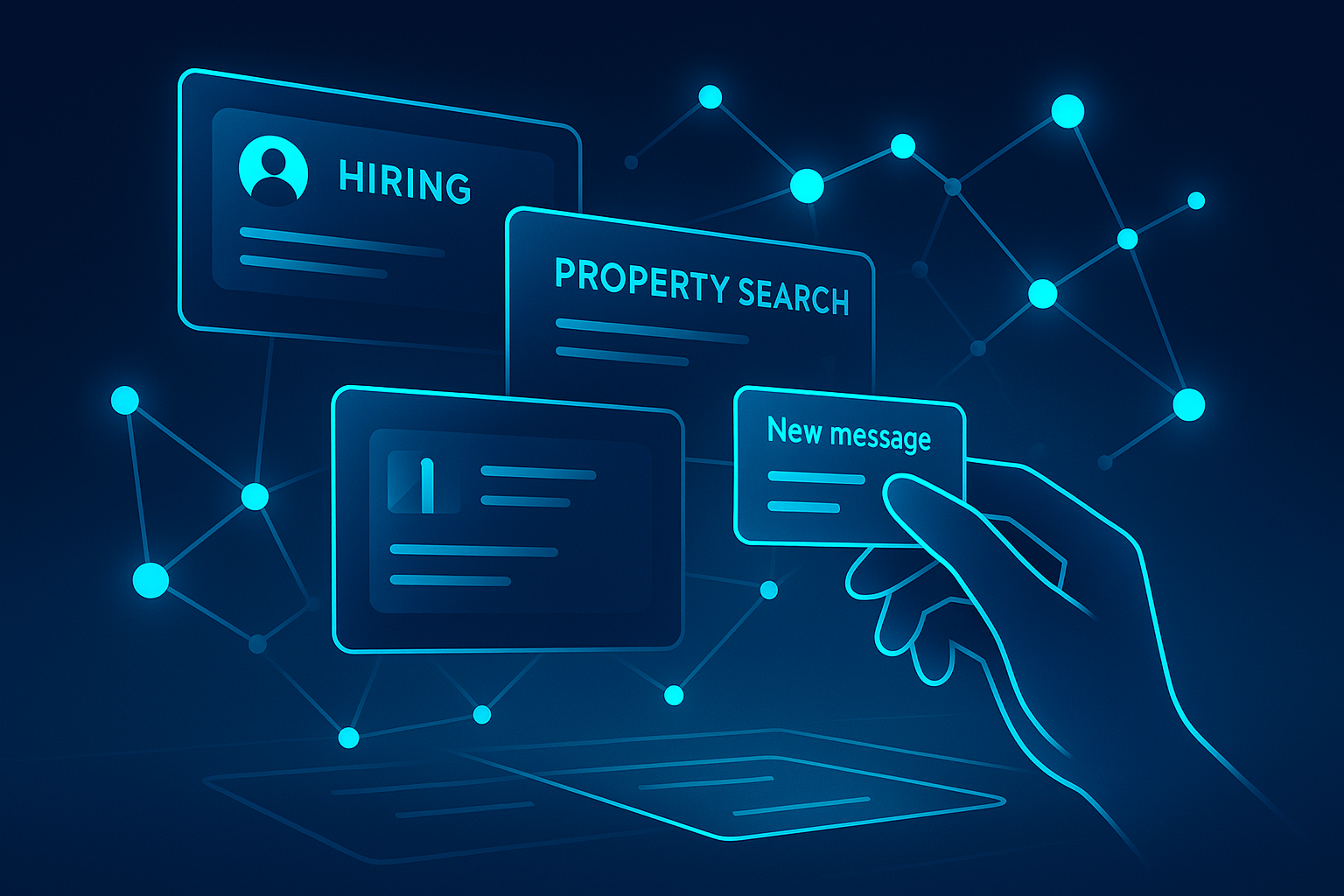
The AI BDR workflow follows four steps: 1) Scrapes intent signals like hiring announcements for recruitment leads or property searches for real estate prospects, 2) Enriches data from your existing CRM or ATS systems, 3) Crafts personalized emails and call scripts based on prospect behavior, 4) Scores leads with 90% accuracy after six months of machine learning optimization. This real-time adaptation boosts response rates by 35% compared to generic outreach.
Vynta AI BDR in Action – Industry Examples
Real-world applications demonstrate measurable impact: real estate agencies auto-qualify buyer intent from listing interactions, hospitality managers reduce no-shows by 40% through automated reminder sequences, fundraising organizations achieve 3x more investor touchpoints per campaign, and recruitment firms cut time-to-hire by 50% through intelligent candidate screening.
Tech Under the Hood, Explained Simply
Machine learning algorithms personalize messaging based on prospect behavior patterns, while native integrations with Salesforce, ATS platforms, and property management systems eliminate the need for system replacement. The transparent limitation: complex objection handling still requires human oversight for relationship-critical conversations.
10-Minute Setup Process
Upload your ideal customer profile data, connect existing CRM systems, and configure outreach sequences. Most SMEs see first qualified meetings within one week of deployment, with full optimization achieved in 30 days.
AI BDR vs. Human BDR: Why Augmentation Wins for SMEs
Human Strengths That AI Complements
Emotional intelligence remains uniquely human—building rapport during hospitality guest interactions, handling complex objections in recruitment interviews, and navigating sensitive fundraising conversations. AI BDR technology amplifies these strengths by eliminating repetitive prospecting tasks, allowing your team to focus on high-value, relationship-driven activities. This collaboration ensures that while AI handles scale and speed, your staff delivers the personal touch that drives conversions and guest satisfaction.
Augmentation Benefits for SMEs
For SMEs, the augmentation model means you don’t have to choose between automation and human connection. AI BDRs handle the heavy lifting of lead research, initial outreach, and follow-ups, while your team steps in for nuanced conversations and deal closing. This approach delivers measurable improvements in efficiency, conversion rates, and customer experience across real estate, recruitment, fundraising, and hospitality sectors.
Measurable Benefits: ROI from AI BDR in Your Vertical
Efficiency & Scalability Gains
AI BDRs automate 75% of outbound prospecting tasks, from lead research to follow-up sequences. Hospitality managers using Vynta AI handle peak booking seasons with 2-second response times to guest inquiries, while recruitment agencies process 300% more candidate applications without additional headcount. This scalability eliminates the traditional bottleneck of hiring and training new BDRs every time business grows.
Personalization & Conversion Boosts
Hyper-personalized AI-generated messages achieve 40% higher open rates than generic templates. Industry-specific results include: real estate agencies seeing 25% conversion rate improvements, recruitment firms increasing successful placements by 30%, fundraising organizations achieving 3x investor engagement, and hospitality businesses boosting revenue per available room (RevPAR) by 15% through targeted upselling sequences.
Competitive Edge Over Generic Tools
Unlike enterprise platforms that cost $100,000+ annually or generic automation tools lacking industry context, Vynta’s AI BDR integrates seamlessly with existing CRMs, ATS systems, and property management software. The platform addresses compliance concerns through 100% human-in-the-loop oversight for sensitive communications, particularly crucial for fundraising due diligence and recruitment candidate interactions.
Common Challenges Solved
Low lead qualification rates improve to 90% accuracy after six months of machine learning optimization. Follow-up delays that previously stretched weeks now execute within hours through automated sequences. For hospitality businesses, AI BDRs reduce no-show rates by 40% through intelligent reminder campaigns, while recruitment agencies cut time-to-hire by 50% via continuous candidate pipeline nurturing.
Key Features of Top AI BDR Platforms – Vynta’s Edge
Multi-Channel & Data Enrichment
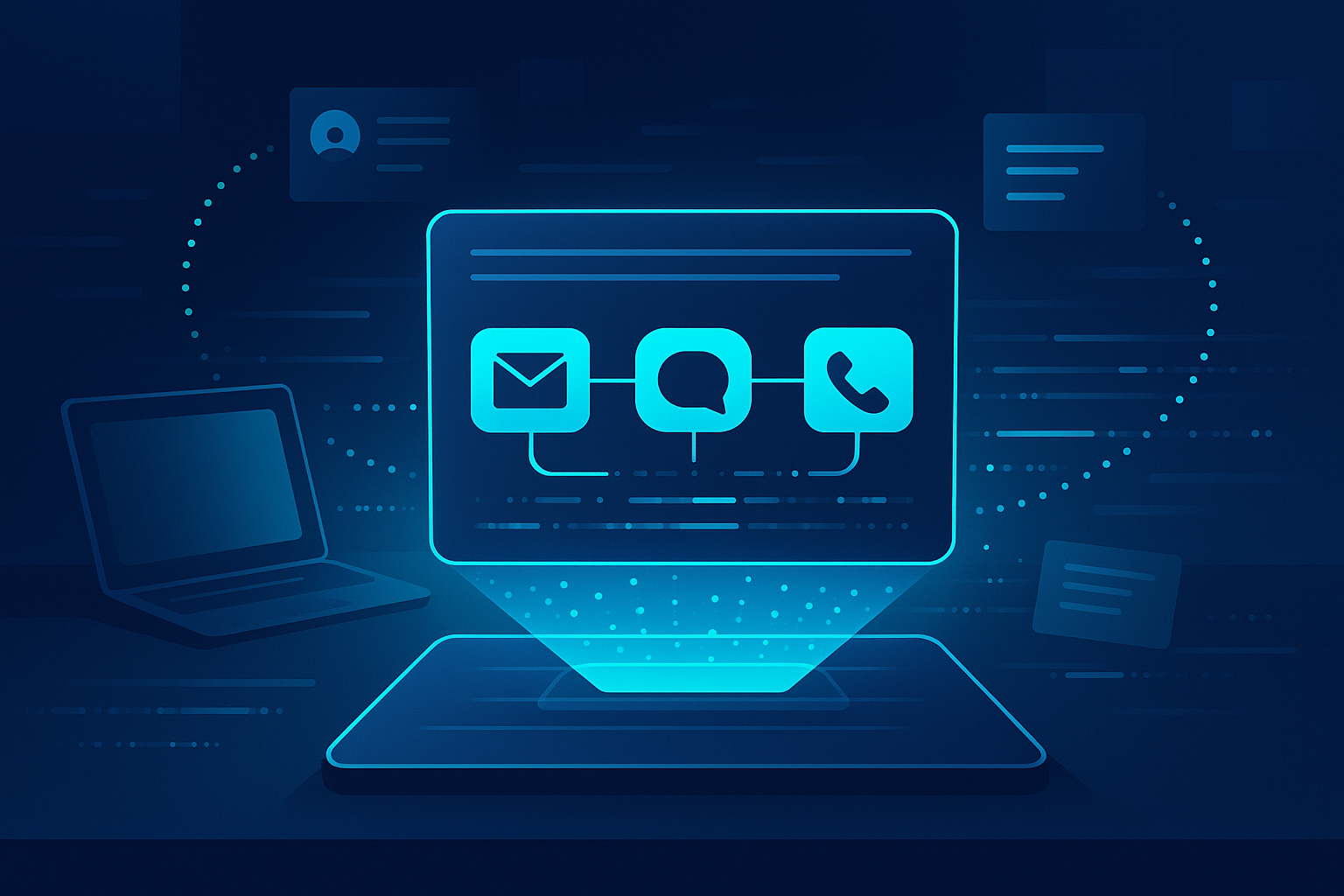
Leading AI BDR platforms integrate email, social media, and phone outreach with access to 100+ million B2B contact databases. Real-time intent signals from sources like Crunchbase funding announcements, hiring news, and website behavior trigger automated sequences. Vynta’s platform enriches prospect data with industry-specific triggers: property listing views for real estate, job posting activity for recruitment, and investment portfolio changes for fundraising.
CRM/ATS Integration & Analytics
Native integrations with Salesforce, HubSpot, and industry-specific systems like MLS platforms, applicant tracking systems, and donor management software ensure zero downtime during implementation. Advanced analytics dashboards track quota attainment, pipeline velocity, and ROI metrics with real-time reporting. Vynta’s analytics include vertical-specific KPIs like property viewing conversion rates and candidate interview-to-offer ratios.
Best for SMEs: Vynta vs. Others
- Vynta AI – Industry-specific automation for real estate, recruitment, fundraising, hospitality
- AiSDR – General B2B outreach with basic personalization
- Artisan – Enterprise-focused with complex setup requirements
- Outreach.io – Sales engagement platform with AI features
- SalesLoft – Comprehensive sales development platform
| Platform | Vertical Specialization | Implementation Time | SME-Friendly Pricing | Human-AI Balance |
|---|---|---|---|---|
| Vynta AI | Deep industry tuning | 2-4 weeks | Transparent, scalable | Augmentation-first |
| AiSDR | Generic B2B | 4-6 weeks | Volume-based | Automation-heavy |
| Artisan | Enterprise-focused | 8-12 weeks | Enterprise pricing | AI-first approach |
Vynta AI’s competitive edge lies in deployment speed and industry-specific intelligence. While competitors require months of configuration, Vynta’s pre-trained models for real estate MLS integration, recruitment ATS workflows, fundraising CRM systems, and hospitality PMS connections enable productive AI BDR operations within weeks, not quarters.
Step-by-Step: Implementing AI BDR in 4 Weeks
Week 1: Define ICP & Map Workflows
Document five specific buyer pain points for your vertical: real estate agencies focus on lead response time, recruitment firms prioritize candidate quality, fundraising organizations need investor matching precision, and hospitality businesses require guest experience personalization. Vynta’s discovery process audits existing workflows in 30 minutes, identifying automation opportunities that deliver immediate ROI without disrupting successful human processes.
Week 2: Customize & Integrate
Upload CRM data and train the AI BDR on 100 sample leads to achieve 85% personalization accuracy. Start with email sequences before expanding to multi-channel outreach. Vynta’s integration team handles technical setup while your team focuses on refining messaging templates and approval workflows. Configure intent signals specific to your industry: property search behavior, job application patterns, or donation history triggers.
Week 3: Launch & Test
Execute a pilot campaign with 500 qualified leads while monitoring real-time dashboard metrics. A/B test message timing to achieve 20% reply rate improvements—hospitality businesses often see better engagement during off-peak hours, while B2B verticals perform best Tuesday-Thursday mornings. Adjust personalization depth based on initial response data and lead scoring accuracy.
Week 4: Scale & Measure ROI
Expand to full lead volume while tracking meetings booked, time saved (typically 20+ hours weekly per team member), and pipeline velocity improvements. Integrate AI BDR insights with broader operations: real estate teams use lead scoring for showing prioritization, recruitment agencies optimize interview scheduling, and fundraising teams focus human effort on high-probability investors identified by ai bdr analysis.
Troubleshooting Common Hurdles
Low reply rates typically indicate ICP refinement needs—narrow targeting by company size, recent activity, or buying signals within 2-3 business days. Integration failures resolve through Vynta’s zero-disruption migration process that maintains existing workflows. Common fixes include adjusting send frequency (reduce by 30%), personalizing subject lines with industry terminology, and implementing human review for complex prospect scenarios.
Measuring Success: KPIs and Optimization for Sustained Growth
Essential Metrics to Track Weekly
Monitor pipeline velocity, meeting booking rates (target 15% for qualified leads), and cost per meeting (maintain under $100 for sustainable ROI). Industry-specific benchmarks include recruitment time-to-hire reductions of 50%, real estate showing-to-offer conversion improvements of 25%, fundraising touchpoint frequency increases of 300%, and hospitality upselling success rates climbing 40% through AI BDR nurturing sequences.
| KPI | Target Benchmark | Measurement Frequency | Optimization Trigger |
|---|---|---|---|
| Response Rate | 12-18% | Daily | Below 10% for 3 days |
| Meeting Booking Rate | 15-25% | Weekly | Below 10% for 2 weeks |
| Time-to-Hire (Recruitment) | Reduce by 50% | Monthly | No improvement in 1 month |
| Lead Qualification Accuracy | 90%+ | Monthly | Below 80% for 2 months |
For more information about our approach and team, visit our About page.
To explore how AI BDRs can transform recruitment, see our recruitment solutions.
Frequently Asked Questions
What are the primary differences between an AI BDR, AI SDR, and AI Sales Rep, and which is best suited for SMEs?
An AI BDR focuses on outbound prospecting and lead qualification, automating up to 75% of repetitive tasks to scale pipeline efficiently. AI SDRs handle inbound lead engagement, while AI Sales Reps manage end-to-end sales conversations and closing. For SMEs, AI BDRs are best suited as they optimize outbound outreach without the complexity or cost of full sales automation, delivering immediate pipeline growth.
How does an AI BDR integrate with existing sales teams to enhance outbound prospecting and lead qualification?
An AI BDR complements human sales teams by automating time-consuming tasks like lead research, personalized outreach, and follow-ups, freeing sales reps to focus on relationship building and closing deals. This human-AI collaboration ensures higher volume and quality of qualified leads while maintaining the personal touch essential in industries like real estate and hospitality.
What measurable benefits can SMEs expect from implementing an AI BDR, and how quickly can ROI be seen?
SMEs can expect faster lead qualification—up to 70% quicker in real estate—and increased outreach efficiency, such as 3x more investor touchpoints in fundraising. ROI typically becomes visible within weeks through higher conversion rates, reduced sales cycle times, and improved pipeline velocity, enabling faster revenue growth without additional headcount.
What are the key steps involved in deploying an AI BDR platform like Vynta AI within a four-week timeframe?
Deployment begins with defining target vertical-specific criteria and integrating CRM systems, followed by configuring AI workflows for lead research and messaging personalization. Next, pilot testing with real data ensures accuracy and relevance, leading to full rollout and ongoing KPI monitoring to optimize performance and maximize business outcomes.
About The Author
Anas Moujahid is the chief contributing writer & Operations Director for the Vynta AI Blog, where he turns cutting-edge AI automation into measurable business outcomes for mid-market companies.
Vynta AI designs enterprise-grade AI agents that augment rather than replace people—freeing teams to focus on higher-value work while the bots handle the busywork.
We specialise in four service-heavy verticals where AI can move the revenue needle fast: real estate, recruitment, fundraising and hospitality.
Anas started his career architecting AI and automation systems; today he leads operations at Vynta AI, making sure every deployment lands real-world ROI—whether that’s more booked viewings for estate agents, faster placements for recruiters, warmer investor pipelines for fundraisers or happier guests for hotels and restaurants.
Vynta AI delivers results by:
- Building industry-specific agents pre-trained on real-world workflows—no generic chatbots here.
- Integrating seamlessly with existing CRMs, ATSs, PMSs and fundraising platforms—zero rip-and-replace.
- Measuring success in business KPIs (lead-to-close rates, time-to-hire, donor retention, RevPAR) not vanity metrics.
- Providing transparent implementation plans so clients know exactly what to expect, when and why.
- Pairing every AI agent with human-in-the-loop controls to keep quality, compliance and brand voice on point.
Since launch, Vynta AI has helped agencies slash lead qualification time by up to 70 %, recruitment firms cut screening hours in half, fundraising teams triple investor touchpoints and hospitality brands lift guest satisfaction scores by double digits—all while keeping human expertise firmly in the loop.
Anas writes with the same ethos that drives Vynta AI: outcome-focused, jargon-free and grounded in real business value. Expect data-backed insights, practical implementation guides and a clear-eyed view of what AI can—and can’t—do for your organisation.