

AI Automation Services Guide: Scale Revenue Without Expanding Headcount
Mid-market businesses face a major challenge: scaling operations without proportional headcount growth. Companies that implement specialized AI agents report 3x qualified pipeline increases and 85% conversion rates while saving more than 20 hours per week per team member. This guide explains how intelligent automation delivers measurable outcomes across real estate, recruitment, fundraising, and hospitality–without replacing your team’s expertise.
AI automation deploys intelligent agents that handle repetitive workflows: lead qualification, candidate screening, donor outreach, and guest communications. You gain enterprise-grade capabilities without enterprise budgets. The key? Industry-specific solutions instead of generic platforms.
What AI Automation Services Deliver for Mid-Market Businesses
Core Components of AI Automation in Business Terms
Modern AI agents combine intelligent processing with your existing business systems to handle high-volume, repetitive tasks. They operate across WhatsApp, SMS, email, and website chat to capture inquiries, qualify prospects, match needs to solutions, and coordinate next steps.
Unlike basic chatbots, these agents understand context, personalize interactions, and integrate with CRM, ATS, and reservation systems to update records automatically. No manual data entry required.
The workflow operates in four stages:
- Instant 24/7 engagement captures every inquiry within 60 seconds
- AI-driven qualification routes prospects based on fit criteria
- Automated matching suggests relevant properties or candidates
- Personalized follow-up nurtures relationships until conversion
This augments human capabilities rather than replacing expertise. Your team focuses on negotiations, relationship building, and complex decisions while automation handles administrative tasks.
Expected ROI Metrics from Real Implementations
Real estate agencies using specialized AI automation see qualified pipelines grow 3x while conversion rates reach 85%. Agents save more than 20 hours weekly by automating 80% of administrative tasks, enabling 30% more deals closed per person.
Client retention improves by 85%. Satisfaction scores rise 27%. The result? More than $100,000 in additional revenue per agent annually.
ROI Reality Check: Response time drops from hours to under 60 seconds. Viewing no-shows decrease through automated reminders. Your team focuses on high-value activities instead of data entry and scheduling.
Why Specialized Services Beat Generic Tools
Most mid-market companies lack internal AI resources but face the same competitive pressures as enterprise organizations. Here’s the problem: generic automation tools miss industry nuances.
Real estate needs property-matching logic. Recruitment requires ATS integration for candidate tracking. Fundraising demands investor relationship management. Hospitality benefits from upsell optimization during reservation workflows.
Specialized AI automation services bridge this gap with pre-built workflows tailored to vertical-specific processes. You get enterprise capabilities at mid-market budgets while maintaining the personal touch that defines service excellence.
Industry-Specific AI Automation Examples Across Key Verticals

| Vertical | Primary Use Case | Key Metric Impact | Time Savings |
|---|---|---|---|
| Real Estate | Lead qualification and property matching with virtual tour delivery | 3x qualified pipeline, 85% conversion rate | 20+ hours per agent weekly |
| Recruitment | Candidate screening and ATS workflow automation | 50%+ placement increase, 60%+ reduced hiring cycle | 2 hours per hire saved |
| Fundraising | Investor outreach personalization and campaign tracking | 40% higher response rates, systematic follow-up | 12+ hours per development officer weekly |
| Hospitality | Guest reservation management and upsell automation | 25% revenue per guest increase, reduced no-shows | 10+ hours per manager weekly |
Real Estate: Automating Lead Qualification and CRM Workflows
Property inquiries receive instant engagement across all channels. AI agents qualify prospects based on budget, location preferences, and timeline. The system automatically matches qualified leads to relevant listings, sends personalized recommendations including virtual tours, and coordinates viewing appointments with calendar integration.
Automated reminders reduce no-shows. Post-viewing feedback collection refines future suggestions, creating a self-improving qualification process.
Learn more about our Agentic Systems for Real Estate designed for property matching and lead management.
Recruitment: Streamlining Candidate Screening and ATS Integration
Recruitment firms deploy AI agents to screen incoming applications against role requirements, automatically updating ATS records with qualification scores and interview availability. The system processes applications from CV Library, Indeed, Reed, TotalJobs, and LinkedIn.
AI processes more than 100,000 CVs per day, screening candidates in under 10 seconds. Candidate matching accuracy reaches 85%. The system engages candidates 24/7 through the WhatsApp Business API.
Interview coordination runs on autopilot: scheduling, confirmations, reminders, and preparation materials all automated. This reduces the hiring cycle by more than 60% and saves approximately 2 hours per hire while improving match quality through consistent evaluation criteria.
Discover how Agentic Systems for Recruitment can streamline your candidate screening and ATS workflows.
Fundraising: Optimizing Investor Outreach and Campaign Tracking
Fundraising organizations use AI automation to personalize investor communications based on giving history, interest areas, and engagement patterns. The system tracks campaign responses, schedules follow-up touchpoints at optimal intervals, and alerts development officers when high-value prospects show interest signals.
This systematic approach increases response rates by 40% while ensuring no potential donor falls through the cracks during multi-month cultivation cycles.
Explore our AI-Powered Fundraising Platform to boost your donor engagement and campaign effectiveness.
Hospitality: Improving Guest Reservations and Upsell Opportunities
Hotels and restaurants implement AI agents to manage reservation inquiries, suggest room upgrades or premium dining experiences based on guest preferences, and send pre-arrival communications that build anticipation.
The system reduces no-shows through automated confirmations and reminders while identifying upsell opportunities that increase revenue per guest by 25%. Post-stay feedback collection informs future personalization, creating memorable experiences that drive repeat bookings.
Find out how Vynta AI Agents for Hospitality can transform your guest communication and upsell strategies.
Platforms vs. Agencies: Which Path Fits Your Business Goals
Limitations of Off-the-Shelf AI Platforms for SMEs
Generic AI platforms require significant internal resources to configure, integrate with existing systems, and maintain over time. Most mid-market businesses lack dedicated IT staff to manage complex API connections, train models on industry-specific data, or troubleshoot integration failures.
These platforms offer broad functionality but miss the nuanced workflows that define success in property matching, candidate assessment, donor cultivation, or guest journey optimization.
Pros of Off-the-Shelf Platforms
- Lower initial cost than custom development
- Faster deployment for basic automation needs
- Self-service configuration for technical teams
Cons of Off-the-Shelf Platforms
- Require internal technical expertise to implement and maintain
- Generic workflows miss industry-specific requirements
- Integration challenges with existing CRM and ATS systems
- No strategic guidance on prioritizing automation opportunities
Advantages of Partnering with a Specialized AI Agency
Specialized AI agencies bring pre-built workflows designed for specific verticals, eliminating months of configuration work. They handle system integration, provide strategic guidance on high-impact automation areas, and offer ongoing optimization as business needs evolve.
This partnership model delivers enterprise-grade AI automation without requiring internal AI expertise. Your team focuses on core competencies while technology partners manage technical complexity.
When to Choose Custom Enterprise AI Agents
Custom enterprise AI agents make sense when business processes differ significantly from industry standards or when competitive advantage depends on proprietary workflows.
Companies with unique qualification criteria, complex multi-stage approval processes, or highly regulated environments benefit from tailored solutions. The investment pays off through differentiated customer experiences and operational efficiencies that generic tools can’t replicate.
Steps to Implement AI Automation and Measure Results
Assess Your Processes and Prioritize High-Impact Areas
Start by mapping current workflows to identify repetitive, high-volume tasks that consume team time without requiring expert judgment.
Real estate agencies typically prioritize lead qualification and viewing coordination. Recruitment firms focus on initial candidate screening and interview scheduling. Fundraising organizations target donor communication sequences. Hospitality businesses automate reservation management and guest communication.
Calculate current time spent on these activities to establish baseline metrics for measuring improvement.
Integrate AI Agents with Existing CRM and ATS Systems
Successful implementation requires smooth data flow between AI agents and existing business systems. This integration ensures that lead scores, candidate assessments, donor interactions, and guest preferences update automatically without manual data entry.
Work with providers who offer pre-built connectors to popular platforms in your industry. Test workflows with small pilot groups before full deployment to identify edge cases and refine qualification criteria based on actual results.
Implementation Timeline: Discovery and strategy phases typically require 2-4 weeks to map processes and prioritize opportunities. Integration and testing add another 3-6 weeks depending on system complexity. Full deployment with team training completes within 8-12 weeks from project start.
Track Key Metrics and Scale Success Across Operations
Monitor response times, conversion rates, time savings per team member, and revenue impact from day one.
Real estate teams track qualified pipeline growth and deals closed per agent. Recruitment firms measure time-to-hire and placement quality. Fundraising organizations monitor donor response rates and cultivation cycle length. Hospitality businesses analyze revenue per guest and satisfaction scores.
Use these metrics to refine AI agent behavior, expand automation to additional workflows, and demonstrate ROI to stakeholders.
Why Vynta AI Delivers Proven Results in AI Automation
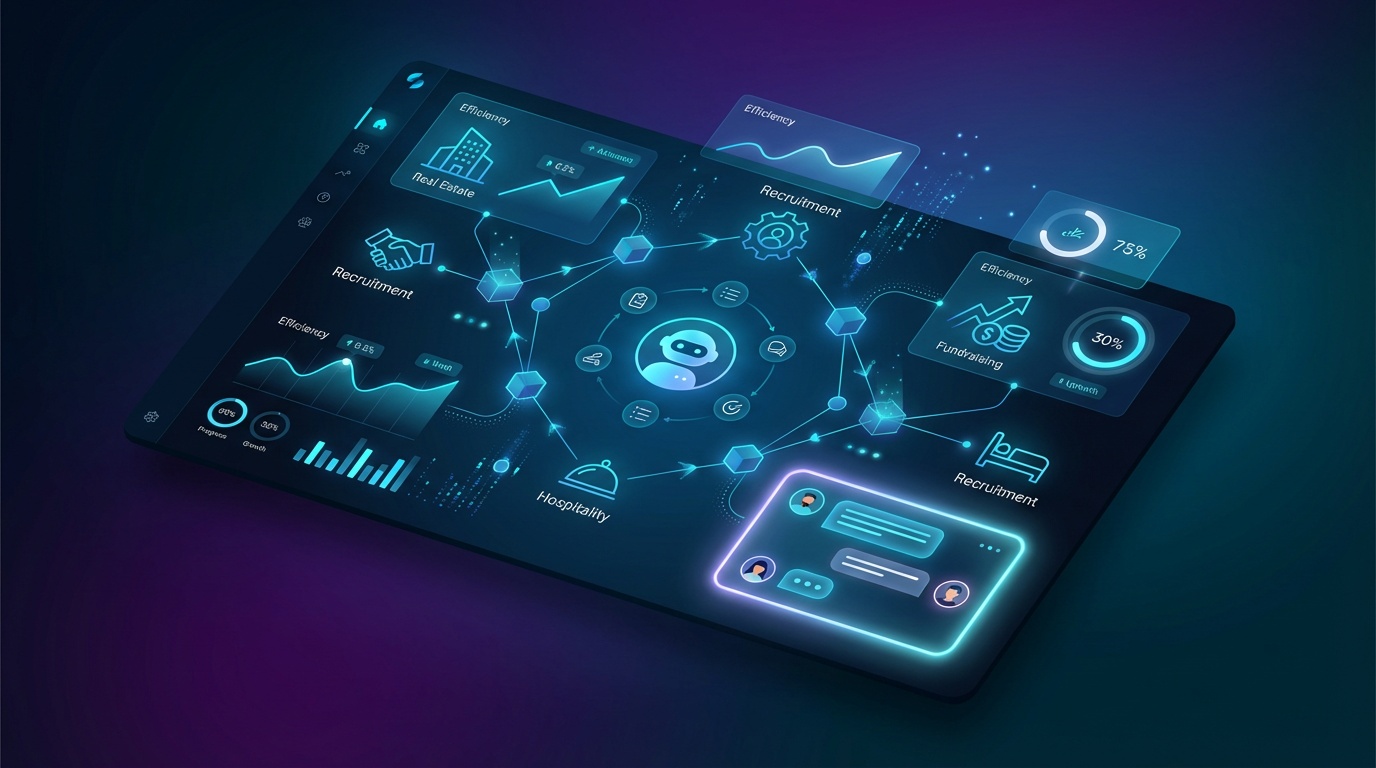
Our Track Record in Real Estate, Recruitment, Fundraising, and Hospitality
Vynta AI specializes in enterprise AI agents built specifically for mid-market businesses across four verticals. Our real estate solutions help agencies handle more properties and close more deals without expanding teams.
We understand the unique challenges of property matching, candidate assessment, donor cultivation, and guest experience management because we focus exclusively on these industries.
Next Steps to Start Your Automation Journey
Ready to scale operations without proportional headcount growth? Contact Vynta AI to discuss your specific challenges in real estate, recruitment, fundraising, or hospitality.
Our team will assess your current processes, identify high-impact automation opportunities, and provide a clear implementation roadmap with expected ROI metrics. Join mid-market companies already saving more than 20 hours per week while increasing conversion rates and revenue per team member.
Choosing the Right AI Automation Partner for Long-Term Success
Evaluation Criteria Beyond Initial Cost
Selecting an AI automation services provider requires looking past sticker price to total value delivered. Assess whether the provider demonstrates deep understanding of your vertical’s specific workflows.
Real estate agencies need partners who comprehend property matching and CRM integration nuances. Recruitment firms require expertise in ATS systems and candidate engagement patterns. Fundraising organizations benefit from providers experienced in donor cultivation cycles. Hospitality businesses need specialists who understand reservation systems and guest journey optimization.
Examine the provider’s approach to human-AI collaboration. Solutions that augment rather than replace your team’s expertise deliver superior outcomes.
Request concrete examples of measurable results from similar businesses: qualified pipeline growth percentages, time savings per employee, conversion rate improvements, and revenue impact. Transparent providers share realistic implementation timelines and address common adoption challenges upfront rather than promising instant transformation.
Integration Capabilities with Your Existing Technology Stack
Successful AI automation connects with systems your team already uses daily. Verify that providers offer pre-built integrations to your CRM, ATS, donor management platform, or reservation system.
Custom API development adds months to implementation and increases ongoing maintenance costs. Ask about data synchronization frequency, error-handling protocols, and the plan if upstream systems change interfaces.
Consider the provider’s approach to multi-channel communication. Modern AI agents must operate across WhatsApp, SMS, email, and website chat without creating disconnected experiences. Unified conversation history across channels enables personalized interactions that feel natural rather than robotic.
Test how the system handles channel switching when prospects move from an initial website inquiry to a text message follow-up to an email confirmation.
Scalability as Your Business Grows
AI automation should expand capabilities as your operations mature. Initial implementations typically focus on one high-impact workflow: lead qualification or candidate screening.
Effective partners provide clear pathways to automate additional processes once foundational systems prove successful. Real estate agencies might start with inquiry management, then add property matching, viewing coordination, and post-sale follow-up over time.
Evaluate how pricing models accommodate growth. Per-seat licensing works well when team size remains stable. Volume-based pricing suits businesses expecting significant transaction increases. Some providers offer hybrid models that balance predictable base costs with usage-based scaling.
Clarify whether advanced features such as custom matching algorithms or sophisticated reporting require tier upgrades or come standard.
Addressing Common Concerns About AI Adoption in Traditional Industries
Maintaining Personal Touch While Automating Workflows
Service industries built on relationships often fear that automation erodes the personal connections that drive client loyalty. Here’s the reality: well-designed AI automation strengthens these relationships by freeing professionals from administrative work.
Real estate agents spend more time on property tours and negotiations when AI handles inquiry screening. Recruiters conduct deeper candidate interviews when automation manages initial assessments. Fundraising officers build stronger donor relationships when systematic follow-up runs automatically.
The technology enables personalization at scale that humans can’t match manually. AI agents retain previous interaction context, preferences, and conversation detail across long engagement cycles. They suggest relevant properties based on preference patterns, recommend candidates whose skills align with role requirements, and time donor outreach based on engagement history.
This creates more personalized experiences than overwhelmed teams managing hundreds of relationships through spreadsheets and memory.
Client Perspective: Prospects who receive sub-60-second responses and well-matched recommendations perceive higher service quality than those who wait hours for generic replies. The combination of instant AI engagement plus expert human guidance at decision points delivers a superior experience.
Data Security and Privacy in Automated Systems
AI automation processes sensitive information: financial qualifications, employment history, donor capacity data, and personal preferences.
Reputable providers implement enterprise-grade security protocols. Encryption for data in transit and at rest. Role-based access controls that limit which users can see specific information. Alignment with privacy requirements such as GDPR and CCPA.
Request documentation of security controls and incident response procedures before sharing customer data.
Understand how the system uses data to improve performance. Some AI agents learn from aggregated patterns across clients to refine matching and qualification logic. Others maintain strict data isolation so your information doesn’t contribute to models used by other customers.
Clarify data retention policies, deletion procedures, and whether you retain ownership of conversation histories and analytics if you change providers.
Training Teams to Work Effectively with AI Agents
Successful adoption requires helping teams understand evolving roles. Professionals shift from handling every inquiry manually to reviewing AI-qualified prospects, refining matching criteria based on outcomes, and focusing on complex situations that require human judgment.
Early resistance often stems from fear of obsolescence rather than technology complexity. Position automation as a way to remove tedious tasks that prevent professionals from applying expertise where it matters most.
Effective training emphasizes collaboration patterns: how agents surface high-priority opportunities that need immediate attention, when to override AI recommendations based on contextual knowledge, and how to provide feedback that improves system performance.
Most teams adapt within weeks once they clear administrative backlogs and close more deals through better-qualified pipelines.
Future of AI Automation in Service Industries
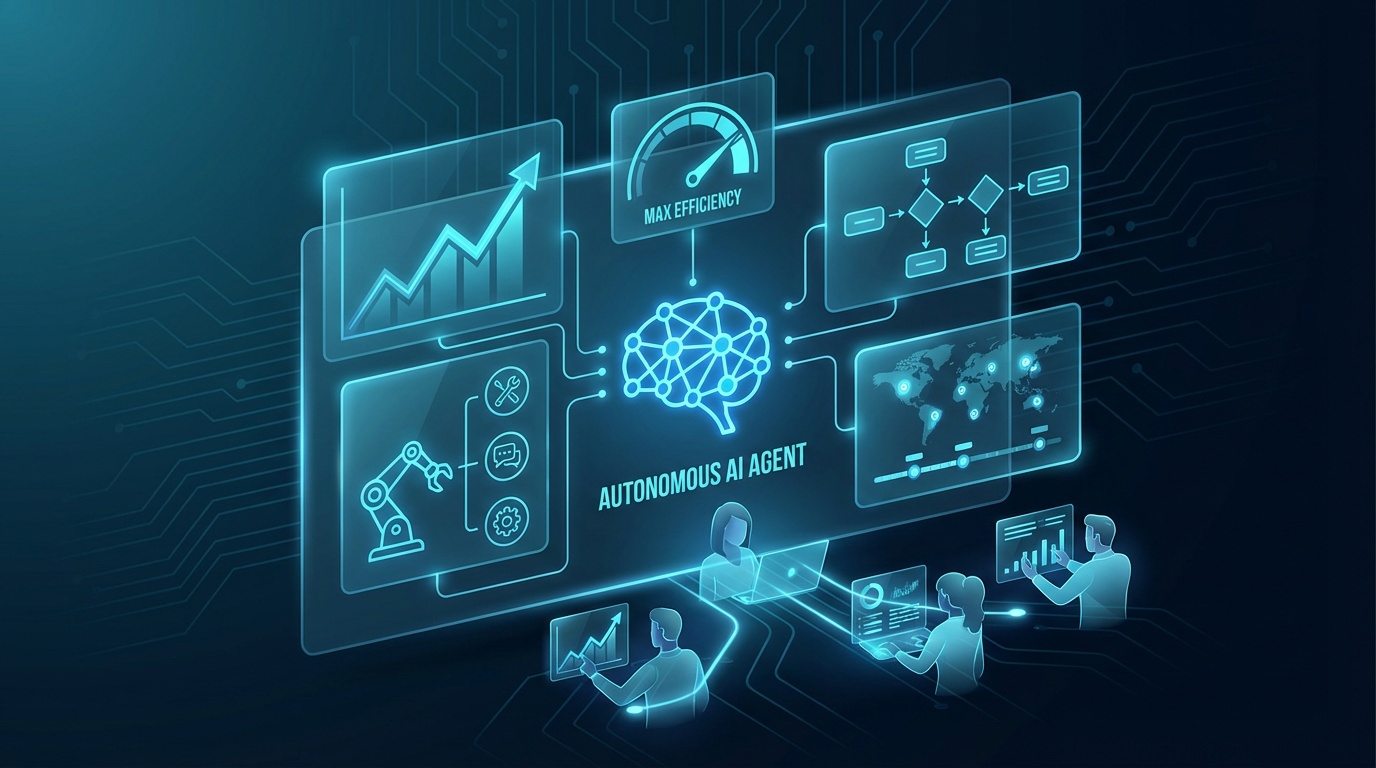
Emerging Capabilities Reshaping Business Operations
AI automation continues advancing beyond current text-based interactions. Voice-enabled agents will conduct natural phone conversations for appointment scheduling and qualification. Computer vision integration may analyze property photos to suggest staging improvements or support structured review of candidate video interviews.
Predictive analytics will identify which prospects are most likely to convert, enabling proactive outreach before competitors respond.
Sentiment analysis can detect frustration or enthusiasm in prospect communications, triggering human intervention when relationships need expert attention. Multi-step workflow orchestration can coordinate complex processes: property inspections with multiple parties or multi-stage interview processes across hiring teams.
These capabilities arrive as incremental improvements to existing systems rather than requiring complete platform replacements.
Competitive Dynamics in AI-Enabled Markets
Businesses that adopt AI automation early gain compounding advantages. Faster response times capture prospects before competitors reply. Higher conversion rates generate more revenue to reinvest in growth. Time savings enable larger client volumes without proportional cost increases.
These advantages widen over time as manual competitors struggle with capacity constraints while automated businesses scale efficiently.
Many industries will split between leaders that adopt intelligent automation and laggards relying on manual processes. The gap in client experience, operational efficiency, and profitability becomes difficult to close through incremental improvements.
Mid-market businesses face a strategic choice: invest in AI automation now to compete effectively, or accept gradual market share erosion to more efficient competitors.
Building Sustainable Competitive Advantages
The most valuable outcome from AI automation extends beyond immediate efficiency gains. Organizations develop institutional knowledge embedded in refined qualification criteria, optimized matching logic, and proven engagement sequences.
This accumulated intelligence becomes a strategic asset that competitors can’t easily replicate. Real estate agencies improve property matching through thousands of placements. Recruitment firms build assessment models validated across hundreds of hires.
Sustainable advantage comes from treating AI automation as an ongoing capability-building program rather than a one-time technology deployment. Refine agent behavior based on outcome data. Expand automation to additional workflows as initial implementations prove successful. Invest saved time in higher-value activities that differentiate your business.
This approach turns AI automation into a growth engine that supports long-term positioning.
Frequently Asked Questions
What are AI automation services for mid-market businesses?
AI automation services deploy intelligent agents to manage repetitive workflows for mid-market businesses. These agents operate across various communication channels to capture inquiries, qualify prospects, and coordinate next steps. This allows SMEs to gain enterprise-grade capabilities without enterprise budgets, achieving measurable ROI through efficiency gains.
How do modern AI agents differ from basic chatbots?
Unlike basic chatbots, modern AI agents understand context and personalize interactions. They integrate with existing business systems like CRM, ATS, and reservation platforms to update records automatically. This allows them to handle high-volume tasks more intelligently and effectively, augmenting human capabilities rather than replacing them.
What measurable outcomes can mid-market companies expect from AI automation?
Businesses implementing AI automation services can see significant improvements, such as 3x increases in qualified pipelines and 85% conversion rates. Teams often save more than 20 hours per week per member by automating administrative tasks. This leads to faster response times, higher client satisfaction, and increased revenue.
Why should mid-market SMEs choose specialized AI automation services?
Mid-market companies need specialized AI automation because generic tools often miss industry-specific nuances. Specialized services deliver pre-built workflows tailored to vertical processes, like property-matching for real estate or ATS integration for recruitment. This bridges the gap, providing enterprise capabilities at mid-market budgets while maintaining a personal touch.
How does AI automation specifically help real estate agencies?
For real estate, AI automation services automate lead qualification and property matching. Agentic Systems for Real Estate convert inquiries into viewings and sales through instant engagement, intelligent qualification, and personalized follow-up. This can increase qualified pipelines by 3x, achieve an 85% conversion rate, and save agents over 20 hours per week.
What is involved in implementing AI automation services?
Implementing AI automation services involves a structured approach. It begins with discovery to identify high-impact areas within your business. Next, a strategy is developed to prioritize automation opportunities, followed by integration with your existing systems.