

Agentic systems vs traditional CRM in real estate?
Agentic Systems vs. Traditional CRM: A New Era for Real Estate Operations
The fundamental question modern brokerage owners face is simple: Agentic Systems for Real Estate or a database that requires constant manual updates? When comparing agentic systems vs traditional CRM in real estate?, the difference lies in execution. A traditional system functions as a passive repository, demanding that human agents manually log every phone call, update buyer preferences, and schedule follow-ups. In contrast, an autonomous partner actively processes incoming lead data, matches properties, and communicates directly with prospects without human intervention.
Understanding the Shift: From Passive Repository to Autonomous Partner
Traditional customer relationship management software relies entirely on human data entry to maintain utility. When an agent forgets to log a conversation, the pipeline data becomes inaccurate. Autonomous systems eliminate this dependency by monitoring communication channels, updating client profiles automatically, and executing workflows based on real-time client behavior. This shift transforms software from a static administrative tool into an active operational partner.
The Core Limitations of Traditional CRMs in Today’s Market
Modern brokerages struggle with the latency inherent in manual systems. When a prospect submits an inquiry, the lead often sits in a database for hours before an agent reviews the details. This delay directly reduces conversion rates. Additionally, busy agents frequently neglect routine follow-up tasks, which leads to cold prospects and lost revenue. Manual property matching also limits the speed at which agents can present relevant options to active buyers.
Introducing Agentic Systems: Proactive Intelligence
An agentic system uses advanced algorithms to orchestrate workflows, make decisions, and interact with buyers. Instead of waiting for a human to trigger an email campaign, the system analyzes user behavior, identifies search patterns, and delivers tailored property recommendations. This proactive approach ensures that prospects receive immediate attention, which optimizes the early stages of the sales funnel.
Key Operational Distinction
Traditional CRMs record history; agentic systems drive progress. One documents what occurred in the past, while the other actively secures the next transaction.
Beyond Data Entry: How Agentic AI Transforms Real Estate Workflows
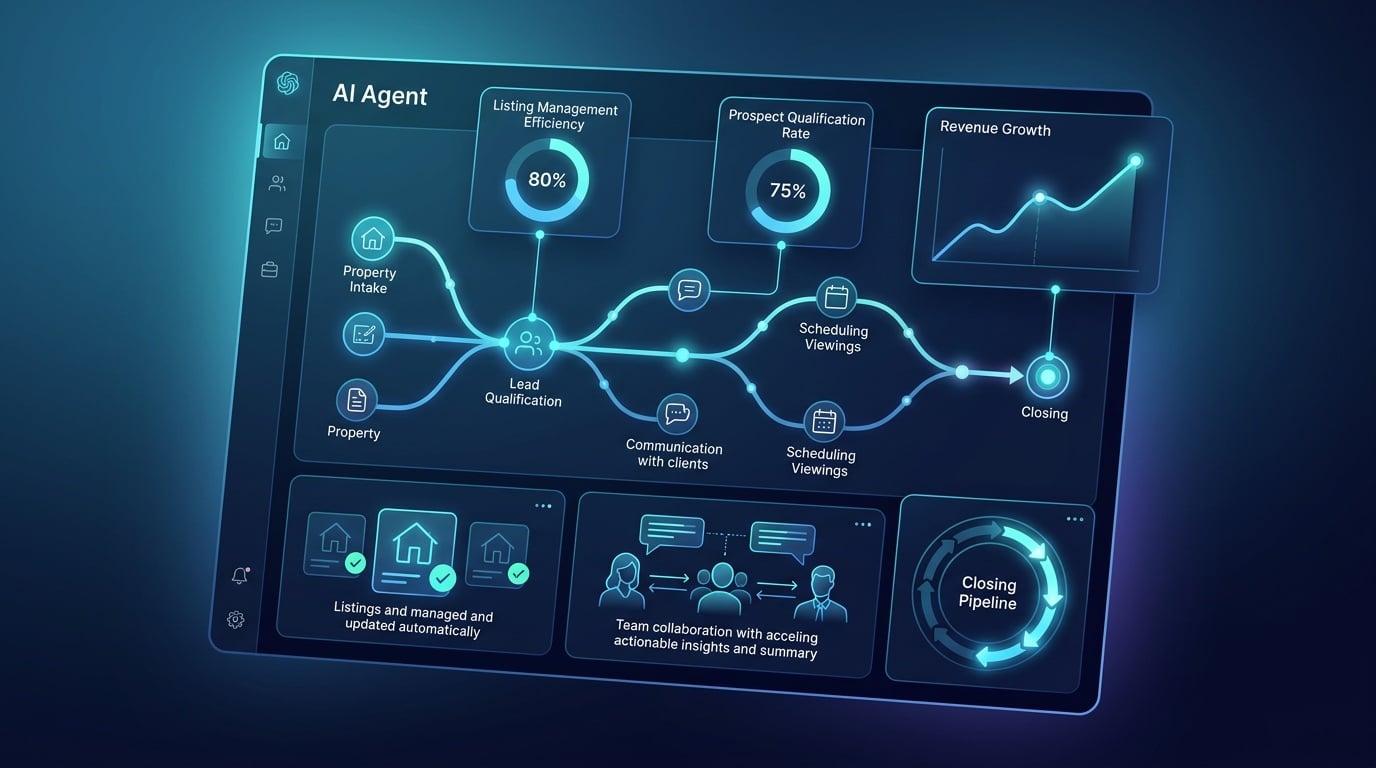
Implementing Agentic Systems for Real Estate allows agencies to manage more listings, qualify prospects, and close transactions without increasing administrative overhead. When evaluating agentic systems vs traditional CRM in real estate?, the main operational advantage is the automation of repetitive tasks. This automation allows agents to dedicate their energy to high-value negotiations and client relationships.
Intelligent Lead Qualification and Prioritization
Instead of manually screening unqualified inquiries, agencies can deploy autonomous agents to engage prospects immediately. The system captures inquiries 24/7 across multiple communication channels including WhatsApp, SMS, email, and website chat. By asking targeted qualification questions, the system identifies serious buyers and routes them to human agents, which ensures that no high-value opportunity is missed.
Automated Property Matching and Personalized Engagement
Using advanced matching algorithms, the system suggests relevant properties based on specific buyer criteria. It sends personalized recommendations, including virtual tours, directly to the prospect. This immediate delivery keeps buyers engaged during their peak period of interest, which increases the likelihood of a scheduled viewing.
| Operational Capability | Traditional CRM Systems | Agentic Systems for Real Estate |
|---|---|---|
| Inquiry Response Time | Manual (typically hours or days) | Instant (less than 60 seconds) |
| Data Management | Manual entry by human agents | Automated real-time updates |
| Property Matching | Manual search and email creation | Algorithmic matching and delivery |
| Calendar Coordination | Back-and-forth email scheduling | Automated booking and reminders |
Proactive Follow-Up and Nurturing
Maintaining consistent communication with hundreds of cold prospects is difficult for human teams. Autonomous systems solve this by executing personalized follow-up sequences. Automated reminders reduce viewing no-shows, and the system collects feedback after each viewing to refine future property suggestions. This continuous engagement keeps prospects active in the sales pipeline.
The ROI Advantage: Quantifying the Business Impact of Agentic Systems

The financial return of transitioning from manual databases to autonomous platforms is clear. When analyzing agentic systems vs traditional CRM in real estate?, business owners must focus on tangible metrics. The deployment of autonomous agents maximizes agent productivity by automating 80% of routine administrative tasks, which saves over 20 hours per week per agent.
Reducing Operational Costs and Scaling Revenue
Brokerages can scale their transaction volume without expanding their administrative headcount. Because the system handles lead capture, initial qualification, and viewing coordination, current staff can manage a larger volume of listings. This efficiency helps agencies close over 30% more deals while keeping operational costs flat.
Boosting Conversion Rates From Lead to Closed Deal
Speed is the primary driver of digital conversion. When response times to inquiries drop to less than 60 seconds, engagement rates rise. By combining instant engagement with intelligent qualification, the qualified pipeline increases by 3x, and the overall conversion rate reaches 85%. This consistent responsiveness prevents prospects from contacting competitors.
Measuring Success: Key Performance Indicators
To evaluate the success of an autonomous system deployment, brokerages should track specific performance indicators. These metrics demonstrate the direct financial impact of automation:
- Client Retention: Systems improve client retention by 85% through consistent, automated follow-up.
- Client Satisfaction: Instant responses and accurate property matching increase satisfaction scores by 27%.
- Revenue Generation: The combination of increased conversion and saved time generates over $100k in additional revenue per agent per year.
Making the Leap: When to Upgrade to an Agentic System

Deciding to transition from a traditional CRM requires an assessment of current operational bottlenecks. If agents spend more time entering data, scheduling viewings, and sending manual emails than they do meeting clients, the current setup is limiting growth. Understanding the distinction of agentic systems vs traditional CRM in real estate? helps owners identify when their business is ready for automation.
Assessing Your Current Workflow for Inefficiencies
If your agency struggles with slow response times, missed follow-ups, or inaccurate pipeline data, a passive database is no longer sufficient. An autonomous system integrates into existing channels to capture leads, qualify prospects, and coordinate calendars automatically. This integration resolves operational bottlenecks and ensures that valuable leads do not slip through the cracks.
Understanding Implementation and What to Expect
Transitioning to an autonomous system is a structured process. The deployment includes dedicated discovery, strategy, and implementation phases to align the technology with your specific business workflows. This methodical onboarding ensures that the system integrates with your current tools and starts delivering value quickly.
Addressing Concerns: AI as an Assistant
A common misconception is that automation replaces human real estate agents. In practice, the technology serves as an assistant. By taking over repetitive administrative tasks, the system allows agents to focus on negotiation, property showings, and relationship building. This hybrid approach combines the speed of AI with the trust and empathy of human professionals.
Evaluating the Transition
Pros of Agentic Systems
- Instant 24/7 lead response and qualification
- Automated property matching and scheduling
- Significant reduction in manual administrative work
Cons of Agentic Systems
- Requires an initial strategy and setup phase
- Demands team adaptation to automated workflows
Making the Leap: When to Upgrade from Traditional CRM to an Agentic System
Deciding to transition from a traditional CRM requires a frank assessment of your current operational bottlenecks. If your agents consistently spend more time managing data, scheduling viewings, and sending manual emails than they do meeting with clients and closing deals, your current system is limiting growth potential. The decision to upgrade is not just about adopting new technology; it is a strategic move to build a more efficient, scalable, and profitable real estate agency for the future.
Assessing Your Current Workflow for Inefficiencies
Examine your lead-to-close process. Are you experiencing slow response times to web inquiries? Do valuable leads go cold due to missed follow-ups? Is your pipeline data frequently inaccurate because of inconsistent manual updates? These are clear indicators that a passive database is no longer sufficient for your needs. An autonomous system directly addresses these pain points by integrating into your existing communication channels to capture, qualify, and nurture leads automatically, ensuring no opportunity is wasted.
Understanding Implementation: What to Expect and How to Prepare
Transitioning to an autonomous system is a structured, collaborative process, not an overnight switch. A successful deployment involves dedicated discovery, strategy, and implementation phases designed to align the technology with your specific business goals and workflows. Preparation involves identifying key processes for automation, cleaning existing client data, and preparing your team for a new way of working. This methodical approach ensures the system integrates seamlessly with your current tools and begins delivering measurable value from the outset.
Addressing Common Concerns: AI as an Assistant, Not a Replacement
A frequent hesitation among agency owners is the fear that automation will replace their human agents. The reality is that agentic systems are designed to augment human capabilities, not supplant them. The technology serves as a tireless assistant, handling the high-volume, repetitive tasks that consume agents’ time. This hybrid model combines the speed and efficiency of AI with the essential trust, negotiation skills, and market expertise that only a human professional can provide. It empowers your team to perform at a higher level.
Why Industry Specialization Matters
Choosing a technology partner with deep expertise in the real estate vertical is essential. Generic AI solutions lack the nuanced understanding of property matching, client qualification, and transaction coordination that defines the industry. A specialized partner like Vynta AI provides an agentic system pre-configured for real estate workflows, ensuring faster implementation and more impactful business outcomes for mid-market SMEs.
Frequently Asked Questions
What is an agentic system in real estate?
As we see at Vynta AI, an agentic system in real estate is an autonomous partner that actively processes lead data, matches properties, and communicates with prospects without constant human input. Unlike traditional CRMs, it uses advanced algorithms to orchestrate workflows and make decisions, driving progress rather than just recording history. This proactive intelligence ensures immediate attention for prospects and optimizes the early sales funnel stages.
How do agentic systems differ from traditional CRM in real estate?
The fundamental difference between agentic systems and traditional CRM in real estate lies in their execution and purpose. Traditional CRMs are passive repositories requiring manual updates from agents, often leading to delays and inaccuracies. Agentic systems, conversely, are active operational partners that automate tasks like lead qualification, property matching, and follow-ups, ensuring real-time data and immediate prospect engagement.
What are the main limitations of traditional CRM software for real estate agents?
Traditional CRM systems often suffer from latency, where leads sit unaddressed for hours, directly impacting conversion rates. They also rely heavily on manual data entry, making them prone to human error and missed follow-ups, which can lead to cold prospects and lost revenue. This manual dependency limits the speed and efficiency needed in today’s fast-paced real estate market.
How do agentic systems improve lead qualification and client engagement?
Agentic systems transform lead qualification by immediately engaging prospects 24/7 across various channels, asking targeted questions to identify serious buyers. For engagement, they use advanced algorithms to suggest relevant properties, sending personalized recommendations and virtual tours instantly. This proactive approach keeps buyers engaged during their peak interest, significantly increasing the likelihood of viewings.
Can agentic systems help real estate brokerages reduce operational costs?
Absolutely. By automating up to 80% of routine administrative tasks, agentic systems allow brokerages to manage more listings and close transactions without increasing administrative headcount. This efficiency means current staff can handle a larger volume of deals, helping agencies close over 30% more transactions while keeping operational costs flat. It is about scaling revenue without proportional cost increases.
What types of CRM systems are common in real estate today?
In real estate today, we primarily see two main approaches to CRM: traditional passive databases and modern agentic systems. Traditional systems function as data repositories that require agents to manually input information and manage interactions. Agentic systems, on the other hand, act as autonomous partners, proactively managing leads, matching properties, and communicating with prospects through AI automation.
How do agentic systems impact agent productivity?
Agentic systems significantly boost agent productivity by automating repetitive tasks like lead capture, initial qualification, and viewing coordination. This automation frees up agents to dedicate their energy to high-value activities such as negotiations and building client relationships. We have seen this automation save agents over 20 hours per week, allowing them to focus on what truly drives business outcomes.