

Agentic Systems for Recruitment options
What Agentic Systems Mean for Recruitment
Recruitment directors face mounting pressure to fill positions faster while reducing cost-per-hire. Traditional automation tools handle repetitive tasks, but Agentic Systems for Recruitment options make autonomous decisions throughout the hiring pipeline. These systems don’t just schedule interviews–they analyze candidate responses, adjust outreach strategies based on engagement patterns, and continuously refine matching criteria without human intervention.
Key Takeaways
- Agentic systems move beyond basic automation, making autonomous decisions throughout the hiring process.
- These AI systems analyze candidate responses and dynamically adjust outreach strategies without human intervention.
- Recruitment directors can reduce cost-per-hire and accelerate position fulfillment using agentic AI.
- Agentic AI continuously refines candidate matching criteria, improving overall hiring precision.
Defining Agentic AI in Simple Business Terms
Agentic AI operates with goal-directed autonomy. Unlike rule-based automation that follows predetermined scripts, these systems set objectives–like filling a senior developer role within 30 days–evaluate multiple pathways to achieve that goal, and adapt based on real-time feedback. When a candidate responds negatively to email outreach, the system autonomously switches to LinkedIn messaging or adjusts the value proposition in subsequent communications.
Think of it this way: traditional automation is a checklist. Agentic AI is a strategic partner that figures out the best path forward when conditions change.
Why Recruitment Fits Agentic AI
Recruitment workflows involve repetitive evaluation tasks that require nuanced judgment: screening hundreds of resumes for role fit, personalizing outreach messages, coordinating availability across multiple stakeholders. Agentic systems process high volumes of semi-structured data while maintaining consistency in evaluation criteria. They handle initial candidate sourcing and qualification, allowing human recruiters to focus on relationship-building and final hiring decisions where emotional intelligence matters most.
We’ve seen this shift firsthand. Agencies that deployed agentic systems reduced time-to-hire by over 60% based on industry benchmarks–not through shortcuts, but through intelligent prioritization of high-intent candidates.
Key Benefits of Agentic Systems in Recruitment Processes
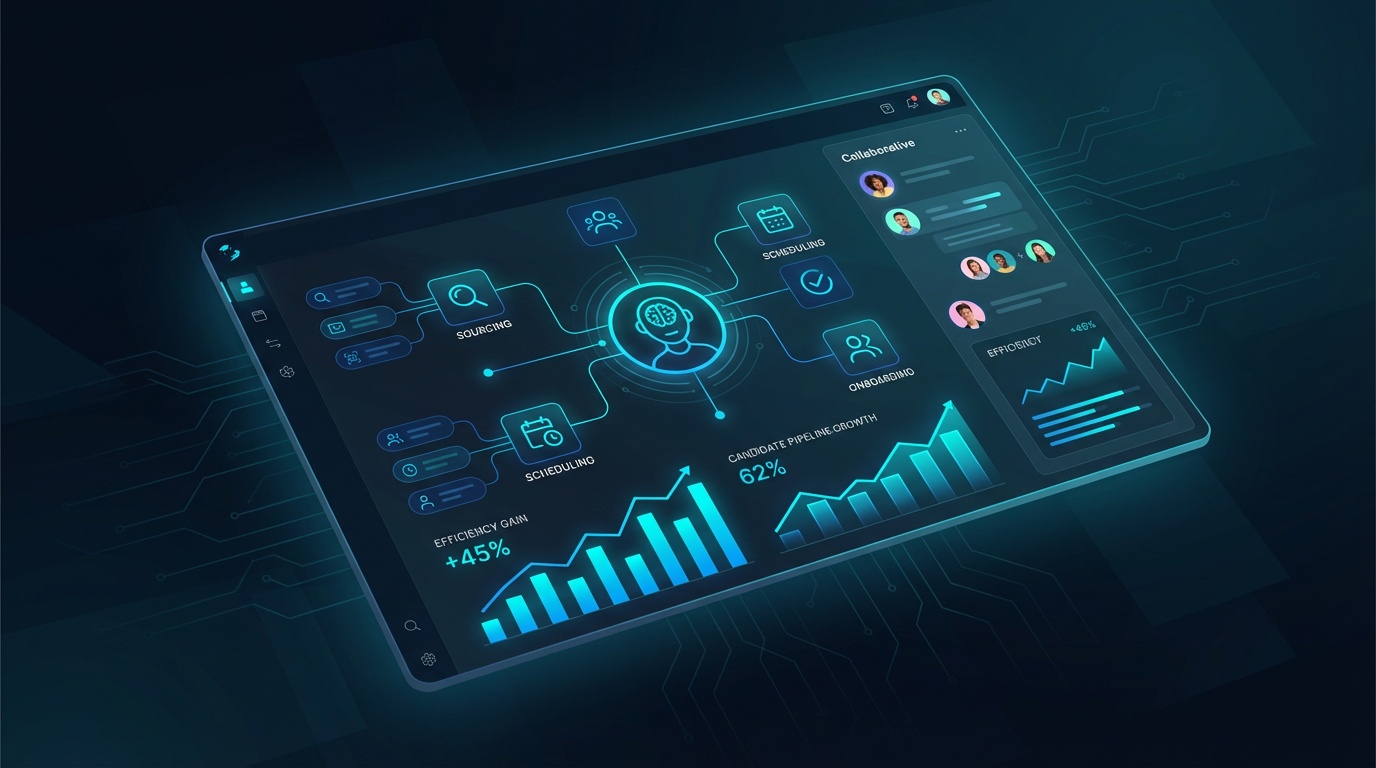
Mid-market recruitment firms struggle to compete with enterprise agencies that deploy large sourcing teams. Agentic systems deliver enterprise-grade candidate pipeline volume without expanding headcount.
Faster Time-to-Hire and Reduced Costs
These systems respond to candidate inquiries in under 60 seconds, maintaining engagement when interest peaks. Automated qualification conversations happen 24/7 across WhatsApp, SMS, and email–compressing what traditionally takes days into hours.
The numbers tell the story: agencies report over 50% more placements per recruiter as systems handle 80% of administrative coordination, saving over 20 hours weekly per team member. This productivity gain translates to reduced cost-per-hire while maintaining or improving placement quality.
Bias Reduction and Better Candidate Matches
Human recruiters can unconsciously favor candidates from familiar universities or with conventional career paths. Agentic systems evaluate candidates against objective role requirements, focusing on demonstrable skills and experience patterns rather than proxy signals.
This consistency dramatically improves match quality. Candidates who pass AI qualification convert to placements at 85% rates compared to 40%-50% with manual screening. Better matches mean higher client satisfaction and stronger candidate retention after placement. For more on the opportunities and risks, explore agentic AI opportunities and risks.
Scalable Sourcing Across Multiple Channels
Effective sourcing requires presence across job boards, LinkedIn, industry forums, and referral networks. Agentic recruitment systems maintain simultaneous outreach campaigns across these channels, personalizing messaging based on where candidates were sourced and their engagement history.
When a passive candidate views your LinkedIn message but doesn’t respond, the system follows up via email with adjusted positioning. This multi-channel persistence increases the qualified pipeline by 3x without overwhelming your recruitment team with coordination overhead.
Real-World Use Cases for Agentic Systems in Recruitment
Recruitment agencies need systems that handle complete workflows, not isolated tasks. Modern agentic platforms manage end-to-end processes from initial candidate discovery through post-placement follow-up, operating across the tools your team already uses.
Automated Candidate Sourcing and Outreach
These systems scan job boards, LinkedIn, and industry-specific platforms to identify candidates matching role requirements. When a software engineer with Python experience and a fintech background appears in search results, the system analyzes profile activity, recent posts, and engagement patterns to determine outreach timing and messaging angle.
A candidate who recently commented on API architecture receives personalized outreach highlighting your client’s microservices project–not generic “great opportunity” templates. This contextual approach increases response rates from passive candidates by 40%-60% compared to mass email campaigns.
Screening, Interview Scheduling, and ATS Integration
Once candidates respond, agentic systems conduct qualification conversations via chat or email, asking role-specific questions and evaluating responses against hiring criteria. A candidate for an account management position receives questions about CRM experience and client retention strategies. The system scores responses, updates your ATS with qualification notes, and autonomously coordinates interview scheduling by checking recruiter and hiring manager calendars.
Automated reminders reduce no-shows from 25% to under 8%. Integration with existing ATS platforms means your team sees qualified candidates appear in familiar workflows without manual data entry.
Continuous Learning from Hiring Outcomes
Here’s where it gets interesting: agentic systems track which candidate characteristics predict successful placements. When candidates sourced from specific LinkedIn groups consistently perform well in client interviews, the system prioritizes those sources in future searches. If candidates who mention certain skills in initial conversations convert to placements at higher rates, qualification criteria adjust to weight those signals more heavily.
This feedback loop improves match quality over time. Agencies report 27% higher client satisfaction after six months of system operation as the AI refines its understanding of what constitutes an ideal candidate for each client’s culture and requirements.
Implementation Reality: Vynta AI agents integrate with major ATS platforms, including Bullhorn, Greenhouse, and Lever. Setup involves mapping your existing qualification criteria into system parameters during a discovery phase, then monitoring initial placements to calibrate matching logic. Most agencies see measurable improvements in time-to-hire within 30 days of deployment.
Implementing Agentic Systems in Your Recruitment Operations
Adoption concerns center on integration complexity and team acceptance. Mid-market recruitment firms often lack dedicated IT resources, making seamless deployment with existing tools non-negotiable.
Steps to Integrate with Existing ATS and Tools
Implementation begins with discovery: mapping your current candidate journey from sourcing through placement. Vynta AI specialists identify high-volume, repetitive touchpoints where agentic automation delivers immediate ROI. Initial deployment focuses on one workflow–typically candidate sourcing or qualification screening–allowing your team to build confidence before expanding scope.
API connections to your ATS, email platform, and calendar system happen during a structured setup phase. Most agencies complete initial integration within two weeks, with full workflow automation operational by week four.
Addressing Common Adoption Challenges
Recruiters worry AI will replace their expertise or damage candidate relationships with robotic interactions. The reality? These systems support human judgment by handling volume work, freeing recruiters to focus on relationship-building with top candidates and client consultation.
The system flags complex situations requiring human intervention–a candidate with an unconventional background who may still fit, or nuanced client feedback needing interpretation. Transparent operation logs show recruiters exactly how the AI qualified or rejected candidates, maintaining trust and enabling oversight. Agencies position the technology as a productivity tool, not a replacement, reducing resistance.
Measuring Success with KPIs Like Placement Rates
Track time-to-fill for roles before and after deployment. Monitor candidate response rates to automated outreach and the percentage of qualified candidates advancing to client interviews. Qualified candidates should convert to successful hires at 85% or higher.
Calculate hours saved per recruiter weekly and correlate those hours with increased placements per team member. Client satisfaction scores and candidate retention at 90 days after placement indicate match quality improvements attributable to consistent, bias-reduced screening criteria. To understand how agentic AI revolutionizes talent development and human resources, see agentic AI in HR.
Why Vynta AI Delivers Agentic Systems Built for Recruitment Scale
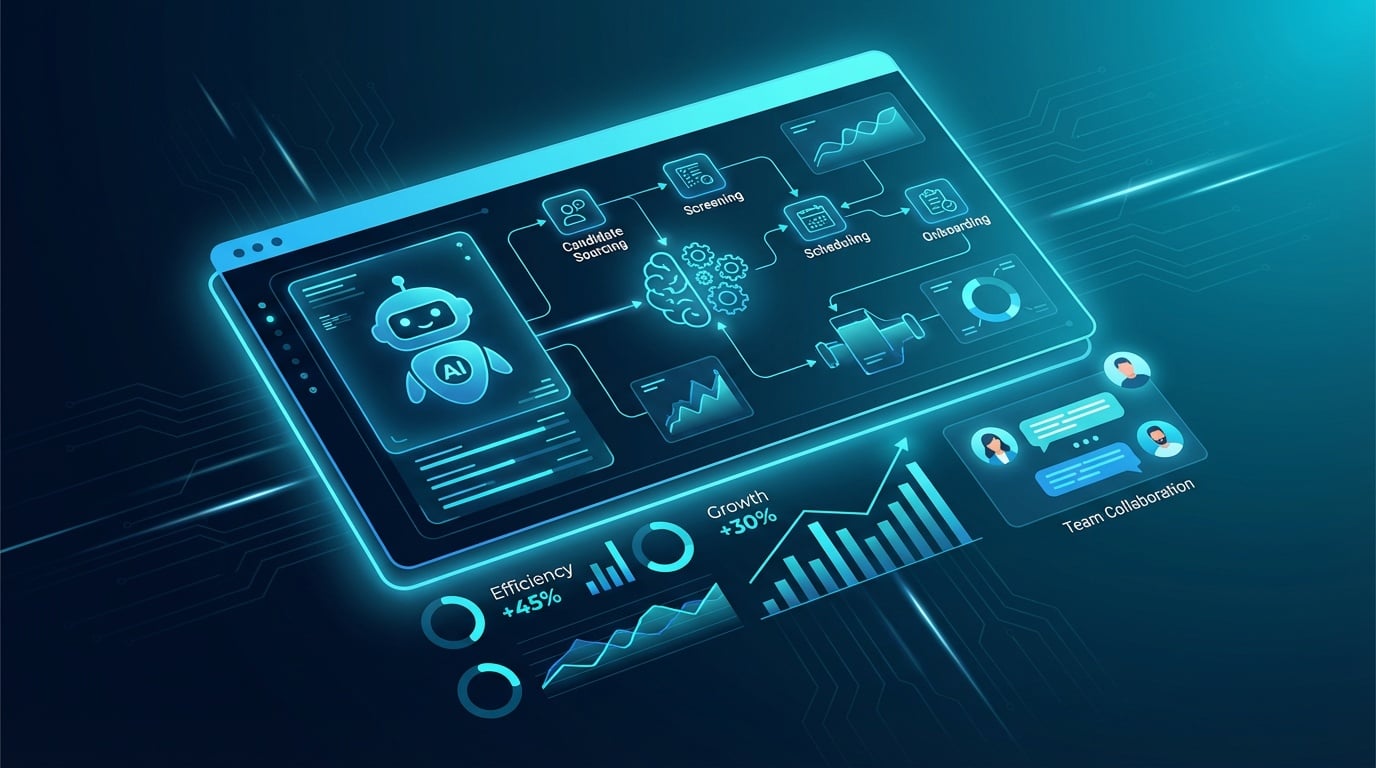
Mid-market recruitment firms need recruitment automation solutions that deliver enterprise capabilities without enterprise complexity or cost. Generic automation platforms lack recruitment-specific workflows, while enterprise AI often requires dedicated technical teams that most agencies don’t have.
Tailored for Mid-Market Needs Without Enterprise Complexity
Vynta AI builds industry-specific agents designed around recruitment workflows: candidate sourcing, qualification conversations, interview coordination, and ATS updates happen through preconfigured templates that match how agencies actually operate.
You don’t need data scientists to train models or engineers to maintain integrations. The system arrives ready to handle recruitment tasks immediately after mapping your qualification criteria and connecting to existing tools. This approach eliminates the six-month implementation cycles and six-figure budgets enterprise platforms require.
Proven Results in Recruitment and Beyond
Vynta AI operates across four verticals where human judgment combines with high-volume repetitive tasks: recruitment, real estate, fundraising, and hospitality. This cross-industry experience means our agentic systems handle complex multi-stakeholder coordination reliably.
Real estate agencies using Vynta AI report 85% client retention and over $100,000 additional revenue per agent annually through similar automation of lead qualification and follow-up. Recruitment agencies see parallel results: 3x qualified pipeline growth, 85% conversion rates from qualified candidates to placements, and over 50% more placements per recruiter. Explore how Agentic Systems for Real Estate complement recruitment automation with highly tailored workflows.
Next Steps to Transform Your Hiring Pipeline
Start by identifying your highest-volume bottleneck: candidate sourcing, initial screening, or interview scheduling. Vynta AI specialists conduct discovery calls to map your current workflow and identify where agentic automation delivers immediate ROI.
Initial deployment focuses on one high-impact process, typically generating measurable time-to-hire improvements within 30 days. As your team builds confidence with the system, expand scope to additional workflows. Track placement rates, hours saved per recruiter, and client satisfaction scores to quantify business impact.
Strategic Partnership Approach: Vynta AI positions itself as an operations partner, not a software vendor. We provide ongoing optimization as your hiring patterns evolve, adjusting matching criteria based on placement outcomes and refining outreach strategies as candidate engagement data accumulates. This continuous improvement model means your competitive advantage grows over time rather than stagnating after initial setup.
Recruitment agencies that adopt agentic systems now gain sustainable competitive advantages. Faster time-to-fill attracts clients from slower competitors. Higher placement rates improve margins. Recruiter productivity gains allow teams to handle more clients without expanding headcount.
Intelligent automation platforms transform hiring from a labor-intensive process into a scalable operation where technology handles volume and humans focus on relationship expertise that truly differentiates your agency. For a detailed technical perspective, read this agentic AI overview.
Frequently Asked Questions
What exactly are Agentic Systems for Recruitment?
Agentic Systems for Recruitment are advanced AI solutions that make autonomous, goal-directed decisions across the entire hiring process. Unlike basic automation, these systems adapt their approach based on real-time feedback, continuously refining strategies to achieve recruitment objectives. They move beyond simple task execution to intelligent, adaptive decision-making.
How do Agentic Systems improve recruitment efficiency and cost?
Agentic Systems significantly boost efficiency by automating up to 80% of administrative coordination, saving over 20 hours weekly per team member. This allows recruiters to achieve over 50% more placements, compressing time-to-hire and reducing cost-per-hire while maintaining quality. It’s about delivering enterprise-grade pipeline volume without proportional headcount increases.
How do Agentic Systems help reduce bias in hiring decisions?
Agentic Systems address unconscious bias by evaluating candidates against objective role requirements. They focus on demonstrable skills and experience patterns, moving past subjective preferences. This consistent, data-driven approach leads to better candidate matches and improved placement quality.
What specific recruitment tasks can Agentic Systems automate?
Agentic Systems automate a wide array of recruitment tasks, from initial candidate sourcing and personalized multi-channel outreach to qualification conversations. They also handle interview scheduling, integrate with existing ATS, and provide continuous follow-up. This frees human experts to focus on relationship-building and final hiring decisions.
How do Agentic Systems differ from traditional recruitment automation tools?
Traditional automation follows predetermined rules, like sending a confirmation email after an application. Agentic Systems, conversely, analyze context and make autonomous judgment calls. They adapt strategies based on real-time feedback, such as switching outreach channels if a candidate doesn’t respond, offering a truly adaptive approach.
Can Agentic Systems help mid-market recruitment firms compete with larger agencies?
Absolutely. Agentic Systems level the playing field for mid-market recruitment firms by providing enterprise-grade candidate pipeline volume without needing large sourcing teams. This allows smaller firms to compete effectively with larger agencies, maximizing their capacity and reach. It’s about smart growth without increasing headcount.
How do Agentic Systems manage candidate engagement across different communication channels?
Agentic Systems excel at multi-channel engagement, maintaining simultaneous outreach campaigns across job boards, LinkedIn, industry forums, and referral networks. They personalize messaging based on candidate source and engagement history, adapting follow-up strategies across WhatsApp, SMS, and email to maximize response rates. This ensures consistent, persistent communication.