

Recommended agentic systems for boosting lead conversion rates.
Agentic Systems: Boost Lead Conversion 2026
Businesses lose leads every day due to slow response times and manual follow-up processes. Research shows 78% of customers purchase from the first responder, yet most companies take hours. Not minutes. To engage new prospects. This guide covers recommended agentic systems for boosting lead conversion rates across real estate, recruitment, fundraising, and hospitality operations.
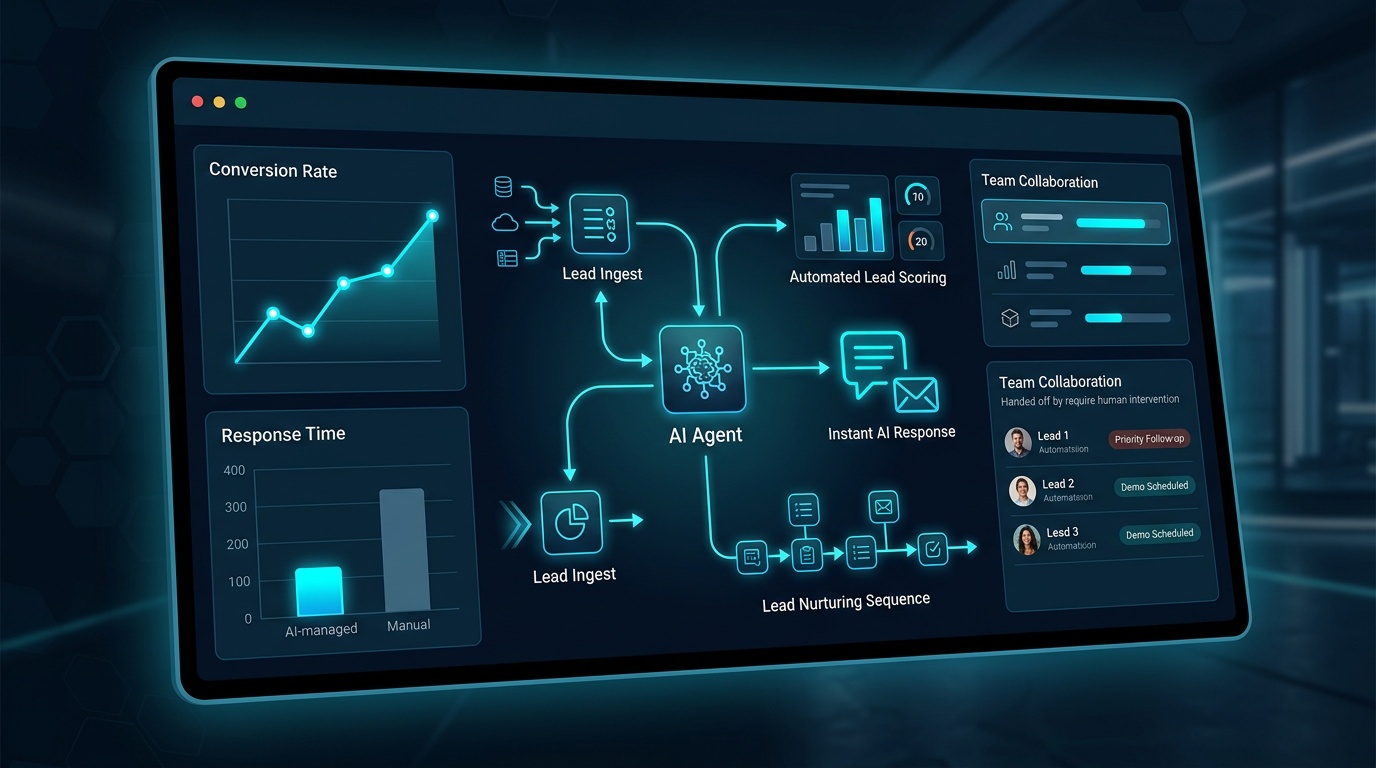
Agentic systems deploy AI agents that handle lead qualification, personalization, and follow-up with defined workflows and human oversight when needed. They respond in under 60 seconds, automate 80% of routine tasks, and increase qualified pipelines by 3x. Top implementations combine intelligent matching algorithms with calendar coordination and multichannel engagement across WhatsApp, SMS, email, and website chat.
Understanding Agentic Systems: Beyond Basic Automation for Lead Conversion
What Exactly Are Agentic Systems?
Agentic systems represent a shift from rule-based automation to AI-driven decision-making. Unlike traditional tools that follow predetermined scripts, these systems perceive context, reason through options, and take actions to achieve specific outcomes.
Think of them as having a top-performing sales rep’s judgment. But available 24/7 across unlimited conversations.
The Leap from Traditional Automation to Agentic Intelligence
Standard automation handles repetitive tasks efficiently. Agentic systems add reasoning capabilities that adapt to prospect behavior in real time. They analyze interaction patterns, adjust qualification criteria dynamically, and initiate appropriate next steps with human oversight for complex queries.
Core Capabilities Driving Autonomous Lead Conversion
Modern agentic platforms combine natural language processing, predictive analytics, and workflow orchestration. They capture leads across multiple channels, score prospects automatically, match them with relevant offerings, and maintain engagement through personalized touchpoints until conversion occurs.
The best systems don’t just respond. They anticipate. What questions will this prospect ask next? When should we follow up? Which offer will resonate most? This predictive intelligence separates leaders from laggards.
Why Agentic Systems Are Your Next Competitive Advantage in Lead Conversion
The High Cost of Missed Opportunities
Every minute delays cost conversions. Studies reveal that companies responding within 60 seconds capture five times more opportunities than those taking 10+ minutes. Slow follow-up, inconsistent qualification, and manual tracking create friction that reduces conversions by 40-60%.
We’ve seen real estate agencies lose $50,000+ monthly in commissions simply because leads went cold during business hours. One recruitment firm tracked 200+ qualified candidates weekly who accepted offers elsewhere due to delayed engagement.
Speed-to-Lead: The Unseen Metric That Drives Revenue
Response time directly correlates with conversion success. This speed advantage compounds across high-volume pipelines where minutes matter more than hours.
Personalization at Scale
Generic outreach fails modern buyers. Agentic systems analyze prospect data to deliver individualized recommendations, customized communication timing, and relevant product matching. This personalization happens simultaneously across thousands of prospects without sacrificing quality or consistency.
Operational Efficiency That Actually Scales
By automating routine qualification, these platforms let your team focus on relationship building and complex negotiations. The result? Higher deal values, improved client satisfaction, and sustainable growth without expanding headcount.
Recommended Agentic System Architectures for Key Industries
Real Estate: Intelligent Property Matching and Buyer Intent Qualification
Agentic Systems for Real Estate convert property inquiries into viewings and sales through instant engagement, intelligent qualification, and personalized follow-up. Advanced matching algorithms suggest relevant properties and send personalized recommendations, including virtual tours. Automated reminders reduce no-shows by 45%, while post-viewing feedback collection refines future suggestions.
Recruitment: Autonomous Candidate Screening and Engagement
Agentic Systems for Recruitment automate CV processing by collecting and processing applications from multiple job boards. CV Library, Indeed, Reed, TotalJobs, and LinkedIn. AI processes over 100,000 CVs daily, screening candidates in under 10 seconds with 85% matching accuracy. Interview coordination runs automatically: scheduling, confirmations, reminders, and preparation materials.
Fundraising: Proactive Investor Outreach and Relationship Nurturing
Fundraising organizations deploy an AI-powered fundraising platform for prospect research, personalized outreach sequencing, and donor engagement tracking. These platforms identify optimal contact times, customize messaging based on giving history, and automate follow-up sequences that maintain relationships at scale.
Hospitality: Predictive Guest Needs and Service Automation
Hospitality businesses analyze booking patterns, preferences, and behavioral signals. Vynta AI Agents for Hospitality are bespoke AI agents designed specifically for luxury venues. Restaurants, premium bars, nightclubs, and beach clubs. The AI agents respond instantly to inquiries and increase average guest spend by up to 25% through brand-safe upselling tailored to guest profiles and channel specifics.
Implementing Your Agentic System Strategy: From Selection to Measurable ROI
Evaluating Agentic Systems: A Framework for Strategic Selection
Prioritize platforms offering multichannel engagement, intelligent qualification, and seamless calendar integration. Verify that systems support your communication preferences and integrate with existing CRM infrastructure.
Ask yourself: Does this system handle our specific qualification criteria? Can it integrate with our calendar software? Does it support the communication channels our prospects prefer?
Integration Realities: Connecting Agentic Systems with Your Existing Stack
Most implementations require API connections to existing CRM, calendar, and communication tools. The process typically includes discovery (2-3 weeks), strategy development (1-2 weeks), and implementation phases (3-4 weeks) rather than instant deployment.
Measuring Success: Key Performance Indicators for Agentic Lead Conversion
Track response time reduction, qualification accuracy, pipeline growth rate, and conversion percentage. Leading implementations report conversion rate improvements of up to 85% and generate over $100,000 in additional revenue per agent per year, depending on volume, margins, and sales cycle length.
The Human-AI Partnership: Maximizing Outcomes Through Collaboration
Agentic systems help agencies handle more properties, convert more leads, and close more deals without expanding teams or increasing admin costs. Your team’s expertise remains essential for complex negotiations, relationship building, and strategic decision-making.
The technology handles volume; humans handle value.
Implementation Considerations
Pros
- Up to 85% conversion rate improvement reported
- Qualified pipeline increases by 3x
- Response times under 60 seconds
- Over 20 hours saved per team member weekly
Cons
- Requires initial integration effort
- Benefits depend on data quality
- Ongoing monitoring recommended
Getting Started: Your First Step Toward 3x Pipeline Growth

Implementing recommended agentic systems for boosting lead conversion rates requires a strategic approach tailored to your industry. Vynta AI offers industry-specific solutions that integrate seamlessly with your existing workflows, providing the infrastructure needed to capture, qualify, and convert leads at scale.
The most successful implementations begin with a thorough assessment of your current lead handling processes. Identify bottlenecks, map existing tool integrations, and establish baseline metrics that demonstrate initial performance. This diagnostic work ensures that your chosen agentic platform addresses your specific pain points rather than applying generic solutions.
Businesses that adopt agentic systems early establish compounding advantages. Every lead captured, every qualification completed, and every follow-up delivered builds momentum that competitors struggle to match. The window for differentiation narrows as adoption accelerates across industries.
Whether you operate in real estate, recruitment, fundraising, or hospitality, the principles remain consistent: implement intelligent automation that responds instantly, qualifies intelligently, and nurtures consistently.
Your pipeline growth depends on the systems you deploy today.
Strategic Verdict and Future Outlook
The Clear Business Case for Agentic Implementation
Organizations deploying recommended agentic systems for boosting lead conversion rates gain measurable advantages across speed, personalization, and operational scale. Teams report outcomes such as 3x pipeline growth, conversion improvements of up to 85%, and 20+ hours reclaimed weekly per team member when systems are configured properly and supported with quality data.
The most compelling implementations share foundational elements: multichannel engagement capabilities, intelligent qualification workflows, and seamless calendar coordination. These components support automated decision-making that mirrors top-performer behavior across real estate, recruitment, fundraising, and hospitality verticals.
Future Trajectory: What’s Next for Autonomous Lead Management
Predictive intent modeling will advance beyond reactive qualification toward anticipatory engagement. Systems will identify prospect readiness signals before explicit inquiry occurs, allowing outreach that meets buyers precisely when decision momentum peaks.
Cross-vertical intelligence sharing will allow agentic platforms to transfer behavioral patterns across industries. A qualification strategy proving effective in hospitality guest engagement may inform real estate buyer nurturing, creating compound learning advantages.
Regulatory adaptation engines will become standard as compliance requirements evolve. Systems will adjust communication frequency, data handling protocols, and consent management based on jurisdictional requirements, reducing legal risk while maintaining engagement effectiveness.
Final Recommendation
For organizations evaluating recommended agentic systems for boosting lead conversion rates, prioritize platforms demonstrating vertical-specific expertise alongside technical capability. Generic automation can’t match the precision of systems trained on industry-specific conversion patterns, buyer behaviors, and compliance frameworks.
Begin with a focused pilot targeting your highest-volume lead source. Measure response time reduction, qualification accuracy, and pipeline velocity against current baselines. The compound effect of faster engagement, smarter qualification, and consistent follow-up creates competitive momentum that accelerates with each interaction processed.
Frequently Asked Questions
What sales strategies work best for improving lead conversion rates with agentic systems?
The most effective strategies include implementing instant response times under 60 seconds, automating 80% of routine qualification tasks, and using AI-driven personalization at scale. Agentic systems excel at multichannel engagement across WhatsApp, SMS, email, and website chat while maintaining human oversight for complex queries.
Which agentic platform is best for B2B lead generation?
The best platform depends on your industry requirements and integration needs. Look for systems offering intelligent qualification, seamless calendar coordination, and CRM integration. Real estate, recruitment, fundraising, and hospitality each benefit from customized AI models and workflows tailored to their specific conversion processes.
What is the most important step for creating successful agentic systems?
Strategic selection and proper integration form the foundation of successful agentic systems. Prioritize platforms with multichannel engagement capabilities, intelligent qualification features, and seamless integration with your existing CRM infrastructure. The system must align with your communication preferences and compliance requirements.
How do agentic systems differ from traditional automation tools?
Traditional automation follows predetermined scripts and rules, while agentic systems use AI to perceive context, reason through options, and make decisions in real time. They adapt to prospect behavior dynamically, adjust qualification criteria automatically, and take appropriate actions with minimal human intervention.
What ROI can businesses expect from implementing agentic systems?
Businesses typically see qualified pipelines increase by 3x, with systems automating 80% of routine tasks and responding in under 60 seconds. The speed advantage captures five times more opportunities compared to manual processes, while freeing teams to focus on high-value relationship building and complex negotiations.
How do agentic systems handle personalization across thousands of prospects?
Agentic systems analyze prospect data to deliver individualized recommendations, customize communication timing, and match relevant products automatically. They process interaction patterns and behavioral signals to create personalized journeys for each prospect simultaneously, replacing generic outreach with targeted engagement.
What industries benefit most from agentic lead conversion systems?
Real estate, recruitment, fundraising, and hospitality see significant benefits from industry-specific agentic implementations. Each vertical uses customized AI models for their unique needs: property matching for real estate, candidate screening for recruitment, donor engagement for fundraising, and guest experience optimization for hospitality.