
How much is the pricing for agentic systems in global real estate?
Understanding Agentic Systems: What You Are Investing In for Real Estate
How much is the pricing for agentic systems in global real estate? Investment ranges from $2,000 to $15,000+ monthly, depending on functionality scope, integration complexity, and customization depth. Most mid-market agencies see 300% ROI within six months through automated lead qualification, fast response capabilities, and streamlined property-matching workflows.
Defining Agentic AI in Modern Real Estate
Agentic artificial intelligence refers to software agents that execute complex real estate workflows with minimal human input. Unlike traditional chatbots or basic automation tools, these systems make decisions, adapt workflows, and manage client journeys from initial inquiry through closing. They operate across WhatsApp, SMS, email, and website chat simultaneously while maintaining context.
Core Capabilities Driving Value
Modern agentic platforms deliver instant engagement, intelligent property matching through advanced algorithms, and personalized follow-up sequences. They qualify prospects, coordinate viewing schedules with automated reminders, and collect feedback to improve future recommendations. These systems support agent teams by handling routine tasks, freeing professionals for relationship building and negotiation.
The Real Estate Agentic System: A Practical Breakdown
Agentic Systems for Real Estate convert property inquiries into viewings and sales through systematic workflows. The qualified pipeline can increase by up to 3x, with conversion rates reaching 85% in some deployments. Teams also report significant time savings, translating into more closed deals and higher revenue per agent.
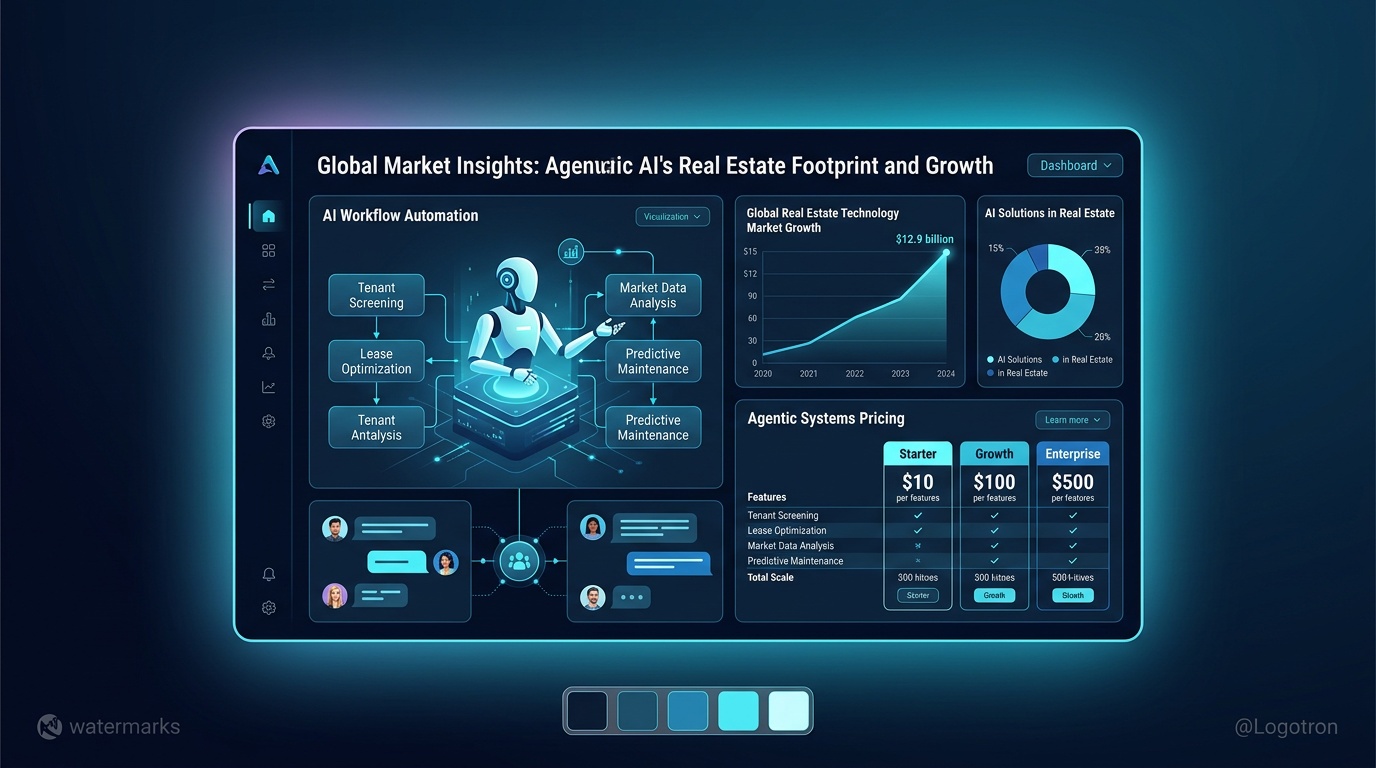
Global Market Insights: Agentic AI’s Real Estate Footprint and Growth
The Expanding AI Automation Market
The global real estate technology market reached $12.9 billion in 2024, with agentic AI solutions capturing an estimated 18% market share across North America, Europe, and Asia-Pacific. Property management firms and brokerage agencies drive adoption through measurable efficiency gains and improved client experiences.
Projected Growth Trajectories
Industry analysts project 34% compound annual growth through 2028 as agencies pursue competitive advantages. Early adopters report higher client retention and improved satisfaction scores, creating pressure for broader implementation across residential and commercial segments.
Decoding the Investment: Factors Influencing Agentic System Pricing
Complexity and Functionality
Pricing structures reflect sophistication levels. Basic lead capture and response automation starts around $2,000 monthly, while platforms that include property matching, calendar coordination, and analytics range from $8,000 to $15,000 monthly. Functionality breadth directly correlates with investment requirements.
Investment Reality Check
Agentic systems can generate strong ROI through increased pipeline volume, reduced administrative overhead, and improved conversion performance. The decision should be based on opportunity value, not just license fees.
Integration Demands
Integration complexity significantly affects pricing. Basic CRM connections and email platform synchronization add $1,500 to $3,000 monthly to base costs. Advanced integrations spanning multiple listing services, property management platforms, and custom databases require specialized development, pushing monthly investments toward $10,000 to $15,000.
Customization Levels
Standard agentic workflows fit many residential agencies at lower price points. Commercial real estate firms needing specialized property-matching logic, custom qualification criteria, and industry-specific communication templates often face higher pricing. Fully bespoke development for unique market conditions can increase baseline costs significantly.
Ongoing Support and Maintenance
Monthly pricing commonly includes updates, performance monitoring, and technical support. Premium tiers may include dedicated account management, custom reporting, and priority assistance. Training for agent teams might be included in higher tiers or priced separately.
Pricing Models: What to Expect in Real Estate
Subscription-Based Access
Many agencies choose subscriptions ranging from $2,000 to $8,000 monthly for predictable budget planning. Packages typically include core features, standard integrations, and baseline support. Tiered plans accommodate growth without disruptive changes, supporting forecasting and planning.
Per-Transaction or Usage-Based Fees
Usage-based pricing may charge $50 to $200 per qualified lead or closed deal, suiting agencies with variable monthly volume. This model reduces fixed costs but becomes expensive during peak seasons. Hybrid approaches combine a base subscription with usage components to balance predictability and activity alignment.
Custom Enterprise Solutions
Large brokerages and franchise networks negotiate enterprise agreements starting at $15,000 monthly. These solutions include white-label options, multi-location management, and advanced analytics dashboards. Implementation timelines typically extend three to six months for full deployment across multiple markets and teams.
Beyond the Price Tag: Realizing Business Outcomes with Agentic AI

Quantifiable ROI
The practical answer centers on return, not cost alone. Automated workflows increase qualified pipeline volume and support faster follow-up, while time savings allow agents to handle more active deals each month. We’ve seen agencies boost their qualified pipeline by 3x within the first quarter.
Augmenting Your Team
Agentic systems support human teams by handling routine inquiry responses, property matching, and appointment scheduling. Agents can focus on relationship building, negotiation, and complex exceptions. This operating model preserves personal service while improving consistency and throughput.
Future-Proofing Your Business
Market dynamics increasingly favor agencies with rapid responses and data-informed matching. Agentic systems help businesses keep pace as client expectations shift toward quicker engagement and more personalized service across channels.
Strategic Implementation: Maximizing Your Agentic System Value
Phased Deployment Approach
Strong implementations follow structured phases including discovery, strategy, and staged rollout. Teams typically start with lead capture and basic qualification before expanding into property matching and calendar coordination. This approach reduces disruption while showing value through faster responses and better pipeline management.
Team Integration Strategies
Adoption improves when teams understand that agentic systems support, rather than replace, human expertise. Training should focus on which tasks automation covers and which situations remain agent-led. Clear role definitions reduce resistance and improve outcomes.
Implementation Success Factors
Teams that combine training, staged rollout, and ongoing performance monitoring see stronger outcomes. Track response-time changes, pipeline quality, and client satisfaction. Not automation volume alone.
Measuring Success: KPIs for Agentic Real Estate Systems
Primary Performance Indicators
Track qualified lead volume, conversion rates, and agent time savings. Baseline measurements before rollout support accurate comparisons. Monthly reporting should include response time, viewing appointment rates, and client feedback to demonstrate measurable value.
Long-Term Business Impact Assessment
Annual evaluations should review revenue per agent, retention, and market share. Some deployments report meaningful improvements within twelve months, justifying expansion across property categories or new geographies. Similar to understanding compensation differences between agents and realtors, tracking performance metrics helps optimize investment returns.
Making the Informed Decision: Your Agentic System Investment

Budget Planning: Realistic Expectations
Consider total cost of ownership, including implementation, training, and ongoing support. Mid-market agencies often invest $3,000 to $8,000 monthly for a solution that delivers results. Enterprise deployments requiring extensive customization may reach $15,000+ monthly, with value dependent on volume, margins, and execution quality.
Vendor Selection Criteria
Strong partnerships depend on technical depth, domain experience, and support quality. Assess integration flexibility, customization options, and scalability. Reference checks validate performance claims, while implementation plans and training resources determine early success. Consider providers that offer AI automation services with proven track records across multiple industries.
Competitive Advantage Through Early Adoption
Market leaders treat agentic AI as differentiation, not operational expense. Early adopters capture attention through responsiveness and consistency while slower competitors rely on manual follow-up. This strategic approach aligns with broader commercial strategy principles that prioritize technology-driven competitive advantages.
Agentic system pricing requires a value-based view beyond monthly numbers. When scoped correctly, implementations drive strong ROI through workflow automation, improved conversion performance, and better client experiences.
Frequently Asked Questions
What is the typical pricing for agentic AI systems in real estate?
As someone focused on measurable outcomes, I see the investment in agentic systems for real estate typically ranging from $2,000 to $15,000+ monthly. This range reflects the system’s capabilities, how complex its integrations are, and the depth of customization required. Basic lead capture systems start at the lower end, while comprehensive platforms with advanced features are at the higher end.
What factors influence the cost of agentic systems for real estate?
Several key factors drive the investment in agentic systems. The scope of functionality, from basic lead qualification to full property matching and analytics, is a primary cost driver. The complexity of integrating with existing CRM, MLS, or property management platforms also significantly impacts the monthly cost. Finally, the level of customization needed for unique workflows or market conditions will adjust the pricing.
How large is the market for agentic AI solutions in real estate?
The real estate technology market reached $12.9 billion in 2024, with agentic AI solutions capturing an estimated 18% market share globally. This segment is experiencing rapid adoption across North America, Europe, and Asia-Pacific. Industry analysts project a 34% compound annual growth through 2028, showing a clear trend towards these solutions.
What kind of return on investment can real estate agencies expect from agentic systems?
Agencies often see significant ROI from agentic systems, with many mid-market agencies reporting a 300% return within six months. This comes from benefits like automated lead qualification, faster client responses, and streamlined property-matching workflows. The systems can increase qualified pipelines by up to 3x and improve conversion rates, ultimately boosting revenue per agent.
Are there different pricing models for real estate agentic systems?
Yes, real estate agentic systems commonly offer various pricing models to suit different business needs. Subscription-based access, typically $2,000 to $8,000 monthly, provides predictable costs for core features and support. Some providers also offer per-transaction or usage-based fees, aligning costs with activity, or hybrid approaches. Large brokerages may opt for custom enterprise solutions, starting around $15,000 monthly, for scaled operations.
How do integration needs affect the cost of agentic systems?
Integration demands play a significant role in the overall investment for agentic systems. Basic connections with CRMs or email platforms might add $1,500 to $3,000 monthly. More advanced integrations with multiple listing services, property management platforms, or custom databases require specialized development, which can push monthly investments towards the $10,000 to $15,000 range. Seamless integration ensures the system works effectively within your existing technology stack.