

Navigating the evolving landscape of AI automation can feel complex. Businesses often encounter solutions labeled as virtual assistants or AI agents, leading to confusion about their true capabilities and the value they can deliver. Understanding the fundamental differences is key to making an informed decision that aligns with your operational needs and business objectives. This comparison delves into the core architectural distinctions, helping you identify whether a traditional virtual assistant or a more advanced agentic platform is the right fit for driving measurable outcomes.
The primary keyword is “Agentic platforms vs virtual assistants comparison?”. At Vynta AI, we focus on equipping mid-market SMEs with AI solutions that offer tangible business transformation. Our expertise spans across critical verticals like real estate, recruitment, fundraising, and hospitality, where we see firsthand the impact of choosing the right automation strategy. This guide aims to demystify these technologies, moving beyond buzzwords to practical application and ROI.
Virtual Assistants vs. Agentic Platforms: Core Architectural Differences
The fundamental divergence between traditional virtual assistants and modern agentic platforms lies in their operational philosophy and execution capabilities. Virtual assistants, often powered by sophisticated natural language processing (NLP), are primarily designed to respond to direct prompts. They excel at executing specific, predefined commands or answering straightforward questions. Think of them as highly capable digital receptionists or data retrieval tools. However, their operational model is largely reactive; they wait for a human to initiate an action or query before responding. This reactive prompting means each interaction is treated as a discrete event, lacking continuity or the ability to build upon previous exchanges unless explicitly programmed to do so. This is a significant limitation when tackling complex, multi-step business processes that require context and initiative.
Reactive Prompting vs. Proactive Goal Execution
Traditional virtual assistants operate on a reactive prompting model. A user asks a question, and the assistant provides an answer or performs a single, immediate task. For example, “What’s the weather like today?” or “Book a meeting for me tomorrow at 10 AM.” They do not typically initiate actions or pursue objectives autonomously. In contrast, agentic platforms are built for proactive goal execution. They are designed to understand a broader objective, break it down into actionable steps, and execute those steps independently, utilizing available tools and information. An agentic platform might identify a sales lead needs follow-up, then proactively draft an email, schedule a call, and update the CRM. This goal-driven behavior is a stark contrast to the command-driven nature of virtual assistants.
Memory Architecture and Context Retention
A critical differentiator is how each system handles memory and context. Traditional virtual assistants often treat each interaction as a clean slate, a concept highlighted by reports noting they “treat each interaction as isolated. ‘every chat is a clean slate’.” While some may retain short-term conversational context within a single session, they generally lack persistent memory across multiple interactions or days. This forces users to repeat information, hindering efficiency. Agentic platforms, however, are designed with more sophisticated memory architectures. They can retain information, learn from past actions, and maintain context over extended periods. This persistent memory allows them to understand ongoing projects, remember user preferences, and adapt their strategies based on historical data, enabling more intelligent and personalized automation.
This difference in memory significantly impacts usability and effectiveness. For instance, a virtual assistant might forget a client’s stated preferences after a single conversation, requiring the client to reiterate them in subsequent interactions. An agentic platform, conversely, can store and recall these preferences, ensuring that follow-up actions or communications are always aligned with the client’s known needs and history. This is particularly valuable in sectors like real estate, where understanding buyer or seller preferences over time is essential for successful transactions.
Task Complexity and Multi-Step Workflows
The complexity of tasks that each system can handle varies dramatically. Virtual assistants are best suited for single-step or simple, sequential tasks. They can retrieve information, set reminders, or perform basic data entry. However, when a task requires multiple decision points, tool integrations, or dynamic adaptation, their limitations become apparent. Agentic platforms, on the other hand, are engineered to manage complex, multi-step workflows autonomously. As IBM states, AI agents can “design their own workflow and use available tools autonomously.” This means they can orchestrate a series of actions, such as researching a problem, consulting multiple data sources, making a decision based on that research, and then executing a subsequent action, all without direct human intervention at each step.
Consider the process of qualifying a sales lead in real estate. A virtual assistant might ask a few basic questions and log the answers. An agentic platform, however, could go much further: it could analyze the lead’s digital footprint, cross-reference their stated needs with available inventory, schedule a preliminary call, send relevant property listings with virtual tours, and then prompt the human agent only when a high probability of conversion is detected. This ability to manage intricate, multi-stage processes is where agentic platforms demonstrate their superior value for complex business operations.
Key Limitations of Traditional Virtual Assistants
Traditional virtual assistants, while useful for specific applications, face inherent limitations that prevent them from driving deeper business transformation. A significant challenge is their inability to handle ambiguity or unexpected deviations from a script. When confronted with a scenario outside their programmed parameters, they often fail or require immediate human escalation. Furthermore, an industry estimate suggests that while 70% of customer service interactions are handled by virtual assistants, only about 20% of complex tasks are resolved without human intervention, according to common findings. This high escalation rate indicates their inadequacy for anything beyond routine inquiries.
Their lack of true autonomy and proactive capability means they cannot independently identify opportunities or mitigate risks. They are tools that require constant guidance, rather than partners that can contribute strategically. For businesses seeking to automate complex processes, improve operational efficiency significantly, and drive growth, the reactive and context-limited nature of virtual assistants presents a significant barrier. They are generally not equipped for the dynamic, goal-oriented demands of modern business operations across specialized verticals.
Key Insight:
Agentic platforms differentiate from virtual assistants through their capacity for autonomous, goal-driven execution, persistent memory, and ability to manage complex, multi-step workflows, moving beyond simple reactive command fulfillment.
Decision Matrix: Choosing the Right AI Automation for Your Workflow
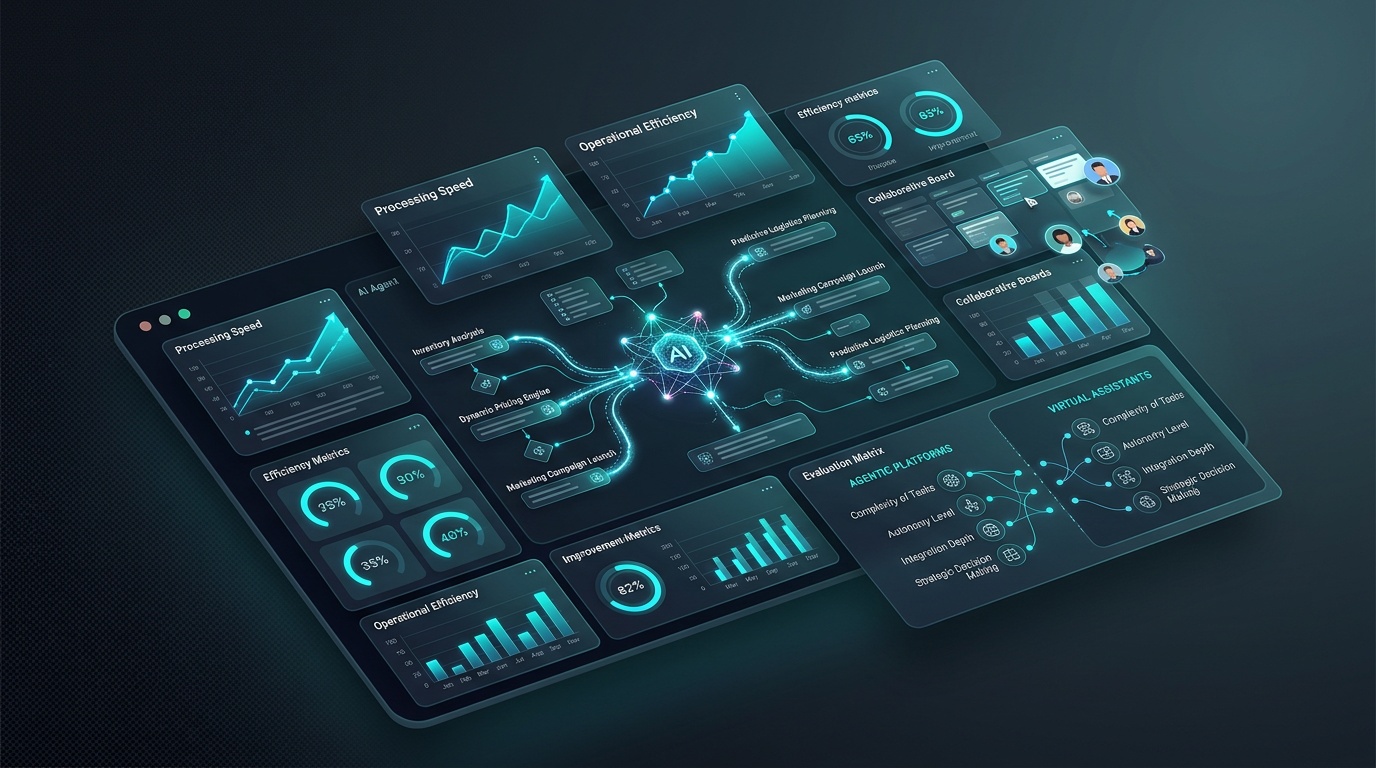
Selecting the appropriate AI automation technology involves a clear assessment of your current workflows, desired outcomes, and the complexity of tasks you aim to automate. It’s not a one-size-fits-all decision. While agentic platforms offer advanced capabilities, traditional virtual assistants still hold value for simpler, well-defined tasks. Understanding where each technology shines allows for strategic deployment, maximizing ROI and operational efficiency. This section provides a framework to guide your evaluation, ensuring you select the solution that best aligns with your business needs and technological maturity.
The Single-Agent Litmus Test
A practical starting point for evaluating automation needs is the “single-agent litmus test.” Ask yourself: Can the primary goal of this workflow be achieved through a single, well-defined sequence of actions, or does it inherently require multiple, independent agents or complex decision-making branches? If a task can be clearly broken down into a linear path with predictable steps and minimal ambiguity, a sophisticated virtual assistant might suffice. However, if the process involves dynamic information gathering, conditional logic, adaptation based on external factors, or requires the system to manage multiple sub-tasks concurrently, it leans towards requiring an agentic platform. For example, a basic chatbot answering FAQs about office hours is a single-agent task, whereas managing a full recruitment pipeline from sourcing to offer is a multi-agent challenge.
Many businesses start by automating discrete, repetitive tasks using virtual assistants. This is a valid approach for immediate efficiency gains. However, when workflows become more intricate, involving continuous learning, complex integrations, or the need for proactive problem-solving, the limitations of a single-agent paradigm become apparent. As one user noted in discussions, “I’d start single-agent unless you can clearly name the handoff boundary or the need for parallel processing,” highlighting the importance of understanding task decomposition and the potential for emergent complexity that single agents struggle to manage.
When Virtual Assistants Remain the Better Fit
Virtual assistants are exceptionally well-suited for roles that are primarily reactive and involve handling high volumes of straightforward, repetitive queries or tasks. These include: answering frequently asked questions (FAQs), basic data entry, scheduling simple appointments, providing status updates on common requests, or guiding users through predefined processes like password resets. Their strength lies in their ability to execute specific commands quickly and consistently, freeing up human staff from mundane duties. For instance, a virtual assistant can manage initial inquiries on a company website, providing instant answers to common questions about products or services, thereby improving customer experience by reducing wait times.
In sectors like hospitality, a virtual assistant can handle booking inquiries, provide information about amenities, or manage simple reservation modifications. In recruitment, they might screen initial applications for basic qualifications or schedule introductory calls. The key is that the tasks are well-defined, have predictable inputs and outputs, and do not require significant independent judgment or adaptation. When the primary goal is to deflect simple queries and automate basic transactions, a virtual assistant offers a cost-effective and efficient solution without the added complexity of agentic systems.
Scaling to Multi-Agent Architectures
For more sophisticated business processes, scaling beyond single-agent capabilities becomes necessary. This is where agentic platforms, often architected to support multi-agent systems, demonstrate their power. Multi-agent architectures allow different AI agents to collaborate, specialize, and work in parallel or sequence to achieve a common, complex objective. This is particularly relevant for tasks that require diverse skill sets or involve managing numerous interconnected sub-processes. For example, in fundraising, a multi-agent system could have one agent focused on identifying potential donors, another on crafting personalized outreach messages, a third on scheduling meetings, and a fourth on tracking engagement metrics. The overall goal. Securing donations. Is achieved through the coordinated efforts of these specialized agents.
The decision to move towards multi-agent systems (or advanced agentic platforms capable of simulating this) should be driven by the inherent complexity and scale of the problem. It’s about orchestrating a symphony of specialized AI functions to tackle challenges that are too convoluted for a single, monolithic AI. This approach allows businesses to automate entire end-to-end processes, driving significant gains in efficiency, productivity, and strategic execution. For instance, Vynta AI’s Agentic Systems for Real Estate are designed to manage the entire lead-to-viewing pipeline, requiring coordination between lead qualification, property matching, and scheduling agents.
Industry-Specific Selection Criteria
When selecting AI automation, industry-specific requirements are paramount. For real estate agencies, the ability to manage high volumes of inquiries, instantly qualify leads, and coordinate showings is critical. An agentic platform can automate much of this, improving response times and agent productivity. In recruitment, the focus shifts to candidate sourcing, screening, and matching. AI agents that can parse resumes, assess fit against job descriptions, and manage interview scheduling offer immense value. Fundraising organizations benefit from agents that can identify donor prospects, personalize outreach, and track relationship progress. For hospitality, the emphasis is on guest experience, from seamless booking and check-in to personalized service and feedback collection.
Generic virtual assistants may offer basic chatbot functionalities, but they often lack the specialized knowledge and integrated workflows needed to make a significant impact in these verticals. The ideal solution must understand industry nuances, integrate with existing vertical-specific tools (like CRMs for real estate or applicant tracking systems for recruitment), and be configurable to meet unique operational demands. This tailored approach ensures that the AI automation directly contributes to key performance indicators such as lead conversion rates, time-to-hire, donor retention, or guest satisfaction scores, driving tangible business outcomes.
Runtime Governance: Why Autonomy Requires Guardrails
Autonomy without control introduces significant operational and financial risks. As agentic platforms execute complex workflows independently, organizations must implement strict governance frameworks to ensure these systems operate within safe and compliant boundaries. Effective runtime governance provides the transparency and control necessary to deploy AI at scale, transforming unpredictable automation into a reliable business asset. This section outlines the critical mechanisms that enable enterprises to harness agentic capabilities while mitigating potential downsides.
Defining Stop Rules and Budget Caps
Autonomous agents must operate within clearly defined parameters to prevent resource exhaustion or misalignment with business objectives. Stop rules dictate the conditions under which an agent must halt execution, such as when confidence scores drop below a threshold or when a specific operational constraint is triggered. These rules prevent agents from pursuing dead-end strategies or generating excessive output. Budget caps limit the computational resources or financial expenditure an agent can consume during a workflow, protecting the organization from unexpected costs. According to industry surveys, 80% of businesses cite lack of governance as the primary barrier to adopting agentic AI, highlighting the urgent need for these control mechanisms before scaling autonomous systems across critical operations.
Audit Trails and Compliance Requirements
Enterprise adoption demands full visibility into AI decision-making processes. Audit trails provide a comprehensive record of every action an agent takes, the data it accesses, and the reasoning behind its choices. This traceability is non-negotiable for organizations operating in regulated industries, where compliance with data privacy laws and internal policies is mandatory. Without detailed logs, it becomes impossible to verify that an agent adhered to required protocols or to investigate incidents when they occur. Auditors require transparent mechanisms to validate AI behavior, and systems that lack comprehensive audit capabilities often face rejection during security reviews. By embedding immutable logging directly into the agentic framework, businesses can demonstrate accountability and maintain the trust necessary for enterprise deployment.
Failure Containment and Error Handling
Even sophisticated AI systems encounter edge cases and unexpected scenarios. Effective failure containment ensures that when an agent encounters an error, the impact is isolated and resolved without disrupting broader operations. This involves automatic retry mechanisms, fallback strategies, and graceful degradation protocols. If an agent cannot complete a task due to missing information or a system outage, it should escalate the issue to a human operator rather than proceeding with flawed assumptions. Error handling also includes monitoring for anomalous behavior that might indicate model drift or a security threat. By prioritizing resilience and clear escalation paths, organizations can deploy agentic platforms with confidence, knowing that potential failures are managed systematically and do not compromise data integrity or customer experience.
Why Generic Platforms Struggle in Regulated Niches
Off-the-shelf AI solutions often lack the nuanced governance features required for specialized industries. Generic platforms may offer basic controls, but they frequently fail to address the unique compliance and operational demands of sectors like real estate, recruitment, or fundraising. For example, a generic agent might mishandle sensitive candidate data or property records due to insufficient access controls or audit capabilities. Vynta AI’s Agentic Systems for Real Estate are built with enterprise-grade governance at their core. This platform incorporates industry-specific rule sets, ensuring that every automated action complies with real estate regulations and data protection standards. By tailoring governance mechanisms to the specific risks and requirements of a vertical, businesses can achieve the autonomy they need while maintaining the strict oversight that their industry demands.
Runtime Governance: Key Capabilities
Essential Governance Features
- Granular budget caps and stop rules
- Immutable audit trails and compliance logs
- Automatic error containment and escalation
- Industry-specific rule enforcement
Risks of Insufficient Governance
- Unpredictable cost overruns and resource waste
- Inability to pass security or compliance audits
- Cascade failures from uncontained errors
- Regulatory violations and reputational damage
Industry-Specific Workflows: Real-World Agentic Applications
Understanding the theoretical differences between agentic platforms and virtual assistants is only part of the equation. The true value of agentic AI emerges when applied to specific industry workflows, where persistent memory, tool integration, and autonomous execution drive measurable business outcomes. This section grounds the comparison in real-world scenarios, demonstrating how agentic systems deliver tangible ROI across real estate, recruitment, fundraising, and hospitality verticals. These applications highlight the shift from reactive task completion to proactive goal achievement.
Real Estate: From Lead Scoring to CRM Handoff
In the competitive real estate market, speed and precision are paramount. Agentic platforms transform lead management by automating the entire journey from initial inquiry to qualified CRM handoff. Agentic Systems for Real Estate deploy intelligent agents that engage property inquiries instantly across multiple channels, including WhatsApp, SMS, email, and website chat. These agents perform real-time qualification, cross-reference buyer preferences with available inventory using advanced matching algorithms, and coordinate calendar availability for viewings. The result is a streamlined pipeline where agents focus only on high-probability opportunities. Organizations implementing these workflows report a 3x increase in qualified pipeline volume, an 85% conversion rate for matched leads, and a response time to inquiries of less than 60 seconds. This level of automation saves agents over 20 hours per week, maximizes productivity by automating 80% of routine tasks, and drives an average of over $100k in additional revenue per agent annually.
Recruitment: Candidate Screening and Interview Orchestration
Recruitment agencies face immense pressure to fill roles quickly while maintaining high quality standards. Agentic platforms automate the time-intensive processes of candidate sourcing, screening, and interview coordination. AI agents can parse thousands of resumes, assess fit against complex job descriptions, and initiate personalized outreach to passive candidates. They manage the scheduling of interviews, send reminders to reduce no-shows, and collect feedback to refine future candidate suggestions. This continuous loop of data collection and optimization ensures that human recruiters spend their time on strategic activities like relationship building and final selection. The outcome is a significant reduction in time-to-hire, improved candidate satisfaction, and higher placement quality. By handling the repetitive heavy lifting, agentic systems enable recruitment firms to scale their operations without proportional increases in administrative overhead, directly impacting their bottom line.
Fundraising and Hospitality: Sustained Outreach and Guest Experience Loops
Fundraising organizations and hospitality businesses rely on sustained, personalized engagement to build lasting relationships. Agentic platforms excel in these areas by maintaining persistent memory of donor or guest interactions and orchestrating multi-touch outreach campaigns. In fundraising, agents can identify potential donors, craft personalized messages based on past contributions, and track engagement metrics to optimize future appeals. This approach improves donor retention and increases average gift sizes. Similarly, in hospitality, agents manage the guest experience from booking to post-stay follow-up. They handle reservation modifications, provide personalized recommendations for amenities, and collect feedback to refine services. These agentic workflows drive measurable improvements in donor retention rates and guest satisfaction scores. By automating the nuances of relationship management, businesses can deliver exceptional, scalable experiences that foster loyalty and drive revenue growth across these relationship-centric industries.
Cost Structures, Implementation Scenarios, and Future Readiness
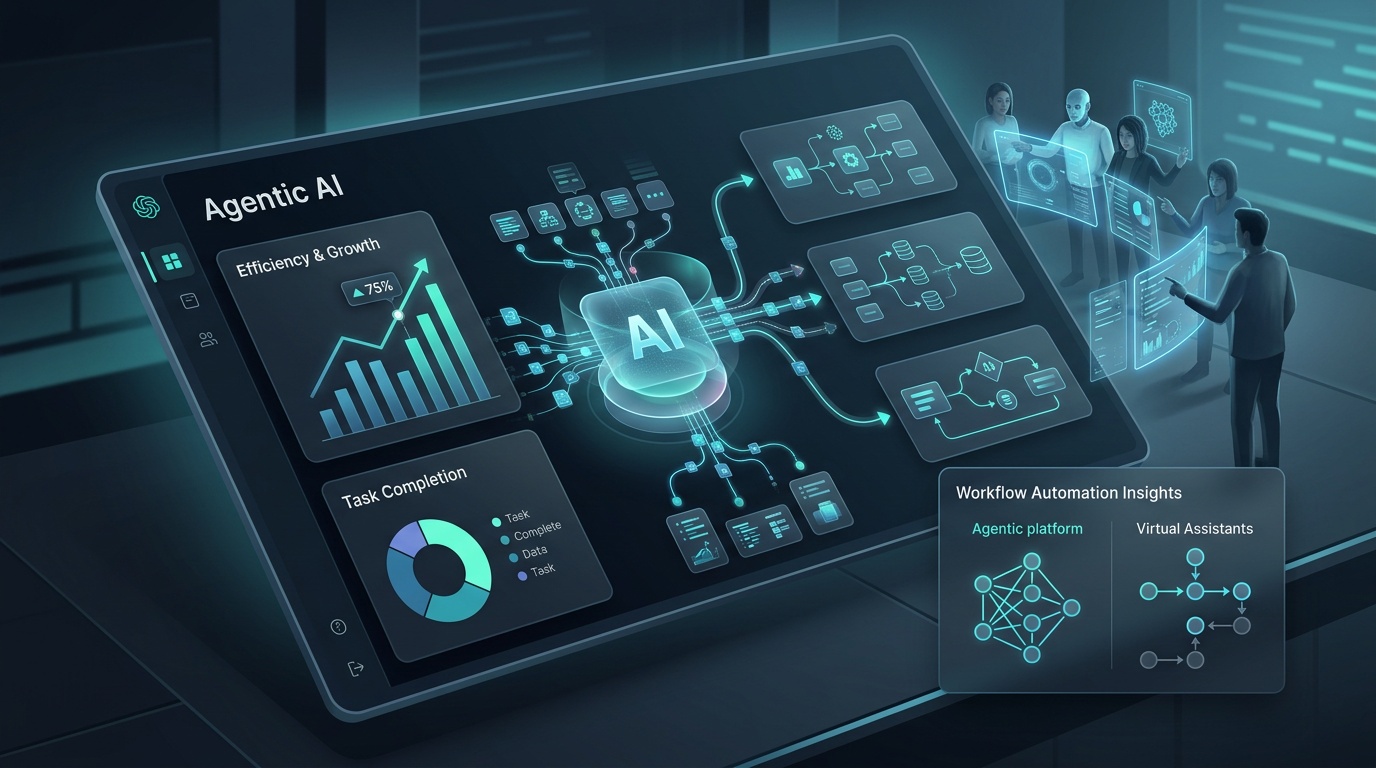
Navigating the commercial evaluation of AI automation requires a clear understanding of pricing models, deployment strategies, and long-term technological trajectories. Organizations must move beyond surface-level feature comparisons to assess how each solution impacts their bottom line. This section closes the commercial investigation loop by detailing the economic realities of agentic platforms versus traditional assistants, outlining a practical migration strategy, and providing a definitive vendor selection framework. These insights equip mid-market leaders with the financial and operational clarity needed to make confident, forward-looking technology investments.
Per-Interaction Pricing versus High-Volume ROI
Traditional virtual assistants frequently rely on per-interaction pricing or flat monthly subscriptions. This model works adequately for basic query handling but breaks down when organizations require continuous, multi-step automation. Agentic platforms operate on a high-volume ROI framework. The initial investment covers the architecture of autonomous workflows that execute thousands of actions daily. The cost per successful outcome drops dramatically as the system scales. Businesses evaluating an Agentic platforms vs virtual assistants comparison? must look beyond immediate software fees. They should calculate the total cost of ownership against projected productivity gains. Vynta AI structures its solutions around measurable business outcomes, ensuring that every automation dollar spent translates directly into revenue growth or significant time savings. For example, automating 80% of routine administrative tasks saves agents over 20 hours per week, which directly correlates to increased deal closures and higher annual revenue per representative.
The Migration Path from Assistant to Agentic Platform
Transitioning from a basic assistant to a full agentic platform requires a structured approach. Organizations should begin with a comprehensive discovery phase to map existing workflows and identify critical bottlenecks. The strategy phase involves designing automation blueprints that align with specific operational goals and compliance requirements. Implementation follows, where specialized engineers deploy the necessary tools and integrations. This phased approach prevents disruption and allows teams to adapt gradually. Vynta AI guides clients through each stage, ensuring that the technology integrates seamlessly with existing CRM, ATS, or hospitality management systems. The migration path emphasizes sustainable growth rather than overnight transformation. By building a solid foundation first, businesses can confidently expand their automated capabilities across multiple departments. Agentic Systems for Real Estate demonstrate this migration path by converting initial property inquiries into qualified viewings through instant engagement, intelligent qualification, and personalized follow-up sequences.
Vendor Evaluation Checklist
Before committing to a new automation solution, mid-market operators must assess potential vendors against strict operational criteria. The following checklist outlines the essential requirements for selecting a partner capable of delivering enterprise-grade results.
- Industry-Specific Expertise: Does the vendor understand the unique workflows of real estate, recruitment, fundraising, or hospitality?
- Governance and Security: Are runtime controls, audit trails, and data protection protocols built into the core architecture?
- Integration Capabilities: Can the platform connect seamlessly with existing vertical-specific software without extensive custom development?
- Measurable ROI Focus: Does the vendor provide clear KPIs and success metrics rather than vague promises of efficiency?
- Implementation Methodology: Is there a structured discovery, strategy, and deployment process that minimizes operational disruption?
- Ongoing Support and Optimization: Does the provider offer continuous performance monitoring and workflow refinement?
Outlook on Autonomous AI in Mid-Market Operations
The future of business automation will increasingly favor autonomous systems over reactive tools. Mid-market SMEs will rapidly adopt agentic platforms to compete with larger enterprises that possess extensive internal technology teams. The barrier to entry will continue to drop as platforms become more intuitive and industry-specific solutions proliferate. Organizations that invest in these advanced systems today will establish a significant competitive advantage. They will operate with leaner teams, faster response times, and higher conversion rates. Vynta AI remains committed to democratizing sophisticated AI automation, allowing business leaders to focus on strategic growth while our agents handle the complex operational heavy lifting. The next generation of autonomous AI will prioritize continuous learning and adaptive decision-making, further reducing the need for manual oversight.
Strategic Recommendation:
Do not limit your automation efforts to simple task completion. Evaluate how agentic platforms can transform entire end-to-end workflows across your organization. Partner with a vendor that provides both the technological infrastructure and the industry expertise necessary to drive sustainable, measurable growth.