

Agentic AI vs predictive analytics for real estate productivity.
Agentic AI vs. Predictive Analytics: What Truly Drives Real Estate Productivity?
Real estate professionals face a key choice between AI technologies that predict outcomes and those that take autonomous action. Understanding Agentic AI vs predictive analytics for real estate productivity determines whether your agency merely forecasts market trends or actively turns leads into closed deals. This distinction shapes everything from lead-qualification workflows to client relationship management.
Defining Agentic AI: Beyond Predictions to Autonomous Action
Agentic AI operates as an intelligent workforce extension, executing tasks with minimal human input. Unlike passive analytical tools, it engages prospects through WhatsApp conversations, schedules property viewings, and nurtures relationships across multiple touchpoints. Agentic Systems for Real Estate exemplify this approach by converting property inquiries into viewings and sales through instant engagement, intelligent qualification, and personalized follow-up.
These systems respond to inquiries in under 60 seconds, qualify prospects automatically, and coordinate viewing appointments while agents focus on closing deals. The technology doesn’t just analyze data; it acts on insights immediately.
Understanding Predictive Analytics: Forecasting Trends and Behaviors
Predictive analytics examines historical data patterns to forecast future market conditions, property valuations, and buyer behavior. These tools identify which neighborhoods may appreciate, when seasonal demand peaks occur, and which lead sources generate the highest conversion rates. The technology excels at strategic planning and resource allocation decisions.
Teams use predictive models to optimize listing prices, target marketing campaigns, and allocate time across different property types. The insights inform human decision-making rather than executing tasks independently.
The Core Distinction: Action vs. Insight
Key Insight: Predictive analytics tells you what might happen; agentic AI drives productive outcomes through execution. While forecasting tools suggest optimal pricing strategies, autonomous agents engage qualified prospects and guide them through property selection processes.
The productivity gap shows up in execution speed. Predictive analytics requires human interpretation and follow-through, creating delays between insight and business results. Agentic systems reduce this lag by automating routine tasks and speeding up lead engagement.
How Agentic AI Delivers Tangible Productivity Gains for Real Estate Professionals
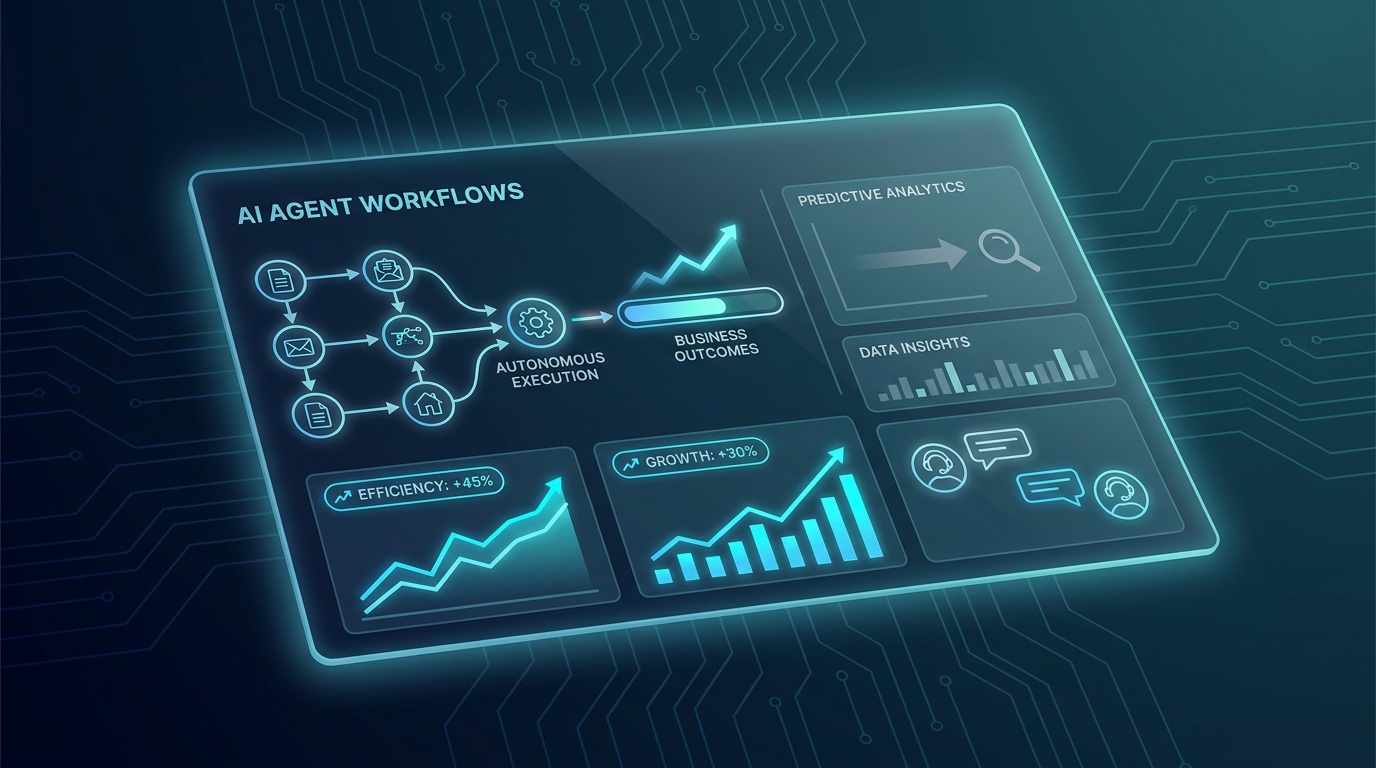
Agentic AI turns efficiency goals into business outcomes through autonomous task execution. Agencies using these systems handle more properties, convert more leads, and close more deals without expanding their team or increasing admin costs.
Automating Lead Qualification: From “Tire Kickers” to Qualified Conversations
Traditional lead qualification consumes hours of agent time through phone tag and email exchanges. Agentic systems engage prospects across multiple channels, asking qualifying questions about budget, timeline, and property preferences. The system identifies serious buyers before human agents invest time in relationship building.
When AI handles initial screening conversations, the qualified pipeline grows significantly. Agents focus on prospects who are ready to view properties and make decisions. This approach mirrors successful recruitment qualification strategies that prioritize high-value interactions.
Intelligent Property Matching: Beyond Basic Filters
Advanced matching algorithms analyze prospect preferences, viewing history, and behavioral signals to suggest relevant properties automatically. The system sends personalized recommendations that include virtual tours, neighborhood notes, and market comparisons without manual curation.
These systems learn from prospect interactions, refining suggestions based on viewing feedback and engagement patterns.
Autonomous Task Management: Freeing Up Agent Time for High-Value Activities
Automated workflows handle appointment scheduling, reminder notifications, follow-up sequences, and feedback collection. Agents receive qualified prospects with interaction histories, rather than managing communication logistics manually. This shift increases throughput while keeping agents focused on negotiations and deal execution.
Predictive Analytics: Guiding Real Estate Decisions with Data-Driven Insights
Predictive analytics gives real estate professionals forecasting capabilities that inform strategy and resource allocation. While agentic systems execute tasks autonomously, predictive models analyze market patterns to guide pricing, marketing investments, and client targeting.
Forecasting Market Trends and Pricing Strategies
Market forecasting algorithms process historical sales data, economic indicators, and demographic shifts to estimate property value movement. These models flag emerging neighborhoods, seasonal demand patterns, and listing timing windows. Teams use these insights to advise clients on timing and pricing.
Predictive pricing models analyze comparable sales, market velocity, and local economic factors to recommend listing prices that balance speed and return. This reduces time on market by supporting data-backed pricing decisions rather than intuition-driven ones.
Predicting Lead Behavior and Conversion Likelihood
Lead scoring algorithms evaluate prospect behavior, demographics, and interaction history to rank conversion probability. These systems highlight which inquiries deserve immediate attention and which need longer nurturing. Agents prioritize outreach based on likelihood rather than queue order.
Behavioral prediction models track website engagement, email responses, and communication frequency to estimate buyer readiness. This helps agents time follow-ups and recommendations for better impact.
Optimizing Marketing Spend with Data-Backed Targeting
Predictive analytics identifies high-performing marketing channels, informs ad budget allocation, and highlights audience segments more likely to generate qualified leads. Campaign performance models compare cost per acquisition across platforms to improve marketing return on investment.
Key Insight: Predictive analytics optimizes marketing strategy through analysis, but it requires human execution. Insights remain theoretical until the team acts on them, creating delays between analysis and outcomes.
Addressing “Vibe-Coded” and Misleading AI: Why Agentic AI Offers a Transparent Alternative
Real estate professionals increasingly encounter AI tools that promise transformation but deliver superficial improvements. Understanding the difference between these technologies helps separate real automation from marketing-driven claims that don’t produce measurable outcomes.
The Pitfall of Superficial AI: Beyond “AI Add-Ons” to Real Value
Many real estate technologies add AI labels to basic automation features without delivering genuine intelligence or autonomous capability. These solutions create extra steps instead of removing them, requiring heavy manual oversight while presenting themselves as advanced systems.
Real agentic systems show value through measurable operational signals: faster first-response times, higher qualification rates, and fewer manual follow-ups. Similar to how effective business services demonstrate clear value propositions, genuine AI solutions produce quantifiable improvements.
Building Trust: How Enterprise Agentic AI Supports Data Security and Transparency
Enterprise agentic systems operate with transparent decision paths, so agents understand why a specific action occurred. Data processing occurs in secure environments with audit trails, consent management, and compliance controls that protect sensitive property and financial information.
Trust comes from consistent performance and clear controls. Strong systems explain reasoning, provide override options, and keep human oversight available while automating routine tasks.
Choosing the Right AI for Your Real Estate Business: A Strategic Partnership Approach

Selecting between autonomous action and predictive insight depends on your agency’s bottlenecks and growth goals. Knowing where these technologies fit in your operation determines which produces faster business impact.
When to Prioritize Predictive Insight vs. Autonomous Action
Choose predictive analytics when strategic planning matters more than day-to-day execution speed. Agencies expanding into new markets, adjusting pricing models, or reallocating marketing budgets benefit from forecasting that supports long-term decisions.
Select agentic systems when lead management outpaces your team’s capacity. If agents spend too much time qualifying prospects, scheduling appointments, or running follow-up sequences, autonomous execution relieves operational pressure quickly. Understanding agent productivity factors helps determine where automation provides the most value.
| Business Challenge | Recommended Solution | Expected Outcome |
|---|---|---|
| Lead response delays | Agentic AI | Faster response times |
| Market timing decisions | Predictive analytics | Data-backed pricing guidance |
| Manual task overload | Agentic AI | Less time spent on admin work |
| Marketing optimization | Predictive analytics | Improved campaign ROI |
How Agentic AI and Predictive Analytics Can Work Together
Using both technologies creates a practical loop: predictive models inform what to do next, and agentic systems carry out those actions. Forecasts guide pricing recommendations, while behavior predictions shape follow-up timing and property suggestions.
In mature setups, predictive insight informs agentic messaging and next-step choices, creating more relevant client interactions while keeping execution fast.
Vynta AI’s Approach: Augmenting Your Team for Measurable Outcomes
At Vynta AI, I focus on operational execution that produces measurable outcomes, not dashboards that sit unused. We prioritize productivity gains through automation, lead qualification, and client engagement workflows, with clear controls and oversight built in.
The goal is to augment agent capability rather than replace human expertise. The system handles routine communication, scheduling coordination, and early screening, while agents focus on relationships, negotiation, and closing.
Implementation Considerations: What to Expect with Enterprise AI Agents
Enterprise agentic implementation typically starts with discovery, during which the system learns your communication standards, service rules, property portfolio structure, and typical buyer journeys. Capability expands as patterns become clear and the team validates outputs.
Setup includes integration with your CRM and communication stack. During the early phase, agents should review conversations and provide feedback so the system aligns with your process and standards. This mirrors how comprehensive AI automation services ensure seamless integration with existing workflows.
Making the Strategic AI Decision: Action-Oriented Productivity vs. Analytical Intelligence
The choice depends on whether you need immediate operational relief or better market intelligence. Many high-performing teams find that autonomous task execution improves productivity faster than adding more analysis.
Predictive analytics fits agencies that already run efficiently and want stronger market positioning through forecasting and targeting. These tools refine decisions and optimize existing workflows.
Agentic systems change day-to-day operations by reducing repetitive work that consumes agent time without producing revenue. Gains come from execution: faster engagement, better follow-up coverage, and fewer scheduling bottlenecks.
Strategic Recommendation: Start with agentic automation to address immediate productivity bottlenecks, then add predictive analytics for strategic optimization once execution is consistent.
If your priority is productivity, pick technology that executes tasks while protecting service quality. It’s the difference between moving work forward automatically and only learning what action might work best.
Long-term leaders often combine both: autonomous agents for operational consistency and predictive models for market positioning.
Frequently Asked Questions
What is Agentic AI for real estate?
Agentic AI in real estate functions as an intelligent extension of your team, executing tasks autonomously. It moves beyond just predicting outcomes to actively engaging prospects, scheduling viewings, and nurturing relationships. This technology converts inquiries into sales through instant engagement and personalized follow-up, allowing agents to focus on closing deals.
How does Agentic AI help real estate agents?
Agentic AI significantly boosts agent productivity by automating time-consuming tasks like lead qualification and appointment scheduling. It engages prospects across multiple channels, identifies serious buyers, and matches them with suitable properties. This allows agents to dedicate more time to high-value activities such as negotiations and deal execution, increasing overall throughput.
What does predictive analytics do for real estate?
Predictive analytics in real estate analyzes historical data to forecast future market conditions, property valuations, and buyer behaviors. It helps identify appreciating neighborhoods, peak demand periods, and effective lead sources. These insights are then used to inform strategic planning, optimize listing prices, and target marketing campaigns effectively.
What is the main difference between agentic AI and predictive analytics?
The core distinction lies in action versus insight. Predictive analytics provides data-driven forecasts and insights, telling you what might happen in the market or with leads. Agentic AI, conversely, takes autonomous action based on insights, executing tasks like engaging prospects and scheduling appointments to drive productive outcomes directly.
Can agentic AI automate lead qualification in real estate?
Absolutely, agentic AI excels at automating lead qualification, saving agents significant time. It engages prospects through various channels, asking qualifying questions about budget, timeline, and preferences. This process identifies serious buyers, ensuring human agents spend their valuable time on qualified leads ready for property viewings and decision-making.
How do real estate teams use predictive analytics for strategy?
Real estate teams use predictive analytics to inform strategic decisions by forecasting market trends and optimizing pricing strategies. It helps identify emerging neighborhoods and ideal listing times, and recommends data-backed listing prices. Predictive models also score leads, allowing teams to prioritize outreach based on a prospect’s likelihood to convert.
Which AI technology should a real estate agency choose?
The choice depends on whether your agency aims to merely forecast market trends or actively convert leads into closed deals. Predictive analytics provides valuable insights for strategic planning, while agentic AI drives productivity by executing tasks autonomously. For agencies focused on immediate execution and tangible business outcomes, agentic AI offers a direct path to converting inquiries into sales.