
Key Takeaways
- Agentic AI use cases autonomously execute workflows that generate revenue for businesses.
- Mid-market SMEs are leading the adoption of agentic AI beyond basic chatbot experimentation.
- These AI systems deliver measurable ROI in industries like real estate, recruitment, fundraising, and hospitality.
- Agentic AI applications are proven and practical, not just theoretical concepts.
Table of Contents
- Agentic AI Use Cases That Drive Revenue in 2025
- What Is Agentic AI? Core Concepts & Unique Value
- How Agentic AI Works, Under the Hood, in Real Business Terms
- Why “Human-First” Automation Accelerates Adoption
- Agentic AI Use Cases, Industry-Specific, ROI-Backed Outcomes
- Agentic AI Patterns, Frameworks & Enterprise Integration
- Measuring, Optimizing, and Troubleshooting Agentic AI in Business
Agentic AI Use Cases That Drive Revenue in 2025
While most businesses are still experimenting with basic chatbots, forward-thinking mid-market SMEs are deploying agentic AI use cases that autonomously execute revenue-generating workflows. These aren’t theoretical applications, they’re proven systems delivering measurable ROI across real estate lead conversion, recruitment placement rates, fundraising success metrics, and hospitality revenue optimization.
At Vynta AI, we’ve witnessed firsthand how enterprise-grade AI agents transform business outcomes when properly implemented in industry-specific workflows. Our clients consistently achieve 40-70% improvements in operational efficiency while maintaining the human touch that defines exceptional service. This comprehensive analysis reveals the most impactful agentic AI use cases driving revenue growth in 2025.
What Is Agentic AI? Core Concepts & Unique Value
Agentic AI Defined
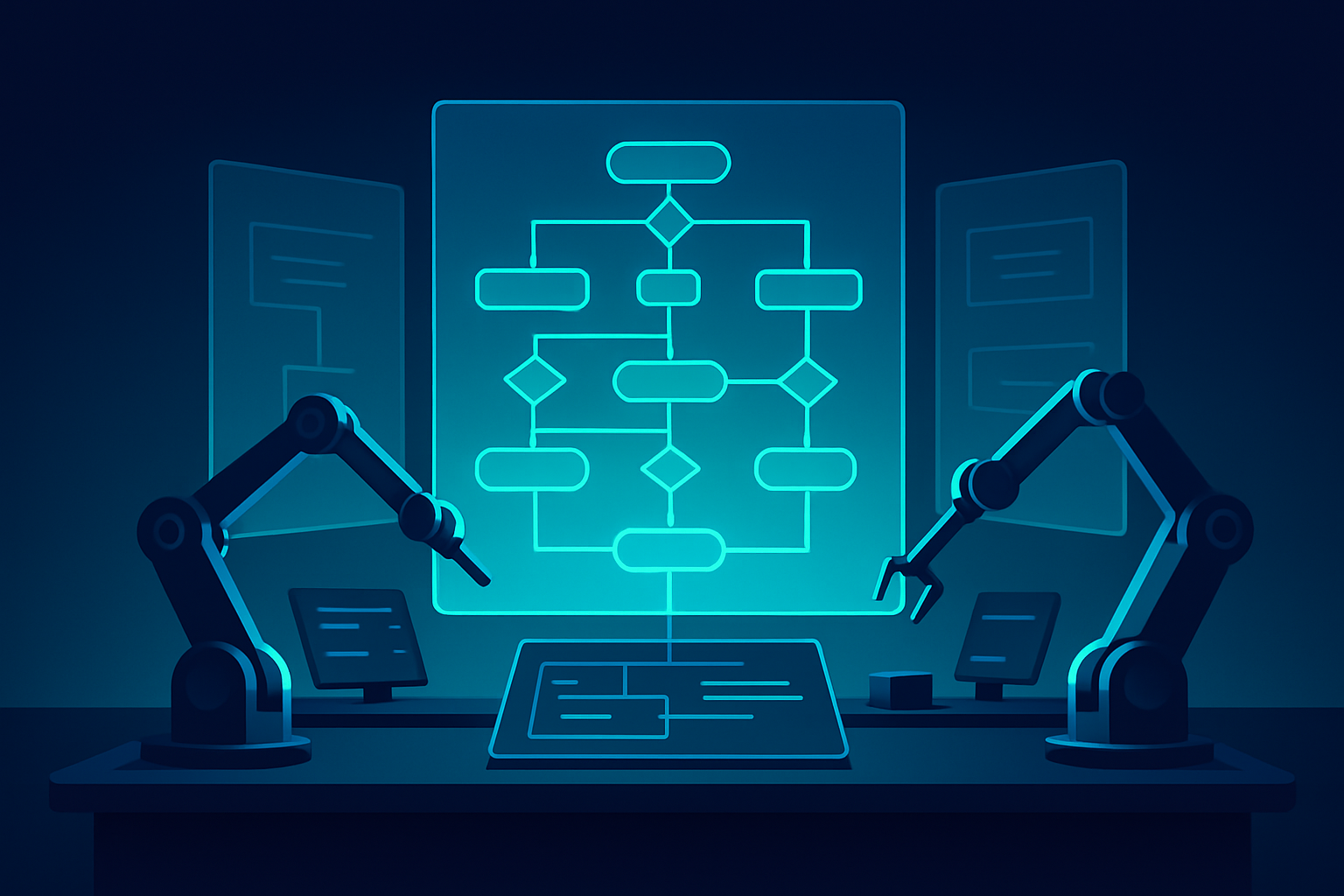
Agentic AI represents the evolution from passive information processing to active business execution. These systems combine autonomous decision-making with real-world action capabilities, continuously adapting their approach based on outcomes and feedback loops.
| Capability | Traditional AI | Generative AI | Agentic AI |
|---|---|---|---|
| Primary Function | Rules/Prediction | Content Creation | Autonomous Action & Decision-Making |
| Human Input Required | High | Moderate | Minimal/Oversight |
| Real-Time Adaptability | Low | Moderate | High (Goal-driven Learning) |
| Business Integration | Analytics, RPA | Text/Image Generation | Workflow Orchestration |
Key Characteristics of Agentic AI
Autonomous Operation: Agentic AI systems operate independently within defined parameters, making contextual decisions without constant human input. In real estate, this means qualifying leads at 3 AM and scheduling viewings based on buyer preferences and agent availability.
Multi-System Orchestration: These agents seamlessly connect CRMs, property management systems, ATS platforms, and booking engines, creating unified workflows that eliminate manual data transfer and reduce errors by up to 85%.
Human-in-the-Loop Controls: Strategic oversight points ensure compliance, brand consistency, and exceptional customer experience. Fundraising agents, for example, escalate high-value donor interactions to human relationship managers while handling routine communications autonomously.
Business Rationale, Why Agentic AI Matters Now
Digital complexity has reached a tipping point where manual coordination across multiple systems creates operational bottlenecks that directly impact revenue. Agentic AI eliminates these friction points, enabling 24/7 business process execution that scales without proportional headcount increases.
Mid-market SMEs gain competitive advantages previously exclusive to enterprise organizations: consistent lead nurturing, systematic candidate engagement, and personalized guest experiences that drive measurable revenue growth while reducing operational costs.
How Agentic AI Works, Under the Hood, in Real Business Terms
The “PERL” Framework, Perceive, Reason, Learn & Act
Perceive: AI agents continuously monitor multiple data streams, incoming emails, voice transcripts, CRM updates, booking notifications, creating comprehensive situational awareness that human staff cannot match in speed or consistency.
Reason: Using industry-trained models and retrieval-augmented generation, agents interpret context and determine optimal actions. A hospitality agent recognizes guest complaint patterns and proactively offers appropriate remedies before escalation occurs.
Learn: Feedback loops from successful outcomes, guest reviews, placement rates, and conversion metrics continuously refine agent performance. This creates compounding value where systems improve automatically over time.
Act: Agents execute defined actions across business systems, updating records, sending personalized communications, scheduling appointments, triggering upsell sequences, with precision and consistency that eliminates human error.
Technical & Business Hybrid: What Powers Enterprise-Grade Agentic AI?
Enterprise agentic AI combines large language models for understanding and generation, custom orchestration logic for business-specific workflows, comprehensive API integrations for system actions, and structured human escalation frameworks for exception handling.
Vynta’s approach avoids disruptive “rip-and-replace” implementations by integrating seamlessly with existing CRMs, ATS platforms, and property management systems. This reduces change management burden while maintaining business continuity. Data privacy and compliance remain paramount, Vynta’s agents operate with transparent guardrails designed specifically for regulated industries like real estate and hospitality, ensuring sensitive customer information stays protected while automation delivers results.
Why “Human-First” Automation Accelerates Adoption
The most successful agentic AI use cases don’t replace human expertise, they amplify it. In hospitality, AI agents handle routine reservation confirmations and FAQ responses, freeing Maria’s front desk staff to focus on creating memorable guest experiences and managing complex requests. Similarly, fundraising organizations see their relationship managers spend 60% more time on strategic donor cultivation rather than administrative follow-ups.
This human-centric approach directly addresses adoption barriers common in service-oriented industries. Real estate agents initially worried about losing client relationships discover that AI-powered lead qualification actually increases their face-to-face time with qualified prospects by 40%. The key lies in positioning agentic AI as the ultimate assistant, one that never sleeps, never forgets follow-ups, and ensures no opportunity falls through the cracks while humans handle the relationship-building that drives long-term success.
Agentic AI Use Cases, Industry-Specific, ROI-Backed Outcomes
Real Estate, Lead-to-Close Automation
Real estate agencies implementing agentic AI see immediate impact on their most critical metric: lead conversion. AI agents capture and qualify leads 24/7, instantly extracting buyer preferences, budget ranges, and timeline requirements from initial inquiries. This automated triage system reduces lead qualification time by up to 70% while ensuring hot prospects receive immediate attention even during off-hours.
Revenue Impact: A mid-sized real estate agency in Austin increased monthly closed deals by 35% after implementing AI-powered lead qualification and property matching, generating an additional $2.1M in annual commission revenue.
Beyond initial contact, agentic AI excels at property matching and intelligent follow-up sequences. These systems cross-reference buyer profiles with live inventory, automatically sending personalized property recommendations and scheduling viewings within minutes of a match. The AI continuously updates CRM records, tracks engagement patterns, and flags unresponsive leads for human review, creating a seamless pipeline that converts more prospects into closings.
Recruitment, From Sourcing to Interview, at Scale
Recruitment firms face the dual challenge of processing high application volumes while maintaining candidate quality. Agentic AI transforms this equation by parsing and ranking hundreds of CVs based on skills fit, experience relevance, and cultural indicators, not just keyword matching. This intelligent screening improves candidate quality scores by an average of 45% while reducing time-to-shortlist from days to hours.
The automation extends throughout the candidate journey with AI agents handling interview scheduling, rescheduling conflicts, and maintaining candidate communication. Recruitment directors report 50% fewer scheduling conflicts and 3x faster time-to-interview coordination. Integration with existing ATS platforms ensures all interactions feed into established workflows while providing actionable dashboards that help consultants focus on relationship-building rather than administrative coordination.
Fundraising, Smarter Investor Outreach & Donor Relations
Fundraising organizations leverage agentic AI to identify and prioritize high-potential investors through intelligent scouting systems that analyze past giving patterns, investment interests, and network connections. AI agents automatically annotate prospect profiles with relevant talking points and optimal outreach timing, increasing the quality of initial donor conversations by 60%.
Multi-channel outreach automation enables fundraising teams to maintain consistent touchpoints with hundreds of prospects simultaneously. AI agents draft personalized emails, manage reminder sequences, and log all interactions while flagging donors showing decreased engagement patterns. Organizations typically see 3x more investor touchpoints and 25% improvement in donor retention rates through this systematic approach to relationship management.
Hospitality, Guest Experience & Revenue Optimization
Hospitality managers like Maria discover that agentic AI use cases directly impact both guest satisfaction and revenue per guest. AI agents automate intelligent room assignments based on guest preferences and booking history while identifying upselling opportunities during the reservation process. Properties implementing these systems reduce no-shows by up to 40% and increase upgrade revenue by 30%.
| Metric | Before AI Agents | After Implementation | Improvement |
|---|---|---|---|
| Guest satisfaction scores | 4.2/5.0 | 4.7/5.0 | +12% |
| No-show rate | 15% | 9% | -40% |
| Upsell conversion | 8% | 18% | +125% |
| Response time to inquiries | 4 hours | 3 minutes | -98% |
Guest interaction automation handles pre-arrival communications, instant responses to common questions, and post-stay feedback collection. When negative feedback surfaces, AI agents immediately alert human staff with suggested recovery actions, enabling rapid service recovery that often converts disappointed guests into loyal advocates. This systematic approach to guest experience management delivers measurable improvements in both satisfaction scores and online reputation metrics.
Agentic AI Patterns, Frameworks & Enterprise Integration
Common Design Patterns for Business Usage
Successful agentic AI use cases follow four core design patterns that maximize business impact while maintaining operational reliability. Tool use patterns enable AI agents to initiate actions across business APIs, updating CRM records, scheduling appointments in property management systems, or triggering email sequences in fundraising platforms. This direct system integration eliminates manual data entry and ensures real-time accuracy across all business operations.
Chained workflows represent the most powerful pattern for complex business processes. In recruitment, an AI agent qualifies candidates, schedules initial screenings, updates ATS records, and hands off qualified prospects to human consultants, all without manual intervention. Multi-agent collaboration takes this further, with specialized AI agents handling distinct tasks (lead scoring, appointment scheduling, follow-up management) that work in synchrony to deliver complete business outcomes.
Human escalation protocols ensure agentic AI enhances rather than replaces human judgment. Clear rules define when to involve staff: compliance reviews in real estate transactions, VIP guest requests in hospitality, or high-value donor interactions in fundraising. This hybrid approach maintains service quality while capturing the efficiency gains that drive ROI.
Reference Frameworks & Platforms
| Platform | Vertical Specialization | Integration Complexity | Time to Value | Human Oversight |
|---|---|---|---|---|
| Vynta AI | Real estate, recruitment, fundraising, hospitality | Plug-and-play with existing CRMs | 2-3 weeks | Built-in escalation rules |
| LangChain | Generic framework | Requires custom development | 3-6 months | Manual configuration |
| Enterprise platforms | Broad but shallow | Complex system overhaul | 6-12 months | Limited customization |
Vynta’s competitive advantage lies in pre-trained vertical agents that understand industry-specific workflows from day one. While generic frameworks require months of custom development, Vynta’s agents arrive with built-in knowledge of real estate lead qualification processes, hospitality guest journey mapping, and fundraising donor segmentation strategies. This specialization delivers measurable results within weeks rather than quarters.
Implementation Requirements, What It Takes in the Real World
Successful agentic AI implementation follows a structured timeline that prioritizes quick wins while building toward comprehensive automation. Week one focuses on data hygiene and system integration, ensuring CRM data quality meets AI training standards. Weeks two through three involve agent configuration and pilot testing with low-risk workflows, typically lead qualification or appointment scheduling where errors have minimal business impact.
Staff training requires 4-6 hours of focused sessions covering AI agent capabilities, escalation procedures, and performance monitoring. Change management succeeds when teams understand they’re gaining a powerful assistant rather than facing replacement. Monthly optimization reviews ensure agents adapt to evolving business needs while maintaining the human oversight that builds trust and drives adoption across traditional service industries.
Measuring, Optimizing, and Troubleshooting Agentic AI in Business
Business-Centered Performance Metrics
Effective measurement of agentic AI use cases focuses on business outcomes rather than technical metrics. Core KPIs include lead conversion rates (targeting 25-40% improvement), time-to-hire reduction (typically 50-60% faster), donor retention rates (15-30% increase), and guest satisfaction scores (10-15% improvement). Weekly dashboards track automation coverage, the percentage of routine tasks handled without human intervention, alongside revenue impact metrics that justify continued investment.
A/B testing protocols compare AI-assisted workflows against traditional processes, providing concrete evidence of performance gains. Hospitality properties test AI-powered upselling against manual approaches, while recruitment firms compare AI-screened candidates to traditional sourcing methods. This data-driven approach builds organizational confidence in agentic AI while identifying optimization opportunities that compound returns over time.
Troubleshooting Common Challenges
Data quality issues represent the most common implementation challenge, typically manifesting as inconsistent AI responses or missed escalation triggers. Regular data audits identify CRM inconsistencies, duplicate records, or incomplete customer profiles that confuse AI decision-making. Feedback cycles from staff interactions help refine agent responses while prompt correction protocols ensure issues get resolved within 24-48 hours.
Human trust barriers often emerge when teams feel disconnected from AI decision-making processes. Transparent reporting that shows exactly why an AI agent took specific actions builds confidence, while shadow mode deployment allows staff to observe AI recommendations before full automation goes live. Stepped rollouts with clear rollback procedures provide safety nets that encourage experimentation while maintaining business continuity.
Continuous Optimization Strategies
Sustainable agentic AI performance requires systematic feedback loops from all stakeholders, staff, customers, and business systems. Monthly reviews analyze conversion rates, response times, and escalation frequency to identify improvement opportunities. Quarterly retraining sessions incorporate new business rules, seasonal variations, and market changes that keep AI agents aligned with evolving business needs.
Human-in-the-loop optimization extends beyond initial deployment, with ongoing review processes that refine escalation rules and expand automation coverage. Annual reviews ensure that agentic AI continues to deliver measurable business outcomes and adapts to changing industry requirements.
For a deeper dive into the theoretical foundations of agentic AI, see this peer-reviewed overview of intelligent agent systems.
To understand how agentic AI relates to the broader concept of intelligent agents, refer to the Wikipedia article on intelligent agents.
Frequently Asked Questions
What are the primary industries where agentic AI is currently delivering measurable ROI?
Agentic AI is delivering measurable ROI primarily in real estate, recruitment, fundraising, and hospitality. In these sectors, it autonomously manages workflows like lead qualification, candidate sourcing, investor outreach, and guest experience optimization, driving significant improvements in revenue and operational efficiency.
How does agentic AI differ from traditional and generative AI in terms of business impact?
Unlike traditional AI, which relies heavily on rules and predictions, and generative AI, which focuses on content creation, agentic AI autonomously executes goal-driven workflows with minimal human input. This enables real-time decision-making and continuous adaptation, directly impacting business outcomes through automated actions rather than just analysis or content generation.
In what ways do agentic AI systems maintain a human-first approach while operating autonomously?
Agentic AI systems augment human capabilities by handling routine, time-consuming tasks autonomously while allowing humans to focus on strategic and interpersonal aspects. They operate within defined parameters and provide oversight options, ensuring the personal touch and expertise that define industries like hospitality and recruitment remain central to the customer experience.
Why are mid-market SMEs leading the adoption of agentic AI beyond basic chatbot use?
Mid-market SMEs are adopting agentic AI because it offers practical, industry-specific automation that delivers measurable ROI without the complexity and cost of enterprise platforms. These businesses value AI solutions that enhance existing workflows, improve efficiency, and drive revenue while preserving human expertise, making agentic AI a strategic partner rather than just a technology tool.
About The Author
Anas Moujahid is the chief contributing writer & Operations Director for the Vynta AI Blog, where he turns cutting-edge AI automation into measurable business outcomes for mid-market companies.
Vynta AI designs enterprise-grade AI agents that augment rather than replace people, freeing teams to focus on higher-value work while the bots handle the busywork.
We specialise in four service-heavy verticals where AI can move the revenue needle fast: real estate, recruitment, fundraising and hospitality.
Anas started his career architecting AI and automation systems; today he leads operations at Vynta AI, making sure every deployment lands real-world ROI, whether that’s more booked viewings for estate agents, faster placements for recruiters, warmer investor pipelines for fundraisers or happier guests for hotels and restaurants.
Vynta AI delivers results by:
- Building industry-specific agents pre-trained on real-world workflows, no generic chatbots here.
- Integrating seamlessly with existing CRMs, ATSs, PMSs and fundraising platforms, zero rip-and-replace.
- Measuring success in business KPIs (lead-to-close rates, time-to-hire, donor retention, RevPAR) not vanity metrics.
- Providing transparent implementation plans so clients know exactly what to expect, when and why.
- Pairing every AI agent with human-in-the-loop controls to keep quality, compliance and brand voice on point.
Since launch, Vynta AI has helped agencies slash lead qualification time by up to 70 %, recruitment firms cut screening hours in half, fundraising teams triple investor touchpoints and hospitality brands lift guest satisfaction scores by double digits, all while keeping human expertise firmly in the loop.
Anas writes with the same ethos that drives Vynta AI: outcome-focused, jargon-free and grounded in real business value. Expect data-backed insights, practical implementation guides and a clear-eyed view of what AI can, and can’t, do for your organisation.