

Top agentic AI tools for improving agent productivity in real estate.
Unlocking Agent Potential: What ‘Agentic AI’ Truly Means for Real Estate Productivity
Real estate professionals are discovering that top agentic AI tools for improving agent productivity in real estate go far beyond simple automation.
Beyond Automation: Defining Agentic AI in Real Estate
Agentic AI marks a clear departure from rule-based automation. Instead of following predetermined scripts, these systems analyze context, evaluate options, and take appropriate action based on real-time data. For real estate agents, this means AI that qualifies prospects, matches properties, schedules viewings, and nurtures relationships with human-like judgment.
How This Technology Differs from Standard AI Tools
Standard AI tools need explicit instructions for each scenario. Agentic systems operate with goal-oriented autonomy. They understand objectives like “convert this lead into a qualified buyer” and determine the best path forward independently. Agents move from reactive task completion to proactive relationship building.
Key Insight: Agentic Systems for Real Estate demonstrate this by converting property inquiries into viewings and sales through instant engagement, intelligent qualification, and personalized follow-up. Without agent intervention.
Core Capabilities That Drive Agent Productivity
These systems excel in three areas: contextual understanding, autonomous decision-making, and continuous learning. They’ll interpret client preferences from conversations, automatically prioritize leads based on buying signals, and refine their approach using successful interaction patterns. This creates compounding productivity gains over time.
The Real Estate Agent’s Workflow Improved: AI Tools in Action
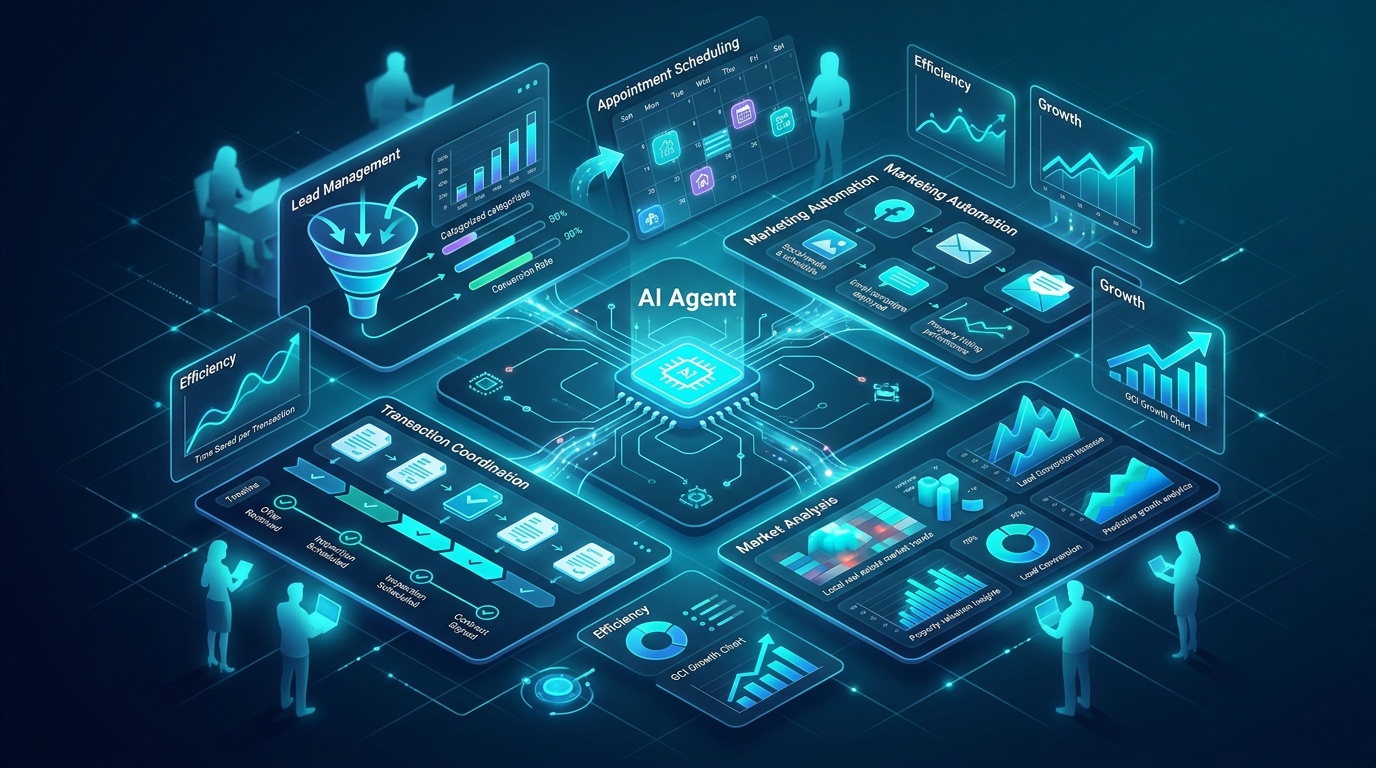
Today’s real estate operations benefit from specialized applications that address specific workflow bottlenecks. The tools integrate into existing processes while delivering measurable improvements in lead conversion and client satisfaction.
Intelligent Lead Qualification and Nurturing Agents
Qualification systems engage prospects across multiple channels. WhatsApp, SMS, email, and website chat. They assess buying intent, financial readiness, and timeline preferences through natural conversation, automatically categorizing leads and triggering appropriate follow-up sequences.
Smart Property Matching and Client-Centric Recommendations
Matching algorithms analyze client preferences, search behavior, and feedback to suggest relevant properties. The systems send personalized recommendations with virtual tours and automatically refine suggestions based on viewing outcomes and client responses.
| Capability | Traditional Approach | Agentic AI Approach |
|---|---|---|
| Lead Response | Business hours only | Immediate engagement, based on your business rules |
| Property Matching | Manual search and selection | Automated, data-driven recommendations |
| Follow-up Timing | Scheduled reminders | Behavior-triggered follow-up |
Automated Client Communication and Engagement Agents
Communication agents maintain consistent contact with prospects and clients. They send appointment reminders, market updates, and personalized check-ins. They reduce no-shows through structured reminder sequences and collect feedback after viewings to improve future recommendations.
Streamlined Market Analysis and Data Insight Agents
Market analysis agents compile comparative market data, track pricing trends, and generate property valuations automatically. They monitor neighborhood developments, school district changes, and economic indicators that affect property values. Giving agents current market intelligence for client consultations.
Measuring Success: Quantifiable ROI and Time Savings
Real estate professionals implementing these tools report measurable improvements across key performance indicators. The systems support business outcomes that directly affect revenue and operational efficiency.
Boosting Conversion Rates: From Lead to Close
Some agentic real estate systems report qualified pipeline increases of up to 3x and conversion rates as high as 85%, depending on data quality, follow-up strategy, and market conditions. Instant engagement paired with intelligent qualification changes how prospects move through your sales funnel. Agents close more deals by focusing time on high-value activities rather than administrative tasks.
Reclaiming Hours: Reducing Administrative Burden
These systems can automate calendar coordination, appointment reminders, follow-up sequences, and initial client screening. The goal? Free agents to focus on relationship building and negotiation. Not replace them entirely.
Revenue Impact: Revenue lift varies by team, market, and adoption. When implementation aligns with clear workflow, many agents report meaningful gains tied to faster response, better qualification, and more consistent follow-up.
Building Client Experience and Stronger Relationships
Consistent communication, personalized property recommendations, and fast response create better client experiences. Automated feedback collection after viewings helps refine future suggestions, while behavioral signals improve relevance. Done well, this builds trust and positions agents as responsive, informed professionals.
Scaling Output Without Expanding Headcount
With the right setup, agencies can handle more properties and convert more leads without adding administrative overhead. The impact is most visible during busy periods, when efficient lead processing and client management reduce missed opportunities.
Navigating the Shift: Practical Steps for Adopting Agentic AI in Your Practice
Successful implementation requires planning and systematic integration. Start by mapping workflow constraints, then select solutions that address the highest-friction moments.
Assessing Your Current Workflow for AI Opportunities
Identify repetitive tasks, response delays, and missed follow-up opportunities. Document your lead qualification process, client communication patterns, and administrative bottlenecks. Where does intelligent automation deliver the most impact?
Choosing the Right Solutions for Your Needs
Evaluate systems based on integration capabilities and measurable outcomes rather than long feature lists. Choose platforms that show results in real estate settings and provide clear reporting on response times, conversion, and time saved.
Integrating AI with Your Existing Tech Stack
Deployment typically includes connecting agentic systems with your CRM, MLS access, and communication platforms. Implementation often includes discovery, strategy development, and a phased rollout to avoid disruption to active deals and client relationships.
Addressing Common Adoption Concerns: Training and Trust
Concerns about complexity and client acceptance usually drop once the system shows value in daily operations. Training should focus on workflow ownership, quality control, and reporting. So your team can review outcomes without needing to manage technical details.
Implementation Reality: Time to proficiency depends on team habits and system scope. Most teams become comfortable within a few weeks when they start with narrow use cases, such as qualification and booking.
Strategic Future: Where AI Takes Real Estate Next

The trajectory points toward more predictive market intelligence and better personalization. Over time, these systems should anticipate client needs, surface opportunities earlier, and support pricing and positioning decisions.
Predictive Market Intelligence and Opportunity Identification
Next-generation systems will analyze demographic shifts, economic indicators, and development patterns to identify emerging opportunities. They can alert agents to potential listings earlier and recommend pricing strategies using predictive modeling alongside historical comps.
Personalized Investment Advisory Capabilities
AI agents may support investment analysis by evaluating rental yields, appreciation potential, and portfolio fit. Used responsibly, this helps agents provide better guidance while keeping final recommendations grounded in local expertise and compliance requirements.
Transaction Coordination Support
Future systems may coordinate parts of the transaction workflow. Inspections, appraisals, financing milestones, and closing steps. They can flag risks, suggest next actions, and keep parties updated, reducing delays.
Maximizing ROI: Your Implementation Success Framework
Achieving strong results requires focused deployment. Prioritize workflows that tie directly to speed-to-lead, qualification quality, and follow-up consistency.
Prioritizing Highest-Impact Applications
Start with lead qualification and initial client communication, where faster response and consistent follow-up improve conversion rates. Once your team trusts the workflow, expand to property matching, market updates, and transaction coordination support.
Performance Measurement and Continuous Optimization
Track conversion rates, response times, client satisfaction, and revenue per agent monthly. Use these metrics to adjust routing rules, refine qualification questions, and tune messaging based on what your clients respond to. Many teams see performance improve over the first six months as systems are tuned to real-world outcomes.
The real estate industry is moving toward workflows where agentic AI becomes standard operating infrastructure. Agents who adopt early can deliver faster service and run more consistent pipelines, while keeping humans responsible for the moments that require judgment.
Ready to modernize your lead handling and follow-up? Agentic Systems for Real Estate provide a framework for measurable productivity gains and pipeline growth, with implementation structured in phases.
Frequently Asked Questions
What is agentic AI and how does it change real estate work?
Agentic AI represents a significant shift from simple automation to intelligent decision-making systems in real estate. It analyzes context, evaluates options, and takes appropriate action based on real-time data, rather than just following predetermined scripts. This means systems can proactively qualify prospects, match properties, and nurture relationships with a judgment that mirrors human understanding.
How does agentic AI differ from standard AI tools in real estate?
Standard AI tools require explicit instructions for every scenario, acting reactively. Agentic AI, however, operates with goal-oriented autonomy, understanding objectives like “convert this lead into a qualified buyer” and determining the best path forward. This distinction transforms pipeline management from reactive task completion to proactive relationship building for agents.
What are the main capabilities of agentic AI that boost agent productivity?
Agentic AI systems excel in contextual understanding, autonomous decision-making, and continuous learning. They interpret client preferences from conversations, automatically prioritize leads based on buying signals, and refine their approach using successful interaction patterns. This creates a compound effect, accelerating productivity improvements over time.
How does agentic AI improve lead qualification and client communication for real estate agents?
Agentic AI uses advanced qualification systems to engage prospects across multiple channels, assessing buying intent and preferences through natural conversation. Communication agents maintain consistent contact, sending reminders, market updates, and personalized check-ins. This reduces no-shows and collects feedback, refining future recommendations.
What measurable benefits can real estate businesses see from using agentic AI tools?
Businesses implementing agentic AI often report measurable improvements in key performance indicators. This includes boosting conversion rates through instant engagement and intelligent qualification, and reclaiming hours by automating routine administrative tasks. These systems support business outcomes that affect revenue and operational efficiency.
Does agentic AI replace real estate agents?
Agentic AI does not replace real estate agents; rather, it empowers them by automating many routine tasks. These systems free agents to concentrate on high-value activities like relationship building and negotiation. The goal is to support agents, allowing them to focus on what humans do best.