

Recommended alternatives in agentic AI for property agencies.
Understanding Agentic AI: Beyond Basic Automation for Property Agencies
Recommended alternatives in agentic AI for property agencies include autonomous systems that plan, execute, and adapt workflows with limited human oversight. Unlike traditional chatbots that follow scripts, these intelligent agents handle complex real estate processes from lead qualification to property matching while making decisions in real-time.
What is Agentic AI? A Practical Definition for Real Estate
Agentic AI operates with autonomy, making decisions and taking actions to achieve specific goals. In property sales, this means systems that engage prospects, qualify leads, match properties, and coordinate viewings while adapting their approach based on client responses and market conditions. Think of it as a digital assistant that doesn’t just follow rules. It thinks.
Three Key Differences from Traditional Property Automation
Traditional automation follows rigid if-then rules. Agentic AI learns from interactions, adjusts strategies in real time, and handles unexpected scenarios. It understands context, remembers prior conversations, and makes informed decisions about next steps. Most importantly, it gets smarter with each client interaction.
These systems demonstrate three capabilities that matter: decision-making without scripts, planning across multiple touchpoints, and tool use across CRM systems, communication channels, and property databases.
Smart Agentic AI Solutions for Modern Agencies

What to Look For: Key Features for Real Estate Success
Effective agentic platforms should support multichannel engagement across WhatsApp, SMS, email, and website chat, with consistent response times aligned with your service-level goals. Look for systems that offer property matching, automated calendar coordination, and analytics that track conversion rates and agent productivity. Skip anything that can’t handle your property database or existing CRM.
Vynta AI: Enterprise-Grade Agents for Measurable Property Agency Growth
Agentic Systems for Real Estate supports workflows that convert property inquiries into viewings and sales through fast engagement and structured qualification. The system targets a 3x increase in qualified pipeline and an 85% conversion rate, while automating routine tasks so agents can focus on client relationships and deal-closing.
Performance Metrics That Matter
When evaluating platforms, prioritize evidence tied to your operating model: faster responses, higher qualification rates, more booked viewings, and stronger agent output. Treat vendor benchmarks as directional until you’ve validated them against your data, market, and lead sources.
When Off-the-Shelf Isn’t Enough: Custom Agentic AI Solutions
Larger agencies with unique workflows may need custom agentic development. These solutions integrate more deeply with existing CRMs, property management platforms, and specialized communication tools. For comprehensive AI automation services, custom solutions can be tailored to specific business requirements while preserving the autonomy that defines agentic AI.
Addressing Real Estate’s AI Dilemmas: Building Trust with Ethical Agentic AI
The Problem with Misleading AI-Generated Property Photos
Property buyers increasingly report frustration with manipulated listing images that misrepresent actual conditions. I’ve seen agencies lose deals because “stunning” AI-enhanced photos didn’t match reality. Ethical agentic AI systems focus on accurate representation through verified data and consistent listing workflows rather than image manipulation. Your brand reputation depends on it.
Call Recording Consent: How Agentic AI Supports Compliance
Agentic systems can manage consent workflows before recording conversations and maintain logs aligned with your compliance requirements. Since recording laws vary by jurisdiction, agencies should configure consent and retention policies with legal guidance. Smart systems make this automatic.
Beyond Hype: Transparent Lead Qualification That Works
Strong agentic platforms prioritize honest qualification that benefits both agencies and prospects. Matching approaches should compare buyer preferences against verified property characteristics to set realistic expectations. This reduces wasted viewings and improves client trust through accurate suggestions and practical timelines.
Maximizing ROI: Practical Applications of Agentic AI for Property Agency Operations
From Inquiry to Hot Prospect in Minutes
Agentic Systems for Real Estate can structure initial property inquiries through guided conversations that capture budget range, timing, location preferences, and financing readiness. The output is a qualified prospect profile that agents can use to follow up with relevant options and next steps. No more cold calling random leads.
Intelligent Property Matching: Precision That Converts
Matching capabilities analyze buyer criteria against property data, including factors beyond core specifications. Neighborhood preferences, commute constraints, and lifestyle needs. Automated recommendations include virtual tours and track engagement signals to improve future suggestions. Understanding who makes more a real estate agent or a realtor can help agencies structure their compensation models effectively.
Measurable Productivity Gains
When agentic workflows cover intake, qualification, scheduling, and follow-ups, agencies can reduce administrative load and improve throughput. Track time saved, booked viewings per lead source, and close rates to confirm impact in your environment. The numbers don’t lie.
Automating CRM Workflows: Free Your Agents for High-Value Work
Systems handle routine CRM updates, appointment scheduling, and follow-up sequences so agents can focus on negotiation and relationship building. Calendar coordination with viewing reminders reduces no-shows, while post-viewing feedback collection supports better future recommendations. Your agents close deals. Not data entry.
Implementing Agentic AI: A Strategic Roadmap for Property Agencies
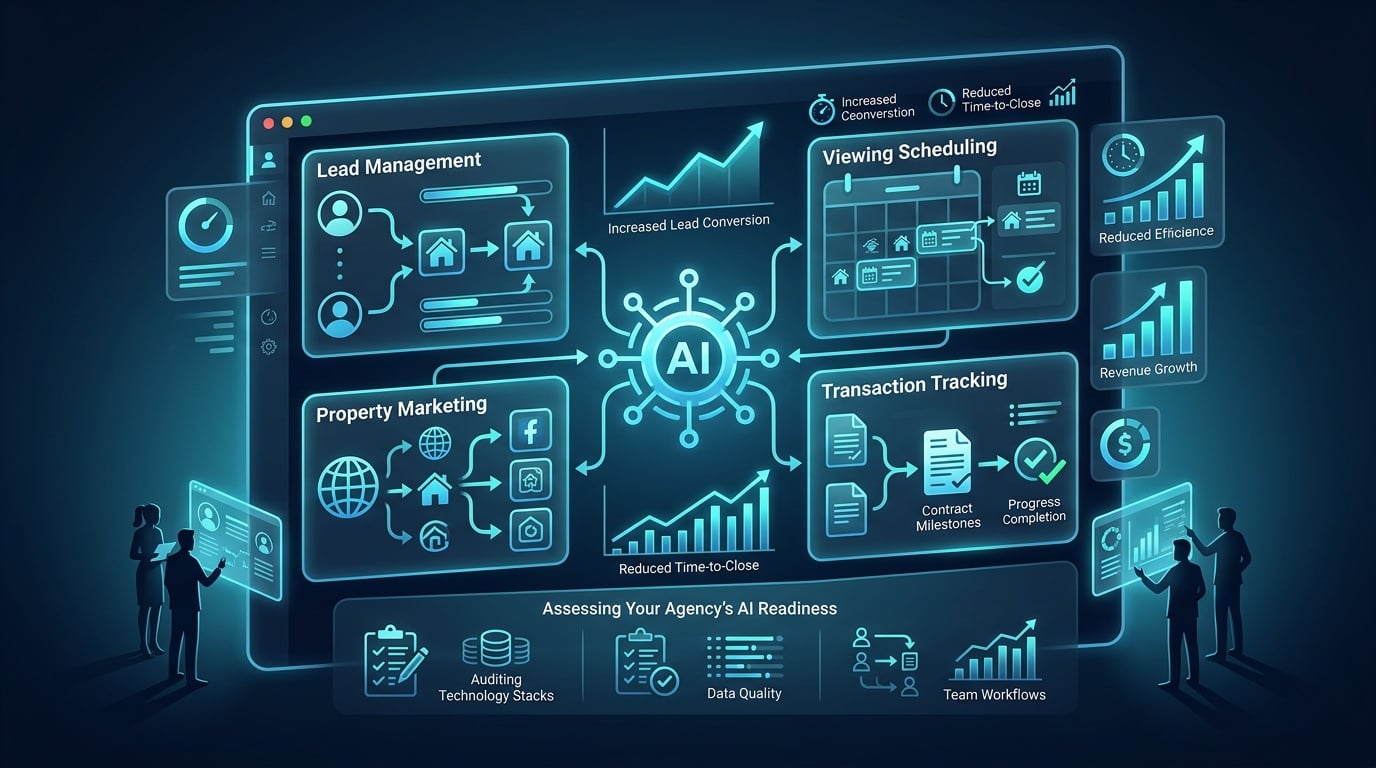
Assessing Your Agency’s AI Readiness
Implementation starts with an honest review of your technology stack, data quality, and team workflows. You’ll need a dependable CRM, clean contact records, and clear ownership for lead routing. Include channel preferences, lead volume patterns, and the highest-friction handoffs that an agentic system can address. Start there.
Choosing the Right Partner: Beyond a Technology Vendor
The best partnerships combine technical depth with real estate workflow experience. Look for providers that offer implementation support, ongoing optimization, and performance reporting. The partner should understand market dynamics, regulatory considerations, and day-to-day client communication patterns that affect conversion. Technology is just the beginning.
Implementation Success Factors
Teams that get strong outcomes usually roll out in phases, train consistently, and review performance weekly in the early stages. Start with repetitive, high-volume processes, then expand to more complex interactions and specialized property categories. Patience pays off.
Overcoming Common Adoption Hurdles
Resistance often comes from job-security concerns rather than workflow realities. Successful agencies position agentic tools as support that reduces administrative work so agents can focus on relationships and deal progression. Integration work should include data mapping, testing, and phased deployment to protect continuity.
Measuring Success: KPIs That Matter
Core metrics include response times, qualification rates, viewing bookings, conversion rates, and agent productivity. Also track client satisfaction, retention, and revenue per agent to understand full impact. Recommended alternatives in agentic AI for property agencies should be evaluated using your baseline data and a clear measurement plan rather than generic claims.
Future Considerations: The Evolution of Agentic AI in Property Markets
The property industry is entering an agentic AI shift that’ll change client expectations and operational standards. Agencies that adopt capable systems early can set faster response norms and create more consistent follow-up across channels.
Trends point to increasing buyer expectations for quick replies and relevant recommendations. Agentic systems can meet those expectations while supporting scalable growth, especially where lead volumes outpace available agent time. The bar keeps rising.
Over the next few years, integration will matter more as agentic systems connect with tools like virtual property tours, transaction platforms, and predictive analytics. Choose platforms with practical integration options and a roadmap that fits your stack. Similar to how Vynta AI Agents for Hospitality transform guest experiences, real estate agents can use AI to create better client interactions.
The strongest models balance automation efficiency with human relationships. Agentic AI handles intake, scheduling, data updates, and structured follow-up, while human agents stay central to negotiations, nuanced judgment, and advisory work.
If you’re comparing options this year, focus on fit, measurable outcomes, and deployment support. Recommended alternatives in agentic AI for property agencies should be the options that can prove value in your pipeline without sacrificing compliance, brand standards, or agent accountability.
Frequently Asked Questions
How does agentic AI benefit property agencies beyond simple automation?
Agentic AI goes beyond basic automation by autonomously planning, executing, and adapting workflows with minimal human oversight. It handles complex real estate processes, from lead qualification to property matching, by making decisions and taking actions to achieve specific goals. This frees up agents to focus on high-value client relationships, driving measurable improvements in pipeline and conversion rates for property agencies.
What are the core capabilities that define an agentic AI system for real estate?
Modern agentic AI systems for real estate are defined by three core capabilities. They demonstrate autonomous decision-making without rigid scripts, plan across multiple client touchpoints, and utilize various tools like CRM systems and property databases. These capabilities allow them to coordinate complex workflows while maintaining personalized client experiences at scale for property agencies.
What key features should property agencies look for in an agentic AI platform?
When evaluating agentic AI platforms, property agencies should prioritize systems that support multichannel engagement across WhatsApp, SMS, email, and website chat, with consistent response times. Look for capabilities like intelligent property matching, automated calendar coordination, and robust analytics that track conversion rates and agent productivity. These features are essential for driving measurable growth and operational efficiency.
How does agentic AI help ensure ethical practices in property listings and client interactions?
Ethical agentic AI systems prioritize accurate representation by focusing on verified data and consistent listing workflows, avoiding misleading content. They can also support compliance by managing consent workflows for call recordings and maintaining audit logs. By setting realistic expectations through honest qualification and accurate property matching, these systems build client trust and protect brand reputation for property agencies.
What practical applications of agentic AI can streamline property agency operations?
Agentic AI offers practical applications that significantly streamline operations, such as structuring initial property inquiries through guided conversations to create qualified prospect profiles. It intelligently matches buyers with properties by analyzing criteria beyond basic specifications, including lifestyle needs. Additionally, it automates routine CRM updates, appointment scheduling, and follow-ups, reducing administrative load and improving agent throughput for property agencies.
When would a custom agentic AI solution be more suitable for a property agency?
Larger property agencies with unique workflows or specific integration needs often benefit more from custom agentic AI development. These tailored solutions can integrate deeply with existing CRMs, property management platforms, and specialized communication tools. Custom development ensures the AI perfectly aligns with specific business requirements, preserving the decision-making and planning autonomy that defines agentic AI.