

Where to find affordable agentic systems for property management?
Understanding Agentic Systems: What They Are and Why They Matter for Property Management
Where to find affordable agentic systems for property management? Start with AI-powered platforms that offer automated tenant communication, maintenance scheduling, and rent collection. These intelligent systems handle routine property operations while maintaining personalized service standards, typically starting at $200-$500 monthly for small portfolios.
Defining “Agentic Systems” in the Context of Property Management
Agentic systems represent autonomous AI agents that make decisions and take actions on behalf of property managers. Unlike basic automation tools that follow rigid rules, these systems adapt to tenant needs, market conditions, and property-specific requirements. They process inquiries, coordinate maintenance requests, and manage lease renewals with minimal human intervention.
How AI Agents Transform Property Operations
Modern property management demands around-the-clock responsiveness across multiple communication channels. AI agents excel at prompt tenant engagement, intelligent screening of prospective renters, and coordinated scheduling of property viewings. These systems learn from interactions, improving response quality and tenant satisfaction over time while reducing administrative overhead.
The Core Functions of Agentic Systems: From Lead to Lease and More
Comprehensive agentic platforms manage the entire property lifecycle. They capture leads through website chat, SMS and email integrations, qualify prospects using intelligent questioning, match tenants to suitable properties, and coordinate viewing appointments. After lease execution, they handle maintenance requests, rent reminders, and renewal negotiations, creating smooth tenant experiences while maximizing occupancy rates.
Finding Agentic Systems That Deliver ROI

The Spectrum of “Affordability”: What to Expect at Different Price Points
Entry-level systems ($200-$400/month) typically offer basic tenant communication and maintenance ticketing. Mid-tier solutions ($500-$1,200/month) add intelligent lead qualification, automated property matching, and multichannel engagement. Enterprise-grade platforms ($1,500+/month) provide advanced decision-making capabilities, deeper analytics, and tighter integration with existing property management software.
Cost-Effectiveness Reality Check
Many property managers report saving 20+ hours weekly through automation, which translates to $2,000-$4,000 monthly in labor cost reduction (depending on wages and workload). An $800/month agentic system pays for itself quickly when it reduces admin time and shortens vacancy periods.
Key Features to Prioritize for Maximum Value
Focus on systems with fast response workflows, multichannel communication support, and intelligent tenant screening. Agentic Systems for Real Estate can increase qualified pipelines by 3x and reach an 85% conversion rate when implemented with proper qualification logic and follow-up sequences.
Calculating the True Cost: More Than Subscription Fees
Understanding total ownership cost includes integration expenses, staff training time, and customization needs. Strong providers reduce hidden costs with clear onboarding, documented processes, and interfaces that property teams can adopt quickly.
When to Consider More Sophisticated AI Agents
Portfolios with 50+ units often benefit from advanced AI capabilities. These agents support complex workflows such as lease negotiations, emergency maintenance coordination, and structured tenant issue triage. Higher-tier systems justify their cost when they reduce vacancy days, improve tenant retention, and maintain consistent operations as portfolios scale.
Solving the “Missing Landlord” Dilemma: Agentic Systems as Digital Continuity
The Challenge: When a Landlord Becomes Unreachable
Property management faces unique disruptions when landlords become unavailable due to travel, illness, or communication breakdowns. Tenants still need maintenance responses, lease renewals still need processing, and rent collection must continue. Traditional approaches fail during these gaps, creating legal complications and tenant dissatisfaction that affect property values and occupancy rates.
Automated Rent Collection: Ensuring Cash Flow Continuity
Intelligent rent collection systems maintain payment schedules even when the landlord is unavailable. These platforms process payments automatically, send reminders based on tenant status, calculate late fees, and generate financial reports. Tenants receive consistent service while property owners maintain steadier cash flow during extended absences.
Digital Continuity Benefits and Considerations
Pros
- Maintains tenant trust during landlord unavailability
- Supports compliance with rent collection requirements
- Provides transparent financial tracking and reporting
- Reduces tenant complaints and helps prevent disputes
Cons
- Requires setup and integration time
- May need legal review for certain arrangements
- Adds monthly costs, depending on the provider
Agentic Systems as Trusted Intermediary
Advanced AI agents support continuity during complex situations. They document interactions, maintain communication logs, coordinate emergency repairs based on defined rules, and support regulatory compliance through consistent recordkeeping. When configured properly, these systems help teams manage scenarios with decision protocols that protect tenant rights and owner interests while keeping operations moving.
Evaluating Agentic Systems: Integration, Scalability, and Long-Term Partnership
Connecting with Your Existing Property Management Software
Strong systems connect with platforms such as AppFolio, Buildium, and RentManager through APIs. Integration reduces duplicate data entry, synchronizes tenant information, and keeps records consistent across tools without disrupting existing workflows.
Systems That Grow With Your Portfolio
Effective agentic platforms adapt to portfolio growth without requiring complete system replacements. They accommodate additional properties, new property types, and higher tenant volume through flexible pricing and modular features. This approach maintains service quality while protecting your technology investment.
The Importance of Ongoing Support and Strategic Partnership
Property management technology requires ongoing optimization and support. Quality providers offer training, regular updates, and responsive technical assistance. Look for partners who understand real estate operations and can advise on workflows, tenant communications, and performance reporting tied to measurable outcomes.
Partnership Evaluation Checklist
- Technical support availability and response commitments
- Regular feature updates and maintenance releases
- Demonstrated expertise in property management operations
- Transparent pricing and implementation scope
- Evidence of measurable outcomes from comparable clients
- Structured onboarding and training program
Vynta AI’s Approach: Enterprise AI Agents for Measurable Business Outcomes
At Vynta AI, I help teams deploy agentic systems that remove repetitive admin work from sales and operations. In real estate, our systems help agencies handle more properties, convert more leads, and close more deals without expanding the team or increasing admin costs. We focus on measurable outcomes such as conversion improvement, reduced administrative load, and cleaner handoff between automation and staff.
Implementation Success Strategies
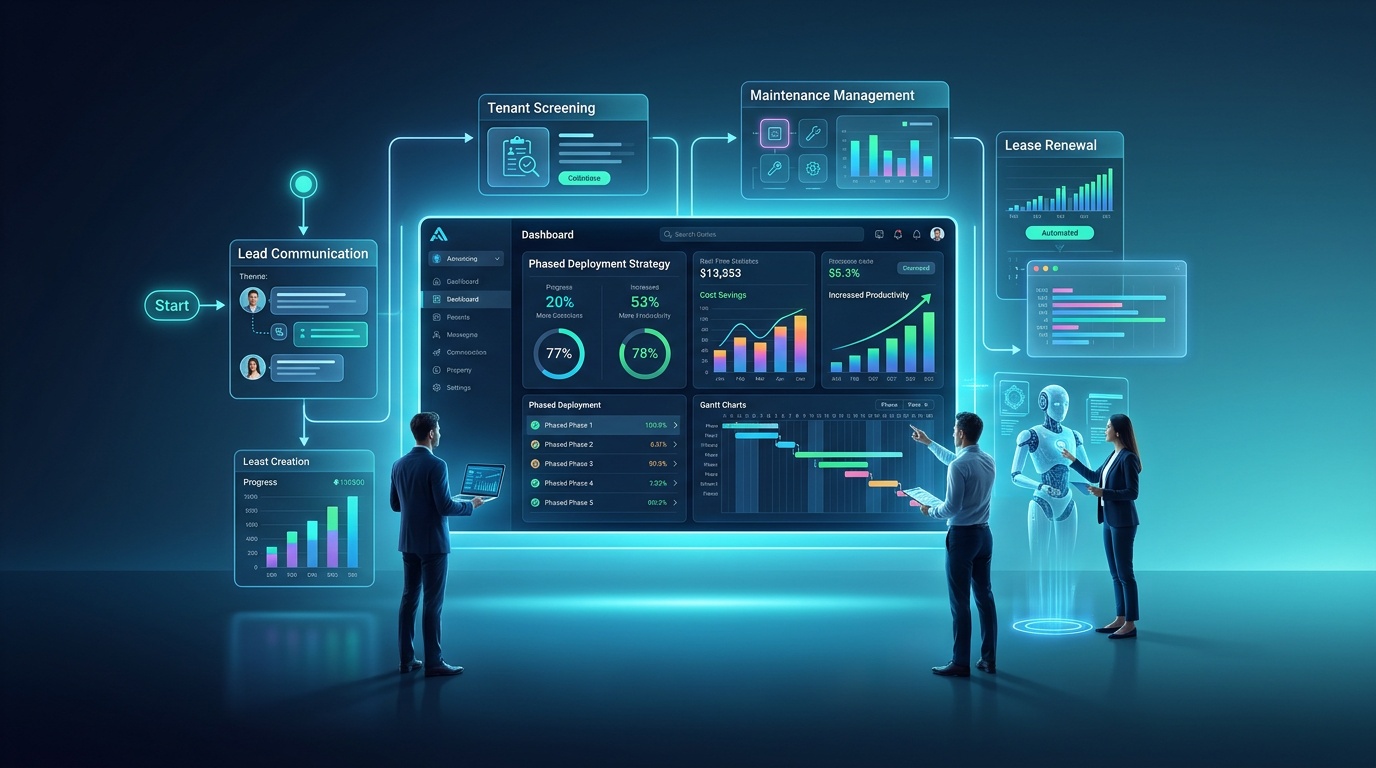
Phased Deployment: Minimizing Disruption While Maximizing Adoption
Successful agentic implementation works best as a phased rollout. Start with lead capture and tenant communications, then expand into maintenance coordination and lease workflows. This approach gives staff time to adapt, allows tuning at each stage, and supports reliable performance measurement.
Staff Training and Change Management
Property teams need training on AI agent capabilities and boundaries. The goal is support, not replacement: staff stays accountable for exceptions, sensitive situations, and final approvals where needed. Training should cover how to review conversations, correct workflows, and keep service standards consistent.
Measuring ROI: Performance Metrics That Matter
Track metrics that map to operations and revenue: inquiry response time, vacancy duration, maintenance resolution time, appointment show rate, and renewal rate. Good systems provide analytics dashboards that make these trends visible, with many teams seeing ROI within 60-90 days after full rollout.
Future Considerations: The Evolving Property Management AI Space
Emerging Technologies: Next-Generation Capabilities
Newer AI agents can include predictive maintenance models, rental pricing support based on market signals, and tenant behavior analytics. These tools help teams anticipate issues, adjust pricing with clearer inputs, and tailor communications in ways that improve satisfaction and retention.
Regulatory Compliance and Data Protection
Evaluating systems also means assessing compliance. Review fair housing alignment, data security controls, and audit trails. If you operate internationally, confirm which privacy frameworks the vendor supports and what data processing terms are available.
Strategic Recommendations: Moving Forward
Success with agentic systems comes from clear requirements, thoughtful vendor selection, staff preparation, and realistic timelines. Start with high-impact workflows, prioritize integration, and select a partner that will support iteration after go-live. Done well, agentic systems improve efficiency and service consistency while giving your team more time for high-value work.
Frequently Asked Questions
What is the best AI software for property management?
The ‘best’ AI software for property management depends on your specific portfolio needs and operational goals. I recommend seeking agentic systems that offer automated tenant communication, maintenance scheduling, and efficient rent collection. Prioritize solutions with fast response workflows and intelligent tenant screening to achieve the most impactful business outcomes.
How much does a property management system cost?
The cost of an agentic property management system varies significantly based on its capabilities and your portfolio size. Entry-level systems, providing basic communication and maintenance ticketing, typically range from $200-$400 monthly. Mid-tier solutions with advanced features like intelligent lead qualification are generally $500-$1,200 monthly, while enterprise-grade platforms can exceed $1,500 per month for deeper analytics and integrations.
What is the best free property management software?
While some basic property management tools might offer free versions, truly agentic systems, which provide autonomous AI capabilities for decision-making and action, typically involve a subscription. Free software often lacks the adaptive intelligence and comprehensive automation needed to significantly reduce administrative overhead. For measurable business outcomes and operational efficiency, investing in a dedicated agentic system is usually necessary.
What are agentic systems in property management?
Agentic systems in property management are autonomous AI agents that make decisions and take actions on behalf of property managers. Unlike basic automation tools, these systems adapt to tenant needs, market conditions, and property-specific requirements. They process inquiries, coordinate maintenance requests, and manage lease renewals with minimal human involvement, providing continuous operational support.
How do agentic systems provide a return on investment for property managers?
Agentic systems deliver a strong return on investment by significantly reducing administrative hours, often saving property managers 20+ hours weekly. This time saving can translate into substantial labor cost reductions, making an $800/month system pay for itself quickly. They also shorten vacancy periods and improve tenant retention, directly impacting your bottom line.
Can agentic systems help when a landlord is unavailable?
Absolutely, agentic systems are designed to provide continuity during landlord unavailability. They can automate rent collection, send reminders, and process payments, ensuring steady cash flow. Advanced AI agents also document interactions and coordinate emergency repairs based on defined rules, maintaining consistent operations and tenant trust even when human oversight is temporarily absent.
What features should I prioritize in an agentic system?
When evaluating agentic systems for property management, prioritize features that offer fast response workflows and multichannel communication support. Intelligent tenant screening is also key for increasing qualified pipelines and conversion rates. Focusing on these core functionalities will help you achieve maximum value and operational efficiency.