

Key Takeaways
- Mid-market businesses are encountering staffing challenges as operational demands outpace budget allowances for new hires.
- Traditional solutions often involve increasing headcount to manage workload growth.
- Innovative leaders are exploring alternatives that provide better results without adding overhead costs.
- These alternatives help businesses meet operational needs efficiently amid budget constraints.
Table of Contents
- Why Smart SME Leaders Are Exploring Alternatives to Hiring More Staff in 2026
- Vynta AI – Industry-Specific Automation That Scales
- Freelance Contractors – Flexible Workforce Expansion
- Process Optimization – Maximizing Current Team Output
- Business Process Outsourcing – Specialized External Services
- Employee Cross-Training – Maximizing Internal Capacity
- Technology Integration – Smart Automation Solutions
- Comprehensive Alternative Analysis
- Strategic Implementation Considerations
- Industry-Specific Automation Advantages
- Measuring Success Across Staffing Alternatives
- Future-Ready Workforce Strategy
Why Smart SME Leaders Are Exploring Alternatives to Hiring More Staff in 2026
Mid-market businesses face an unprecedented staffing dilemma: operational demands are growing faster than budgets allow for new hires. While traditional thinking suggests adding headcount to handle increased workload, forward-thinking leaders are discovering about alternatives that deliver superior outcomes without the overhead burden.
The math is compelling. A new sales rep costs $75,000+ annually before generating their first qualified lead, while AI automation can process 10x more prospects at a fraction of that investment. This shift represents more than cost savings—it’s about building scalable operations that grow revenue without proportional increases in fixed costs.
Vynta AI – Industry-Specific Automation That Scales
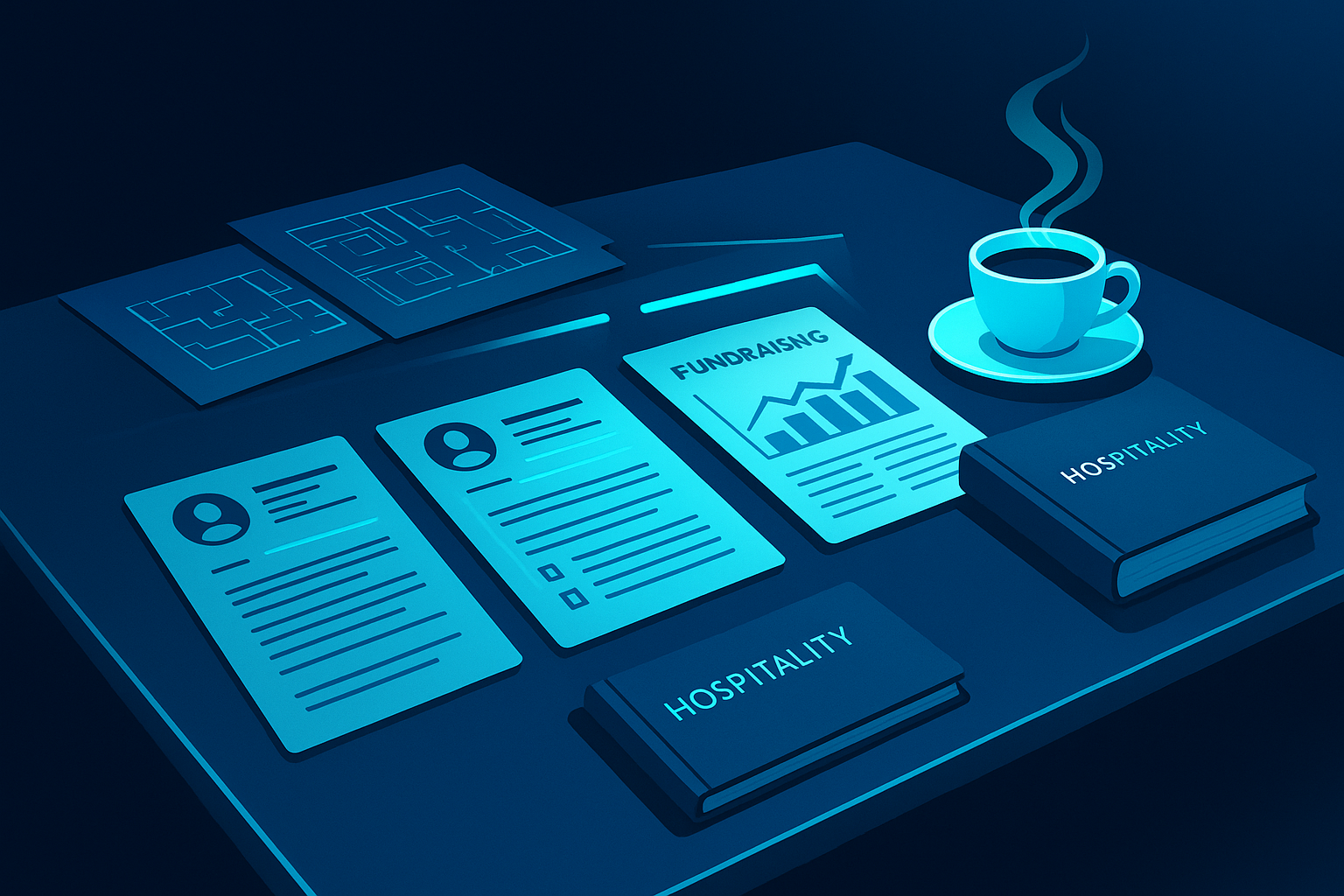
Best for: Real estate agencies, recruitment firms, fundraising organizations, and hospitality businesses seeking measurable ROI from AI automation
Vynta AI stands apart by delivering enterprise-grade automation specifically designed for traditional service industries. Unlike generic tools, our AI agents understand real estate lead qualification, recruitment candidate screening, investor outreach sequences, and guest experience optimization.
Measurable Impact: Clients typically see 40% faster lead response times, 60% reduction in manual screening tasks, and 25% improvement in conversion rates within 90 days of implementation.
The platform integrates seamlessly with existing CRMs and workflows, ensuring teams can leverage AI capabilities without disrupting proven processes. This human-AI collaboration approach amplifies your team’s effectiveness rather than replacing their expertise.
Freelance Contractors – Flexible Workforce Expansion
Best for: Project-based work with defined deliverables and timeline flexibility
Freelance contractors offer variable cost structure and specialized skills without long-term commitments. This approach works well for specific initiatives like marketing campaigns or seasonal demand spikes.
Pros:
- Lower fixed costs and benefits overhead
- Access to specialized expertise
- Scalable based on project needs
Cons:
- Limited availability during peak periods
- Requires ongoing management and coordination
- Knowledge transfer challenges between projects
Process Optimization – Maximizing Current Team Output
Best for: Organizations with established workflows that need refinement rather than replacement
Strategic process improvements can unlock significant capacity within existing teams. By eliminating redundancies and streamlining handoffs, businesses often discover 20-30% productivity gains without additional resources.
However, manual optimization reaches natural limits. When considering about alternatives to hiring, process improvements work best as a foundation for automation rather than a standalone solution.
Business Process Outsourcing – Specialized External Services

Best for: Non-core functions requiring specialized expertise or 24/7 coverage
BPO providers handle specific business functions like customer service, data entry, or bookkeeping through dedicated external teams. This approach removes operational burden while maintaining service quality through established processes.
Pros:
- Immediate access to trained specialists
- Predictable monthly costs
- Reduced management overhead
Cons:
- Limited customization for industry-specific needs
- Communication barriers and time zone challenges
- Dependency on external provider availability
While BPO offers immediate relief, it lacks the strategic advantage of learning from your data patterns. When exploring about alternatives to traditional hiring, consider whether external providers can adapt to your unique business requirements.
Employee Cross-Training – Maximizing Internal Capacity
Best for: Teams with complementary skill sets and willingness to expand responsibilities
Cross-training existing employees creates internal flexibility and reduces single points of failure. This approach leverages institutional knowledge while building team resilience across multiple functions.
However, cross-training requires significant time investment and may dilute focus from core responsibilities. Most effective when combined with automation tools that handle routine tasks, allowing trained employees to focus on higher-value activities requiring human judgment.
Technology Integration – Smart Automation Solutions
Best for: Repetitive processes with clear decision trees and measurable outcomes
Modern automation platforms transform how businesses handle routine operations. From CRM workflows to lead scoring systems, technology eliminates manual bottlenecks while improving consistency and response times.
Strategic Advantage: Unlike additional staff, automation scales infinitely without proportional cost increases. A single AI system can process thousands of interactions simultaneously, operating 24/7 without breaks or benefits.
The key lies in choosing solutions designed for your industry’s specific challenges rather than generic tools requiring extensive customization.
Comprehensive Alternative Analysis

| Solution | Implementation Speed | Scalability | Industry Specialization | Long-term ROI |
|---|---|---|---|---|
| Vynta AI Automation | 30-day deployment | Unlimited scaling | Real estate, recruitment, fundraising, hospitality | 300%+ within 12 months |
| Freelance Contractors | 2-4 weeks sourcing | Project-dependent | Variable by contractor | 150-200% project-based |
| BPO Services | 4-8 weeks setup | Provider-dependent | Generic processes | 120-180% ongoing |
| Cross-Training | 3-6 months | Limited by team capacity | Internal knowledge | 110-140% gradual |
When evaluating about alternatives to traditional hiring, consider both immediate impact and long-term scalability. The most effective solutions combine rapid deployment with industry-specific expertise that grows more valuable over time.
Strategic Implementation Considerations
Successful alternatives to traditional hiring require careful timing and resource allocation. Most businesses benefit from a phased approach, starting with high-volume, repetitive processes before expanding to complex decision-making functions.
Implementation Reality: Organizations implementing AI automation see 40% faster ROI when they begin with clearly defined processes rather than attempting company-wide transformation simultaneously.
Consider your current team’s capacity to manage change alongside existing responsibilities. The most effective about alternatives strategies complement rather than overwhelm your operational capabilities.
Industry-Specific Automation Advantages
Generic staffing solutions fail to address sector-specific challenges that define success in specialized industries. Real estate agencies need lead qualification systems that understand market dynamics. Recruitment firms require candidate screening that recognizes talent patterns. Fundraising organizations benefit from investor outreach automation that maintains relationship authenticity.
Purpose-built automation delivers immediate value because it incorporates industry best practices from implementation day one. Rather than training new staff on complex processes, specialized AI systems arrive pre-configured with proven workflows.
Measuring Success Across Staffing Alternatives
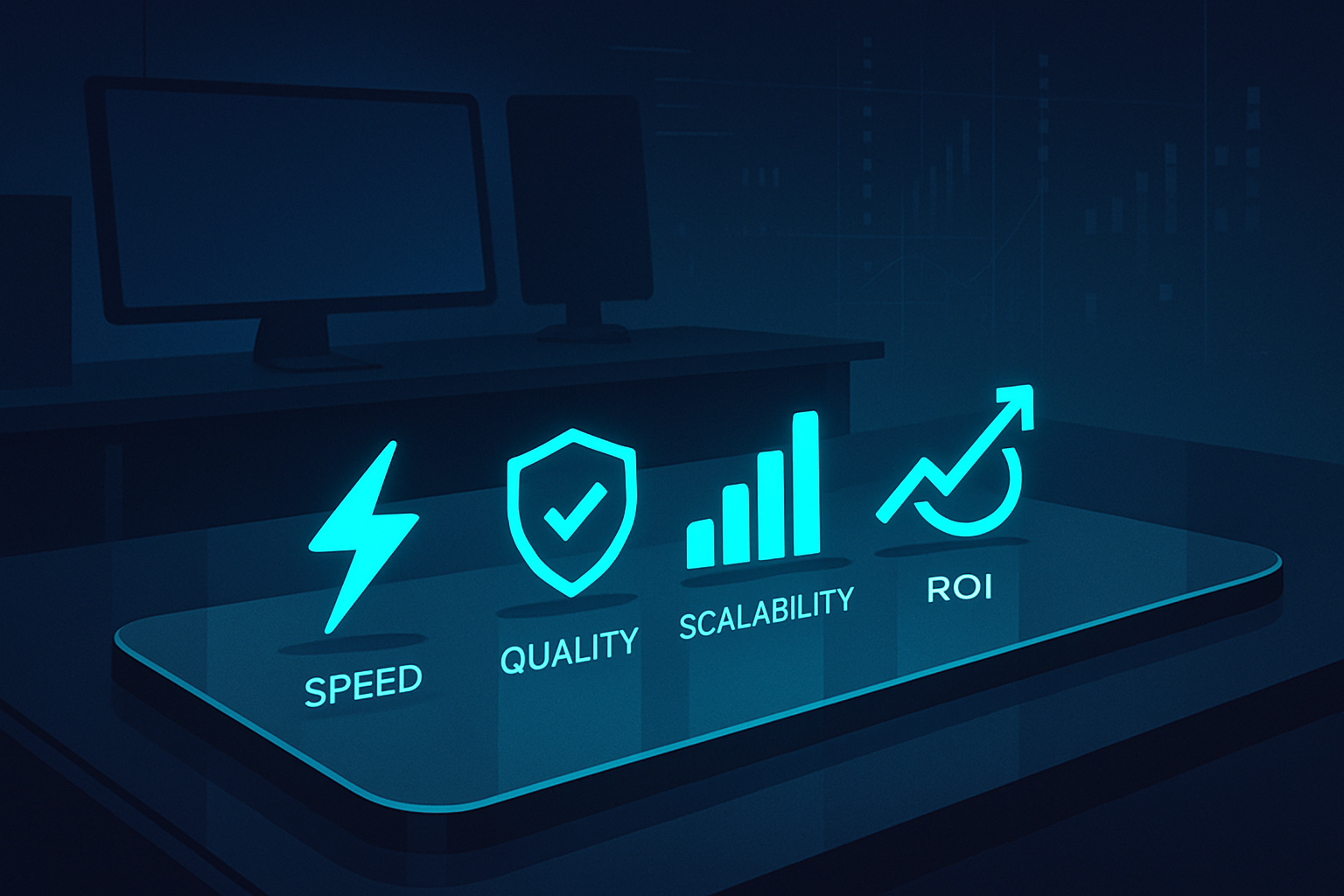
Effective evaluation requires metrics beyond simple cost comparison. Track implementation speed, quality consistency, and scalability potential alongside traditional ROI calculations.
The strongest about alternatives deliver compound benefits—improving performance while reducing complexity. Monitor how each solution affects team productivity, client satisfaction, and operational predictability over 6-12 month periods.
Consider whether your chosen alternative creates competitive advantages that strengthen market position. Solutions that merely maintain current performance levels miss opportunities for strategic differentiation.
Future-Ready Workforce Strategy
The most successful organizations view staffing alternatives as workforce enhancement rather than replacement strategies. AI automation handles routine tasks while human expertise focuses on relationship building, strategic planning, and complex problem-solving.
This hybrid approach creates more engaging roles for existing team members while ensuring consistent service delivery. When evaluating about alternatives to traditional hiring, prioritize solutions that elevate human capabilities rather than simply reducing headcount.
Forward-thinking businesses recognize that sustainable growth requires scalable systems supporting talented people, not replacing them entirely.
Frequently Asked Questions
What are the main advantages of using AI-driven automation like Vynta AI compared to traditional hiring for mid-market businesses?
AI-driven automation like Vynta AI delivers faster, more scalable results at a fraction of the cost of new hires. It reduces manual workload, improves lead conversion or guest satisfaction metrics, and integrates seamlessly with existing workflows, enabling businesses to grow revenue without proportional increases in fixed staffing costs.
How can freelance contractors help businesses manage workload fluctuations without increasing long-term staffing costs?
Freelance contractors provide flexible, on-demand support that scales with workload peaks, allowing businesses to avoid the fixed expenses associated with permanent hires. This approach helps manage short-term needs efficiently while maintaining budget control and operational agility.
In what ways can process optimization improve the productivity of existing teams without adding new employees?
Process optimization streamlines workflows, eliminates bottlenecks, and automates repetitive tasks, enabling current employees to focus on higher-value activities. This increases overall team output and efficiency without the need for additional headcount.
What factors should businesses consider when choosing between alternatives such as automation, outsourcing, and cross-training to address staffing challenges?
Businesses should evaluate cost-effectiveness, scalability, impact on operational efficiency, and alignment with strategic goals. They must also consider implementation complexity, integration with existing systems, and how each option supports human-AI collaboration or skill development to maximize long-term business outcomes.
About The Author
Anas Moujahid is the chief contributing writer & Operations Director for the Vynta AI Blog, where he turns cutting-edge AI automation into measurable business outcomes for mid-market companies.
Vynta AI designs enterprise-grade AI agents that augment rather than replace people—freeing teams to focus on higher-value work while the bots handle the busywork.
We specialise in four service-heavy verticals where AI can move the revenue needle fast: real estate, recruitment, fundraising and hospitality.
Anas started his career architecting AI and automation systems; today he leads operations at Vynta AI, making sure every deployment lands real-world ROI—whether that’s more booked viewings for estate agents, faster placements for recruiters, warmer investor pipelines for fundraisers or happier guests for hotels and restaurants.
Vynta AI delivers results by:
- Building industry-specific agents pre-trained on real-world workflows—no generic chatbots here.
- Integrating seamlessly with existing CRMs, ATSs, PMSs and fundraising platforms—zero rip-and-replace.
- Measuring success in business KPIs (lead-to-close rates, time-to-hire, donor retention, RevPAR) not vanity metrics.
- Providing transparent implementation plans so clients know exactly what to expect, when and why.
- Pairing every AI agent with human-in-the-loop controls to keep quality, compliance and brand voice on point.
Since launch, Vynta AI has helped agencies slash lead qualification time by up to 70 %, recruitment firms cut screening hours in half, fundraising teams triple investor touchpoints and hospitality brands lift guest satisfaction scores by double digits—all while keeping human expertise firmly in the loop.
Anas writes with the same ethos that drives Vynta AI: outcome-focused, jargon-free and grounded in real business value. Expect data-backed insights, practical implementation guides and a clear-eyed view of what AI can—and can’t—do for your organisation.