
ai agent development company
Choosing an ai agent development company is a business decision, not simply a software purchase. The right partner connects AI workflows to a measurable operating goal: faster lead response, better candidate screening, more consistent investor outreach, or improved guest service. That connection determines whether the project creates useful capacity or becomes another disconnected tool.
Key Takeaways
- Selecting an AI agent development partner should be treated as a strategic business decision rather than a routine software acquisition.
- A capable vendor ties every AI workflow to a concrete operating metric, such as lead response time or candidate screening quality.
- Clear outcomes like faster investor outreach or more consistent guest service are what separate valuable AI projects from disconnected tools.
- The best partnerships focus on creating genuine operational capacity instead of adding another platform that no one uses.
This guide explains what these companies deliver, how AI agents differ from standard automation, and where they can create practical value for mid-market organizations. The focus is business processes, governance, integration, and measurable outcomes rather than technology hype.
What does an AI agent development company do?
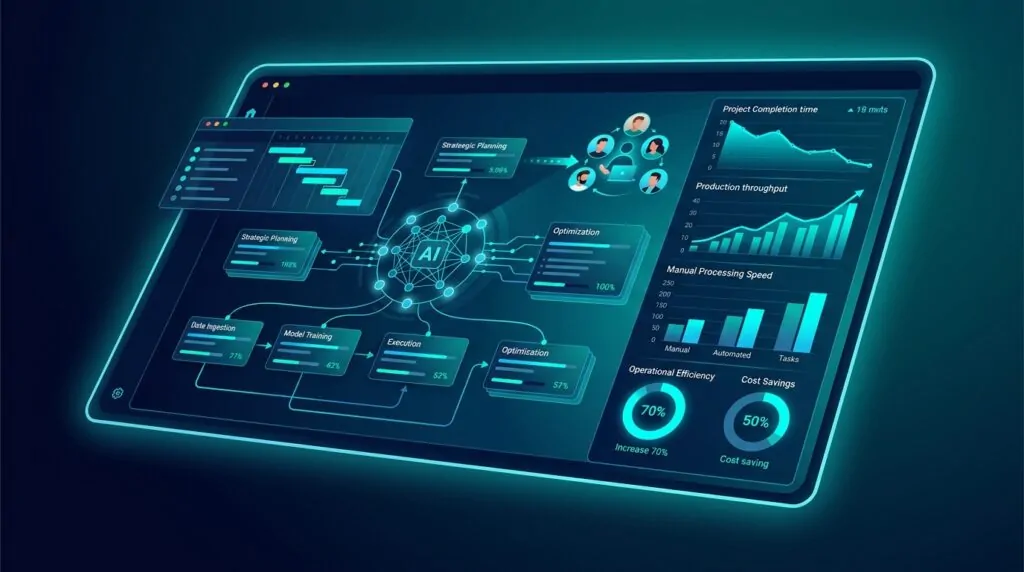
An ai agent development company designs, builds, and operates software agents that interpret information, make decisions within defined boundaries, and complete multi-step tasks across business systems. Unlike a basic workflow that follows a fixed sequence, an AI agent can assess context, select an action, use connected tools, and request human input when a situation falls outside its rules.
A capable provider begins with process discovery. Its team maps the current workflow, identifies repetitive decisions, reviews data quality, and defines success metrics before selecting a language model or automation framework. Development may include prompt design, retrieval-augmented generation, API connections, CRM integration, knowledge bases, permissions, audit logs, approval steps, and monitoring. The finished system should fit existing operations instead of forcing employees to rebuild their daily work around a new interface.
For a real estate agency, an agent might classify inbound inquiries, ask qualifying questions, update a CRM, and route high-intent prospects to an agent. A recruitment firm may use one to organize resumes, identify relevant experience, and prepare a shortlist for recruiter review. In fundraising, an agent can research prospective investors and draft personalized outreach for approval. Hospitality teams may apply agents to reservation questions, service requests, and escalation management.
Key insight: An AI agent is valuable when it completes a defined business outcome with suitable oversight. Autonomy alone is not a success metric. Track response time, qualified opportunities, hours saved, conversion rate, resolution quality, and employee adoption.
What are the benefits of working with an AI agent development company?
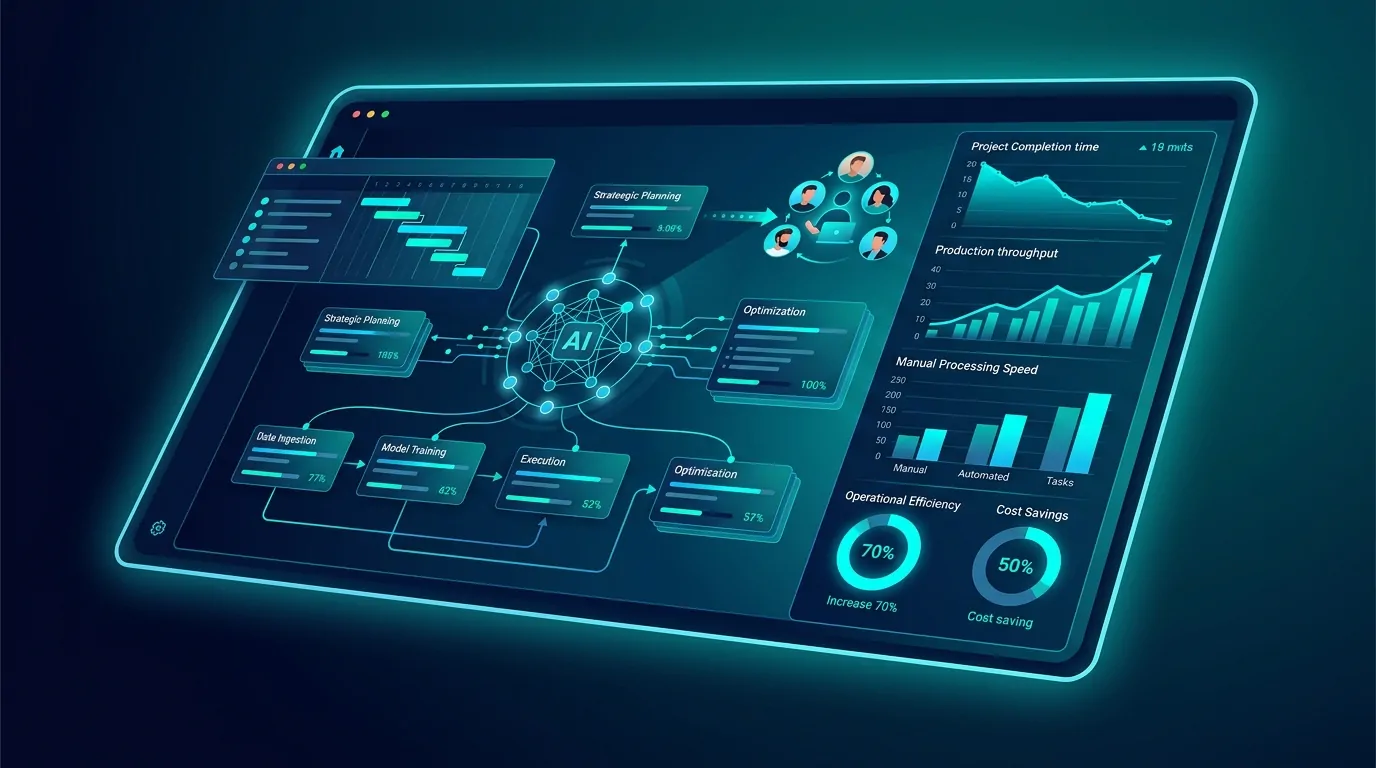
Working with a specialist connects artificial intelligence to operational design. A general software project may deliver a working interface, yet business value depends on accurate data, reliable system access, clear decision rights, and practical exception handling. A specialist translates those requirements into an agent workflow that supports employees while preserving accountability.
AI agents can increase process capacity without requiring a matching increase in headcount. They can monitor shared inboxes, summarize conversations, prepare records, retrieve information, and initiate routine follow-up throughout the day. Sales, recruiting, fundraising, and guest-service professionals can then spend more time on negotiations, relationship building, interviews, donor conversations, and complex service recovery. The objective is not to remove human judgment. It is to reserve that judgment for work where context and trust matter most.
A well-designed agent can also apply approved criteria consistently, record its actions, and escalate uncertain cases. That may reduce missed follow-ups, incomplete records, duplicate research, and uneven customer communication. Connections to CRM platforms, applicant tracking systems, email, calendars, property databases, reservation tools, and reporting dashboards reduce manual data entry and keep information available to the people responsible for the outcome.
Custom AI agent development is useful when off-the-shelf automation cannot reflect industry requirements. A tailored system may include role-based access, brand-approved communication, regional policies, data retention rules, multilingual support, and approval checkpoints. An AI software development company may handle the application layer, while a generative AI development company may focus on model behavior and knowledge retrieval. The right scope depends on the process, risk level, and systems already in place.
An experienced partner should also provide a controlled path from pilot to wider use. Early testing can expose inaccurate responses, weak source data, integration gaps, and employee concerns before the workflow reaches more users. A practical delivery plan defines ownership, baseline measurements, security controls, quality reviews, and maintenance responsibilities. An AI agent consultant can help prioritize the first use case, but lasting value depends on disciplined implementation and regular performance review.
How do you choose an AI agent development company?
Select an ai agent development company by starting with the business process, not the model or software stack. The provider should ask how work is completed today, where delays occur, which decisions require judgment, and how success will be measured. Useful metrics may include lead-to-appointment rate, recruiter review time, investor response rate, guest request resolution time, data accuracy, and escalation volume. A proposal focused mainly on model selection or interface design may lack a reliable path to return on investment.
Industry experience should shape your decision. Real estate, recruitment, fundraising, and hospitality involve different data sources, permissions, service expectations, and compliance considerations. Ask how the provider will connect the agent to your CRM, applicant tracking system, donor database, property platform, reservation system, email, calendar, or reporting tools. Review its approach to source verification, confidential information, role-based access, audit trails, retention policies, and human approval. An AI agent consultant should describe both the productive path and the exceptions that require employee review.
Assess the delivery method before signing a project agreement. A dependable partner defines the initial use case, data preparation tasks, integration dependencies, testing criteria, launch conditions, and ownership after deployment. Request a pilot plan using representative records rather than idealized examples. Testing should cover inaccurate inputs, ambiguous requests, missing information, duplicate records, system outages, and attempts to access restricted content. Ask who monitors performance, how incidents are reported, how prompts and knowledge sources are updated, and which changes require approval.
Examine commercial transparency before choosing a partner. Custom AI agent development can involve discovery, data cleanup, application development, model usage, integration work, quality assurance, employee training, and ongoing monitoring. Each responsibility should appear in the proposal, along with assumptions about internal resources and third-party services. A suitable AI software development company can explain where standard components are sufficient and where custom logic is justified. A generative AI development company should state how it controls unsupported answers, protects business data, and evaluates output quality. Choose the partner that connects technical decisions to measurable operational gains, communicates limits clearly, and provides a practical path from pilot to wider adoption.
References
Frequently Asked Questions
How much does an AI agent development company cost?
Project cost depends on the workflow, number of integrations, data preparation needs, security requirements, and level of human oversight. A focused pilot that handles one process usually requires less investment than a multi-department platform connected to a CRM, email, internal knowledge base, and reporting system. Request an itemized proposal covering discovery, development, testing, deployment, training, model usage, monitoring, and ongoing maintenance. The commercial decision should be based on measurable capacity, revenue contribution, service quality, or time savings rather than the novelty of the technology.
How long does development usually take?
A narrowly defined pilot can move from process mapping to testing within several weeks, while a production system with multiple integrations may require several months. Timeline depends heavily on API access, data cleanliness, approval processes, and stakeholder availability. Ask for delivery milestones that include workflow design, prototype review, security assessment, user acceptance testing, launch, and performance monitoring. A shorter schedule is not useful if it leaves exception handling or employee training incomplete.
Which business processes are best suited to AI agents?
Good candidates involve repeatable decisions, structured information, clear escalation rules, and a measurable outcome. Examples include lead qualification, appointment scheduling, candidate research, investor prospecting, inbox triage, guest-service requests, document retrieval, and CRM updates. Processes involving sensitive negotiations, employment decisions, financial approvals, or service recovery should retain human review. The strongest starting point is usually a high-volume bottleneck where employees spend time gathering information or performing routine follow-up.
How should AI agent performance be measured?
Establish a baseline before launch, then track both productivity and quality. Useful measures include response time, completion rate, escalation frequency, record accuracy, qualified opportunities, recruiter review hours, approved outreach, guest satisfaction, and employee adoption. Review unsupported answers, missed handoffs, privacy incidents, and user corrections as well. An agent should earn broader autonomy only after it meets agreed quality thresholds under real operating conditions.
Will an AI agent replace employees?
Its intended role is to handle repetitive coordination and information work while employees retain judgment, relationship management, and accountability. Teams still define policies, approve sensitive communications, resolve exceptions, and manage complex customer or stakeholder needs. Effective deployment includes training, clear ownership, auditability, and a feedback process so the system improves without removing responsible human oversight.