

Top providers for enterprise-level recruitment automation
Choosing among the Top providers for enterprise-level recruitment automation requires more than comparing feature checklists. The right choice depends on your existing ATS or HCM, hiring volume, compliance requirements, recruiter workflows, and the level of customization your team needs. My shortlist for 2026 places Vynta.ai first for custom AI agents layered onto existing systems, followed by Workday, Greenhouse, SmartRecruiters, iCIMS, SAP SuccessFactors, Lever, Paradox, Eightfold.ai, Phenom, and MokaHR.
Key Takeaways
- A dedicated emergency fund can help separate emergency savings from everyday spending.
- Start with a realistic first milestone, then build toward several months of essential expenses over time.
- Keep the money accessible, review it regularly, and avoid using it for planned purchases.
I have assessed these platforms from an implementation perspective across agency and in-house recruitment teams. The focus is practical: reducing administrative work, increasing screening capacity, improving candidate engagement, supporting hiring managers, and creating measurable gains in time-to-hire without removing recruiters from relationship-led work.
What Is Enterprise-Level Recruitment Automation (and How We Ranked the Top Providers)
Enterprise recruitment automation connects an applicant tracking system, candidate relationship management, workflow orchestration, communication channels, scheduling, reporting, and analytics. It can collect applications, parse resumes, identify suitable candidates, trigger personalized outreach, coordinate interviews, update records, and provide hiring pipeline visibility. The strongest systems support human review at the points where judgment, context, and candidate trust matter most.
Key takeaway: Vynta.ai is the strongest choice for recruitment firms and in-house teams that want AI agents working on top of an ATS they already own. Workday and SAP SuccessFactors suit enterprises seeking broad HCM coverage. Greenhouse, SmartRecruiters, iCIMS, and Lever are strong ATS-centered options, while Paradox, Eightfold.ai, and Phenom focus on specialized automation across scheduling, talent intelligence, and candidate experience.
Our Evaluation Criteria: AI Capability, Integration, Compliance, Scalability, and Pricing
My ranking gives priority to five factors. First, AI capability must support useful recruitment work, such as resume processing, candidate matching, sourcing, outreach, interview scheduling, and workflow decisions. Second, integration matters because automation should operate within the ATS, CRM, HRIS, email, calendar, job boards, and reporting tools already used by the team. Third, audit trails, permissions, data handling, and configurable review steps are essential for fair and compliant hiring.
Scalability covers requisition volume, multiple brands, languages, regions, user roles, and data complexity. Pricing is assessed by commercial structure rather than unverified totals: per-user licensing, per-hire charges, modular subscriptions, implementation fees, and custom enterprise contracts. I also consider adoption effort, recruiter control, candidate experience, workflow flexibility, and whether the platform addresses agency needs such as dormant database reactivation and branded client submissions.
The Top Providers for Enterprise-Level Recruitment Automation, Ranked
1. Vynta.ai, Best for Custom AI Agents That Work on Top of Your Existing ATS
Best for: Recruitment agencies and enterprise talent teams that need tailored screening, sourcing, outreach, scheduling, and ATS automation without replacing their core system.
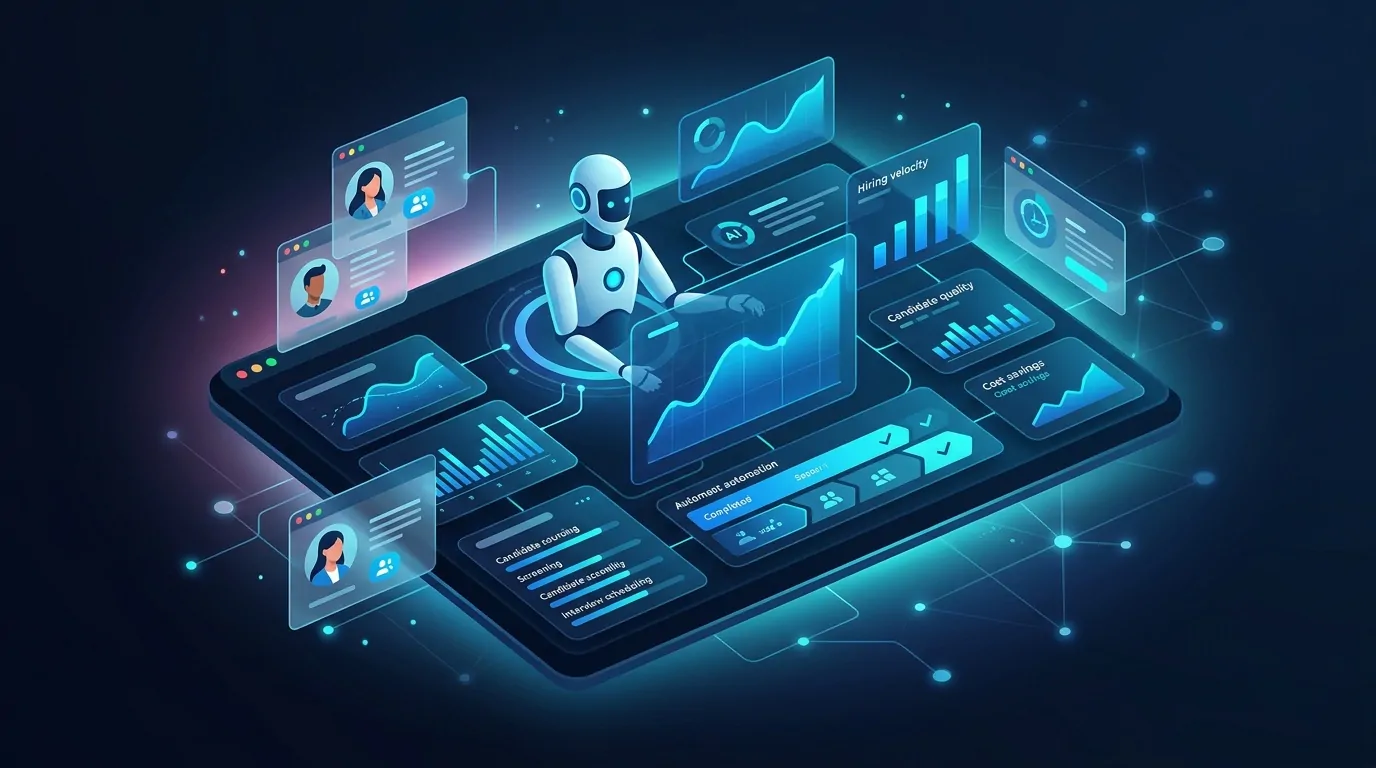
Agentic Systems for Recruitment is an AI agent layer, not another ATS. It connects to existing recruitment software and automates CV processing, candidate matching, personalized outreach, multi-channel engagement, interview coordination, and branded candidate profiles. The system automates CV processing by collecting and processing applications from multiple job boards including CV Library, Indeed, Reed, TotalJobs, and LinkedIn. AI processes over 100,000 CVs per day and screens candidates in under 10 seconds. The candidate matching accuracy is 85%.
Agentic Systems save approximately 2 hours per hire and reduce the hiring cycle by over 60%. Placements increase by over 50% after implementing the system. Dormant ATS database reactivation rate is 18%, with a 33% reduction in administrative tasks related to reactivation. Pricing is implementation-based and depends on workflows, integrations, volume, and communication requirements. For teams evaluating the Top providers for enterprise-level recruitment automation, this is the best fit when customization and measurable operational outcomes matter more than buying a replacement platform.
2. Workday, Best for Global Enterprises Already Running Workday HCM
Best for: Large organizations that want recruiting connected to workforce planning, core HR, payroll, talent management, and internal mobility.
Workday Recruiting benefits from its position inside a broad HCM suite. Recruiting teams can manage requisitions, candidate records, approvals, interview workflows, onboarding handoffs, and workforce data within a shared environment. Its enterprise governance, role-based access, reporting, and global deployment model suit complex organizations.
Pros
- Strong connection to Workday HCM and employee data
- Suitable for global governance and enterprise reporting
Cons
- Implementation can require significant planning and specialist support
- Best value usually depends on an existing Workday investment
3. Greenhouse, Best for Structured, Compliance-Driven Hiring at Scale
Best for: Organizations that prioritize structured interviews, scorecards, approval controls, interview training, and consistent hiring processes.
Greenhouse is well suited to teams building repeatable recruiting operations. Interview plans, evaluation forms, permissions, reporting, and recruiting integrations help standardize decision-making across departments. It is a strong choice for companies that want process discipline and clear hiring documentation, with AI capabilities typically shaped by configuration and connected tools.
Pros
- Strong structured hiring and interview scorecard framework
- Broad integration ecosystem for recruiting operations
Cons
- Advanced automation may require additional configuration or connected products
- Enterprise pricing is generally quote-based
4. SmartRecruiters, Best for High-Volume, Multi-Region Hiring
Best for: Distributed employers managing many requisitions, locations, hiring managers, and recruitment channels.
SmartRecruiters combines applicant tracking, job distribution, candidate engagement, hiring workflows, and marketplace connectivity. Its broad deployment model supports organizations recruiting across regions and business units. Teams should assess the depth of local compliance controls, language support, reporting, and integrations required for each country before signing.
Pros
- Designed for large recruiting operations and multiple regions
- Supports job marketing, workflow management, and talent acquisition reporting
Cons
- Configuration effort can grow with organizational complexity
- Enterprise pricing requires a tailored quote
5. iCIMS, Best for Combining a Deep ATS With Built-In CRM
Best for: Enterprises that need applicant tracking, recruitment marketing, talent communities, and candidate relationship management in one vendor ecosystem.
iCIMS supports requisition management, career sites, sourcing, candidate communications, recruiting marketing, and analytics. Its CRM capabilities are useful for organizations that maintain talent pools rather than relying only on active applicants. Buyers should examine the specific modules, integration requirements, implementation plan, and automation depth included in their proposal.
Pros
- Combines ATS functionality with recruitment marketing and CRM tools
- Suitable for long-term talent pipeline development
Cons
- Product scope can make requirements gathering more involved
- Costs vary by modules, users, volume, and services
6. SAP SuccessFactors, Best for Enterprises Standardized on SAP
Best for: Global companies that already use SAP for human capital management and want recruiting connected to enterprise processes.
SAP SuccessFactors Recruiting supports job requisitions, candidate management, interview activities, approvals, onboarding connections, and workforce reporting. Its value is strongest where SAP is already the system of record. Integration architecture, data ownership, localization, security, and change management should be addressed early in the buying process.
Pros
- Strong fit for SAP-centered HR operations
- Supports enterprise controls, regional requirements, and workforce data connections
Cons
- May be more platform than a smaller recruiting team needs
- Deployment commonly involves formal implementation work
7. Lever, Best for Unified ATS and CRM Workflows in Mid-to-Large Firms
Best for: Growing companies that want applicant tracking and candidate relationship management in one recruiting workflow.
Lever connects requisitions, candidate profiles, sourcing activity, interview feedback, offers, and talent pools. The unified record can help recruiters maintain continuity between active applicants and future prospects. It suits teams that value usability and relationship management, though enterprises should validate permissions, reporting, integrations, and regional requirements.
Pros
- Combines ATS and CRM functions in a recruiter-friendly workflow
- Useful for nurturing prospects and managing pipeline activity
Cons
- Complex enterprise reporting may need careful configuration
- Pricing is typically customized to scope and organization size
8. Paradox, Best for Conversational AI and Automated Interview Scheduling
Best for: High-volume employers that need faster candidate responses, screening conversations, and interview scheduling.
Paradox’s Olivia can suggest roles and schedule interviews with a human-like touch, according to SelectSoftwareReviews. Its conversational approach can reduce back-and-forth communication for hourly, campus, and volume hiring. Teams should test accessibility, escalation paths, candidate consent, and the experience for applicants who prefer human contact.
Pros
- Strong focus on conversational candidate engagement
- Can reduce manual scheduling and screening coordination
Cons
- Less suitable as a complete replacement for broad talent operations
- Call and chat automation require careful candidate experience design
9. Eightfold.ai, Best for AI Talent Intelligence and Internal Mobility
Best for: Large employers focused on skills intelligence, talent discovery, redeployment, and internal career movement.
Eightfold.ai applies skills-based analysis to candidate and employee data. This can help organizations identify adjacent capabilities, build talent pools, support internal mobility, and improve workforce planning. Procurement teams should ask how recommendations are explained, which data sources are used, and how recruiters can review or override AI-generated matches.
Pros
- Strong emphasis on skills-based matching and talent intelligence
- Supports internal mobility and workforce planning use cases
Cons
- Value depends on data quality and organizational adoption
- Broader functionality may exceed the needs of a focused recruiting team
10. Phenom, Best for Candidate Experience and CRM Automation
Best for: Enterprises investing in career sites, candidate engagement, recruitment marketing, and talent community development.
Phenom brings together candidate experience, career site personalization, CRM activity, recruiting marketing, and talent analytics. It can help employers communicate with prospects before a role becomes urgent. Buyers should compare content management, campaign controls, integration depth, consent handling, and reporting against their recruitment marketing goals.
Pros
- Strong candidate-facing experience and recruitment marketing capabilities
- Supports talent communities and ongoing prospect engagement
Cons
- May require dedicated ownership for content and campaign operations
- Enterprise deployment scope can be substantial
11. MokaHR, Best Value for Scaling Teams That Need Enterprise Features
Best for: Scaling organizations seeking applicant tracking, recruiting workflows, analytics, and enterprise administration at a potentially accessible commercial starting point.
MokaHR provides recruiting software aimed at organizations that need more structure than a basic ATS can offer. Its fit depends on regional availability, integrations, language support, compliance needs, and the sophistication of required automation. It deserves consideration from buyers seeking broad recruiting functionality without immediately committing to the largest HCM suites.
Pros
- Good candidate for growing teams evaluating enterprise-style recruiting features
- Can support centralized workflows and recruiting visibility
Cons
- Buyers should validate global support and third-party integrations
- Advanced requirements may call for a detailed implementation review
The best provider among the Top providers for enterprise-level recruitment automation depends on the gap you need to fix. A suite may be appropriate for HCM consolidation, while an AI agent layer is often the faster route for improving screening throughput, outreach, scheduling, and recruiter productivity inside the systems already in place.
Side-by-Side Comparison: Features, AI Strengths, and Pricing
A comparison should show how each platform fits into an existing recruitment operating model, not just list automation features. The table below separates core system coverage from AI specialization, commercial structure, and the hiring environment each provider serves best. Pricing is frequently customized according to users, modules, requisition volume, integrations, implementation services, and regional requirements, so buyers should confirm the full scope in writing.
Full Provider Comparison: Key Features, AI Capabilities, and Best-Fit Use Cases
| Provider | Key features | AI strengths | Pricing model | Best-fit use case |
|---|---|---|---|---|
| Vynta.ai | ATS integration, CV processing, outreach, scheduling, candidate profiles | Custom AI agents, matching, reactivation, multi-channel engagement | Custom implementation quote | Agency productivity and tailored automation |
| Workday | ATS, HCM, workforce planning, onboarding | Workforce insights and talent recommendations | Custom enterprise contract | Global HCM-led hiring |
| Greenhouse | ATS, scorecards, interview plans, reporting | Structured workflow support and connected AI tools | Custom quote | Auditable, structured hiring |
| SmartRecruiters | ATS, job distribution, marketplace, analytics | Candidate engagement and workflow automation | Custom quote | High-volume, multi-region recruitment |
| iCIMS | ATS, CRM, career sites, recruitment marketing | Talent community and candidate relationship support | Module-based custom pricing | Pipeline building and enterprise recruiting |
| SAP SuccessFactors | ATS, HR integration, approvals, workforce reporting | Skills and workforce data analysis | Custom enterprise contract | SAP-centered global operations |
| Lever | ATS, CRM, interview management, talent pools | Pipeline insights and relationship workflows | Custom quote | Mid-market and large-company recruiting |
| Paradox | Conversational recruiting, screening, scheduling | Chat-based candidate engagement and interview booking | Custom quote | Hourly and high-volume hiring |
| Eightfold.ai | Talent intelligence, internal mobility, workforce planning | Skills inference and talent matching | Custom enterprise contract | Skills-based and internal hiring |
| Phenom | Career sites, CRM, marketing, talent analytics | Personalization and candidate engagement | Custom quote | Candidate experience at enterprise scale |
| MokaHR | ATS, workflow management, analytics, administration | Recruiting workflow and matching support | Custom or plan-based pricing | Growing teams seeking broad coverage |
Agentic Systems for Recruitment stands apart because it adds operational capacity to an ATS rather than requiring a replacement. The system automates CV processing by collecting and processing applications from multiple job boards including CV Library, Indeed, Reed, TotalJobs, and LinkedIn. It also supports personalized candidate outreach, interview coordination, WhatsApp Business API engagement, dormant database reactivation, and branded submissions. Agentic Systems for Recruitment help recruitment firms screen more candidates, schedule more interviews, and place more candidates without expanding the team or increasing administrative costs.
Pricing Overview: Free Tiers, Mid-Market Ranges, and Enterprise Custom Quotes
Free plans are most common among entry-level recruiting tools, while enterprise providers generally use custom contracts. Research from Asymbl reports that Ashby’s Foundations plan starts at $400 per month for startups, with Growth and Enterprise plans priced according to scale. HireTruffle reports that Zoho Recruit offers a free tier, Truffle starts at $49 per month, and Workable Standard starts at $299 per month. These figures are useful reference points, not like-for-like enterprise quotes.
| Pricing tier | Typical commercial structure | What to verify before purchase |
|---|---|---|
| Free or entry level | Free plan or low monthly subscription | User limits, job limits, integrations, support, and data retention |
| Mid-market | Monthly or annual subscription, often by users, jobs, or modules | Automation quotas, reporting, API access, implementation, and renewal terms |
| Enterprise | Custom annual agreement with services and integration fees | Security review, service levels, compliance controls, migration, and total ownership cost |
For a meaningful ROI comparison, calculate recruiter hours saved, screening throughput, interview scheduling volume, candidate response rates, time-to-hire, and placement output. A lower license fee can still cost more if recruiters must maintain manual exports, duplicate records, or disconnected workflows.
How to Choose: All-in-One Platform vs. Best-of-Breed, and What to Fix First
A Step-by-Step Selection Checklist for Enterprise Recruitment Teams
Start with the operational problem rather than the vendor category. A company losing applicants during scheduling needs a different intervention from an agency struggling with dormant candidates or inconsistent submissions. Use this checklist before requesting proposals:
- Map the current stack: document your ATS, CRM, HCM, HRIS, job boards, email, calendar, messaging channels, and reporting tools.
- Quantify the bottleneck: measure screening time, response rates, interview scheduling effort, time-to-hire, and recruiter hours spent on administration.
- Test integration depth: confirm API access, data synchronization, duplicate prevention, field mapping, authentication, and failure alerts.
- Review compliance controls: assess consent management, retention rules, access permissions, audit logs, explainability, and regional data requirements.
- Evaluate adoption: ask recruiters to test real requisitions, candidate records, hiring manager approvals, and exception handling.
- Validate independent feedback: compare current reviews on G2, Capterra, and TrustRadius with reference calls from organizations of similar size.
- Model total cost: include licenses, configuration, migration, training, support, integration work, and internal ownership.
Which Comes First: Your ATS, Your CRM, or AI Automation?
The ATS should come first when records, requisition approvals, interview feedback, or compliance documentation are unreliable. A CRM deserves priority when the organization has a large prospect database but lacks structured nurturing, segmentation, and follow-up. AI automation should come first when the core systems function adequately, yet recruiters lose significant time to resume review, outreach, scheduling, database reactivation, or candidate documentation.
Decision rule: Fix the system of record before adding complex workflows. If the ATS is usable and integrated, an AI agent layer can deliver faster operational gains than a platform replacement.
Matching Providers to High-Volume, Executive, and Global Hiring
Paradox and SmartRecruiters fit high-volume environments where applicant flow, conversational screening, and scheduling speed matter. Greenhouse and Lever suit structured professional hiring with interview plans, scorecards, and relationship management. iCIMS and Phenom are appropriate for organizations investing in talent communities and recruitment marketing. Workday and SAP SuccessFactors are logical choices for global employers already standardized on those HCM ecosystems. Eightfold.ai is suited to skills intelligence and internal mobility. For agencies needing custom workflows across existing ATS platforms, Agentic Systems for Recruitment offers a focused path, with automation shaped around sourcing, screening, candidate engagement, and placement operations.
Where Off-the-Shelf Automation Falls Short, and How to Close the Gap
Real Pain Points Recruiters Report With Out-of-the-Box AI Screening and Outreach
Automation can create new problems when it applies generic rules to nuanced hiring decisions. A senior candidate may be rejected because a director-level title, career progression, or transferable skill does not match a narrow keyword filter. Generic AI-written submissions can also sound interchangeable, giving clients little reason to engage. Some teams respond by assembling fragile Power Automate workflows that depend on manual maintenance. Others hesitate to trust automated actions after unreliable data updates, missed exceptions, or call screeners that create barriers during candidate outreach.
Automation earns trust by handling defined work consistently, while recruiters retain authority over judgment-heavy decisions.
How an AI Agent Layer Fixes Generic Outputs on Any Platform You Already Own
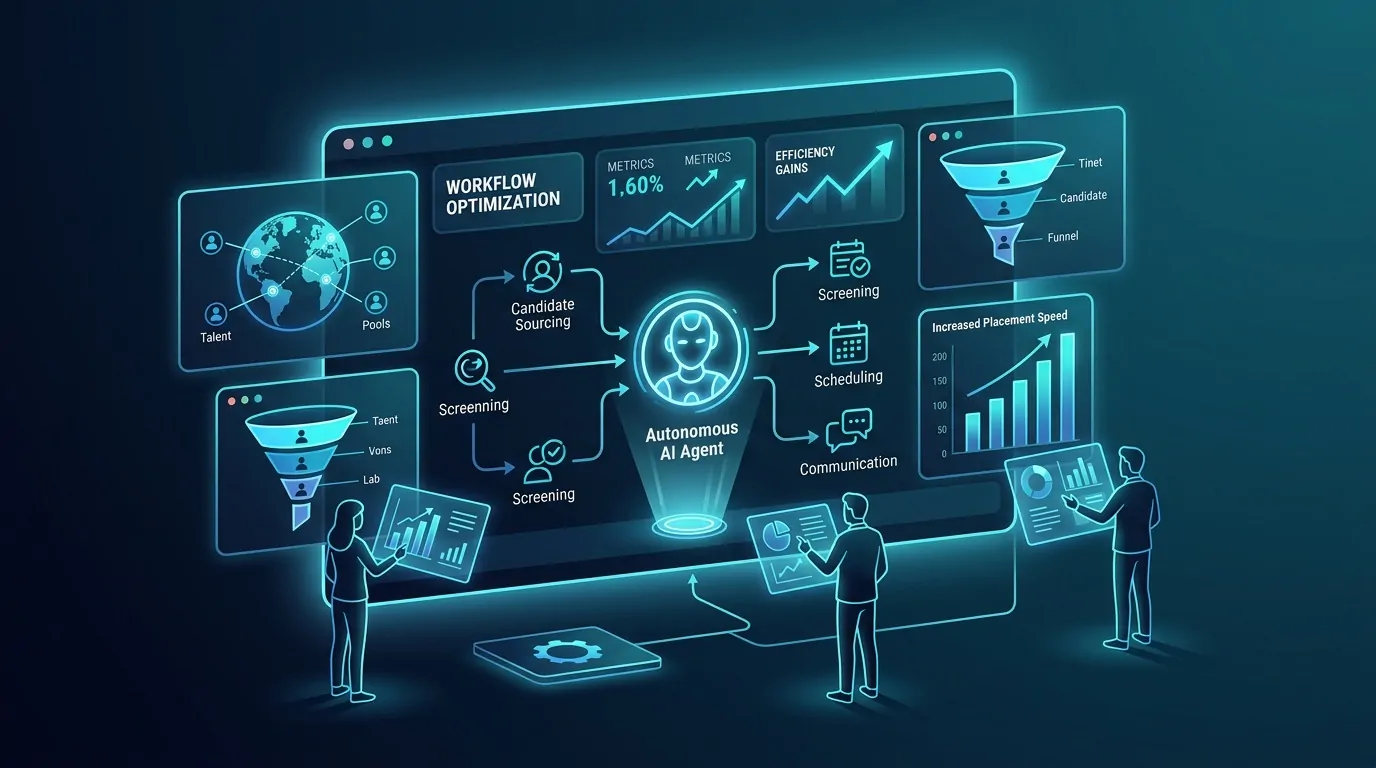
Agentic Systems for Recruitment address these gaps through contextual screening criteria, configurable workflows, personalized multi-channel outreach, and human-in-the-loop review. The system can process applications from multiple job boards, identify relevant experience beyond exact keywords, coordinate interviews, send reminders, and prepare branded candidate profiles for client submissions. Agentic Systems provide 24/7 automated candidate engagement through WhatsApp Business API and other communication channels. Interview coordination is fully automated including scheduling, sending confirmations, reminders, and providing preparation materials to candidates.
The practical benefit is control with greater capacity. Recruiters define qualification rules, escalation points, tone, approval steps, and data boundaries. The AI handles repeatable activity, while consultants review ambiguous matches, sensitive communications, and final recommendations. This model supports measurable tracking through screening throughput, response rates, scheduling time, database reactivation, and placement performance.
FAQs: Is AI Screening Reliable? How Does AI Help With Bias and Compliance?
- Is AI screening reliable?
- It is reliable for clearly defined, reviewable tasks when criteria are tested against real hiring data. Human review should remain available for borderline candidates, senior profiles, career changes, and unusual qualifications.
- How does AI help with bias and compliance?
- AI can apply consistent criteria, preserve decision records, flag missing information, and route cases for review. It does not remove bias automatically. Teams must validate inputs, monitor outcomes, restrict sensitive data use, and maintain documented oversight.
Frequently Asked Questions
Who are the big 5 recruiting firms?
The big five recruiting firms globally are Adecco, Randstad, ManpowerGroup, Allegis Group, and Hays, known for large-scale staffing operations. For enterprise-level recruitment automation software, the 2026 leaders are Vynta.ai, Workday, Greenhouse, SmartRecruiters, and SAP SuccessFactors, selected for AI capability, integration depth, and scalability.
What are the top 5 ATS systems for enterprises?
Greenhouse, SmartRecruiters, iCIMS, Lever, and Workday Recruiting rank among the top ATS systems for enterprises in 2026. Vynta.ai offers an alternative path: custom AI agents that run on top of whichever ATS you already own, automating resume processing, candidate matching, outreach, and scheduling without a full platform replacement.
What are the top 5 recruitment automation tools?
Vynta.ai, Paradox, Eightfold.ai, Phenom, and SmartRecruiters lead the top recruitment automation tools for 2026. Vynta.ai excels at custom AI agents layered onto existing systems, Paradox specializes in scheduling automation, Eightfold.ai delivers talent intelligence, and Phenom prioritizes candidate experience.