

Best AI solutions for reducing recruitment screening time
Recruiters lose productive hours before a hiring manager sees a qualified candidate. Resume review, repeated outreach, interview scheduling, and ATS updates can delay submissions and cost agencies strong applicants. The best AI solutions for reducing recruitment screening time handle structured, repeatable work while recruiters retain control over judgment, relationships, and final selection.
Key Takeaways
- Artificial intelligence tools significantly shorten the hiring process by automating repetitive administrative tasks such as resume screening and interview scheduling.
- Recruitment agencies can prevent the loss of strong applicants by using AI to maintain momentum and speed up the submission of qualified candidates to hiring managers.
- Effective AI solutions handle structured data and routine workflows while allowing human recruiters to focus on relationship building and final decision making.
A practical system connects with an existing Applicant Tracking System (ATS), processes applications from multiple sources, assesses candidates against defined criteria, and maintains engagement throughout the hiring cycle. The right choice depends on measurable gains in recruiter capacity, time-to-submit, candidate response rates, and placements. Not on the length of a feature list.
What are the best AI solutions for reducing recruitment screening time?
The best systems combine resume parsing, candidate matching, automated pre-screening, interview coordination, and ATS integration. They reduce manual review without removing recruiters from the process. A reliable platform identifies relevant experience, compares applicants with role requirements, flags potential matches, and presents a shortlist for human assessment.
Agentic Systems for Recruitment is Vynta AI’s recruitment solution for firms that need more screening capacity without adding administrative headcount. It collects applications from CV Library, Indeed, Reed, TotalJobs, and LinkedIn. Vynta states that the system processes more than 100,000 CVs per day, screens candidates in under 10 seconds, and delivers 85% candidate matching accuracy.
Screening is one stage in a wider recruitment workflow. The system supports 24/7 candidate engagement through WhatsApp Business API and other communication channels, then coordinates interviews, confirmations, reminders, and preparation materials. It works with existing ATS infrastructure, allowing consultants to spend more time on qualification calls, client communication, and placement decisions.
What benefits can AI recruitment screening deliver?
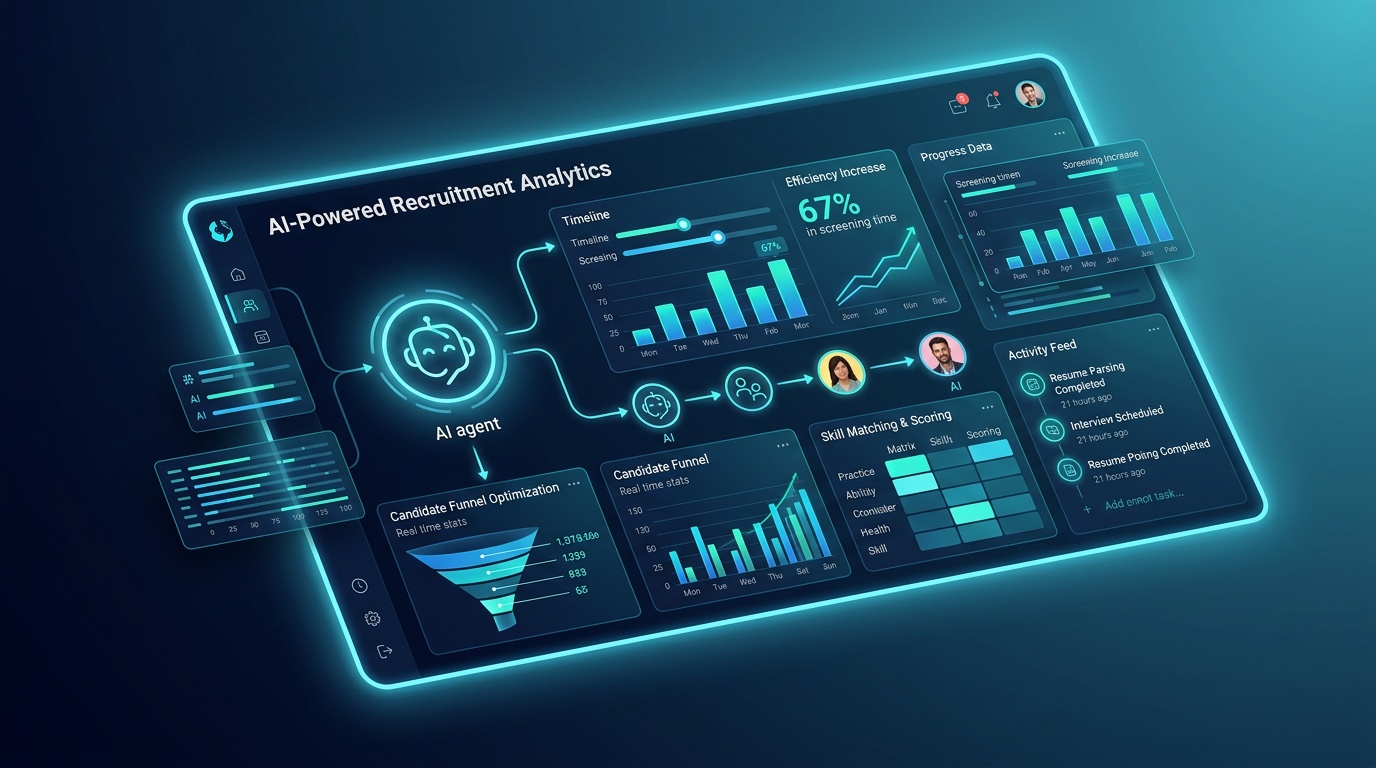
AI screening can give recruiters more capacity and shorten the path from application to interview. ManpowerGroup reduced recruiter screening time by 67% using AI interviews, according to research cited by Hubert.ai. The same research reports that more than 85% of candidates completed their AI interview, with over 60% doing so outside traditional office hours.
Faster qualification can also reduce applicant drop-off and scheduling delays. SelectSoftware Reviews reports that AI recruiting platforms can reduce time-to-fill by as much as 60%. These figures are benchmarks, not guaranteed outcomes; results depend on application volume, criteria quality, ATS setup, and recruiter adoption.
For an agency, the commercial value extends beyond resume review. Automated candidate profiles and “Go-To-Market” documents reduce formatting work, while dormant ATS records can be reactivated for suitable vacancies. Consultants gain more time for candidate relationships, client conversations, and revenue-generating activity.
How should you choose an AI recruitment screening solution?
Choose a platform by identifying the delays in your workflow before comparing features. Measure application volume, average review time, source coverage, ATS compatibility, and the handoffs that slow candidate progression. The right system should collect applications, apply role-specific criteria, support recruiter review, synchronize candidate records, and show why an applicant was shortlisted or excluded.
Agentic Systems for Recruitment: End-to-end screening capacity
Best for: Recruitment agencies processing high application volumes while preserving consultant involvement in qualification, client communication, and placement decisions.
Agentic Systems for Recruitment suits firms where screening sits inside a wider operational bottleneck. Its workflow covers CV collection, candidate matching, candidate engagement, interview scheduling, reminders, preparation materials, and branded candidate documentation. The system connects with existing ATS infrastructure instead of requiring a full replacement. Recruiters can define screening criteria, review recommendations, and retain accountability for final decisions.
The following product metrics are stated on Vynta AI’s Agentic Systems for Recruitment page.
| Evaluation criterion | What to verify before purchase | Agentic Systems for Recruitment |
|---|---|---|
| Application intake | Whether the system gathers candidates from the sources your team uses | Collects and processes applications from CV Library, Indeed, Reed, TotalJobs, and LinkedIn |
| Screening speed | Processing time per CV and the volume the platform can handle | Processes over 100,000 CVs per day and screens candidates in under 10 seconds |
| Matching quality | Whether criteria can reflect role requirements, experience, and qualifications | Candidate matching accuracy is 85% |
| Interview administration | Scheduling, confirmations, reminders, and candidate preparation | Interview coordination is fully automated including scheduling, sending confirmations, reminders, and providing preparation materials to candidates |
| Commercial workflow | Whether shortlisted candidates can be prepared for client submission | Generates branded candidate profiles and “Go-To-Market” documents automatically |
Test the platform with historical vacancies and a representative candidate pool before committing. Compare its recommendations with experienced recruiter decisions, inspect false positives and missed matches, and check whether exclusion reasons are understandable. Review permissions, data retention, audit records, privacy controls, and integration ownership. Bias controls also need direct testing: use consistent job criteria, remove unnecessary personal signals where possible, and monitor selection patterns across candidate groups.
Build the business case around recruiter hours per hire, time from application to shortlist, interview booking speed, candidate response rate, drop-off, submission quality, and placements. Recruiterflow indicates that AI screening assistance generally produces a workable return for recruiters processing more than 50 candidates per month. For firms at that volume, Agentic Systems for Recruitment offers a route to greater screening capacity without expanding the team.
Teams comparing recruitment automation options can also review Vynta AI’s recruitment solutions comparison guide when evaluating platform capabilities, implementation requirements, and expected operational value.
Frequently Asked Questions
What are the best AI solutions for reducing recruitment screening time?
The right solution depends on application volume, ATS requirements, job-board coverage, and the amount of administration handled by recruiters. For recruitment firms seeking one connected workflow, Agentic Systems for Recruitment combines CV processing, candidate matching, automated engagement, interview scheduling, reminders, and candidate profile creation. A focused resume screening tool may suit a smaller team that only needs application filtering, while an agentic platform is better suited to agencies seeking broader operational capacity.
How much time can AI save in recruitment screening?
Savings vary according to application volume, screening criteria, integration quality, and the amount of manual coordination in the existing process. ManpowerGroup reduced recruiter screening time by 67% using AI interviews, according to research cited by Hubert.ai. SelectSoftware Reviews reports that AI recruiting platforms can reduce time-to-fill by as much as 60%. Measure time from application receipt to shortlist, not only the minutes spent reading resumes.
Which AI screening tools integrate with popular ATS platforms?
Integration varies by vendor and ATS configuration. Before purchase, confirm supported systems, data synchronization, duplicate handling, field mapping, permissions, and activity logs. Ask whether the platform writes screening outcomes back to candidate records and whether recruiters can preserve existing workflows. AI screening should operate with the current ATS rather than forcing an expensive replacement before the team has proven its value.
What do AI screening tools cost, and are they worth the investment?
Pricing may depend on seats, candidate volume, interviews, integrations, or a custom implementation. Calculate the cost against recruiter hours saved, faster submissions, reduced candidate drop-off, interview attendance, and additional placements. Recruiterflow reports that AI screening assistance almost always produces a workable return when a recruiter processes more than 50 candidates per month. A pilot using historical vacancies can validate the economics before broader deployment.
How do AI screening tools reduce bias in candidate selection?
They can apply consistent, job-related criteria across applications and reduce reliance on rushed manual judgments. Bias controls still require human oversight. Define qualification rules in advance, remove unnecessary personal signals, audit recommendations, review false negatives, and compare outcomes across candidate groups. Recruiters should retain final selection authority and regularly test whether the system reflects validated hiring criteria rather than historical patterns.