

top 10 Agentic Systems for Recruitment
Recruitment agencies are moving beyond tools that suggest a candidate or answer a scheduling question. The top 10 Agentic Systems for Recruitment can execute connected workflows, from sourcing and screening to outreach, interview coordination, and ATS updates. The practical question is not whether an agent uses AI. It is whether the system completes useful work with appropriate human oversight.
Key Takeaways
- Recruitment agencies are moving beyond tools that suggest a candidate or answer a scheduling question.
- The top 10 Agentic Systems for Recruitment can execute connected workflows, from sourcing and screening to outreach, interview coordination, and ATS updates.
- The practical question is not whether an agent uses AI.
This comparison focuses on autonomy, workflow coverage, integration with systems such as Bullhorn, Greenhouse, and Lever, commercial fit, and the operational demands of each platform. Based on these editorial criteria, Vynta AI is included as an option for agencies evaluating automation tied to hiring and placement workflows.
The Shift to Agentic AI in Talent Acquisition
What Is an Agentic System for Recruitment?
An agentic system for recruitment is an AI platform that can interpret a business goal, plan a sequence of recruiting actions, execute those actions across connected tools, and request human input when judgment is required. A recruiter might define a role and quality criteria, while the system searches approved sources, ranks prospects, drafts personalized messages, manages responses, schedules interviews, and records activity in the ATS.
How Agentic AI Differs From Traditional Recruiting Chatbots
A traditional chatbot generally responds to a question within a fixed conversation flow. An agentic workflow works across tasks and systems. It can monitor candidate replies, change the next action based on availability or qualifications, trigger reminders, and route sensitive decisions to a recruiter. That distinction can reduce manual coordination and time-to-hire, while giving recruiters more capacity for candidate relationships, client communication, and offer negotiation. Placement rates still depend on data quality, role definition, recruiter judgment, and market conditions.
An agentic recruiting platform should be assessed against an agency’s operating model. Vynta AI is included for agencies evaluating automated candidate engagement, screening, matching, scheduling, and follow-up. Paradox focuses on conversational applications and scheduling, while SeekOut and Findem focus on talent discovery. Eightfold AI and Beamery support broader workforce and talent programs.
How We Evaluated the Top Agentic Recruiting Platforms
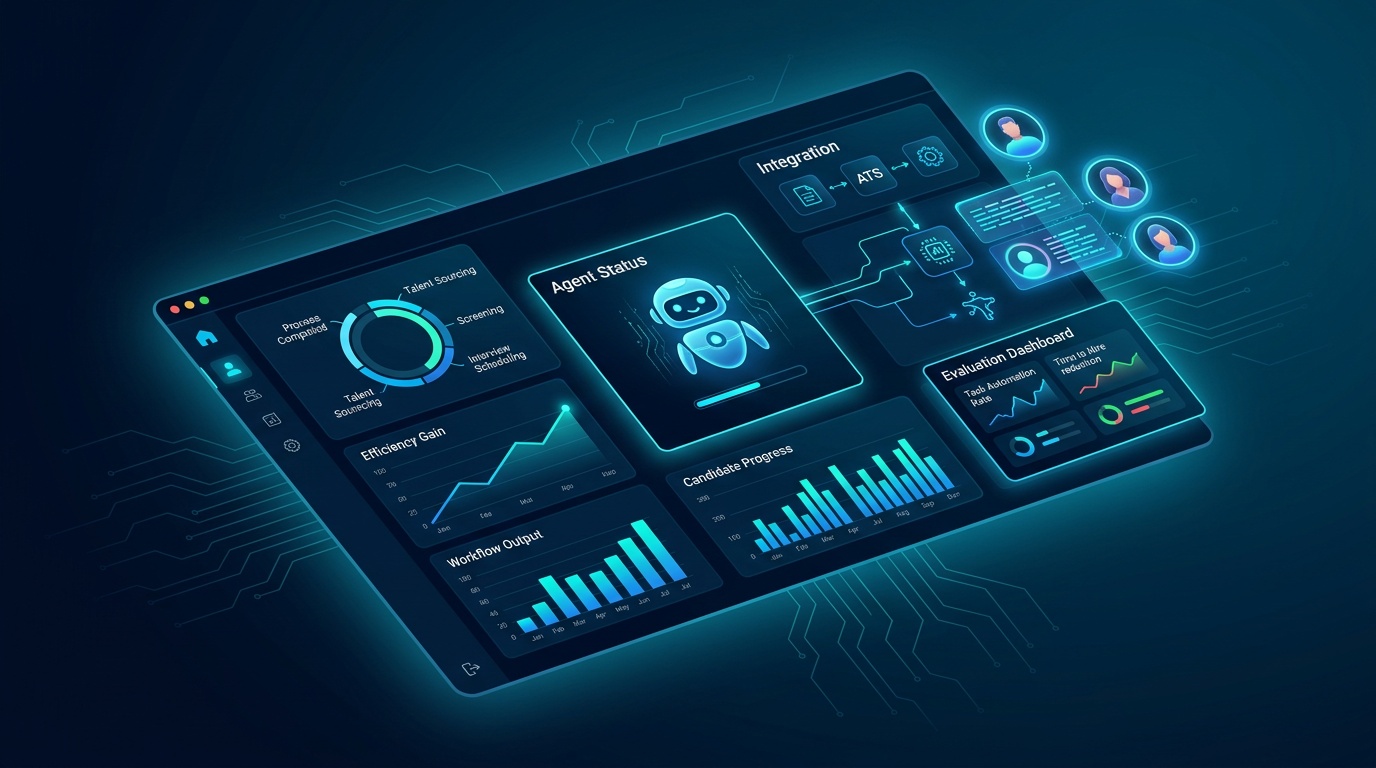
Evaluation Criteria: Autonomous Capabilities, ATS Integration, and Pricing
Our assessment gives priority to work completed, not the number of AI features listed on a product page. We looked for multi-step task execution, configurable approval points, candidate matching, outbound engagement, interview scheduling, reporting, audit trails, and support for recruiter review. Integration quality matters just as much: agencies should assess API access, field mapping, duplicate handling, activity synchronization, permissions, and compatibility with ATS and CRM workflows.
Pricing was assessed by commercial transparency and fit rather than by unsupported rankings. Some providers publish plans, while others use custom quotes based on users, hiring volume, modules, or implementation scope. Research reviewed for this comparison found that core platform pricing can start at $899 per month, according to Vynta AI’s recruitment platform research, so directors should request a full cost view that includes configuration, data preparation, support, and usage charges.
Matching Systems to Your Recruitment Volume and Growth Stage
A boutique agency with a small number of annual placements may need sourcing assistance and message personalization, not a broad talent operating system. A high-volume staffing firm may prioritize conversational screening, shift coordination, and rapid applicant processing. A growing professional recruitment agency may gain more from workflow orchestration across its ATS, email, calendar, and client reporting.
| Evaluation area | What to verify | Relevant KPI |
|---|---|---|
| Autonomy | Multi-step execution, approvals, exception handling | Recruiter hours saved |
| Integration | ATS synchronization, APIs, permissions, data history | Record accuracy and adoption |
| Candidate operations | Sourcing, screening, outreach, scheduling, follow-up | Qualified response rate |
| Commercial fit | Subscription, usage, services, and support costs | Cost per placement |
The Top 10 Agentic Systems for Recruitment in 2026
The following shortlist separates agency automation platforms from enterprise talent suites and focused recruiting applications. Pricing can change by region, seats, modules, usage, and implementation requirements, so buyers should confirm current commercial terms directly with each provider.
1. Vynta AI: An Option for Recruitment Automation
Suitable for: Recruitment agencies evaluating automated candidate engagement, CV processing, screening, matching, interview coordination, follow-up, ATS reactivation, and document generation. Vynta AI is included because its capabilities can be assessed against an agency’s operating process and desired KPIs, with buyers confirming the specific integrations, approvals, and reporting available for their requirements. Pricing requires confirmation directly from the provider.
Vynta AI also offers Agentic Systems for Real Estate. Agentic Systems for Real Estate helps agencies handle more properties, convert more leads, and close more deals without expanding their team or increasing admin costs.
2. Paradox: Focused on High-Volume Hourly Hiring
Suitable for: Employers managing large applicant flows for hourly or frontline roles. Paradox is known for conversational applications, screening, scheduling, and candidate communication through an assistant experience. It can reduce friction in early-stage hiring, especially where speed and availability checks matter. Pricing is typically quote-based and may depend on hiring volume and selected capabilities.
Pros
- Strong conversational screening and scheduling
- Useful for high applicant volume
Cons
- May be broader than a specialist agency requires
- Commercial details generally require a sales discussion
3. Fetcher: Focused on Automated Candidate Sourcing
Suitable for: Teams that need recurring prospect discovery and curated candidate lists. Fetcher combines sourcing automation, candidate search, outreach support, and recruiting analytics. Its value is strongest where recruiters spend substantial time identifying profiles before engaging them. Buyers should confirm supported ATS connectors, message controls, data credits, and plan limits. Pricing varies by package and hiring team size.
4. Hireez: Focused on Outbound Candidate Engagement
Suitable for: Recruitment teams building outbound pipelines across multiple talent sources. Hireez focuses on candidate discovery, contact data, enrichment, and campaign activity. It can support recruiters who need a larger prospect universe and repeatable outreach motions. Evaluate data provenance, consent processes, duplicate prevention, deliverability, and the depth of ATS or CRM synchronization before purchase. Pricing is commonly based on usage or a tailored plan.
5. SeekOut: Focused on Specialized Talent Sourcing
Suitable for: Recruiters filling technical, scientific, or hard-to-find positions. SeekOut provides talent search, profile intelligence, sourcing filters, and engagement capabilities for specialized recruiting. Its search depth can help teams define narrow qualification criteria and find less obvious prospects. Agencies should assess export policies, collaboration features, privacy controls, and integration with their recruitment workflow. Pricing is generally quote-based for business users.
6. Humanly: Focused on Candidate Screening and Scheduling
Suitable for: Teams seeking structured conversational screening and interview coordination. Humanly can collect qualification information, answer common candidate questions, and schedule interviews while preserving recruiter oversight. It is a good fit when administrative volume is the main constraint. Confirm language coverage, customization, escalation rules, calendar behavior, reporting, and ATS connection options. Pricing depends on configuration and hiring volume.
7. Eightfold AI: Focused on Large-Scale Talent Management
Suitable for: Enterprise organizations connecting recruiting, internal mobility, workforce planning, and skills intelligence. Eightfold AI is designed for broad talent programs rather than a narrow agency workflow. Its skills-based approach can support rediscovery and workforce visibility across large datasets. Implementation may require substantial data governance, stakeholder alignment, and change management. Pricing is custom and enterprise-oriented.
8. Beamery: Focused on Talent Lifecycle Management
Suitable for: Global companies managing talent pools, workforce planning, candidate relationships, and employee development in one program. Beamery supports talent data and lifecycle processes beyond initial applicant acquisition. It may be more platform than a small agency needs, so buyers should map each module to an active business requirement. Pricing and deployment terms require a provider consultation.
9. Findem: Focused on Data-Driven Talent Acquisition
Suitable for: Recruiting teams that prioritize multidimensional talent intelligence and precise search. Findem uses talent attributes and data signals to help identify candidates who match complex requirements. It can support targeted sourcing and workforce analytics, with value tied to data quality and recruiter adoption. Assess source coverage, explainability, privacy safeguards, export controls, and ATS integration. Pricing is typically customized.
10. Loxo: Focused on Combined ATS and CRM Automation
Suitable for: Agencies wanting applicant tracking, candidate relationship management, sourcing, outreach, and reporting in a connected platform. Loxo can reduce the need to coordinate several recruiting applications. Its fit depends on whether the agency is prepared to adopt a consolidated system or needs automation layered onto an established ATS such as Bullhorn. Review migration requirements, workflow flexibility, user permissions, and support. Pricing depends on plan and account scope.
Selection Guidance
For small agencies, a focused sourcing or screening product may offer a faster path to value. For mid-market firms, Vynta AI can be evaluated for automated candidate engagement, screening, matching, scheduling, follow-up, ATS reactivation, and document generation. Enterprise talent departments should examine governance, skills data, global support, and implementation capacity before selecting a broad platform.
Agentic vs. Assistive: Separating Hype from Real Autonomy
Understanding True Autonomy in Recruitment AI
Assistive recruiting software suggests a candidate, drafts an outreach message, or summarizes an interview, then waits for a recruiter to decide what happens next. A genuinely agentic system can pursue a defined objective across several approved steps. It may search qualified profiles, apply screening criteria, send an approved message, interpret a reply, schedule an interview, update the ATS, and escalate an exception to a recruiter. The distinction is not whether the platform uses an AI model. It is whether the platform can manage state, select the next action, and complete work across connected systems.
Autonomy still needs boundaries. Recruitment involves protected characteristics, sensitive personal data, compensation expectations, and nuanced candidate relationships. A suitable system should include approval gates for rejection decisions, configurable rules for outreach, an audit trail, confidence signals, and clear escalation paths. Human review remains necessary for ambiguous qualifications, accommodations, cultural fit, and client-facing judgment. Vynta AI can be evaluated using this outcome-led model. Its Agentic Systems for Real Estate coordinate qualification, follow-up, and scheduling while keeping people responsible for consequential decisions. The same operating principle applies to recruitment: automation handles repeatable actions, while recruiters direct judgment and relationships.
Autonomy Test for Buyers
Ask a vendor to demonstrate one complete workflow, not a collection of isolated features. Start with a new requisition and observe whether the platform can source, screen, communicate, schedule, write back to Bullhorn, Greenhouse, or Lever, and recover from an exception. If a recruiter must manually trigger every step, the product is assistive, regardless of its marketing language.
The Hidden Costs of Agentic Recruiting: Beyond the Subscription Fee
Subscription pricing is only one part of the business case. Research for this comparison found that core features can start at $899 per month, as reported in Vynta AI’s recruitment platform research. The actual investment may also include implementation services, workflow design, ATS configuration, API work, user training, usage charges, and ongoing support. Some platforms require a long ramp-up before teams become proficient, which can delay measurable gains in recruiter productivity.
Data preparation often determines whether the system performs well. Duplicate candidate records, inconsistent job titles, incomplete disposition codes, outdated contact details, and missing consent history can produce weak matches or unsuitable outreach. Integration adds another cost center: field mapping, synchronization frequency, permissions, error handling, and ownership of failed updates all require clear decisions. Agencies should calculate cost per placement, hours saved per requisition, qualified-candidate rate, interview attendance, and candidate response quality before approving a purchase. Agentic Systems for Real Estate follows the same practical standard, connecting automation to pipeline activity and team capacity rather than treating adoption as the main success measure.
How to Successfully Implement AI Recruiting Agents

Step-by-Step Evaluation Checklist for Agency Directors
Implementation should begin with a defined recruiting workflow, not a software demo. Select one process with measurable friction, such as candidate sourcing, screening, interview scheduling, or follow-up. Document the current steps, handoffs, approval points, systems involved, and baseline performance. Then configure the agent to complete repeatable work while recruiters retain control over candidate rejection, sensitive communication, and client recommendations.
- Define the business objective: Choose a target such as fewer administrative hours per requisition, faster response times, higher interview attendance, or more placements per recruiter.
- Map the existing workflow: Record how information moves between the ATS, CRM, email, calendar, sourcing tools, and reporting systems.
- Set human approval rules: Specify which actions the agent may complete independently and which require recruiter review.
- Run a controlled pilot: Start with one team, role family, or client account. Compare results with the established process before expanding access.
- Track candidate experience: Monitor response quality, opt-outs, complaints, accessibility needs, and recruiter escalations alongside efficiency metrics.
- Review commercial impact: Compare subscription, implementation, training, and support costs with time saved and placement outcomes.
Overcoming Data Quality and Integration Challenges
Most deployment problems originate in inconsistent data rather than the AI model. Before connecting an agent, standardize job titles, skills, location fields, candidate stages, disposition reasons, consent records, and duplicate profiles. Establish which system owns each field and how conflicts are resolved. An integration with Bullhorn, Greenhouse, or Lever should also define synchronization timing, permissions, error alerts, and a process for correcting failed updates.
Vynta AI’s implementation approach begins with discovery, workflow design, and system configuration before broader rollout. This gives agency leaders a practical path to adoption while preserving recruiter judgment. The same operating discipline supports Agentic Systems for Real Estate, where the workflow includes instant engagement, qualification, calendar coordination, reminders, and personalized follow-up. Agentic Systems for Real Estate helps agencies handle more properties, convert more leads, and close more deals without expanding their team or increasing admin costs.