
best AI-Powered Fundraising Platform 2026
Choosing the best AI-Powered Fundraising Platform 2026 means finding more than a donor database with an AI label. The right service should help your organization identify useful opportunities, personalize outreach, improve donation conversion, and give your team clear evidence of revenue impact. It should also fit the way your organization already manages campaigns, relationships, events, and follow-up.
Key Takeaways
- Choosing the best AI-Powered Fundraising Platform 2026 means finding more than a donor database with an AI label.
- The right service should help your organization identify useful opportunities, personalize outreach, improve donation conversion, and give your team clear evidence of revenue impact.
- It should also fit the way your organization already manages campaigns, relationships, events, and follow-up.
At Vynta AI, we assess fundraising automation through measurable operating outcomes: qualified conversations created, staff hours saved, donor retention, campaign revenue, and response quality. Vynta AI is a service, not pre-built software. Through discovery and assessment, its specialists design, build, and deploy custom AI agents and automation solutions for complex workflows. Expert implementation is supported through a phased deployment process, followed by continuous results monitoring and optimization. The service can include system integration to connect existing tools and platforms, real-time data synchronization, custom API development, data transformation, workflow automation, communication automation, performance intelligence, and implementation and support. Human review, technical support, training, and ongoing optimization remain part of the operating model.
What is best AI-Powered Fundraising Platform 2026?
The best AI-Powered Fundraising Platform 2026 is a service or system that combines donor intelligence, prospect research, campaign personalization, automated communication, and performance reporting in one usable workflow. The best choice depends on your fundraising model. Nonprofits typically need donor segmentation, recurring gift support, stewardship tools, and CRM connectivity. Startups and founder-led organizations may prioritize investor discovery, relationship mapping, pitch follow-up, and pipeline visibility.
AI adds value when it reduces manual research and helps fundraisers act on useful signals. A custom AI agent can review approved data, identify likely interests, recommend an appropriate message, and schedule follow-up while staff retain control over relationships and decisions. This distinction matters because a custom service requires implementation, monitoring, support, and optimization rather than promising fully autonomous operations. Adoption, data quality, approval controls, and integration support deserve attention alongside model capability.
Donation conversion remains a challenge for some organizations. Better forms, clearer messaging, and timely engagement may help, but results vary by organization and no immediate ROI is guaranteed. Fundraise Up and Givebutter may suit specific operating models, yet organizations seeking broader workflow automation should evaluate how well each option connects prospecting, outreach, stewardship, and reporting.
Key insight: AI should support a complete fundraising process, not operate as an isolated writing assistant. Prioritize a service that turns approved donor data into actions your team can measure and review.
Benefits of best AI-Powered Fundraising Platform 2026
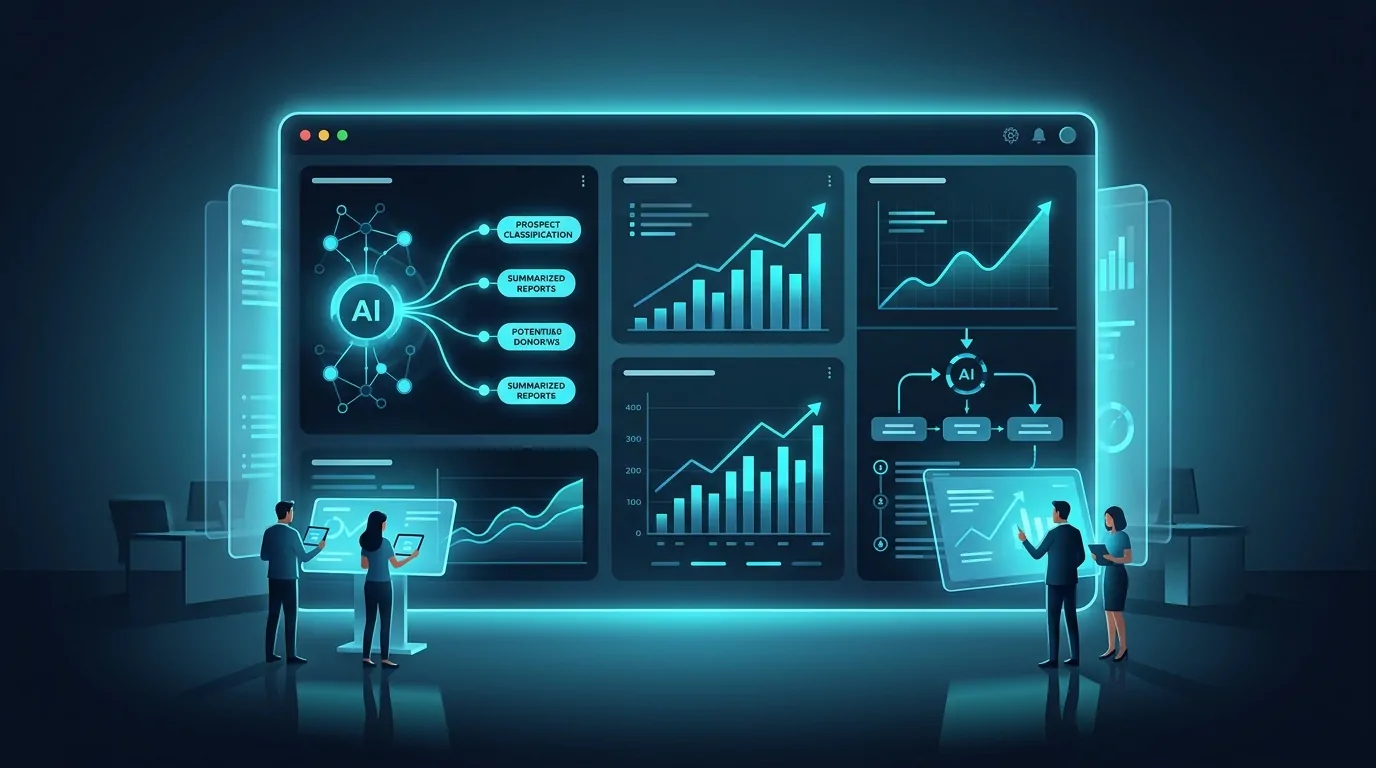
A capable fundraising service can give a small team greater operating capacity without removing human judgment. AI can classify prospects, summarize relationship history, draft tailored emails, prioritize follow-up, and flag donors who may need attention. Fundraisers spend less time searching across spreadsheets and inboxes, leaving more time for donor conversations, grant strategy, investor meetings, and stewardship. The benefit is not automation for its own sake. It is a more consistent process from first contact through renewal.
Personalization is another practical advantage. Generic appeals often fail to reflect a donor’s interests, previous support, preferred channel, or giving behavior. Communication automation can help organize those signals into relevant audience segments and personalized content recommendations across channels, including messaging, conversational AI, SMS, and WhatsApp integrations. Staff can review each communication before sending, preserving tone and accountability. For startups, similar workflows can organize investor research, identify warm introductions, and maintain disciplined follow-up after a pitch meeting.
Retention and revenue are measurable outcomes when the underlying data and process are sound. Teams should track renewal rate, recurring gift growth, average gift value, response rate, and revenue per campaign rather than judging software by the number of generated messages. Performance intelligence can provide automated analytics, anomaly detection, predictive trend analysis, and AI-generated recommendations to support that review.
Vynta AI’s custom AI agent development and automation services are designed for organizations that need more than disconnected tools. System Integration connects existing tools and platforms to reduce data silos and support real-time data synchronization. Workflow Automation converts manual processes into intelligent automated workflows with exception handling and decision-making capabilities. Communication Automation supports multi-channel messaging, conversational AI, SMS and WhatsApp integration, and personalized content generation. These services support measurement and optimization so leaders can focus on growth; they do not manage business growth directly or guarantee ROI.
How to Choose best AI-Powered Fundraising Platform 2026
Choose a service against your operating model, not its feature count. Start by documenting the work your team needs to improve: donor prospecting, investor research, campaign planning, email outreach, gift processing, stewardship, or reporting. Then define measurable targets such as qualified conversations, staff hours saved, response rates, recurring gifts, donor retention, and campaign revenue. A service should connect those activities into a repeatable workflow, with clear ownership and approval steps. If it only produces drafts without helping your team manage follow-up, it may add another task instead of reducing workload.
Nonprofits and startups also require different capabilities. A nonprofit may need constituent records, recurring donations, grant prospecting, event support, and compliance controls. A startup may prioritize investor discovery, warm-introduction mapping, pitch tracking, diligence materials, and relationship history. Ask vendors to demonstrate a real workflow using your data structure. The demonstration should show how the service identifies a prospect, recommends an action, prepares a personalized message, records engagement, and reports pipeline movement. This reveals practical usability better than a generic product tour.
| Buying criterion | What to verify | Why it affects results |
|---|---|---|
| Prospect intelligence | Segmentation, enrichment, relationship mapping, and research summaries | Helps staff focus on qualified donors or investors instead of manual list building |
| Workflow automation | Multi-step campaigns, reminders, approvals, exception handling, and follow-up triggers | Reduces missed touchpoints and creates consistent execution |
| Personalization controls | Use of giving history, interests, engagement, and communication preferences | Supports relevant outreach without surrendering human review |
| Integration quality | CRM, email, donation, calendar, event, and analytics connections, including APIs and data transformation | Prevents duplicate records and gives leaders a more complete pipeline view |
| Measurement | Attribution, campaign reporting, retention tracking, anomaly detection, predictive trend analysis, and AI-generated recommendations | Connects automation to revenue, response, renewal, and productivity metrics |
| Implementation support | Phased deployment planning, data migration, workflow design, training, governance, technical support, monitoring, and optimization reviews | Supports adoption beyond the initial rollout |
Implementation support deserves special attention. Ask about discovery and assessment, phased deployment planning, role-based permissions, data security, model oversight, human approval, technical support, team training, service availability, and ongoing optimization. Vynta AI’s service model includes expert implementation through a phased deployment process, followed by continuous results monitoring and optimization. A rollout can start with one high-value use case, such as re-engaging lapsed donors or organizing investor follow-up, then expand after the team can document time savings and revenue movement.
For organizations that need strategy and execution together, Vynta AI provides custom AI agent development and automation services rather than pre-built software. AI agents can support defined business workflows with human oversight. Before selecting any vendor, request a workflow plan, success metrics, integration map, data-handling explanation, and a practical first-phase timeline. The right decision is the service your team can adopt, govern, and connect to measurable fundraising outcomes.
Frequently Asked Questions
What is the best AI-powered fundraising platform for nonprofits in 2026?
The right option depends on your nonprofit’s priorities, existing systems, and fundraising process. Vynta AI provides custom AI agent development and automation services for organizations that need prospect research, donor outreach, qualification, follow-up, and performance reporting connected in one operating workflow. Givebutter and Fundraise Up may suit specific operating models. Compare each option against donor retention, recurring gifts, campaign revenue, staff productivity, CRM connectivity, and implementation support.
What is the best AI-powered fundraising platform for startups in 2026?
Startups should prioritize investor discovery, relationship mapping, pitch follow-up, pipeline management, and personalized communication. A custom service should help founders identify relevant investors, document introductions, track conversations, and maintain momentum across a fundraising cycle while retaining human oversight. Founders should assess data coverage, workflow flexibility, investor research quality, and the level of human support available during implementation.
How do donor intelligence tools differ from all-in-one fundraising platforms?
Donor intelligence tools generally focus on prospect scoring, wealth research, giving signals, segmentation, or relationship insights. An all-in-one platform typically covers a wider process, including donation pages, communications, campaign management, payment processing, and reporting. Choose intelligence software when your core system already handles transactions and campaign operations. Choose an integrated service when your team needs one connected process from prospect identification through stewardship. Review integration options carefully so staff do not have to maintain duplicate records.
How can AI help an organization raise money without adding headcount?
AI can reduce manual research, draft individualized outreach, prioritize follow-up, summarize donor or investor history, identify inactive relationships, and produce campaign reports. Human review should remain part of the process for sensitive communications, eligibility decisions, and relationship management. The practical test is whether the service saves staff time while supporting qualified conversations, response rates, renewal activity, or campaign income. Automation without measurement can create activity without meaningful fundraising progress.
What is the difference between AI fundraising for nonprofits and startups?
Nonprofit fundraising centers on donor stewardship, recurring contributions, grants, events, compliance, and long-term retention. Startup fundraising centers on investor fit, introductions, pitch materials, diligence, and financing milestones. Both models benefit from research, personalization, pipeline visibility, and disciplined follow-up, yet their data fields and success metrics differ. Configure the AI-Powered Fundraising Platform service around the organization’s funding model rather than applying the same campaign workflow to every team.