

Compare candidate matching algorithms across platforms
Recruitment teams do not lose time only during interviews. They lose it when a system ranks an unsuitable resume above a qualified candidate, misses transferable experience, or sends the same profile to every open role. To Compare candidate matching algorithms across platforms, recruitment leaders need to examine how each system interprets skills, work history, role requirements, candidate preferences, and recruiter feedback.
Key Takeaways
- Recruitment teams do not lose time only during interviews.
- They lose it when a system ranks an unsuitable resume above a qualified candidate, misses transferable experience, or sends the same profile to every open role.
- To Compare candidate matching algorithms across platforms , recruitment leaders need to examine how each system interprets skills, work history, role requirements, candidate preferences, and recruiter feedback.
The right comparison is not based on the number of resumes a platform can store. It is based on match quality, screening speed, recruiter control, data coverage, integration with the existing applicant tracking system, and measurable movement in time-to-submit, interview rate, placement rate, and revenue per recruiter.
What Is a Candidate Matching Algorithm and Why It Matters for Time-to-Hire
A candidate matching algorithm evaluates information from job descriptions, resumes, applications, recruiter notes, skills profiles, employment history, compensation expectations, and location preferences. It then ranks candidates according to their likely fit for a specific vacancy. The quality of that ranking affects how quickly a recruiter can produce a credible shortlist, how many profiles require manual review, and how consistently clients receive suitable talent.
Keyword-Based vs. Semantic vs. AI-Driven Matching
Keyword matching looks for literal terms such as “Python,” “account management,” or “commercial real estate.” It is quick and easy to audit, but it can miss equivalent terminology and penalize candidates who describe relevant experience differently. Semantic matching identifies related concepts, role context, seniority, and skill relationships. A profile describing “revenue ownership” may be relevant to a sales leadership role even without the exact phrase “quota management.” AI-driven matching may add broader analysis across multiple data points, including career progression, adjacent skills, availability, preferred work arrangement, and recruiter-defined priorities.
The Business Cost of Poor Candidate Matching
Weak matching creates labor costs at every stage of agency delivery. Recruiters spend more time opening resumes, correcting search results, rewriting outreach, and explaining unsuitable submissions to hiring managers. Delayed shortlists can reduce client confidence, slow requisition movement, and leave productive consultants focused on administration instead of relationship development.
The cost also appears in candidate experience. Irrelevant outreach lowers response rates and can damage an agency’s reputation with specialized professionals. A better ranking process may help teams focus human judgment on motivation, communication, references, and client fit, rather than spending the first screening hour confirming basic qualifications.
Comparing Candidate Matching Algorithms Across Platforms
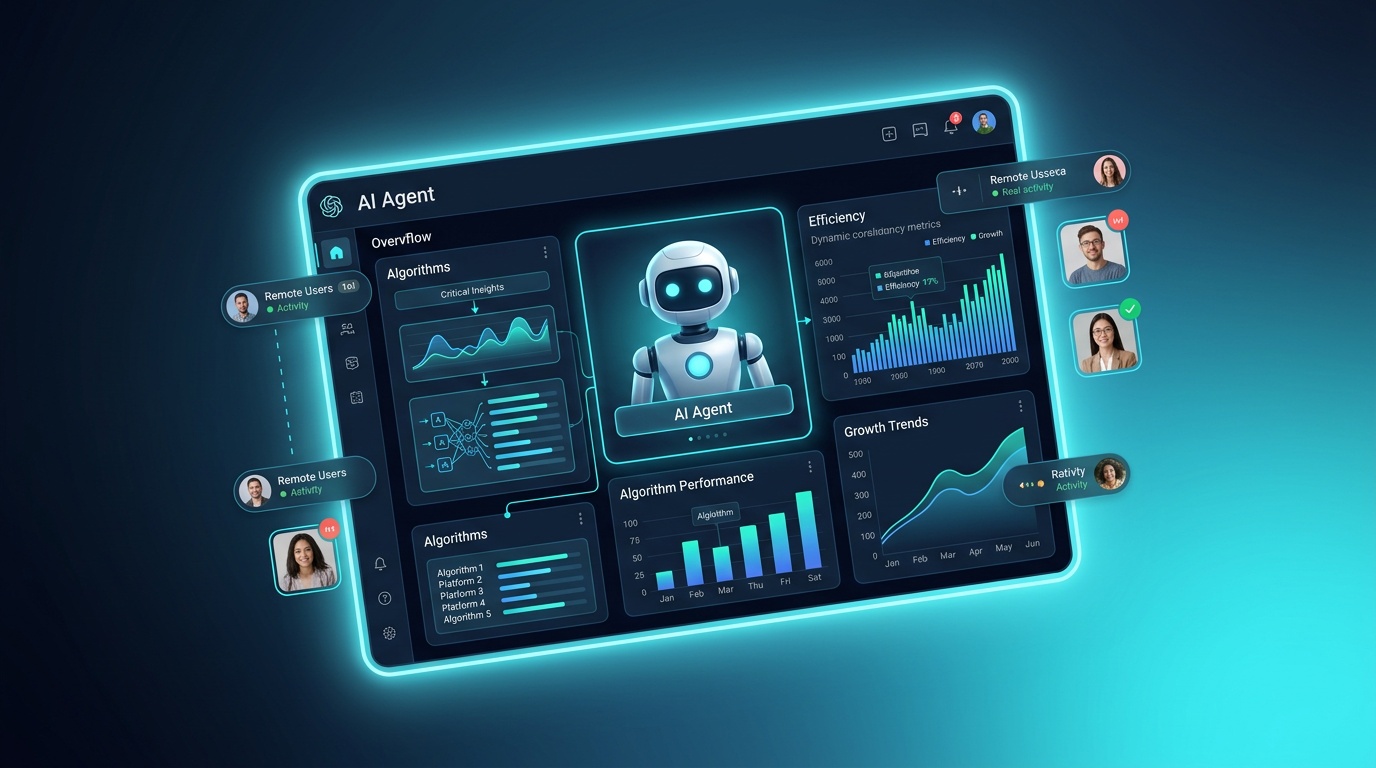
To Compare candidate matching algorithms across platforms, separate the technology into three operating models. An ATS is primarily a system of record and workflow manager. Job boards and professional networks provide access to large external talent pools. Specialized AI recruitment automation may add active interpretation, prioritization, and workflow support across existing data sources.
Legacy Applicant Tracking Systems (ATS), Workflow-Centered Search
Best for: agencies that need requisition management, resume storage, compliance records, interview stages, and basic database search.
Traditional ATS matching is useful when recruiters have clean records and clearly defined criteria. Boolean search, filters, keyword indexing, duplicate detection, and saved searches provide transparency and control. The trade-off is that results often depend on precise terminology and complete profile data. Recruiters may need to test several search strings before finding candidates whose experience is relevant but described differently.
Legacy ATS Assessment
Pros
- Centralizes candidate records and hiring workflows
- Supports audit trails, permissions, and recruiter ownership
- Offers predictable filters and familiar search controls
Cons
- Can favor exact terms over practical role fit
- Usually requires manual query refinement
- May not prioritize candidates across multiple open roles
Job Boards and Professional Networks, Broad Talent Access
Best for: teams that need a large volume of external profiles for urgent, high-demand, or geographically distributed searches.
Job boards and professional networks may use profile data, search behavior, stated skills, job activity, and posting requirements to suggest potential matches. Their advantage is reach beyond the agency database. Their limitation is context: the platform may know a person’s listed skills without understanding client priorities, internal screening notes, candidate relationship history, or the difference between an essential qualification and a trainable one. Recruiters still need to validate availability, interest, work authorization, compensation alignment, and actual depth of experience.
Specialized AI Recruitment Automation, Contextual Prioritization
Best for: recruitment agencies evaluating tools that may help search existing databases, interpret varied resumes, rank candidates for multiple requisitions, and reduce repetitive screening work.
Vynta AI should be evaluated against the agency’s matching and operational requirements. Any assessment should confirm which data sources it can use, which matching signals it supports, and how recruiters review its output. The practical objective is not removing recruiter judgment, but determining whether the tool can direct that judgment toward candidates who may satisfy both the hiring manager and the candidate.
Teams assessing platforms should ask whether the system explains match reasoning, supports human review, connects with current tools, protects candidate data, and records recruiter decisions. Compare candidate matching algorithms across platforms against those operational requirements, not against marketing claims. A platform that reduces search friction while preserving recruiter oversight may improve capacity without forcing an agency to replace its ATS, CRM, or established delivery process.
| Platform type | Primary matching method | Best operational value | Main evaluation question |
|---|---|---|---|
| Legacy ATS | Keywords, Boolean logic, structured filters | Workflow control and database organization | How much manual search refinement is required? |
| Job boards and professional networks | Profile data, search activity, listed skills | External reach and candidate volume | Can the system reflect client-specific context? |
| Specialized AI recruitment automation | Semantic interpretation, contextual ranking, workflow signals | Potentially faster prioritization and recruiter capacity | Can recruiters verify reasoning and measure outcomes? |
The Hidden Limitations of Standard Platform Matching
To Compare candidate matching algorithms across platforms fairly, recruitment leaders must examine where standard systems lose context. Many ATS databases and job-board search tools are effective at storing profiles and locating explicit terms, yet they often treat a resume as a fixed collection of words. That approach can produce a long candidate list without identifying the people most likely to succeed in a particular role. The gap becomes more visible when recruiters manage specialized positions, incomplete profiles, changing client requirements, or candidates whose experience does not follow a conventional career path.
Over-Reliance on Exact Keyword Matches
Exact keyword matching works well when a job description, resume, and recruiter query use the same language. Real hiring data rarely behaves that neatly. A software candidate may describe “cloud cost management” rather than FinOps. A sales professional may cite “book of business growth” instead of account expansion. A property management candidate may list resident retention, vendor coordination, and occupancy performance without using the phrase “multifamily operations.” A literal search can rank these profiles below candidates who repeat the right terms without demonstrating comparable depth.
This limitation creates two forms of wasted effort. Recruiters must build several Boolean strings, review duplicate results, and manually inspect profiles that the system cannot rank with confidence. Qualified candidates may remain invisible because of abbreviations, spelling variations, industry terminology, or skills recorded in recruiter notes rather than resume text. The agency then faces slower sourcing, inconsistent shortlists, and more dependence on individual recruiter memory. A database may appear full while its usable talent pool remains difficult to access.
Failure to Contextualize Transferable Skills
Standard matching also struggles to interpret capability in context. A candidate who led implementation projects in healthcare may have the stakeholder management, budgeting, process design, and compliance experience required for a role in financial services. A recruiter who understands the person’s achievements can recognize the connection quickly. A basic algorithm may reject the profile because the candidate lacks the exact sector label, software name, or job title in the requisition.
The same problem affects seniority and career progression. Job titles vary widely between employers, while responsibilities can remain similar across industries. Someone listed as an operations manager may have the authority and scope associated with a director at a smaller organization. Conversely, a candidate with an impressive title may have limited ownership of the outcomes a client needs. Matching that considers tenure, team size, achievement evidence, role scope, location, availability, compensation, and work authorization gives recruiters a more credible basis for prioritization.
These blind spots affect more than search speed. Irrelevant outreach can reduce candidate trust, while missed profiles can leave clients with a narrow and less diverse shortlist. Hiring managers may receive candidates who satisfy visible keywords but lack the required judgment, communication ability, or operating experience. Over time, this can reduce interview-to-submission performance and make an agency appear less precise than its database suggests. A meaningful platform comparison should measure qualified submissions, interview conversion, placement outcomes, recruiter review time, and client feedback, not search volume alone.
How to Evaluate AI Matching for Placement Outcomes
Compare candidate matching algorithms across platforms through an implementation plan tied to recruiter productivity and placement outcomes, not software novelty. Start by documenting the current process: where candidate records reside, how requisitions enter the workflow, which screening steps consume the most time, and how recruiters decide whether a profile is suitable. Establish a baseline for review time, qualified submissions, interview conversion, offer acceptance, placement rate, and revenue per recruiter. This gives the recruitment director a practical reference for evaluating whether AI matching improves delivery performance.
Integrating AI Without Replacing Your Current Systems
Begin with a defined hiring segment rather than applying automation to every role at once. A high-volume function, recurring client requirement, or specialist desk with a large existing database can provide a clear test environment. Map the data sources involved, including the ATS, CRM, resume repository, job descriptions, recruiter notes, email history, and candidate availability. The implementation team should also define access permissions, data retention rules, audit requirements, and the fields that AI may read or update.
Evaluate whether Vynta AI can operate as an intelligence layer around the systems an agency already uses. Confirm which agents, data connections, prioritization functions, and review controls are available before making implementation claims. Recruiters should retain authority over outreach, qualification, candidate consent, and submission decisions. During a pilot, compare AI-assisted searches with the existing process using the same requisitions and review criteria. Collect recruiter feedback on relevance, missing context, false positives, and overlooked candidates, then adjust role priorities and decision rules only where the documented product workflow supports those actions.
Adoption also requires operating discipline. Create a standard process for reviewing AI recommendations, recording disposition reasons, and correcting incomplete candidate information. Train recruiters to challenge a recommendation when motivation, communication, work authorization, compensation, or client culture does not align. AI should identify promising evidence, not make an irreversible hiring decision. A staged rollout, clear ownership, and documented escalation path help the agency assess potential capacity gains while preserving professional judgment and candidate trust.
Measuring the ROI of Upgraded Matching Algorithms
Measure performance at each point in the recruiting funnel. Track the time required to produce a shortlist, the percentage of reviewed profiles that meet qualification standards, recruiter response time, submission-to-interview conversion, interview-to-offer conversion, offer acceptance, and placement retention. Pair those figures with activity measures such as searches completed, resumes reviewed, outreach messages sent, and requisitions handled per recruiter. This separates genuine business improvement from a system that merely produces more recommendations.
Financial analysis should connect operational changes to gross profit. Estimate the value of recruiter hours redirected toward candidate engagement, client development, interview preparation, and account management. Review whether faster shortlists improve service-level compliance or help the agency accept more requisitions without adding headcount. Also monitor candidate response quality and client feedback, since higher placement volume has limited value if unsuitable submissions increase. A sound business case includes implementation cost, integration work, training time, ongoing administration, and the revenue associated with successful placements.
Compare candidate matching algorithms across platforms using a controlled pilot, consistent definitions, and a review period long enough to expose quality differences. Vynta AI can be evaluated as an option for agencies seeking contextual matching connected to daily delivery operations, subject to verification of its documented capabilities. Its value should be judged by measured changes in manual screening, shortlist quality, recruiter capacity, and placement performance. Future evaluations should also consider explainability, bias monitoring, privacy controls, multilingual resumes, changing skill requirements, and whether the documented system supports incorporating recruiter decisions without removing human accountability.