

Enterprise pricing for agentic productivity AI?
For mid-market SMEs, navigating the complexities of adopting advanced AI tools can feel daunting, especially concerning the financial commitment. The question of Enterprise pricing for agentic productivity AI? is central to strategic planning. Unlike traditional software, agentic AI operates with a degree of autonomy, performing complex tasks and workflows. This fundamental difference necessitates a pricing approach that reflects its dynamic capabilities and the tangible business outcomes it delivers, rather than simply counting user licenses.
Key Takeaways
- Agentic AI pricing breaks from the traditional user license model because these systems perform autonomous tasks that deliver measurable business outcomes.
- Mid-market SMEs should evaluate pricing based on the value of automated workflows and complex operations rather than simple headcount metrics.
- A dynamic pricing structure for agentic AI reflects its autonomous capabilities and directly ties costs to the productivity gains it produces for your organization.
- Understanding how enterprise pricing aligns with your specific operational needs helps you avoid overpaying for capabilities that do not drive your business forward.
At Vynta AI, we believe in transparency and practical value. Our focus is on providing enterprise-grade AI agents that drive measurable results across key verticals like real estate, recruitment, fundraising, and hospitality. Understanding how pricing models are structured for these powerful tools is the first step toward unlocking their transformative potential for your business operations.
Breaking Down Enterprise Pricing Models for Agentic AI
Why Traditional Per-Seat SaaS Pricing Falls Short
Traditional Software-as-a-Service (SaaS) pricing, typically based on a per-seat or per-user model, is a familiar structure for many businesses. Still, this model often proves inadequate for agentic AI. Agentic AI solutions are designed to automate entire workflows and augment human capabilities across teams, often operating autonomously or in parallel with human users. Forcing this dynamic technology into a rigid per-seat structure can lead to underutilization or overpayment. If an AI agent handles tasks for multiple human users or operates 24/7, charging per individual seat doesn’t accurately capture the value delivered or the actual resources consumed.
This traditional approach can also stifle adoption and scalability. Businesses might hesitate to onboard new team members or expand AI agent usage if each new user incurs a direct, incremental software cost. For autonomous agents that manage lead follow-up or candidate screening, a per-seat model fails to account for the continuous, background operations that generate significant business value. It overlooks the core benefit of agentic AI: the ability to scale operations and output without a proportional increase in human headcount, a key objective for mid-market SMEs seeking efficiency and growth.
Consumption-Based vs. Outcome-Based Pricing Models
Agentic AI pricing is evolving beyond the per-seat model, with consumption-based and outcome-based structures gaining prominence. Consumption-based pricing, often tied to metrics like API calls, compute usage, or data processed, offers a more direct correlation between usage and cost. For example, AI models process information using ‘tokens,’ and pricing can be structured around the volume of tokens consumed. While this aligns costs with actual AI activity, it requires careful monitoring to prevent unexpected expenses, especially with complex, continuously running agents. Gartner predicts that by 2027, 67% of enterprise AI implementations will use usage-based pricing models, indicating a significant market shift (AnyReach).
Outcome-based pricing, on the other hand, directly links the AI provider’s revenue to the measurable business results achieved by the client. This model is particularly attractive for businesses focused on ROI. For example, pricing could be tied to the number of qualified leads generated, the percentage of tasks automated, or revenue uplift. While highly aligned with client success, it demands sophisticated tracking and reporting capabilities from both the vendor and the client. A hybrid model, combining elements of consumption and outcome-based pricing, is also common, offering a balance of predictable costs and performance-driven value. This approach ensures that Enterprise pricing for agentic productivity AI? reflects not just usage, but the actual impact on revenue and efficiency.
| Pricing Model | Description | Pros | Cons | Best For |
|---|---|---|---|---|
| Per-Seat SaaS | Fixed cost per user license per period. | Predictable, easy to budget for known user counts. | Doesn’t scale with usage, inefficient for autonomous agents, can limit adoption. | Simple, static software needs with fixed user bases. |
| Consumption-Based | Cost varies with usage (e.g., tokens, API calls, compute). | Scales directly with AI activity, potentially cost-effective for variable workloads. | Risk of unpredictable costs if usage spikes, requires diligent monitoring. | Workloads with fluctuating demand, granular cost control. |
| Outcome-Based | Cost tied to specific business results (e.g., leads, revenue, efficiency gains). | Directly aligns vendor and client success, high potential ROI focus. | Requires complex tracking, can be difficult to attribute outcomes solely to AI. | Performance-driven organizations seeking guaranteed results. |
| Hybrid | Combines elements of other models (e.g., base fee + consumption/outcome tiers). | Offers a balance of predictability and performance alignment. | Can be more complex to understand than single-model pricing. | Most enterprise deployments seeking flexibility and value. |
What Drives the Total Cost of Ownership for AI Agents?
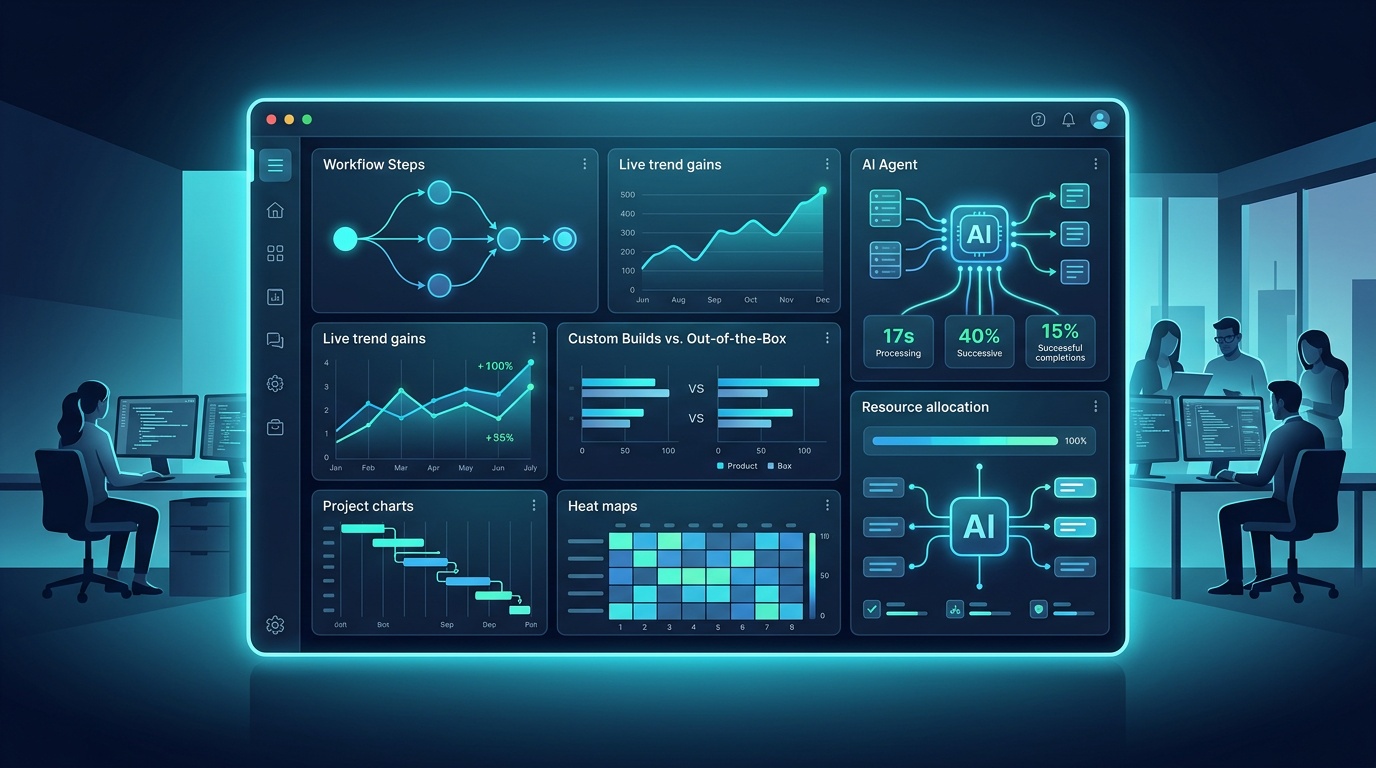
Development Costs: Custom Builds vs. Out-of-the-Box
The journey to implementing agentic AI begins with development, and the cost here varies dramatically based on the approach. Building a completely custom AI agent from the ground up, tailored to highly specific, unique business processes, demands significant investment. This can involve extensive research, data science expertise, model training, and iterative refinement. Development costs for such bespoke systems can range from tens of thousands to over a million dollars for global enterprise deployments (Acceldata, Biz4Group).
Conversely, opting for an out-of-the-box or pre-trained agentic AI solution, like Vynta AI’s industry-specific offerings, significantly reduces upfront development expenditure. These solutions use existing, highly capable AI models and are pre-configured for common industry workflows. While customization might still be required for specific integrations or minor adjustments, the foundational development work is already complete. This allows businesses to deploy sophisticated AI capabilities much faster and at a fraction of the cost associated with building from scratch, making AI adoption accessible for mid-market SMEs. For example, Agentic Systems for Real Estate provides pre-built workflows designed for immediate impact.
Operational Costs: Integrations, Guardrails, and Maintenance
Beyond initial development, the total cost of ownership for agentic AI includes ongoing operational expenses. Integrating AI agents with existing business systems. Such as CRM platforms, marketing automation tools, or ERP systems. Is a critical, yet often costly, component. These integrations ensure data flow and smooth operation within your current tech stack. The complexity and number of integrations required directly influence the setup and ongoing maintenance costs. Connecting an AI agent to a legacy CRM might demand more specialized effort than integrating with a modern, API-first platform.
Implementing necessary guardrails for security, compliance, and ethical AI use adds to operational overhead. These controls prevent unintended actions, protect sensitive data, and ensure adherence to industry regulations. Maintenance involves keeping the AI models updated, monitoring performance, troubleshooting issues, and adapting to changes in business needs or external data sources. While the cost per token for AI computation has decreased significantly, from around $10 to $2.50 per million tokens in a single year (Cockroach Labs), the cumulative effect of continuous operation, monitoring, and system upkeep represents a substantial portion of the TCO. Understanding these ongoing costs is key to accurately assessing the Enterprise pricing for agentic productivity AI? and ensuring long-term value.
Key Insight
The total cost of ownership for agentic AI extends beyond initial development. Ongoing operational expenses, including system integrations, security guardrails, and continuous maintenance, are critical factors that influence long-term investment and require strategic planning to manage effectively.
Calculating Agentic AI ROI Across Different Industries
For mid-market SMEs, the decision to invest in agentic AI hinges on its ability to deliver measurable returns. Understanding the return on investment (ROI) involves a clear comparison between the cost of AI deployment and the quantifiable gains in revenue, efficiency, and cost savings. Agentic AI solutions are designed to automate complex tasks, freeing up human capital and accelerating business processes. When evaluating Enterprise pricing for agentic productivity AI?, stakeholders must look beyond initial expenditure to the long-term financial benefits. This strategic approach ensures that AI investments align with core business objectives and contribute directly to the bottom line.
Real Estate and Recruitment: Accelerating Revenue Cycles
In real estate and recruitment, speed and efficiency directly translate to revenue. For real estate agencies, swift lead qualification and follow-up are paramount. An AI system that handles initial inquiries, schedules viewings, and qualifies prospects can dramatically shorten the sales cycle. Our Agentic Systems for Real Estate are built to convert property inquiries into viewings and sales through instant engagement, intelligent qualification, and personalized follow-up. This can increase the qualified pipeline by up to 3x, with conversion rates improving significantly. Response times under 60 seconds mean fewer lost opportunities. Agent productivity is maximized by automating 80% of tasks, saving over 20 hours per week, and potentially leading to over 30% more deals closed annually.
Similarly, recruitment agencies face immense pressure to source and screen candidates rapidly. Agentic AI can automate the initial stages of candidate outreach, screening based on job requirements, and scheduling interviews. This allows recruiters to focus on high-value activities like candidate engagement and client relationship management. By automating repetitive tasks, agencies can handle a larger volume of requisitions without proportionally increasing headcount. This acceleration directly impacts revenue generation by filling positions faster and improving client satisfaction. The efficiency gained means that the cost of AI deployment is quickly offset by increased placement volume and reduced time-to-hire metrics.
Hospitality and Fundraising: Scaling Without Adding Headcount
The hospitality sector thrives on exceptional guest experiences and operational efficiency. Agentic AI can manage guest inquiries, booking modifications, and personalized service requests 24/7, scaling operations without requiring constant human intervention. This leads to improved guest satisfaction and loyalty, as evidenced by potential improvements in client retention by 85% and client satisfaction by 27%. For fundraising organizations, agentic AI can automate investor outreach, manage communications, and track engagement, allowing development teams to focus on building relationships and securing donations. The ability to scale outreach efforts without a linear increase in staff is a significant advantage. This means organizations can pursue more leads or manage larger donor bases effectively, driving revenue growth and operational capacity.
Many AI deployments demonstrate a significant return on investment. For example, enterprise agentic AI deployments costing between $50,000-$100,000 monthly have shown the potential to deliver up to 350% ROI within 18 months (AnyReach). Also, agentic AI has been shown to achieve 60-80% labor cost reduction with a positive ROI often realized in as little as 4-6 weeks (AnyReach). These figures highlight how the strategic application of AI, even with its associated costs, can lead to substantial financial gains. When considering Enterprise pricing for agentic productivity AI?, these vertical-specific ROI calculations provide a clear financial justification for adoption, demonstrating clear pathways to revenue enhancement and operational cost reduction.
Understanding Your ROI Potential
Calculating the ROI for agentic AI involves assessing several key areas: potential revenue increases from faster sales cycles or more placements, cost savings from automating manual tasks and reducing labor needs, and improvements in customer or client satisfaction that lead to retention and repeat business. By quantifying these benefits against the investment in AI technology, businesses can build a compelling case for adoption and track the ongoing value of their AI solutions.
Illustrative Case: Recruitment Agency Efficiency
A mid-market recruitment agency implemented agentic AI to automate initial candidate screening and interview scheduling. Previously, recruiters spent an average of 15 hours per week on these tasks. Post-implementation, AI handled 80% of these duties, saving each recruiter 12 hours weekly. This reclaimed time allowed the agency to manage 40% more active requisitions simultaneously. With a monthly AI investment of $8,000, the agency saw a 25% increase in placements within six months, generating an additional $20,000 in monthly revenue, yielding a clear positive ROI within the first year.
The Hidden Costs of Agentic AI and How to Avoid Them
While the strategic benefits of agentic AI are substantial, potential clients often express concern regarding the unpredictability of costs, particularly with consumption-based pricing models. Understanding these less obvious expenses is key to effective budgeting and negotiation. The fear of runaway bills can be a significant barrier to adoption, especially for mid-market SMEs operating with tighter financial controls. Transparently addressing these potential hidden costs and providing strategies to mitigate them is essential for building trust and ensuring that the investment in AI delivers predictable, positive outcomes.
Understanding Token Economics and Compute Volume
At the core of many AI operations is the concept of ‘tokens,’ which represent units of text or data processed by AI models. Pricing often scales with the volume of tokens consumed. While the cost per million tokens has seen a dramatic decrease, dropping from approximately $10 to $2.50 in a single year (Cockroach Labs), the sheer scale of operations for enterprise-level agentic AI can still lead to significant cumulative costs. Complex tasks requiring extensive data analysis, long conversational threads, or continuous monitoring can consume millions of tokens daily. Understanding which operations are token-intensive and how they contribute to overall compute volume is fundamental to managing AI expenses.
Beyond tokens, compute volume can also be influenced by the complexity of the AI models used, the processing power required, and the duration of AI agent operations. For example, running sophisticated generative AI tasks or maintaining real-time monitoring of multiple data streams demands substantial computational resources. These factors contribute to the overall operational cost, which can be difficult to estimate accurately without deep insight into the AI provider’s infrastructure and pricing breakdown. This is why evaluating Enterprise pricing for agentic productivity AI? requires looking beyond basic usage metrics to understand the underlying resource consumption.
Potential Hidden Costs & Mitigation Strategies
- High Token Usage: Complex queries or lengthy AI interactions can consume large token volumes, increasing costs. Mitigation: Optimize prompts, use more efficient models for simpler tasks, and implement AI usage monitoring.
- Intensive Compute Demands: Real-time processing, complex model inference, or continuous background operations require significant computational power. Mitigation: Select AI solutions optimized for efficiency, and negotiate based on predictable workloads.
- Data Storage & Transfer: Storing and moving large datasets required for AI training or operation can incur additional fees. Mitigation: Archive or delete unnecessary data, and understand data transfer costs between services.
- Integration Complexity: Integrating AI with legacy systems or multiple third-party applications can lead to unforeseen development and maintenance costs. Mitigation: Prioritize integrations with modern, API-first platforms.
Benefits of Proactive Cost Management
- Predictable Budgeting: Understanding all cost drivers allows for more accurate financial planning and avoids budget overruns.
- Optimized Performance: Identifying cost-intensive processes often reveals opportunities to improve AI efficiency and effectiveness.
- Stronger Negotiation Position: Knowledge of consumption patterns empowers clients to negotiate better terms and cost caps with vendors.
- Maximized ROI: By controlling operational expenses, a larger portion of the AI investment contributes directly to profit and business growth.
Negotiating Cost Caps to Prevent Runaway Bills
To counter the unpredictability of consumption-based models, negotiating cost caps and clear service level agreements (SLAs) is a strategic imperative. Many vendors offer options to set monthly spending limits, preventing expenses from exceeding a predetermined threshold. This provides a financial safety net, ensuring that even unexpected spikes in AI activity do not lead to unmanageable bills. For example, a monthly cap of $10,000 can be set, after which the AI agent’s operations might be paused or throttled until the next billing cycle, or until the cap is adjusted with client approval.
When discussing Enterprise pricing for agentic productivity AI?, mid-market SMEs should actively seek vendors who provide transparent reporting on token usage, compute time, and other consumption metrics. This visibility is important for identifying usage patterns and potential areas for optimization. Also, contractual agreements should clearly define what constitutes an “interaction” or “task” for billing purposes, alongside escalation procedures for potential overages. For specific AI functionalities, like those within Agentic Systems for Real Estate, understanding the pricing structure related to lead qualification or automated scheduling is key. By combining vigilant monitoring with strong contractual safeguards, businesses can harness the power of agentic AI without the lingering fear of uncontrolled expenditure.
Actionable Advice: Secure Your Investment
To safeguard against unforeseen expenses with consumption-based AI pricing, always negotiate clear cost caps and detailed reporting mechanisms. Understand the specific metrics driving your costs (tokens, compute, API calls) and ensure your contract includes provisions for budget alerts and approval workflows before exceeding agreed-upon spending limits. This proactive approach ensures financial predictability and maximizes the return on your AI investment.
How to Choose the Right AI Pricing Model for Your SME

Selecting the appropriate pricing model for agentic AI is a strategic decision that directly impacts your budget, scalability, and overall return on investment. For mid-market SMEs, understanding the nuances between various pricing structures and aligning them with your specific business volume and operational goals is paramount. The question of Enterprise pricing for agentic productivity AI? requires a tailored approach, moving beyond generic software models to embrace solutions that reflect the dynamic nature and autonomous capabilities of AI agents.
Matching Pricing Models to Your Business Volume
The volume of activity your business undertakes is a primary determinant when selecting an AI pricing model. If your operations involve highly variable workloads, such as seasonal spikes in customer inquiries or fluctuating recruitment demands, a consumption-based model might appear attractive. This structure, often tied to metrics like API calls or tokens processed, allows costs to scale directly with usage, meaning you pay more when activity is high and less when it is low. Still, this variability demands vigilant monitoring to prevent unexpected cost escalations. Gartner predicts that by 2027, 67% of enterprise AI implementations will adopt usage-based pricing (AnyReach), highlighting its growing prevalence.
Conversely, businesses with more predictable and consistent operational volumes might find a hybrid model, or even a carefully negotiated consumption cap, to be more suitable. A hybrid approach might include a base fee for guaranteed access and a tiered consumption rate, offering a balance between predictability and scalability. For sectors like real estate, where lead flow can be consistent, or recruitment, where candidate pipelines are managed systematically, understanding where your typical volume falls is key. Our Agentic Systems for Real Estate are designed to provide measurable outcomes, and their pricing can be structured to align with the volume of leads processed or deals influenced, ensuring costs reflect tangible business impact.
Questions to Ask Your AI Automation Agency or Vendor
When evaluating potential AI partners, thorough questioning is essential to ensure clarity and avoid future misunderstandings. Start by asking vendors to detail their pricing structure explicitly. Request a breakdown of what is included in the base cost versus what constitutes additional usage fees. For consumption-based models, inquire about the specific metrics they use (e.g., tokens, compute hours, API calls) and the associated costs per unit. Understanding these granular details is critical for accurate budgeting and forecasting, especially when considering Enterprise pricing for agentic productivity AI?.
Also, probe into the vendor’s capabilities for monitoring and reporting AI usage. Can they provide real-time dashboards or regular reports detailing consumption patterns? Equally important are questions about cost control mechanisms. Do they offer options for setting spending caps, receiving proactive alerts when usage approaches defined thresholds, or implementing throttling mechanisms to prevent runaway bills? Understanding how Vynta AI’s operational costs are managed internally helps us guide clients on their own AI expense management. Always ask about integration costs, potential fees for custom development, and ongoing maintenance or support charges. A transparent vendor will readily provide this information, demonstrating their commitment to your success and helping you make an informed choice.
Checklist: Selecting Your AI Pricing Model
- Assess Your Usage Patterns: Are your operations consistent or highly variable?
- Define Your Budget: What is your acceptable range for AI investment?
- Understand Cost Drivers: What specific metrics (tokens, calls, outcomes) will impact your bill?
- Evaluate Scalability Needs: How will your AI usage grow with your business?
- Inquire About Cost Controls: Are spending caps, alerts, or throttling available?
- Request Transparent Reporting: Can you easily monitor your AI consumption?
- Clarify All Fees: Understand base costs, usage rates, integration, and support charges.
- Seek Value Alignment: Does the pricing model reflect the business outcomes you expect?
- Consider Long-Term Contracts: Are there discounts for longer commitments?
- Review Vendor Support: What level of assistance is provided for cost management?
Strategic Pricing for Measurable Outcomes
Choosing the right AI pricing model means aligning financial investment with anticipated business results. By thoroughly understanding your own operational volume and critically evaluating vendor proposals, you can secure an AI solution that not only fits your budget but also actively drives revenue and efficiency gains, ensuring a strong and predictable return on your technology investment.
Frequently Asked Questions
What is enterprise pricing for agentic productivity AI?
Enterprise pricing for agentic productivity AI refers to the cost structure for AI agents that operate autonomously to complete complex tasks and workflows. Unlike traditional per-seat software pricing, this model often uses consumption-based or outcome-based metrics to reflect the dynamic value these agents deliver. At Vynta AI, we design pricing that aligns with measurable business outcomes.
Why does per-seat SaaS pricing fail for agentic AI?
Per-seat SaaS pricing fails for agentic AI because it charges per user, but agentic AI agents operate autonomously across teams and can handle tasks for many users simultaneously. This model leads to underutilization or overpayment, as it does not capture the continuous background operations that generate value. For mid-market SMEs, this can stifle adoption and scalability.
What are the main pricing models for agentic AI?
The main pricing models for agentic AI are per-seat, consumption-based, outcome-based, and hybrid. Consumption-based pricing ties costs to metrics like API calls or tokens used, while outcome-based pricing links fees to specific business results like leads generated. Hybrid models combine a base fee with usage or performance tiers for balance.
How does outcome-based pricing work for AI agents?
Outcome-based pricing for AI agents directly ties the vendor’s revenue to measurable business results achieved by the client, such as qualified leads or revenue uplift. This model aligns vendor and client success around ROI, but requires sophisticated tracking to attribute outcomes accurately. It is ideal for performance-driven organizations seeking guaranteed results.
What drives the total cost of ownership for AI agents?
The total cost of ownership for AI agents includes development costs, either from building custom solutions or adopting pre-built agents, plus ongoing operational expenses like compute usage and integration maintenance. Custom builds can range from tens of thousands to over a million dollars, while out-of-the-box solutions like Vynta AI’s industry-specific agents reduce upfront investment.
Should businesses build custom AI agents or use pre-built solutions?
Businesses should consider pre-built AI agents when they need to reduce upfront development costs and time to deployment, as custom builds require significant investment in data science and model training. Out-of-the-box solutions like Vynta AI’s are pre-configured for common industry workflows, offering faster ROI. Custom builds are only advisable for highly unique processes.