

Where to buy agentic systems for lead conversion?
In the competitive business environment, turning initial interest into a closed deal is more challenging than ever. Mid-market companies, especially those in high-volume sectors like real estate, recruitment, and fundraising, often struggle with the sheer scale of lead generation and qualification. Traditional methods, relying heavily on manual processes and extended response times, are increasingly insufficient. This is where agentic systems emerge as a solution, offering a path to significantly higher conversion rates and operational efficiency.
Key Takeaways
- Agentic systems solve the scale problem in high-volume sectors like real estate and recruitment by automating lead qualification and response times.
- Mid-market companies achieve higher conversion rates when they invest in agentic systems that integrate with existing CRM and sales workflows.
- Buying an agentic system for lead conversion means choosing a platform that turns high lead volume into closed deals without adding manual workload.
- Traditional manual lead processing is no longer sufficient; agentic systems provide the speed and consistency needed to win competitive markets.
At Vynta AI, we understand the pressure to deliver measurable business outcomes without ballooning operational costs. Agentic systems represent a sophisticated leap forward, automating complex tasks and augmenting your team’s capabilities to ensure no lead falls through the cracks. They are designed not to replace human expertise, but to amplify it, freeing up your valuable personnel to focus on strategic tasks that truly drive revenue and growth.
Where to buy agentic systems for lead conversion?
Agentic systems for lead conversion are advanced AI-powered platforms designed to autonomously manage and advance potential customer relationships from initial contact through qualification. Unlike traditional chatbots or automated email sequences, these systems operate with a higher degree of intelligence and agency. They can understand context, perform multi-step tasks, and adapt their approach based on lead behavior and data, mimicking the proactive and strategic engagement of a top-performing sales development representative (SDR). Their primary goal is to ensure every valuable inquiry receives prompt, intelligent, and personalized attention, dramatically increasing the likelihood of conversion.
How Agentic AI Outperforms Traditional Lead Generation
Traditional lead generation often involves manual outreach, slow response times, and generic follow-ups, leading to missed opportunities. Studies show that 50% of users report increased frustration with traditional chatbots that provide irrelevant information, and 30% of customers leave a brand after a negative chatbot experience, according to Aviso citing Infosys. Agentic AI fundamentally shifts this model. For example, visitors who engage with an AI sales agent show significantly higher conversion rates, with one platform reporting a 3x increase, as noted by Swell. This rapid, context-aware interaction ensures that potential customers feel heard and understood from the first touchpoint, an essential factor in the market where new car buyers, for example, reported a record-high 75% satisfaction rate with online shopping in 2026, per Infosys.
The operational benefits are substantial. Agentic systems can handle a volume of leads that would overwhelm a human team, maintaining consistent quality and speed. They automate the often tedious tasks of initial research, data enrichment, and basic qualification, freeing up human agents to focus on high-value interactions like closing complex deals or building deeper client relationships. This leads to a more efficient allocation of resources, increased agent productivity, and a tangible impact on your sales pipeline and revenue. For example, Spanx achieved over 100% conversion increase and significant annualized incremental revenue by implementing such systems, as reported by Swell, demonstrating the profound business outcomes possible.
Key Insight: Speed and Personalization Drive Conversion
In an era where customer expectations are shaped by instant digital experiences, the ability to respond immediately and offer tailored engagement is paramount. Agentic systems excel by providing 24/7 availability and instant responses, which not only captures interest but also builds trust and demonstrates a commitment to customer satisfaction. This proactive approach is a stark contrast to the delays inherent in manual processes, directly impacting conversion rates and customer retention.
Core Features to Demand in a Platform
When evaluating agentic systems for your business, prioritize capabilities that directly translate to measurable ROI. Look for platforms offering instant 24/7 engagement across multiple channels, including WhatsApp, SMS, email, and website chat. This ensures you can connect with leads wherever they are. AI-driven qualification is essential, enabling the system to intelligently assess lead needs and readiness without manual intervention. Automated property matching, as seen in Agentic Systems for Real Estate, or candidate sourcing tools are examples of industry-specific applications that add significant value.
Additionally, demand features that facilitate smooth calendar coordination with automated reminders for viewings or meetings, drastically reducing no-shows. The ability to collect feedback post-interaction and use it to refine future suggestions or interactions is also a mark of a sophisticated system. Advanced matching algorithms that can suggest relevant properties, candidates, or investment opportunities, complete with personalized recommendations and even virtual tours, are essential for delivering a superior prospect experience. Ultimately, the system should automate a significant portion of repetitive tasks, aiming to maximize agent productivity and drive more deals closed.
Where to Buy Agentic Systems: Vendor Comparison and Pricing
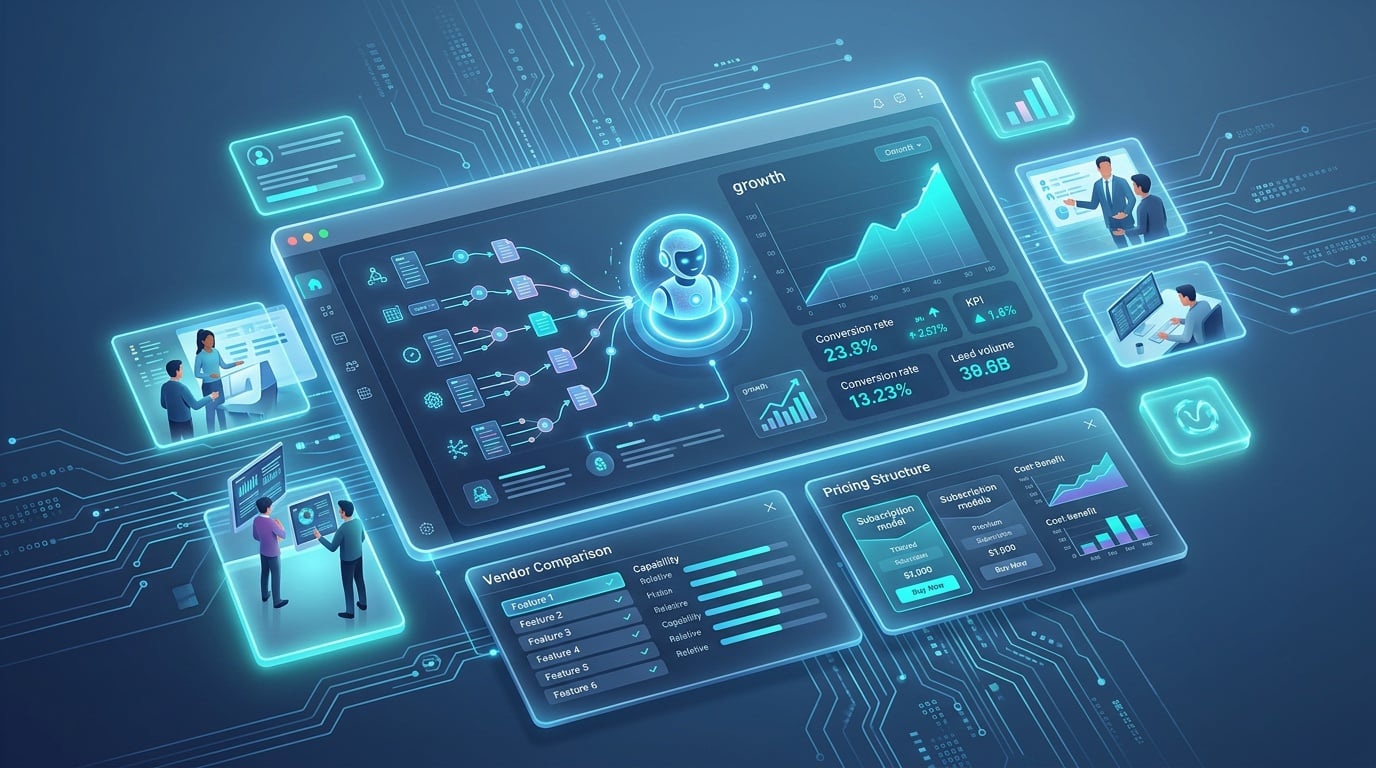
Answering the question, “Where to buy agentic systems for lead conversion?” requires understanding the available options and their associated costs. The market includes a range of solutions, from open-source frameworks that offer maximum customization but demand significant technical resources, to Software-as-a-Service (SaaS) platforms providing ready-to-deploy solutions with varying feature sets and support levels. For mid-market SMEs, SaaS solutions often strike the best balance between capability, ease of implementation, and cost-effectiveness, offering enterprise-grade AI without the overhead of building from scratch.
When considering where to buy agentic systems for lead conversion, it is important to look beyond just the initial price tag. Factors like integration capabilities, ongoing support, feature updates, and the vendor’s industry-specific expertise play a significant role in the total cost of ownership and the ultimate success of the implementation. Vynta AI’s approach, for example, focuses on delivering industry-specific AI agents tailored for verticals like real estate, recruitment, fundraising, and hospitality. These solutions are designed for practical application and measurable business outcomes, ensuring that your investment translates directly into improved lead conversion rates and operational efficiency.
Top Vendors for Agentic Lead Conversion
The market of agentic AI platforms is evolving rapidly, offering businesses more choices than ever to improve their lead conversion strategies. When seeking where to buy agentic systems for lead conversion, potential buyers should look for vendors that demonstrate a clear understanding of specific industry needs and provide demonstrable ROI. Platforms like Netcore’s agentic stack have shown success, with companies like Pomelo Fashion reporting significant conversion lifts after migration, as detailed by Netcore. Other specialized platforms focus on specific niches, offering tailored solutions for automated sales engagement and qualification.
Vynta AI offers specialized Agentic Systems for Real Estate, which are built to address the unique challenges of property inquiries, qualification, and viewing coordination. These systems are designed to convert property inquiries into viewings and sales through instant engagement, intelligent qualification, and personalized follow-up, ensuring a qualified pipeline increases by 3x and conversion rates reach up to 85%. Agent productivity is maximized, automating 80% of tasks and saving over 20 hours per week, leading to over 30% more deals closed. This focus on industry-specific application is key to identifying vendors that can deliver beyond generic AI capabilities.
Pricing Models: Open-Source vs. SaaS vs. Enterprise
Understanding the pricing structures available is fundamental when determining where to buy agentic systems for lead conversion. Open-source solutions, while often free to acquire, require substantial investment in technical expertise for implementation, customization, and ongoing maintenance. This can lead to significant hidden costs in terms of developer salaries and project timelines, making them less accessible for many mid-market businesses. For example, an open-source approach might cost $1,500/year for basic infrastructure versus significantly higher costs for cloud alternatives, as suggested by AgenticLeadGen.xyz, but this does not account for the engineering effort.
SaaS (Software-as-a-Service) solutions offer a more predictable and manageable pricing model, typically involving monthly or annual subscription fees based on usage, features, or number of agents. This model abstracts away much of the technical complexity, allowing businesses to deploy AI capabilities faster. Enterprise-level solutions often provide custom pricing, dedicated support, advanced security features, and bespoke integrations, catering to larger organizations with complex requirements. For mid-market SMEs, SaaS solutions often represent the most practical and cost-effective entry point, providing access to powerful agentic capabilities without the burden of extensive in-house development or high upfront capital expenditure.
Industry-Specific Applications for Lead Conversion
While agentic systems offer broad benefits, their true power is unlocked when applied with deep industry understanding. Generic AI solutions often fall short because they lack the nuanced context required to address specific business challenges. At Vynta AI, we specialize in tailoring agentic capabilities to the unique demands of sectors like real estate, recruitment, fundraising, and hospitality. This vertical-specific approach ensures that the AI agents not only automate tasks but also drive strategic outcomes aligned with the core objectives of each industry, differentiating them from one-size-fits-all platforms.
By focusing on these core verticals, Vynta AI provides solutions that directly tackle the pain points of our Ideal Customer Profile (ICP). We understand that a real estate agency owner needs rapid lead qualification for property inquiries, a recruitment director requires efficient candidate screening, a fundraising leader must systematically engage potential donors, and a hospitality manager aims to optimize reservations and guest experiences. Our agentic systems are engineered to meet these precise needs, offering tangible improvements in conversion rates, operational efficiency, and revenue generation.
Real Estate: Faster Property Matching and Qualification
The real estate market demands swift responses to inquiries and precise matching of buyers to properties. Agentic Systems for Real Estate are designed to handle this critical function efficiently. These systems convert property inquiries into viewings and sales through instant engagement, intelligent qualification, and personalized follow-up. The outcome is a qualified pipeline that can increase by 3x, with conversion rates reaching up to 85%. This automation allows agents to focus on building relationships and closing deals, rather than being bogged down by initial information gathering.
The operational benefits for real estate professionals are significant. Agent productivity is maximized by automating 80% of tasks, saving over 20 hours per week, and resulting in over 30% more deals closed. The system improves client retention by 85% and client satisfaction by 27%, generating over $100k in additional revenue per agent per year. The agentic workflow includes lead capture through instant 24/7 engagement across multiple channels like WhatsApp, SMS, email, and website chat. It includes AI-driven qualification, automated property matching, calendar coordination with reminders for viewings, and personalized follow-ups.
Industry Focus Drives Specific Outcomes
Generic AI tools can automate tasks, but industry-specific agentic systems deliver targeted results. For real estate, this means instant, intelligent property matching and qualification that directly leads to more viewings and sales. For recruitment, it translates to automated screening and interview scheduling that accelerates hiring. This tailored approach is what separates effective AI solutions from merely automated ones, ensuring that businesses in our core verticals see measurable impacts on their key performance indicators.
Recruitment: Automated Screening and Interview Scheduling
Recruitment agencies face constant pressure to source, screen, and place candidates quickly and accurately. Agentic systems can automate the initial stages of this process, significantly reducing time-to-hire. AI agents can engage with incoming applications, perform initial screening based on predefined criteria, and even conduct preliminary qualification interviews. This ensures that recruiters’ time is spent engaging with the most promising candidates, rather than sifting through countless resumes. The system can also handle the complex logistics of scheduling interviews, coordinating availability between candidates and hiring managers, and sending automated reminders to minimize no-shows.
The efficiency gains are substantial. By automating repetitive tasks like resume parsing, initial candidate outreach, and basic qualification questions, recruiters can dramatically increase their capacity. This means sourcing more high-quality candidates and filling roles faster, leading to greater client satisfaction and increased revenue for the agency. Additionally, consistent and prompt communication throughout the application process can improve the candidate experience, an essential factor in attracting top talent and maintaining a positive employer brand. This human-centered approach, augmented by AI, ensures that the recruitment process remains efficient without sacrificing the quality of interaction.
Fundraising: Systematic Donor Outreach
For non-profits and fundraising organizations, building and maintaining relationships with donors is paramount. Agentic systems can simplify the complex process of donor outreach and cultivation. AI agents can identify potential donors based on past giving history, engagement patterns, or wealth indicators, and then initiate personalized outreach campaigns. These agents can manage follow-up communications, respond to donor inquiries, and even assist in scheduling meetings with major gift officers. This systematic approach ensures that no potential donation opportunity is missed due to manual oversight or delayed communication.
The implementation of agentic systems in fundraising can lead to more efficient donor engagement and increased contributions. By automating routine communications and segmentation, fundraising professionals can dedicate more time to strategic relationship building and personalized appeals to high-value donors. The ability to track engagement across multiple touchpoints and tailor messages based on donor profiles allows for a more effective cultivation strategy. This not only helps secure immediate funding but also fosters long-term donor loyalty, which is essential for the sustained success of any non-profit organization.
Hospitality: Reservation Optimization and Upselling
In the hospitality sector, exceptional guest experience and efficient operations go hand-in-hand. Agentic systems can revolutionize how hotels and other hospitality businesses manage reservations and improve guest interactions. AI agents can handle booking inquiries 24/7, provide instant information about services and availability, and manage reservation modifications. Beyond bookings, these systems can proactively engage guests before their stay, offering personalized recommendations for on-site services, local attractions, or dining options, thereby driving ancillary revenue through intelligent upselling. They can also assist with pre-arrival check-ins and post-stay feedback collection.
The impact on guest satisfaction and revenue is significant. By providing instant, accurate responses and personalized offers, hospitality businesses can improve guest loyalty and increase spending on additional services. Automated communication reduces the burden on front-desk staff, allowing them to focus on in-person guest service. Additionally, by analyzing guest preferences and booking patterns, agentic systems can help optimize room allocation and pricing strategies. This data-driven approach ensures that every guest interaction, from initial inquiry to post-stay follow-up, contributes positively to the business’s bottom line and reputation.
How to Evaluate and Select an AI Platform
Choosing the right AI platform for lead conversion is a strategic decision that requires careful evaluation. Mid-market SMEs often face the dilemma of whether to invest in building an in-house solution or purchasing a ready-made platform. The decision hinges on a thorough analysis of total cost of ownership, required technical expertise, implementation speed, and desired scalability. While building offers maximum customization, it typically demands significant upfront investment in development talent and ongoing maintenance, which can be prohibitive for businesses without dedicated AI resources.
Purchasing a Software-as-a-Service (SaaS) platform, such as those offered by Vynta AI, generally presents a more accessible and faster path to achieving measurable business outcomes. These platforms are pre-built, regularly updated, and supported by the vendor, abstracting away much of the technical complexity. This allows businesses to focus on integrating the AI into their existing workflows and realizing benefits like improved lead conversion and operational efficiency without the burden of extensive custom development. The key is to align the platform’s capabilities with specific business goals and operational needs.
Build vs. Buy: Analyzing Total Cost of Ownership
When considering whether to build or buy an agentic system, a comprehensive analysis of the Total Cost of Ownership (TCO) is essential. Building an in-house solution involves direct costs such as hiring AI engineers, data scientists, and software developers, along with infrastructure expenses for development, testing, and deployment. Indirect costs include the opportunity cost of taking longer to deploy a solution and the ongoing expenses for maintenance, updates, and bug fixes. This path often requires a substantial capital outlay and a long-term commitment to R&D, which can be a significant hurdle for mid-market companies.
Conversely, buying a SaaS platform typically involves predictable subscription fees, which can be structured based on usage, number of agents, or feature tiers. While there is an ongoing operational expense, it generally offers a lower upfront investment and a much faster time-to-value. The vendor handles development, maintenance, and updates, allowing your team to focus on strategic implementation and using the AI for lead conversion. For example, AgenticLeadGen.xyz suggests that some cloud alternatives can cost $5,400-13,200 annually, while a more direct SaaS solution might be priced more accessibly for mid-market needs, but the true comparison must include the engineering effort for a ‘build’ scenario.
Strategic Choice: Build or Buy
The decision to build an AI platform internally or purchase a SaaS solution is a critical one for mid-market SMEs. Building offers ultimate control but demands significant resources and time. Buying provides faster deployment, predictable costs, and vendor support, making it often the more practical choice for businesses focused on immediate ROI and operational efficiency without extensive in-house AI expertise.
10 Questions to Ask Vendors Before Purchasing
To ensure you select the most effective agentic system for your lead conversion needs, it is imperative to ask vendors targeted questions. Start by understanding their data security and privacy protocols, especially concerning sensitive customer information. Inquire about integration capabilities with your existing CRM, marketing automation tools, and other essential software, as smooth integration is key to operational efficiency. Ask about the platform’s adaptability and customization options; can it be tailored to your specific industry vernacular and sales processes?
Additionally, examine the AI’s capabilities: how does it handle complex qualification scenarios, and what is its accuracy rate? Understand the vendor’s support model. What level of technical assistance and training is provided post-purchase? Ask about their roadmap for future development and how they incorporate user feedback. Inquire about performance metrics and reporting capabilities. What data can you expect to track to measure ROI? Finally, clarify the pricing structure thoroughly, including any potential hidden costs for setup, customization, or exceeding usage limits. A transparent vendor will readily provide answers that build confidence in their solution’s ability to deliver measurable business outcomes.
Vendor Evaluation Checklist
- Data Security & Privacy: What measures are in place to protect sensitive data? Are compliance certifications (e.g., SOC 2, GDPR) provided?
- Integration Capabilities: How easily does the platform integrate with your current CRM, marketing automation, and other critical business systems?
- Customization & Adaptability: Can the AI be tailored to your industry-specific language, sales stages, and unique business processes?
- AI Qualification Accuracy: How does the AI qualify leads, and what are its reported accuracy rates for different lead types?
- Support & Training: What kind of post-purchase support, onboarding, and ongoing training does the vendor offer?
- Product Roadmap: What are the plans for future features and AI model improvements?
- Reporting & Analytics: What key metrics can be tracked, and how comprehensive are the reporting dashboards for ROI analysis?
- Pricing Transparency: Is the pricing model clear? Are there additional costs for setup, customization, or scaling?
- Implementation Timeline: What is the estimated time from purchase to full operational deployment?
- Scalability: Can the platform scale with your business growth in terms of lead volume and user capacity?
Implementation Strategy and Tracking ROI
Integrating AI Agents with Your Existing CRM
Integrating agentic systems into your existing customer relationship management (CRM) platform is a foundational step in realizing the full potential of AI-driven lead conversion. The integration must enable smooth data exchange between the AI agent and your CRM to ensure that lead information, interaction history, and qualification status remain consistent and actionable across your sales and marketing workflows. This connectivity supports real-time responses and avoids silos where valuable lead data might otherwise be lost or delayed.
For mid-market companies, selecting an agentic system with open API support and pre-built connectors for popular CRMs like Salesforce, HubSpot, or Zoho simplifies implementation. This approach avoids costly custom development and reduces time-to-value. The integration should allow bidirectional syncing: the AI agent updates lead records with qualification scores, engagement notes, and next steps, while the CRM triggers AI workflows based on lead status changes or new inquiries. This tight coupling enables sales teams to access enriched lead profiles instantly and prioritize outreach effectively.
At Vynta AI, our Agentic Systems for Real Estate are designed with native CRM integrations that maintain workflow continuity. The system automates tasks such as calendar coordination for property viewings and follow-up scheduling, directly within the CRM environment. This ensures that agents do not need to switch platforms, reducing friction and accelerating deal progression. Implementing AI agents this way maximizes operational efficiency and preserves the human touch critical for closing deals.
Key Metrics to Track Post-Implementation
Measuring the impact of agentic systems requires focusing on metrics that reflect both lead conversion effectiveness and operational efficiency. Important quantitative indicators include the qualified lead pipeline size, conversion rate, average response time to inquiries, and the volume of automated tasks completed. For example, successful deployments of Agentic Systems for Real Estate have demonstrated a 3x increase in qualified pipeline and conversion rates reaching 85%, with response times reduced to less than 60 seconds.
Additional operational metrics include agent productivity gains, measured by time saved on routine qualification and scheduling tasks, often exceeding 20 hours weekly per agent. Tracking deal closure rates and revenue per agent provides direct insight into the financial benefits attributable to AI adoption. Client retention and satisfaction scores are also valuable, as improved engagement through personalized AI interaction correlates with higher loyalty and repeat business.
Beyond raw numbers, it is crucial to monitor qualitative feedback from sales teams and customers to identify potential friction points or areas for system refinement. Continuous performance monitoring facilitates iterative improvements, ensuring the AI agent adapts to evolving business needs and market conditions.
Key Insight: Human-AI Collaboration Drives Sustainable ROI
Agentic systems do not replace human agents but automate repetitive tasks to free up time for strategic customer engagement. Tracking metrics that capture both AI efficiency and human agent performance delivers a comprehensive view of ROI. This balanced approach ensures that technology adoption translates into measurable business outcomes such as faster lead conversion, higher customer satisfaction, and increased revenue.
References
Frequently Asked Questions
Where can I buy agentic systems for lead conversion?
You can find agentic systems for lead conversion through various providers, including Software-as-a-Service (SaaS) platforms and open-source frameworks. For mid-market companies, SaaS solutions typically offer a practical balance of advanced capabilities, ease of implementation, and cost-effectiveness. These platforms are designed to automate lead management and qualification, driving better business outcomes.
What makes an agentic system effective for lead conversion?
Effective agentic systems for lead conversion provide instant, 24/7 engagement across multiple channels like WhatsApp, SMS, and website chat. They use AI-driven qualification to intelligently assess lead needs and readiness, mimicking proactive sales development representatives. Personalization and speed are key, ensuring every valuable inquiry receives prompt, intelligent attention to increase conversion likelihood.
How do agentic systems differ from traditional chatbots?
Agentic systems for lead conversion operate with a higher degree of intelligence and agency than traditional chatbots. They can understand context, perform multi-step tasks, and adapt their approach based on lead behavior and data. This allows them to autonomously manage and advance potential customer relationships through qualification, offering more proactive and strategic engagement.
What features should I look for in an agentic platform?
When selecting an agentic system, prioritize instant, multi-channel engagement and AI-driven qualification capabilities. Look for features that automate repetitive tasks, such as initial research and data enrichment, to maximize agent productivity. Smooth calendar coordination and feedback collection for ongoing refinement are also important indicators of a sophisticated platform.
How much do agentic systems for lead conversion typically cost?
The cost of agentic systems for lead conversion varies based on the provider, feature set, and level of customization required. Software-as-a-Service (SaaS) platforms often provide a range of options that balance capability with cost-effectiveness for mid-market SMEs. Pricing generally reflects the advanced AI capabilities and automation benefits delivered.
Can agentic systems handle high volumes of leads?
Yes, agentic systems are built to handle significant volumes of leads that would overwhelm a human team. They maintain consistent quality and speed in their interactions, automating initial research and qualification tasks. This operational benefit allows businesses to manage growth and ensure every potential customer receives timely attention.