
me works
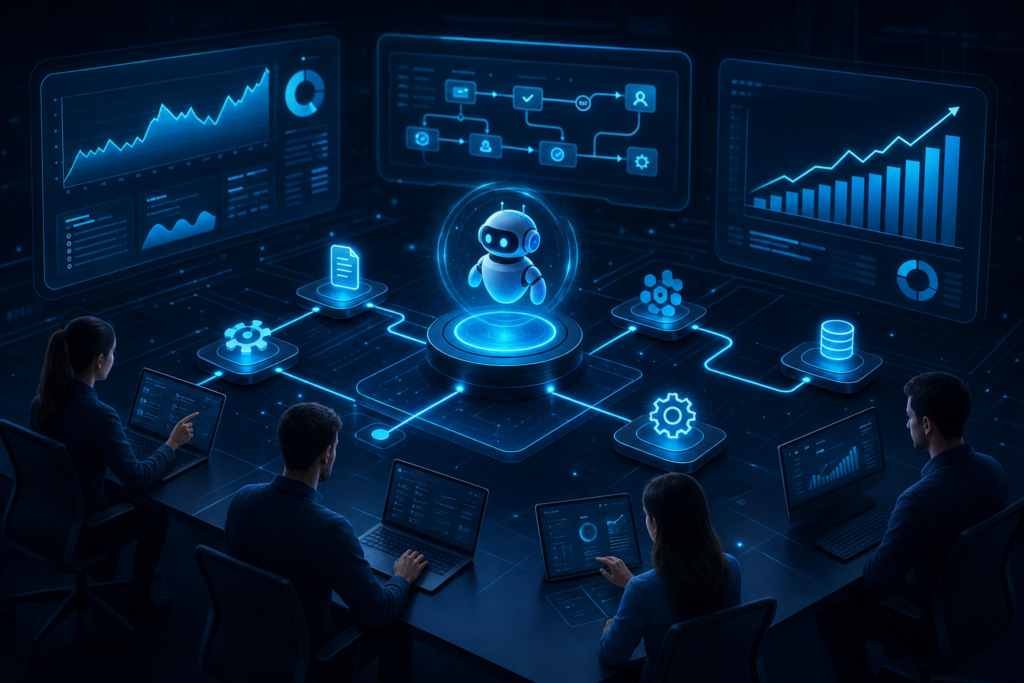
In today’s competitive business environment, efficiency isn’t just a goal. It’s a necessity. Mid-market organizations, often caught between the agility of startups and the resources of large enterprises, constantly seek ways to optimize operations and drive growth. While the promise of automation can feel distant when the tools available are generic, failing to grasp the unique nuances of specific industries, this gap leads to frustration and underperformance. At Vynta AI, we believe true automation comes not from one-size-fits-all software, but from intelligent agents designed to understand and act within your specific operational context. This is the essence of what me works: AI solutions built for your business, your industry, and your unique challenges.
Key Takeaways
- Generic automation tools fail mid-market firms because they lack the industry-specific understanding needed for real efficiency.
- Vynta AI builds intelligent agents that operate within your unique operational context, not around generic templates.
- True automation requires solutions that comprehend and act on your specific workflows, not just execute generic tasks.
- Mid-market organizations can close the efficiency gap by adopting context-aware AI agents tailored to their industry.
The term “me works” signifies a profound shift in how businesses approach AI integration. It moves beyond generic platforms that require extensive customization or offer limited functionality. Instead, it represents AI that is deeply embedded, understands industry-specific workflows, and delivers tangible, measurable outcomes tailored precisely to your operational needs. For mid-market SMEs, this means unlocking sophisticated automation capabilities without the prohibitive cost or complexity traditionally associated with enterprise-level AI. It’s about deploying AI that genuinely understands the tasks at hand, from qualifying real estate leads to screening candidates, identifying potential donors, or improving guest experiences, thereby driving significant business impact.
Understanding ‘Me Works’: The Shift from Generic Automation to Industry-Specific AI Agents
What ‘Me Works’ Means for Your Business
The concept of “me works” encapsulates AI automation that is meticulously crafted to align with the distinct operational realities of your business and industry. It signifies a departure from generalized software solutions, which often demand significant manual configuration and still fall short of addressing sector-specific complexities. For mid-market SMEs, this tailored approach means AI that understands the particular language, processes, and objectives of their field. Whether that’s real estate lead generation, candidate sourcing in recruitment, investor outreach in fundraising, or guest relationship management in hospitality. Deploying AI that truly me works empowers your team by automating repetitive tasks, uncovering hidden opportunities, and accelerating decision-making, all within a framework that respects your existing infrastructure and business logic. This precision ensures that automation efforts yield direct, quantifiable improvements in efficiency and revenue.
This specialized approach ensures that AI agents are not just tools, but intelligent collaborators that speak the language of your industry. Imagine an AI that understands the specific criteria for a qualified real estate lead, the key indicators of a promising candidate profile, the nuances of donor cultivation, or the preferences of a hotel guest. This level of contextual understanding is what differentiates “me works” AI from generic platforms. It allows for automation that is not only efficient but also effective, driving better outcomes and freeing up human capital for higher-value strategic activities. The result is a more productive, agile, and competitive business.
Why Generic Automation Falls Short for Mid-Market SMEs
Generic automation tools, while seemingly accessible, often fail to deliver on their promise for mid-market SMEs due to their one-size-fits-all nature. These platforms typically require extensive, costly customization to even begin approximating industry-specific needs. For example, a marketing automation tool designed for e-commerce might struggle to manage the complex, multi-stage sales cycles common in real estate or the candidate vetting processes in recruitment. This lack of inherent industry intelligence means businesses often end up with software that is either underutilized, poorly adapted, or necessitates a significant overhaul of existing, effective processes. The promised efficiency gains are rarely realized, leading to wasted investment and operational friction. This is why understanding what me works is essential; it avoids the pitfalls of generic solutions.
Additionally, mid-market companies often lack the dedicated IT resources or specialized AI expertise to wrangle generic platforms into shape. The burden of configuration, integration, and ongoing fine-tuning falls disproportionately on operational teams, diverting their attention from core business functions. The result is often a superficial application of automation that doesn’t touch critical workflows or, worse, introduces errors due to misconfiguration. These tools can also fail to provide the deep, actionable insights that come from AI trained on domain-specific data, leaving businesses operating with incomplete visibility. The promise of streamlined operations becomes a complex, expensive, and ultimately disappointing endeavor.
The Four Verticals Where AI Delivers Measurable ROI
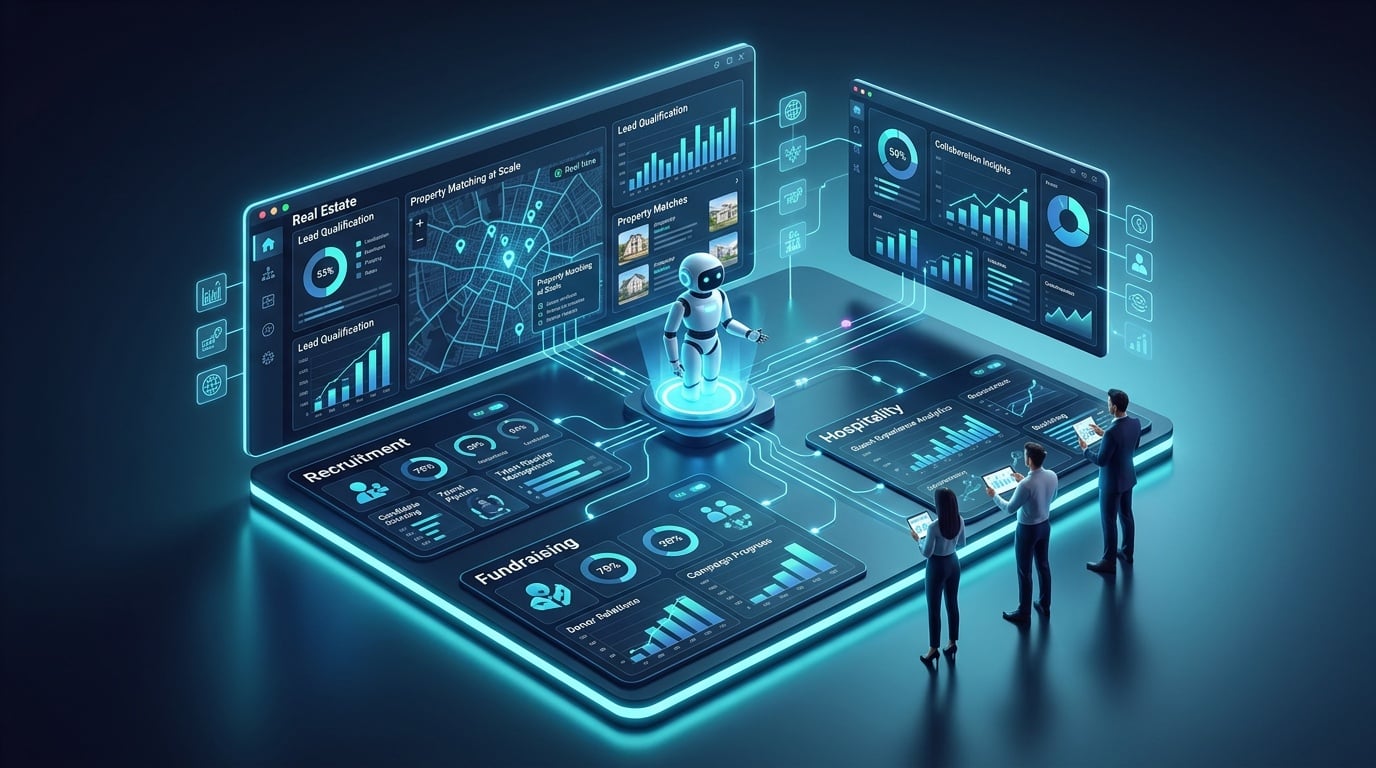
Vynta AI focuses its expertise on four key verticals where we consistently observe significant, measurable returns on investment through our tailored AI agents: Real Estate, Recruitment, Fundraising, and Hospitality. In Real Estate, our AI agents excel at automating lead qualification, nurturing prospects, and matching properties to buyer preferences at scale, drastically reducing response times and increasing conversion rates. For Recruitment agencies, AI streamlines candidate sourcing, pre-screening, and interview scheduling, ensuring that recruiters focus on high-quality matches rather than administrative tasks, thereby improving time-to-hire and candidate quality. These are examples of how AI designed for a specific purpose truly me works.
In the Fundraising sector, our AI agents automate investor identification, initial outreach, and relationship management, enabling development teams to build stronger connections with more potential donors and secure funding more efficiently. Within Hospitality, AI agents personalize guest experiences, manage reservations, automate upselling opportunities, and handle routine inquiries, leading to increased guest satisfaction and ancillary revenue. Each of these sectors presents unique challenges and opportunities, and by developing AI solutions specifically for them, Vynta AI ensures that automation delivers not just efficiency but also strategic advantage and demonstrable business outcomes.
| Feature | Generic Automation Tools | Vynta AI Industry-Specific Agents |
|---|---|---|
| Focus | Broad, task-based automation (e.g., sending emails, scheduling meetings) | Industry-specific workflow automation (e.g., real estate lead qualification, candidate screening) |
| Customization Needs | High; requires significant technical expertise and time investment | Low; designed with pre-built industry logic, requires minimal configuration |
| Understanding of Nuance | Limited; struggles with industry-specific terminology, processes, and data | Deep; understands sector-specific language, data points, and operational workflows |
| Implementation Complexity | Often high; requires extensive integration and training | Streamlined; designed for rapid deployment and intuitive use |
| Measurable Outcomes | Variable; often focused on task completion rather than business impact | High; directly tied to KPIs like revenue growth, cost reduction, and efficiency gains |
| Target User | General business users, IT departments | Industry professionals (e.g., real estate agents, recruiters, fundraisers, hospitality managers) |
| Best For | Simple, universally applicable tasks | Complex, industry-critical workflows demanding contextual intelligence |
How AI Agents Work in Real Estate, Recruitment, Fundraising, and Hospitality
Real Estate: Lead Qualification and Property Matching at Scale
In the fast-paced Real Estate sector, time is money, and swift, accurate lead qualification is paramount. Vynta AI’s agents are engineered to automate this critical function. They can engage with incoming leads across multiple channels. Website forms, social media, and even initial email inquiries. Asking targeted questions to assess budget, timeline, property preferences, and financing readiness. This AI-driven qualification process ensures that agents only spend their valuable time on prospects who are genuinely ready to buy or sell. Beyond qualification, these agents can also perform intelligent property matching, cross-referencing buyer criteria with available listings to suggest suitable properties, thereby accelerating the sales cycle and improving client satisfaction.
A typical workflow might see an AI agent receive a new lead inquiry. It then initiates a conversation, gathering essential details through natural language processing. Based on the responses, the AI categorizes the lead’s urgency and specific needs. For instance, if a lead expresses interest in a three-bedroom home in a specific school district with a budget up to $750,000, the AI can instantly query the CRM and MLS data to identify matching properties. It can then present these options to the lead, along with relevant property details, and schedule a follow-up call or showing with a human agent. This level of automated, intelligent engagement means no lead falls through the cracks, and every interaction is professional and data-driven, demonstrating how AI designed for this purpose truly me works.
Recruitment: Smarter Candidate Screening and Interview Scheduling
For recruitment agencies, the challenge lies in sifting through a high volume of applications to identify top talent efficiently. Vynta AI’s recruitment agents automate and optimize this process. They can scan resumes and online profiles against job requirements, identifying candidates whose skills, experience, and qualifications align with the specific needs of an open position. This goes beyond simple keyword matching; the AI can understand context and infer suitability based on a candidate’s career trajectory and responsibilities. Once a pool of qualified candidates is identified, the AI can further screen them through automated video interviews or initial chatbot conversations, assessing communication skills and cultural fit.
A key benefit is the automation of interview scheduling. After initial screening, the AI can coordinate availability between the candidate and the hiring manager, presenting them with optimal time slots and sending out calendar invitations. This significantly reduces the administrative burden on recruiters, allowing them to focus on building relationships with candidates and clients, and strategizing talent acquisition. The result is a faster, more accurate hiring process, leading to better quality hires and reduced time-to-fill, which is essential for both the recruitment firm and their clients. This AI’s ability to perform complex matching and coordination is a prime example of how targeted automation me works effectively.
Fundraising: Automated Investor Outreach and Donor Management
Non-profit organizations and fundraising entities rely heavily on cultivating relationships with donors and investors. Vynta AI’s fundraising agents automate the often time-consuming process of identifying, engaging, and managing these relationships. The AI can analyze databases and public information to identify potential major donors or institutional investors whose philanthropic interests or investment profiles align with the organization’s mission and funding needs. It can then initiate personalized outreach, crafting tailored messages based on donor history, interests, and giving capacity, ensuring each communication feels relevant and impactful.
Beyond initial outreach, these agents help manage donor pipelines, track engagement levels, and automate follow-ups for pledges or upcoming donation cycles. They can also assist in segmenting donor lists for targeted communication campaigns, increasing the effectiveness of fundraising appeals. By handling the repetitive aspects of outreach and data management, AI empowers fundraising professionals to dedicate more time to high-level strategy, building personal rapport with key stakeholders, and ultimately securing the resources needed to fulfill their mission. This strategic application of AI ensures that outreach efforts are consistent and data-informed.
Hospitality: Guest Experience Optimization and Upselling Automation
In the hospitality industry, exceptional guest experience is the cornerstone of success and repeat business. Vynta AI’s hospitality agents are designed to improve guest satisfaction at every touchpoint. From pre-arrival communication, where the AI can confirm bookings, provide local information, and offer personalized upgrades, to during-stay support, where it can handle room service requests, answer frequently asked questions, or facilitate maintenance calls, the AI ensures guests receive prompt and efficient service. Post-stay, it can automate feedback requests and manage responses, helping to maintain a positive online reputation.
Additionally, these agents can intelligently identify opportunities for upselling and cross-selling. Based on a guest’s profile, booking details, and stated preferences, the AI can suggest relevant add-ons, such as spa treatments, restaurant reservations, or room upgrades, at opportune moments. This is done in a non-intrusive, personalized manner, increasing ancillary revenue without compromising the guest experience. The ability of these AI agents to understand guest needs and operational capacity allows hotels and other hospitality businesses to operate more smoothly, improve guest loyalty, and drive revenue growth. This targeted approach is a clear demonstration of how AI specifically designed for the industry me works.
AI in Action: A Process Snapshot
Consider a recruitment agency using Vynta AI. A new job opening is posted. The AI agent analyzes the job description, identifies key skills and experience requirements, and then scans the agency’s candidate database and external professional networks. It ranks candidates based on alignment, flags potential matches, and initiates personalized outreach messages via email or LinkedIn. For promising candidates, the AI schedules screening calls or initial video interviews, managing calendars for both the candidate and the recruiter. This automated sequence, from sourcing to initial screening and scheduling, significantly compresses the hiring timeline and improves the quality of candidates presented to clients.
Measuring Success: The KPIs That Prove AI Automation Works
Implementing advanced AI automation is a strategic investment, and like any significant investment, its success hinges on measurable outcomes. For mid-market SMEs, understanding what me works is not just about adopting new technology, but about seeing tangible improvements in key performance indicators that directly impact the bottom line. At Vynta AI, we focus on delivering quantifiable results across our core verticals, ensuring that our clients can clearly see the return on their AI investment. This involves defining precise metrics and tracking them diligently from the outset, allowing for continuous optimization and validation of the AI’s effectiveness.
The value of AI agents is best demonstrated through concrete data points that reflect operational efficiency, cost savings, and revenue generation. We empower businesses to move beyond theoretical benefits and into a position of demonstrable progress. By focusing on specific, industry-relevant KPIs, Vynta AI ensures that the automation deployed aligns perfectly with business objectives, leading to predictable and impressive results. This data-driven approach builds confidence and provides a clear roadmap for maximizing the impact of AI across sales, marketing, and operational functions.
From Time Savings to Revenue Growth: Key Metrics Across Verticals
The impact of AI automation varies by industry, but the core metrics for success often revolve around efficiency gains, cost reductions, and revenue acceleration. In Real Estate, key performance indicators might include a reduction in lead response time by up to 70%, an increase in qualified leads by 30%, and a shorter sales cycle. For Recruitment agencies, metrics could focus on decreasing time-to-hire by 25%, improving candidate-to-interview ratios by 40%, and reducing recruiter administrative workload by 50%. These figures highlight how AI can directly address operational bottlenecks.
For Fundraising organizations, success is measured by an increase in donor engagement rates, a growth in average donation size, and a higher conversion rate for investor outreach campaigns, potentially by as much as 20%. In Hospitality, KPIs often include an uplift in guest satisfaction scores (e.g., Net Promoter Score), an increase in ancillary revenue through intelligent upselling by 15%, and a reduction in guest service response times. Tracking these specific metrics allows businesses to understand how AI automation is contributing to their strategic goals and proving its value. This demonstrates that AI designed with a purpose truly me works.
Calculating ROI: What to Track in the First 90 Days
The initial 90 days post-implementation are critical for validating the ROI of AI automation. During this period, we advise clients to focus on a core set of metrics that provide a clear picture of performance. This includes tracking the volume of automated tasks completed, the time saved by human staff, and the direct impact on conversion rates or revenue. For instance, in Real Estate, you would monitor how many leads the AI qualified versus how many a human agent would have handled in the same timeframe, and the subsequent conversion rate of AI-qualified leads. This initial data forms the baseline for future growth and optimization.
A practical approach to ROI calculation involves comparing the cost of the AI solution against the gains realized. Gains can be direct, such as increased sales from faster lead response, or indirect, such as reduced operational costs due to staff reallocation to higher-value activities. For example, if an AI agent handles 100 customer inquiries per day that previously required 2 hours of a staff member’s time, the daily time saved is 200 hours. Quantifying this time saving in terms of salary and overhead provides a clear cost-benefit analysis. By focusing on these immediate impacts, businesses can quickly ascertain the financial viability and effectiveness of their AI deployment. This pragmatic measurement is key to ensuring AI me works as intended.
Real Results: Case Study Examples from Vynta.ai Deployments
To illustrate the tangible benefits of industry-specific AI agents, consider a mid-sized recruitment firm that implemented Vynta AI. Prior to deployment, their average time-to-fill for critical roles was 45 days. Within 90 days of integrating our AI for candidate sourcing and initial screening, this was reduced to an average of 30 days, representing a 33% improvement. The AI automated the initial resume review for over 80% of applicants, freeing up recruiters to conduct more in-depth interviews with higher-quality candidates. This direct impact on efficiency and speed translated into increased client satisfaction and the capacity to handle more open positions.
Another example comes from the hospitality sector. A boutique hotel chain utilized Vynta AI’s agents to manage guest inquiries and upsell services. Post-implementation, they observed a 20% increase in guest satisfaction scores, largely attributed to the AI’s rapid response times and personalized recommendations. Additionally, AI-driven upselling initiatives, such as offering room upgrades or spa packages based on guest profiles, led to a 10% increase in ancillary revenue within the first quarter. These outcomes underscore the power of AI tailored to specific business needs, proving that when automation is designed for a particular context, it truly me works.
Key Performance Indicators (KPIs) for AI Automation Success
Pros
- Quantifiable Efficiency Gains: Measurable reductions in task completion times and operational bottlenecks across all verticals.
- Direct Revenue Impact: Clear links to increased sales, improved conversion rates, and higher ancillary revenue.
- Cost Reduction: Decreased reliance on manual labor for repetitive tasks, leading to optimized resource allocation.
- Improved Customer/Client Satisfaction: Faster response times and more personalized interactions foster better relationships and loyalty.
- Data-Driven Decision Making: Provides actionable insights for continuous improvement and strategic planning.
- Enhanced Scalability: Allows businesses to handle increased volumes of leads, candidates, or guests without proportionate increases in staff.
Cons (Challenges in Measurement)
- Initial Data Collection Effort: Establishing accurate baseline metrics requires careful planning and data gathering.
- Attribution Complexity: Isolating the precise impact of AI versus other business factors can sometimes be challenging.
- Defining the Right Metrics: Not all metrics are equally relevant; selecting industry-specific and outcome-oriented KPIs is essential.
- Potential for Overwhelm: Tracking too many metrics can dilute focus; prioritizing key indicators is important.
- Resistance to Change: Ensuring staff buy-in and adoption is necessary for accurate data collection and utilization.
Overcoming Common Concerns: Is AI Automation Right for Your Business?
As Operations Director at Vynta AI, I frequently engage with mid-market leaders who are genuinely interested in AI automation but also harbor legitimate concerns. It’s natural to question how new technology will impact your team, your data, and your operational flow. We understand that adopting AI is a significant decision, not just a technological upgrade. Our approach is to address these concerns head-on, providing clear, transparent answers grounded in our experience across real estate, recruitment, fundraising, and hospitality. We believe that informed decision-making is the first step toward successful AI integration, ensuring the technology serves your business goals effectively and ethically.
The core of our philosophy is that AI should augment human capabilities, not replace them. This perspective is fundamental to how we address common hesitations about AI adoption. We focus on empowering your existing workforce, automating repetitive or time-consuming tasks, and freeing up your team to focus on strategic initiatives, client relationships, and complex problem-solving. For example, a recruiter can spend more time building rapport with top candidates or advising clients, rather than sifting through hundreds of applications. This shift allows your team to operate at a higher level, increasing job satisfaction and overall business productivity.
Addressing the Fear of Job Displacement
The concern that AI will lead to job displacement is perhaps the most common apprehension. We address this by emphasizing that Vynta AI’s solutions are designed for augmentation, not automation in the sense of replacement. Our AI agents handle tasks like initial lead qualification, resume screening, scheduling, or answering routine inquiries. This frees up your valuable human employees from repetitive, low-value work, allowing them to focus on more strategic, creative, and relationship-driven aspects of their roles. For example, a recruiter can spend more time building rapport with top candidates or advising clients, rather than sifting through hundreds of applications. This shift allows your team to operate at a higher level, increasing job satisfaction and overall business productivity.
Our goal is to create AI-powered co-workers, not replacements. Think of it as providing your team with highly efficient assistants that never tire and can process vast amounts of data. This approach not only preserves existing roles but can also lead to the creation of new, more specialized positions focused on managing and optimizing AI systems. By handling the volume and speed required for certain tasks, AI enables your human talent to apply their unique skills. Judgment, empathy, and strategic thinking. More effectively, ultimately driving better business outcomes and a more fulfilling work environment.
What About Data Privacy and Security?
Protecting your sensitive business and client data is paramount, and Vynta AI takes data privacy and security extremely seriously. Our AI agents operate within strict security protocols, adhering to industry best practices and relevant regulations. We ensure that data handled by our agents is encrypted both in transit and at rest. Access controls are rigorously managed, ensuring that only authorized personnel and systems can interact with sensitive information. When integrating with your existing systems, we prioritize secure API connections and data handling procedures that align with your organization’s security policies. We are committed to transparency regarding our data handling practices.
Our platform is built with security as a foundational element, not an afterthought. We understand that in sectors like real estate (with client property details), recruitment (with candidate PII), fundraising (with donor information), and hospitality (with guest preferences), data breaches can have severe consequences. Therefore, we employ multi-layered security measures and conduct regular audits to maintain the integrity and confidentiality of all data processed by our AI agents. You can be confident that your business information is safeguarded, allowing you to harness the power of AI without compromising on security or compliance. This responsible approach is key to ensuring AI me works safely.
The Implementation Reality: What You Need to Get Started
Implementing AI automation with Vynta AI is designed to be as streamlined as possible for mid-market SMEs. The primary requirement is clarity on your specific business processes and desired outcomes. We need to understand the workflows you aim to automate or optimize. Be it lead qualification in real estate, candidate sourcing in recruitment, investor outreach in fundraising, or guest service in hospitality. Providing access to relevant data sources and systems (like CRMs, ATS, or PMS) is also essential for the AI agents to function effectively. Our team works closely with yours to identify these needs and ensure a smooth integration process with minimal disruption to your daily operations.
Beyond process definition and data access, the most valuable asset you bring is your team’s domain expertise. While our AI is pre-trained on industry-specific logic, your insights are invaluable for fine-tuning the agents to your unique operational nuances. We typically require a dedicated point of contact from your organization to facilitate communication and decision-making during the implementation phase. Our goal is to make the technical heavy lifting as seamless as possible, allowing your team to focus on leveraging the AI’s capabilities to achieve measurable business results. This collaborative approach ensures that the AI truly me works for your specific business context.
Common Questions About AI Implementation
Q: Do I need a dedicated IT team to manage Vynta AI?
A: Not necessarily. While IT collaboration is helpful for integration, our platform is designed for ease of use. We provide ongoing support and training, and many of our clients manage their AI agents with minimal technical intervention.
Q: How long does implementation typically take?
A: Implementation timelines vary based on complexity, but for many standard use cases within our core verticals, we can achieve significant deployment within weeks, not months. We prioritize rapid time-to-value.
Q: What if my business processes change? Can the AI adapt?
A: Absolutely. Our AI agents are designed to be flexible. We work with you to update and adapt the AI’s logic as your business processes evolve, ensuring continuous alignment and optimization.
Taking the Next Step: How to Implement AI Automation in Your Organization
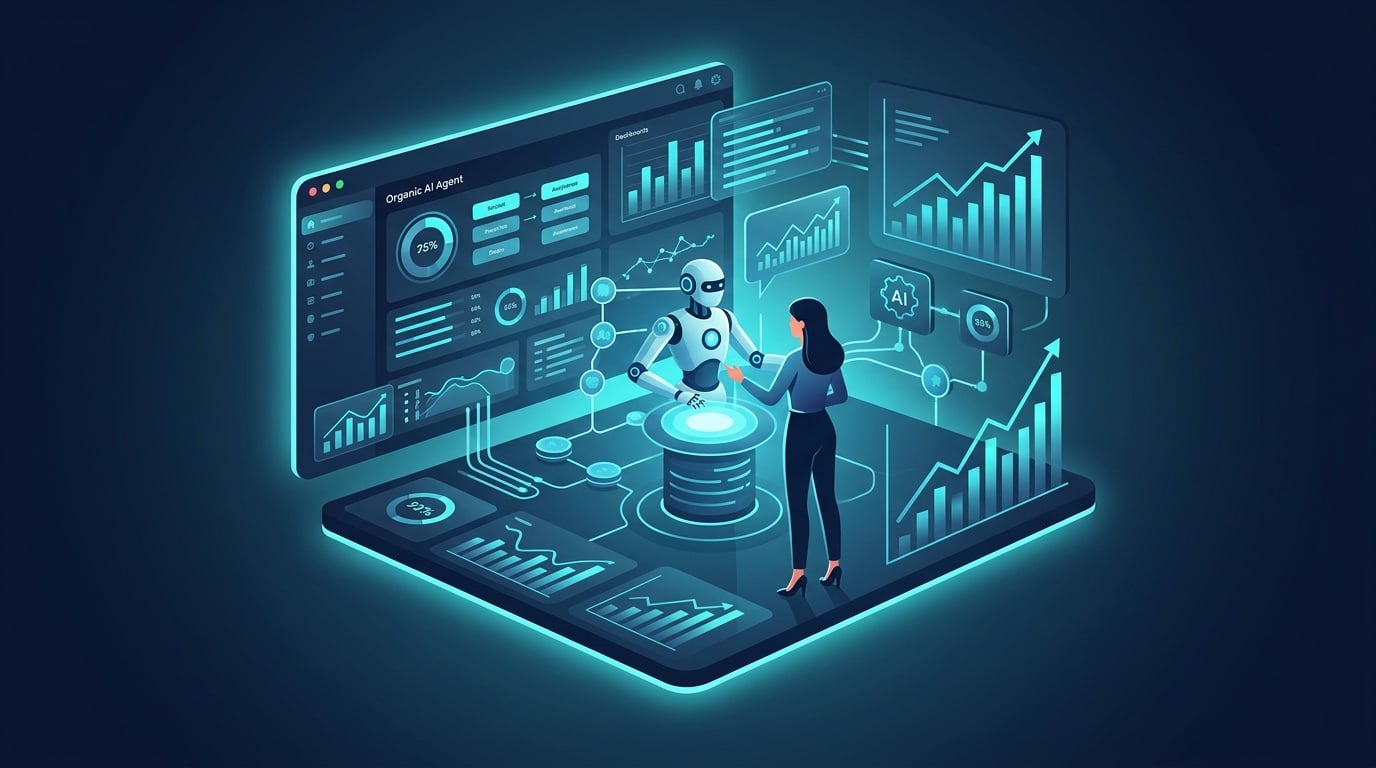
Transitioning to AI-driven automation is a strategic imperative for mid-market companies looking to gain a competitive edge. At Vynta AI, we’ve refined our implementation process to be clear, collaborative, and focused on delivering rapid value. Our approach ensures that you not only adopt powerful AI tools but also integrate them seamlessly into your existing operations, maximizing their impact on revenue and efficiency. We guide you through each phase, from initial assessment to full deployment and ongoing optimization, making the journey manageable and rewarding.
Choosing the right AI partner is as important as choosing the right technology. We pride ourselves on being more than just a vendor; we are a strategic partner invested in your success. Our deep industry expertise in real estate, recruitment, fundraising, and hospitality means we understand your unique challenges. This allows us to implement AI solutions that are not only technically sound but also perfectly aligned with your business objectives, ensuring that the automation truly me works for your organization.
A Three-Phase Implementation Roadmap
Our implementation process is structured into three distinct phases designed for clarity and efficiency. Phase 1: Discovery & Strategy involves a deep dive into your current workflows, objectives, and data infrastructure. We identify the highest-impact automation opportunities and co-create a tailored AI strategy. Phase 2: Configuration & Integration focuses on setting up and connecting the AI agents to your systems, configuring them according to the agreed strategy, and conducting initial testing. This phase ensures the AI is precisely aligned with your operational needs. Phase 3: Deployment & Optimization marks the go-live of the AI agents, followed by continuous monitoring, performance analysis, and iterative adjustments to maximize results and ensure ongoing value.
Choosing the Right AI Partner for Your Industry
Selecting an AI partner requires looking beyond generic capabilities. For mid-market SMEs in real estate, recruitment, fundraising, or hospitality, it is essential to partner with a provider that possesses deep domain expertise. Vynta AI specializes in these four verticals, meaning our AI agents are pre-built with industry-specific logic, terminology, and workflows. This specialized knowledge significantly reduces implementation time and ensures the AI understands the nuances of your business, from qualifying a me works real estate lead to screening a niche candidate profile or personalizing a guest’s stay. Look for a partner who can demonstrate a proven track record within your specific industry and whose solutions are designed for measurable business outcomes.
Avoiding Pitfalls: What We’ve Learned from Hundreds of Deployments
Over our extensive experience, we’ve identified common pitfalls that can hinder AI adoption. One major pitfall is the expectation of a “set it and forget it” solution; AI requires ongoing attention and optimization. Another is insufficient clarity on desired outcomes, leading to misaligned automation. Additionally, attempting to automate too much too soon can overwhelm both the technology and your team. We mitigate these by focusing on phased rollouts, clear KPI definition, and continuous collaboration. Our expertise ensures that your AI implementation is strategic, manageable, and focused on delivering sustained, measurable value, avoiding common errors that lead to underperformance.
Your AI Implementation Checklist
- Clearly define your top 1-3 business challenges that AI can solve.
- Identify key metrics to measure AI’s impact (e.g., time saved, conversion rates).
- Designate a point person for AI implementation and ongoing management.
- Ensure access to relevant data sources and existing business systems.
- Communicate AI goals and benefits clearly to your internal team.
- Plan for iterative optimization beyond the initial deployment.
- Partner with an AI provider with demonstrated industry-specific expertise.
References
Frequently Asked Questions
What is me works in AI automation?
Me works is a concept from Vynta AI that describes AI automation built specifically for your business, industry, and unique challenges. It moves beyond generic platforms by embedding AI that understands industry-specific workflows and delivers tailored outcomes for mid-market SMEs.
Why do generic automation tools often fail for mid-market businesses?
Generic automation tools fail because they lack the industry-specific intelligence required for complex workflows. Mid-market SMEs find them costly to customize and difficult to integrate with existing processes, leading to underutilization and wasted investment. Me works AI avoids these pitfalls by being designed for your operational context.
How can me works AI benefit mid-market SMEs in terms of efficiency?
Me works AI empowers teams by automating repetitive tasks, uncovering hidden opportunities, and speeding up decision-making within your existing infrastructure. This tailored approach yields direct, quantifiable improvements in efficiency and revenue without the high cost of enterprise-level AI.
In which verticals does Vynta AI focus its me works automation?
Vynta AI focuses on four key verticals: real estate, recruitment, fundraising, and hospitality. In real estate, AI agents automate lead qualification and property matching. In recruitment, they streamline candidate sourcing and screening. These examples demonstrate the targeted impact of me works AI.
What makes me works AI different from traditional automation platforms?
Me works AI differs by being deeply embedded in your specific industry processes rather than offering a one-size-fits-all solution. Traditional platforms require extensive manual configuration, while me works AI understands the language, objectives, and nuances of your field, driving better outcomes.
How does me works AI improve decision-making for businesses?
Me works AI improves decision-making by providing actionable insights trained on domain-specific data. It automates lead qualification, candidate screening, or guest relationship management, freeing human teams to focus on strategic activities that drive business growth.