

Top providers of agentic tech for deal closing?
In today’s fast-paced business environment, the ability to close deals swiftly and efficiently can be the deciding factor between stagnation and significant growth. Yet, many organizations grapple with persistent bottlenecks that slow down their sales cycles and procurement processes, leading to lost opportunities and reduced revenue. Understanding the root causes of these delays is the first step toward implementing solutions that drive measurable outcomes. Agentic AI offers a transformative approach, automating repetitive tasks and empowering teams to focus on what they do best: building relationships and closing business.
Key Takeaways
- Slow sales cycles and procurement delays directly impact revenue growth, making it essential to identify and eliminate these bottlenecks.
- Agentic AI solutions specialize in automating repetitive tasks, allowing sales and procurement teams to prioritize high-value activities like relationship building.
- When evaluating providers of agentic tech for deal closing, focus on solutions that integrate seamlessly with existing workflows and deliver clear ROI.
- The right agentic AI tools can reduce deal cycle times and optimize resource allocation, leading to improved closure rates.
This guide explores the important challenges that impede deal closing and introduces the innovative technologies designed to overcome them. We will delve into how artificial intelligence agents are redefining efficiency and effectiveness, setting the stage for a more productive future. Identifying the Top providers of agentic tech for deal closing? requires a clear understanding of the problems they solve and the specific capabilities they bring to the table.
Why Deals Stall and How Agentic AI Fixes the Gap
The Real Cost of Manual Follow-ups and Slow Lead Processing
The friction in deal closing often stems from the sheer volume of manual, repetitive tasks that consume valuable time. Sales representatives frequently spend hours on administrative duties: logging calls, sending follow-up emails, scheduling meetings, and updating CRM systems. Similarly, procurement teams navigate complex negotiation sequences and contract reviews that, when handled manually, can drag on for weeks. This administrative burden directly impacts conversion rates and revenue potential. For example, a delay of just a few hours in responding to a hot lead can mean that prospect moves on to a competitor. Organizations often underestimate the cumulative cost of these inefficiencies, which manifest as missed quotas, decreased agent productivity, and ultimately, a slower growth trajectory. This is where the need for advanced automation becomes apparent.
Did You Know? In many industries, a significant percentage of sales opportunities are lost simply due to slow response times. Prompt, personalized engagement is key to capturing interest and moving prospects down the funnel.
How Agentic AI Agents Automate the Closing Workflow
Agentic AI agents are designed to tackle these bottlenecks head-on by automating core components of the deal-closing process. These intelligent systems can monitor pipelines, identify stalled deals, and initiate automated, context-aware follow-ups. They handle tasks such as sending personalized outreach based on prospect behavior, scheduling demo calls, generating initial proposals or quotes, and even managing routine contract negotiations within predefined parameters. For example, an agent can be programmed to follow up with a prospect who downloaded a whitepaper but hasn’t engaged further, offering relevant additional resources or a direct line to a sales rep. This automation frees up human agents to concentrate on high-value interactions, complex negotiations, and strategic relationship building, rather than getting bogged down in operational minutiae, thereby accelerating the path to a closed deal.
Impactful Automation: Agentic AI can automate a significant portion of routine sales and procurement tasks, saving teams valuable time and potentially leading to more deals closed.
Human-Agent Collaboration: Augmenting, Not Replacing, Your Closers
A common misconception is that AI aims to replace human roles entirely. In reality, the most effective agentic AI solutions are built for collaboration, augmenting the capabilities of your existing teams. Agentic AI agents act as tireless assistants, handling the repetitive, time-consuming aspects of deal closing, allowing human closers to focus on strategic thinking, emotional intelligence, and complex problem-solving that AI cannot replicate. Consider the recruitment vertical: an AI agent can sift through thousands of resumes, pre-qualify candidates based on defined criteria, and schedule initial screening calls, but the final interview and cultural fit assessment remain firmly in the hands of the human recruiter. This human-agent collaboration ensures that deals progress efficiently while maintaining the personalized touch and expert judgment essential for successful closing. This synergy is key to understanding why agentic AI is becoming indispensable for identifying the Top providers of agentic tech for deal closing?
Top 7 Agentic AI Platforms for Closing Deals in 2026

Selecting the right agentic AI platform is paramount for businesses aiming to streamline their closing processes. The market offers a diverse range of solutions, from specialized sales-focused tools to horizontal platforms with broad automation capabilities. Our analysis focuses on platforms that demonstrate a clear impact on the deal-closing stage, whether through improved lead qualification, automated negotiation, or streamlined contract management. Understanding these categories helps businesses pinpoint the solutions best suited to their specific needs, whether they operate in real estate lead generation, recruitment candidate sourcing, fundraising investor outreach, or hospitality guest experience management. These platforms are important for any organization looking to elevate its closing efficiency.
Sales-Oriented Platforms: HubSpot, Salesforce, and Delight.ai
For many businesses, the sales pipeline is the most direct route to revenue, making sales-oriented agentic AI tools invaluable. Platforms like HubSpot and Salesforce, already deeply integrated into sales workflows, are increasingly embedding agentic capabilities to automate follow-ups, qualify leads with greater precision, and manage prospect interactions. They excel at integrating with existing CRM data, providing agents with comprehensive customer histories to inform their outreach. Delight.ai, on the other hand, often focuses on hyper-personalization and proactive engagement, aiming to accelerate deal progression by identifying buying signals and automating outreach at the opportune moment. These tools are designed to empower sales teams by handling a significant portion of the client engagement process, thereby enabling them to focus on strategic selling and closing complex deals. Their primary strength lies in their deep understanding of sales cycles and their ability to inject automation precisely where it can yield the highest conversion rates.
Procurement-Focused Solutions: Pactum and Coupa Agentic AI
Procurement teams are tasked with optimizing supplier relationships and negotiating favorable terms. Agentic AI solutions for procurement address the unique challenges of this domain, which often involve complex contracts, compliance requirements, and multi-party negotiations. Pactum, for example, is recognized for its AI-driven negotiation capabilities, handling contract renewals and supplier agreements autonomously. Similarly, Coupa’s approach integrates agentic functions into its broader procurement suite, aiming to automate sourcing, contract management, and supplier interactions. These platforms are critical for organizations looking to reduce costs, ensure compliance, and accelerate the procurement cycle without sacrificing precision or oversight. They represent a sophisticated application of AI in a domain where meticulous attention to detail and adherence to established protocols are paramount for successful deal closing.
Horizontal Agentic Platforms with Closing Capabilities: UiPath and Aisera
Beyond vertical-specific or sales/procurement-focused tools, several horizontal agentic AI platforms offer versatile capabilities applicable to deal closing across various industries. UiPath, a leader in Robotic Process Automation (RPA), extends its automation prowess to AI agents that can manage complex, multi-step workflows, including customer interactions, data processing, and system integrations essential for closing. Aisera focuses on unifying customer service, IT helpdesk, and business process automation with AI agents capable of handling queries, executing tasks, and driving process completion. These platforms are highly adaptable, allowing businesses to customize agentic workflows to their specific closing processes, whether it involves generating custom reports, coordinating approvals, or managing complex data transfers. Their flexibility makes them powerful options for organizations seeking a unified automation strategy that can impact deal closing from multiple angles.
Side-by-Side Feature Comparison Table
| Platform | Primary Use Case | Key Closing Capabilities | CRM Integration | Negotiation Automation | Contract Generation | Target Market |
|---|---|---|---|---|---|---|
| HubSpot | Sales & Marketing Automation | Automated follow-ups, lead qualification, meeting scheduling | Deep native integration | Limited (via workflows) | Basic (via templates) | SMB to Enterprise |
| Salesforce | CRM & Sales Cloud | AI-powered insights, automated task management, personalized outreach | Native platform | Via AppExchange/AI add-ons | Via AppExchange/AI add-ons | Mid-market to Enterprise |
| Delight.ai | Sales Engagement & Prospecting | Proactive outreach, buying signal detection, automated communication sequences | Integrates with major CRMs | N/A | N/A | Mid-market to Enterprise |
| Pactum | Procurement & Supplier Negotiation | Automated contract negotiation, renewals, compliance checks | Integrates with ERP/Procurement systems | Advanced | Advanced (contract lifecycle) | Enterprise |
| Coupa Agentic AI | Procurement & Supply Chain | Automated sourcing, contract management, supplier onboarding | Integrates with ERP | Moderate | Moderate | Mid-market to Enterprise |
| UiPath | RPA & Business Process Automation | Workflow automation for data processing, system integration, task execution | Extensive API support | Via custom workflows | Via custom workflows | Mid-market to Enterprise |
| Aisera | Enterprise AI Service Management | Automated task completion, query resolution, process orchestration | Extensive connectors | Via custom workflows | Via custom workflows | Mid-market to Enterprise |
| Agentic Systems for Real Estate | Real Estate Lead Management & Closing | Instant inquiry engagement, AI-driven qualification, automated follow-up, viewing coordination. Converts inquiries to viewings and sales. | Integrates with popular real estate CRMs | N/A (focuses on qualification/engagement) | N/A (focuses on scheduling/follow-up) | Real Estate Agencies |
Sales vs. Procurement: Two Sides of the Deal-Closing Coin
The journey to a closed deal is rarely uniform. On one side, sales teams are driven by velocity, seeking to nurture leads, generate proposals quickly, and maintain consistent communication to secure new business. Their success hinges on rapid response times and the ability to adapt to prospect needs on the fly. On the other side, procurement and supplier management teams navigate a domain defined by precision, compliance, and rigorous negotiation. Their focus is on securing the best terms, ensuring contractual integrity, and managing long-term relationships. While both aim for successful transactions, their methods, priorities, and the very nature of their “closing” activities differ significantly, influencing the types of agentic AI tools that best serve them.
Understanding these distinct operational philosophies is key to identifying truly effective agentic solutions. Sales-focused AI agents excel at high-volume outreach, lead qualification, and pipeline acceleration. They automate follow-ups, schedule meetings, and provide sales representatives with insights to personalize their approach. Procurement-focused AI, conversely, delves into the complexities of contract language, price negotiation parameters, and supplier performance metrics. It ensures that every agreement meets stringent organizational standards and financial objectives. Recognizing these differences is fundamental when evaluating the Top providers of agentic tech for deal closing? because a tool optimized for one function may not translate effectively to the other.
Why Sales Teams Need Speed and Procurement Needs Precision
Sales teams operate under intense pressure to convert opportunities into revenue. Their closing process is often characterized by a high volume of interactions, requiring instant engagement with inbound leads and proactive follow-ups with prospects. Speed is paramount; a lead that waits more than a few minutes for a response is significantly less likely to convert. Agentic AI for sales automates these critical touchpoints, ensuring no opportunity falls through the cracks. It can handle initial qualification, schedule demos, and send templated yet personalized communications, freeing up sales professionals to engage in high-value activities like complex negotiation, relationship building, and closing the final deal. The system’s ability to automate a significant portion of tasks and save valuable time directly translates to more time spent closing, potentially leading to more deals closed.
Procurement, however, demands a different kind of AI. While speed is beneficial, precision and adherence to policy are non-negotiable. Procurement agents must meticulously review contracts, compare supplier proposals against established criteria, and negotiate terms within defined boundaries. Mistakes can lead to significant financial losses or compliance violations. Therefore, AI solutions in this space focus on deep analysis, risk assessment, and structured negotiation. They support teams by automating the review of thousands of pages of contractual documents, identifying deviations from standard terms, and facilitating complex, multi-stakeholder negotiations. This ensures that while the process is efficient, it remains thorough and secure, safeguarding the organization’s interests. This distinction is why looking for the right provider among the Top providers of agentic tech for deal closing? requires a clear understanding of your specific operational focus.
Platforms That Bridge Both Worlds: A Rare Find
While distinct, the ideal scenario for many organizations involves an agentic AI solution that can bridge the gap between sales and procurement needs. Such platforms are rare but incredibly valuable. They offer a unified approach to transaction management, capable of managing both inbound sales engagement and outbound supplier negotiation. These hybrid solutions typically feature advanced workflow automation, deep CRM integration, and sophisticated AI engines that can adapt to different communication styles and objectives. They might automate the creation of sales quotes and proposals based on CRM data, while simultaneously managing the negotiation of master service agreements with new vendors. For example, a company might use a single agentic system to automate lead follow-ups for its sales team and to manage contract renewals with its top suppliers, ensuring consistent branding and efficient processing across both functions.
Strategic Advantage: Integrating agentic AI across sales and procurement can create a more cohesive business process, reducing friction between departments and accelerating overall deal velocity from initial contact to final contract execution.
Real-World Example: How a Recruitment Firm and a Hospitality Chain Each Close Deals Differently
Consider a recruitment agency. Its primary deal-closing activity involves sourcing and placing candidates. Agentic AI here focuses on automating candidate outreach, screening resumes against job requirements, scheduling interviews, and managing client communications regarding candidate status. The goal is to quickly present qualified candidates to hiring managers and finalize placement agreements. Success metrics include time-to-fill and placement conversion rates. The response time to inquiries is often less than 60 seconds, ensuring candidates don’t opt for competitors.
Agentic AI for hospitality might automate inquiry handling for event spaces, provide instant quotes for room blocks, and manage personalized follow-ups to secure bookings. The emphasis is on guest experience, managing availability, and tailoring packages. While speed is important for booking, the closing often involves detailed event planning and contract finalization, requiring a balance of automation and human touch for client satisfaction. For example, Agentic Systems for Real Estate are designed to handle specific workflows, but the principles of tailoring AI to distinct industry needs apply broadly. Each sector requires agentic solutions calibrated to its unique closing cycle and client interaction model.
What to Look For in an Agentic AI Deal-Closing Platform
Selecting an agentic AI platform specifically for deal closing requires a nuanced approach, going beyond generic automation capabilities. The effectiveness of these tools is measured by their direct impact on converting opportunities into closed business. Key considerations revolve around how deeply they integrate into existing workflows, their capacity for autonomous yet controlled negotiation, and their ability to manage sensitive deal data securely. Organizations seeking to identify the Top providers of agentic tech for deal closing? must prioritize features that directly address the friction points in their unique sales or procurement cycles.
A critical factor is the platform’s ability to integrate seamlessly with your existing Customer Relationship Management (CRM) or Enterprise Resource Planning (ERP) systems. This integration should be deep, not merely an API hook. It means the agentic AI can access, interpret, and update comprehensive customer data in real-time, enabling context-aware decision-making and personalized interactions. For example, an agent should be able to leverage a prospect’s entire interaction history within Salesforce or HubSpot to tailor its negotiation strategy or follow-up approach. This level of integration ensures that automation supports, rather than complicates, your established sales and operational processes.
Must-Have Feature #1: Deep CRM Integration (Not Just API Hooks)
The true power of agentic AI in deal closing lies in its ability to act upon comprehensive, up-to-date information. Deep CRM integration means the AI doesn’t just passively receive data; it actively understands and utilizes it. This includes pulling historical sales data, customer service interactions, marketing engagement metrics, and any other relevant client information stored within platforms like Salesforce or HubSpot. An agent agentically leveraging this data can then initiate personalized outreach, suggest relevant upsell opportunities, or adapt negotiation points based on the client’s past behavior and value. For example, if a CRM shows a client has a history of prioritizing long-term support, an agent can factor this into contract negotiations. Without this deep connection, AI interventions risk being generic and ineffective, failing to drive actual deal progression.
Must-Have Feature #2: Autonomous Negotiation and Contract Generation
Many deal-closing processes involve back-and-forth negotiations and the generation of formal contracts. Agentic AI platforms should ideally possess capabilities in both these areas. Autonomous negotiation means the AI can engage in discussions with counterparts, adhering to pre-defined parameters and objectives, to reach mutually agreeable terms. This could involve price adjustments within a set range, agreement on payment schedules, or defining service level agreements. Following negotiation, the AI should be able to generate accurate, compliant contracts based on the agreed-upon terms and your organization’s templates. Solutions like Pactum demonstrate this capability, handling contract renewals autonomously. This feature is particularly impactful for procurement and B2B sales, where repetitive negotiation cycles can be a significant bottleneck, accelerating deal closure and reducing the burden on human teams.
Must-Have Feature #3: Security, Governance, and Audit Trails
When AI agents handle sensitive deal information, negotiations, and contract generation, security, governance, and comprehensive audit trails are non-negotiable. Organizations need assurance that client data is protected, that AI actions are compliant with regulations, and that every step of the automated process is traceable. Capable platforms offer end-to-end encryption, granular access controls, and detailed logs of all AI actions. This ensures transparency and accountability, allowing businesses to review how deals were negotiated or contracts were generated. For example, if a legal team needs to audit a contract negotiated by an AI, the system should provide a clear, step-by-step record of the AI’s actions and decisions. This focus on security and governance builds trust and mitigates risks associated with AI deployment in critical business functions.
Vendor Evaluation Checklist for Deal-Closing AI
- Integration Depth: Does the platform offer true, bi-directional integration with your primary CRM (e.g., Salesforce, HubSpot)? Can it access and update all relevant customer data fields?
- Negotiation Capabilities: Can the AI autonomously negotiate within defined parameters for pricing, terms, and service levels? How customizable are these negotiation rules?
- Contract Generation: Does the AI automatically generate contracts based on negotiation outcomes and pre-approved templates? Does it support custom clauses?
- Security & Compliance: What security measures are in place (encryption, access controls)? Does the platform offer comprehensive audit trails for all AI actions?
- Industry Fit: Does the AI’s pre-built logic or customization options align with the specific closing workflows of your industry (e.g., real estate, recruitment, hospitality)?
- Scalability: Can the platform handle increasing deal volumes and complexity as your business grows?
- Measurable Outcomes: Does the vendor provide clear metrics or case studies demonstrating impact on conversion rates, time-to-close, or revenue growth?
- Human Oversight: Does the platform facilitate human review and intervention points within automated workflows?
Expert Tip: When evaluating platforms, ask for a demonstration specifically focused on a complex deal-closing scenario relevant to your business. This will reveal the AI’s practical capabilities and integration potential more effectively than general feature lists.
Ultimately, the right agentic AI platform for closing deals should act as a force multiplier for your sales or procurement teams. It needs to offer tangible benefits by accelerating processes, improving precision, and safeguarding your interests. By focusing on deep integration, autonomous yet controlled negotiation, and steadfast security, organizations can confidently select solutions that drive measurable business outcomes and redefine their approach to closing. Whether your focus is on generating more leads for Agentic Systems for Real Estate or streamlining complex B2B negotiations, these criteria are essential for success.
References
How to Deploy Agentic AI Without Disrupting Your Sales Team
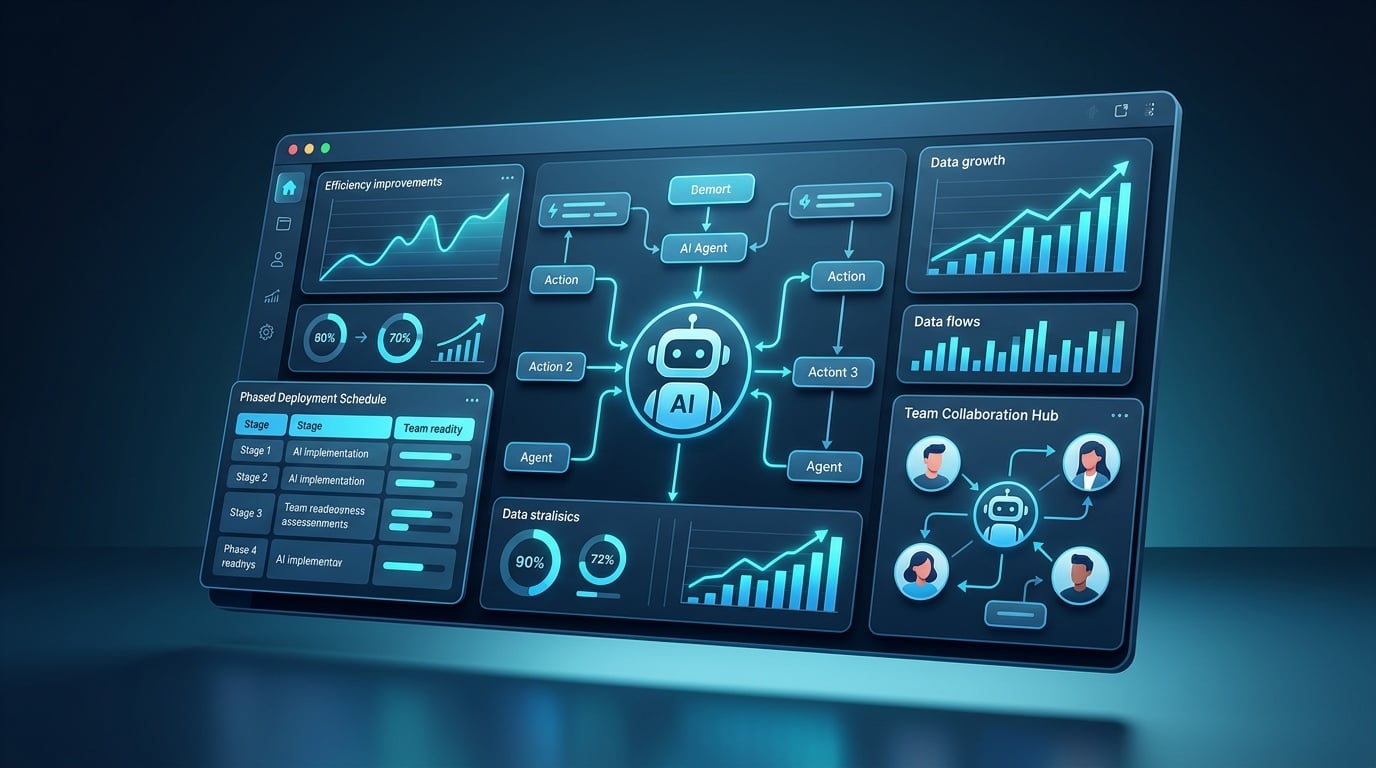
Implementing agentic AI for deal closing requires careful planning to ensure adoption and avoid friction. A phased approach that prioritizes team readiness and measurable gains will maximize your return on investment while maintaining operational stability. Below is a practical roadmap tailored for mid-market SMEs, followed by change management tactics and the KPIs that prove success.
Step-by-Step Implementation Roadmap for Mid-Market SMEs
- Discovery and Process Mapping: Start by auditing your current closing workflow. Identify repetitive tasks (lead follow-up, meeting scheduling, proposal generation) that consume the most time. Document decision points where human judgment adds critical value. This blueprint ensures the AI agent targets the right bottlenecks first.
- Select and Configure the Platform: Choose a solution that integrates deeply with your existing CRM. For real estate agencies, Agentic Systems for Real Estate maps directly to property inquiries and viewing coordination. Configure automation rules for qualification, initial outreach, and handoff conditions.
- Pilot with a Small Team: Roll out the agent to one or two top-performing sales reps who are open to technology. Monitor the agent’s accuracy and response quality. Gather feedback on friction points, then refine logic and escalation rules.
- Gradual Scaling: Expand to the full sales team in waves, each time providing training and reviewing performance data. Measure the impact on lead response time and pipeline volume before moving to the next group.
- Continuous Optimization: Use the agent’s audit trail and KPI dashboard to identify trends. Adjust automated messaging, qualification criteria, and follow-up cadences based on conversion data.
Change Management: Getting Your Closers to Trust the Agent
Resistance from sales teams often stems from a fear of being replaced or losing control over key client relationships. Address this head-on by emphasizing that agentic AI augments rather than replaces their role. The agent handles repetitive touches, allowing reps to focus on high-stakes negotiation and relationship building. Involve the team in the configuration process, letting them set parameters and review automated communications. Transparency about the agent’s capabilities and limitations builds confidence. A phased rollout with visible early wins, such as a reduction in manual data entry, helps skeptics become advocates. Regular coaching sessions on how to utilize the agent’s insights further reinforce its value.
Measuring Success: KPIs That Matter (Conversion Rate, Time-to-Close, Revenue per Rep)
| KPI | Measurement | Target Improvement |
|---|---|---|
| Lead-to-Opportunity Conversion Rate | Percentage of qualified leads that become active opportunities | Increase by 15-25% within 90 days |
| Average Time-to-Close | Days from first contact to signed deal | Reduce by 20-30% |
| Revenue per Sales Rep | Monthly closed revenue divided by number of full-time reps | Increase by 30%+ as automation frees up selling time |
| Lead Response Time | Time between lead capture and first engagement | Under 60 seconds (industry best practice) |
| Agent Adoption Rate | Percentage of reps using AI agent features weekly | 80%+ by end of first quarter |
Tracking these metrics ensures your deployment remains on course. When you see lead response times drop and conversion rates rise, the business case for scaling the agent becomes undeniable. For real estate teams, Agentic Systems for Real Estate delivers these exact outcomes: a qualified pipeline increase of 3x, an 85% conversion rate, and over $100k in additional revenue per agent per year.
Frequently Asked Questions
What are the top providers of agentic tech for deal closing?
Top providers of agentic tech for deal closing include sales-oriented platforms like HubSpot, Salesforce, and Delight.ai. These tools embed agentic capabilities to automate follow-ups, qualify leads, and manage prospect interactions directly within existing CRM workflows. They help businesses streamline the closing process by reducing manual tasks and accelerating response times.
How does agentic AI help close deals faster?
Agentic AI helps close deals faster by automating repetitive tasks such as follow-up emails, scheduling meetings, and initial proposal generation. It monitors pipelines, identifies stalled deals, and initiates context-aware outreach, freeing sales teams to focus on high-value interactions. This automation cuts delays in lead response and keeps prospects engaged, directly speeding up the path to a closed deal.
What is the difference between agentic AI and traditional automation tools?
Agentic AI goes beyond traditional automation by acting as an intelligent agent that can monitor pipelines, make decisions based on prospect behavior, and initiate personalized follow-ups without manual triggers. Traditional automation typically follows fixed rules and sequences, whereas agentic AI adapts its actions in real time, handling complex sequences like routine contract negotiations and multi-step outreach autonomously.
Can agentic AI replace human sales reps?
Agentic AI is designed to augment, not replace, human sales reps. It handles repetitive, time-consuming tasks like logging calls and sending follow-ups, allowing human closers to focus on strategic thinking, relationship building, and complex negotiations. The most effective solutions combine AI efficiency with human judgment for a collaborative approach that accelerates deal closing without losing the personal touch.
Which industries benefit most from agentic AI for deal closing?
Industries with high-volume, repetitive sales processes benefit most from agentic AI for deal closing, including real estate lead generation, recruitment candidate sourcing, fundraising investor outreach, and hospitality guest experience management. These sectors often face bottlenecks in follow-ups and lead processing, which agentic automation can address by handling routine tasks and improving response times, leading to more deals closed.
How do sales-oriented platforms like HubSpot and Salesforce use agentic AI?
Sales-oriented platforms like HubSpot and Salesforce embed agentic AI capabilities directly into their CRM to automate follow-ups, qualify leads with greater precision, and manage prospect interactions. They integrate with existing customer data to provide comprehensive histories, enabling agents to send personalized outreach based on behavior and schedule meetings automatically, all within the familiar interface sales teams already use.