

Which agentic system is best for sales automation?
Start With the Job, Not the Tool
Determining which agentic system is best for sales automation? requires shifting focus from software features to specific operational roles. Mid-market SMEs often struggle when they attempt to automate an entire sales department overnight. Success begins by identifying a single, high-friction task where human effort is currently wasted on repetitive data entry or basic outreach. By defining the exact scope of work, businesses ensure the AI remains focused and efficient rather than spreading its processing power across too many variables.
Key Takeaways
- Choosing the right agentic system for sales automation begins with isolating one time-consuming, repetitive task rather than attempting to overhaul the entire department.
- Mid-market SMEs see better results when they narrow the AI’s focus to a single high-friction activity like data entry or basic outreach.
- Defining a precise operational role for the automation tool prevents the system from spreading its resources across too many variables and losing efficiency.
- A practical approach is to identify where human effort is currently wasted on manual work and assign the agentic system to that specific bottleneck first.
Why role clarity prevents AI disaster
Sales automation fails when the objectives are vague. If an agent is tasked with “generating revenue,” it lacks the behavioral guardrails necessary to succeed. Instead, successful deployments define the agent as a Lead Qualifier or an Outreach Specialist. This clarity allows the system to utilize specific datasets and logical flows tailored to that function. When the boundaries of the role are clear, the AI can execute complex sequences without deviating into irrelevant conversations or misinterpreting prospect intent.
The one-job-per-agent rule for reliability
Reliability in autonomous systems stems from specialization. Assigning one discrete job to each agent minimizes the risk of logic conflicts within the code. For example, an agent specialized in calendar coordination should not also be responsible for high-level contract negotiation. By stacking specialized agents, businesses create a modular workforce where each component performs its task with precision. This modularity makes it easier to troubleshoot performance issues and scale specific parts of the sales funnel as lead volume grows.
Where Most Sales Agents Fail (and How to Fix It)
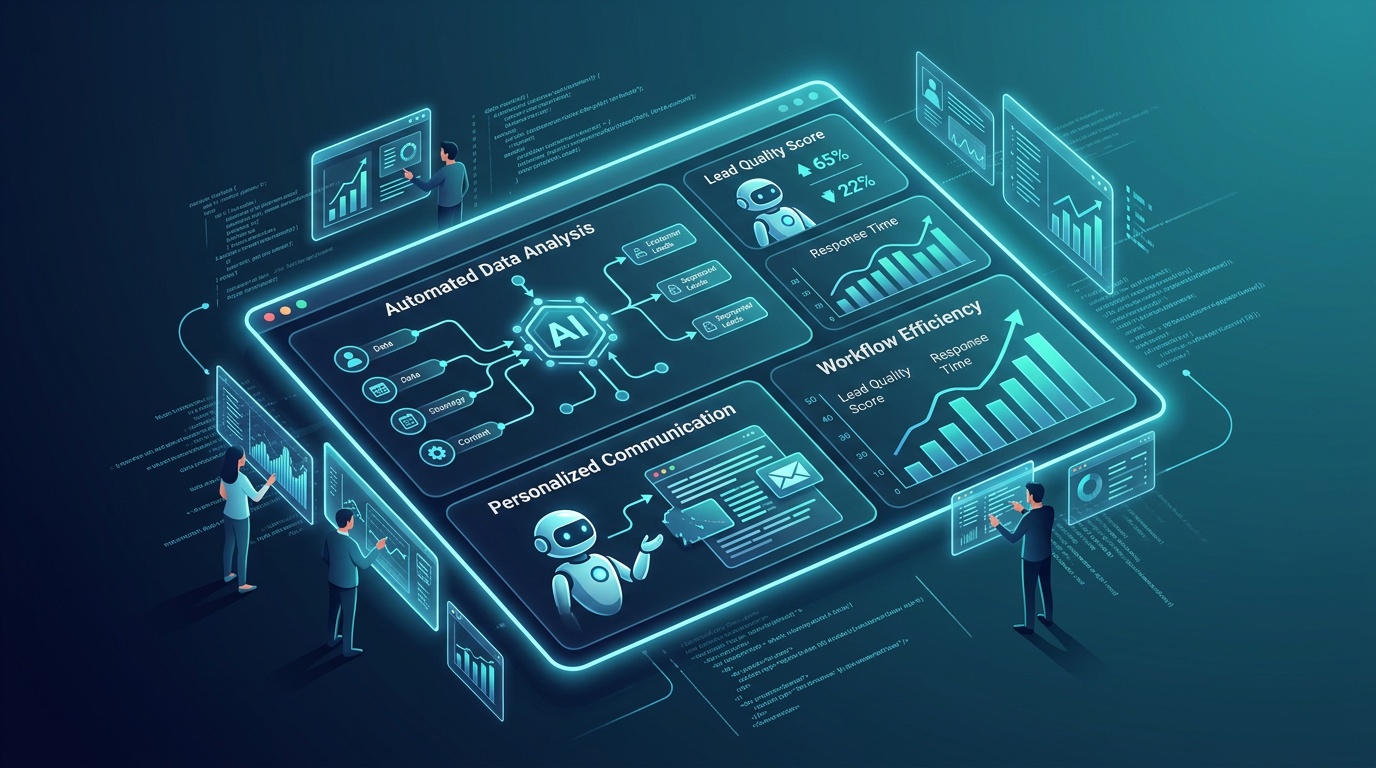
The most common complaints regarding autonomous sales tools involve hallucinations, repetitive loops, and impersonal communication. These issues typically arise from a lack of grounding in real-world business data. When an agent lacks access to your specific product knowledge or customer history, it fills the gaps with probabilistic guesses. Solving this requires a system that prioritizes context over raw generative power, ensuring every interaction is backed by verified information from your internal databases.
Hallucination, loops, and horrendous cold email
Robotic outreach is a symptom of poor prompt engineering and a lack of feedback loops. Many systems get stuck in repetitive cycles because they do not recognize when a prospect has already provided a specific answer. To fix this, the architecture must include a memory layer that tracks state changes throughout the conversation. This prevents the agent from asking the same qualifying questions twice and allows it to pivot its strategy based on the prospect’s sentiment or specific objections.
Knowledge structure: prompts, memory, and CRM context
A high-performing agentic system relies on a structured knowledge base. This includes your CRM data, past email threads, and technical documentation. By feeding this context into the agent, you transform it from a generic chatbot into a specialized representative. When considering which agentic system is best for sales automation?, look for platforms that offer native integration with your existing tech stack. This ensures the AI understands the current status of every lead before it ever hits “send” on an email or SMS.
Evaluating Sales Automation Reliability
Pros
- Reduces manual lead research significantly
- Ensures consistent responsiveness within client-defined operating hours
- Maintains consistent brand voice across all channels
- Scales outreach volume without increasing headcount
Cons
- Requires initial time investment for knowledge base setup
- May struggle with highly nuanced or emotional negotiations
- Depends heavily on the quality of existing CRM data
The Hidden ROI of CRM Write-Backs and Human-in-the-Loop
The true value of automation is not just in sending messages, but in the data it returns to your organization. Many businesses overlook the importance of CRM write-backs, which is the process of the AI automatically updating lead records based on its interactions. Without this, your sales team still spends hours on administrative cleanup. A system that logs every sentiment, objection, and follow-up date directly into your CRM creates a clean, actionable pipeline that increases the efficiency of your human closers.
Call transcript analysis that cleans your pipeline
Modern agentic systems can analyze recorded calls or meetings to extract key data points. They identify budget constraints, decision-makers, and timelines, then populate those fields in the CRM. This level of automation ensures that no detail is lost during the handoff from an AI qualifier to a human account executive. It provides a level of data integrity that is nearly impossible to maintain manually, especially in high-volume environments like real estate or recruitment agencies.
Approval paths as a reliability feature
Human-in-the-loop (HITL) functionality is a necessity for enterprise-grade automation. It allows managers to review and approve high-stakes messages before they are delivered. This acts as a quality control layer that builds trust in the system. Over time, as the AI demonstrates consistent accuracy, the approval threshold can be lowered, but having the option to intervene is what separates a professional tool from a risky experiment. This safety net is essential when asking which agentic system is best for sales automation? in a regulated industry.
| Feature | Basic Automation | Advanced Agentic Systems |
|---|---|---|
| Data Entry | Manual or Zapier-based | Automated CRM write-backs |
| Lead Qualification | Static forms | Dynamic conversational AI |
| Follow-up Logic | Time-based sequences | Behavior-based triggers |
| System Oversight | None (Set and forget) | Human-in-the-loop approvals |
Buy, Build, or Partner? A Practical Decision Framework
Choosing the right path depends on your internal resources and the complexity of your sales process. Many mid-market SMEs lack the engineering talent to build custom LLM-based tools from scratch. In these cases, partnering with a specialist who understands your vertical is often the most cost-effective route. This approach provides the benefits of a custom solution without the overhead of maintaining a complex technical infrastructure. For those in the property sector, Agentic Systems for Real Estate offers a ready-to-deploy framework that balances technical sophistication with industry-specific logic.
When to buy a ready-made agent platform
Ready-made platforms are ideal for standard tasks like email sequencing or basic meeting booking. These tools are typically affordable and easy to set up, making them a good entry point for small teams. However, they often lack the deep integration and customization required for complex sales cycles. If your business relies on unique qualifying criteria or multi-channel engagement, a generic platform may eventually become a bottleneck rather than a solution.
When a vertical specialist agency makes sense
A strategic partner provides more than just software; they provide the architecture and strategy needed to drive measurable outcomes. This is particularly relevant for businesses that require high-touch interactions, such as fundraising or hospitality. A specialist can configure the agent to handle industry-specific nuances, such as donor relations or guest preferences, which generic tools often miss. When evaluating which agentic system is best for sales automation?, consider whether you need a tool or a comprehensive operational transformation. Using Agentic Systems for Real Estate allows agencies to automate most of their administrative tasks, directly contributing to a significant increase in closed deals and client satisfaction.
The Partnership Advantage
Partnering with a vertical specialist ensures your AI is grounded in industry best practices from day one. Instead of spending months testing prompts, you deploy a system that already knows how to qualify a lead or handle a common objection in your specific market.
Real-World Results: Sales Automation Across Four Industries
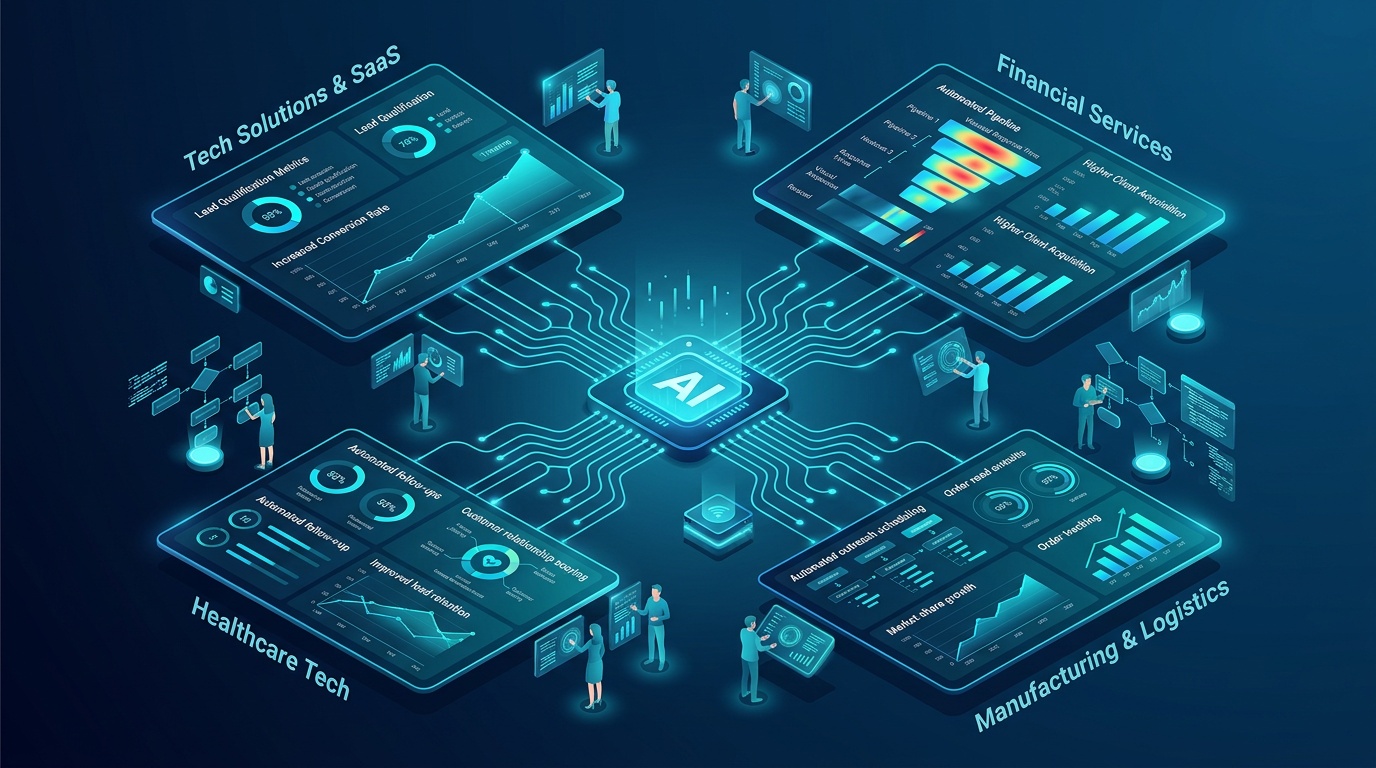
Abstract discussions about agentic systems often miss the point. The value of automation is measured in concrete outcomes, such as conversion rates, time savings, and revenue growth. Different industries require different approaches, but the common thread is that a properly configured agentic system can transform operations. When evaluating which agentic system is best for sales automation? for your specific sector, examine how the technology handles the unique friction points of your daily workflow.
Real estate: lead qualification and property matching
Real estate agencies face a constant flood of inbound inquiries. Without automation, agents waste hours responding to basic questions about square footage, price range, and availability. Agentic Systems for Real Estate handles this influx by engaging every lead within sixty seconds across channels like WhatsApp, SMS, email, and website chat. The system qualifies prospects through intelligent conversation, matches them to properties using advanced algorithms, and schedules viewings with automated reminders. Agencies using this approach report a qualified pipeline increase of three times and a conversion rate of eighty-five percent, based on Vynta AI’s product data. Agents save over twenty hours per week, allowing them to focus on closing deals rather than administrative sorting.
Recruitment: candidate screening and interview scheduling
Recruitment firms measure success by speed to placement and quality of match. An agentic system designed for this vertical automates candidate sourcing by parsing resumes against job descriptions using semantic matching. It screens candidates through conversational interviews, capturing soft skills and cultural fit indicators. The system then schedules interviews by coordinating calendars between recruiters, hiring managers, and candidates. Automated follow-ups reduce ghosting and keep the pipeline moving. Firms that adopt this approach see a reduction in time-to-fill of over sixty percent and a significant increase in placements, according to Vynta AI’s product data.
Fundraising: investor outreach and donor management
Fundraising organizations require a delicate balance of persistence and personalization. An agentic system manages investor outreach by segmenting donor lists based on past giving history, engagement level, and capacity indicators. It drafts personalized email sequences, tracks open and response rates, and flags high-intent donors for human follow-up. The system also manages event invitations and acknowledgment letters, ensuring no donor falls through the cracks. This level of automation allows fundraising teams to maintain meaningful relationships with a larger pool of prospects without sacrificing the personal touch that drives major gifts.
Hospitality: guest experience and reservation optimization
Hotels and hospitality businesses thrive on guest satisfaction and repeat bookings. An agentic system for this sector automates reservation management, handles pre-arrival communication, and personalizes guest recommendations based on past preferences. It manages room assignment logic, upsells amenities during the booking flow, and collects post-stay feedback to refine future interactions. By automating routine inquiries about check-in times, parking, and local attractions, the system frees front desk staff to handle complex guest needs. Properties using this approach report higher booking conversion rates and improved online review scores.
| Industry | Core Automation Task | Primary KPI Improvement | Time Saved per Week |
|---|---|---|---|
| Real Estate | Lead qualification and property matching | 85% conversion rate, 3x pipeline growth | 20+ hours |
| Recruitment | Candidate screening and interview scheduling | Over 60% faster time-to-fill | Significant reduction |
| Fundraising | Investor outreach and donor management | Improved engagement rates | Measurable efficiency gains |
| Hospitality | Guest experience and reservation management | Improved booking conversion and review scores | 12+ hours |
The success of any agentic system depends on its alignment with the specific operational rhythms of your industry. A real estate agency needs rapid response and property matching logic, while a recruitment firm requires deep semantic parsing of resumes and soft skill assessment. The question of which agentic system is best for sales automation? is answered not by comparing feature lists, but by matching the system’s specialization to your industry’s most critical workflow bottleneck. When the agent understands your sector’s language, compliance requirements, and decision criteria, the results become predictable and repeatable.
Future-Proofing Your Sales Stack for Long-Term Growth
Selecting the right technology today requires looking at the trajectory of your sales operations over the next thirty-six months. Many organizations make the mistake of choosing a tool that solves a current bottleneck without considering how it will handle increased lead volume or new communication channels. A truly effective agentic system must be scalable and adaptable. When deciding which agentic system is best for sales automation?, prioritize platforms that offer modular updates and the ability to integrate new data sources as your business intelligence grows.
The evolution of sales automation is moving toward systems that learn from every interaction. Unlike static rules-based software, advanced agents utilize feedback loops to refine their qualifying questions and follow-up timing. This ensures that your outreach remains relevant even as market conditions shift. For mid-market SMEs, this adaptability is the difference between a temporary fix and a permanent competitive advantage in lead conversion.
Systemic adaptability and continuous learning
An agentic system should not be a static asset. It must evolve alongside your sales strategy. Look for systems that offer analytics dashboards showing which scripts are performing best and where prospects are dropping out of the funnel. This data allows you to retrain the agent with new prompts or updated product information. By treating your AI as a learning entity, you ensure that your sales automation remains aligned with your brand voice and evolving market demands.
Implementation Roadmap for Mid-Market SMEs
Successfully deploying an agentic system requires a structured approach that minimizes disruption to your current workflow. The first phase involves a discovery period where you map out your most successful human-led sales sequences. These sequences become the blueprint for your AI agents. By grounding the technology in proven human behavior, you reduce the risk of errors and ensure the system starts generating value from day one.
A phased rollout for maximum reliability
Avoid the temptation to automate every touchpoint simultaneously. A phased rollout, starting with lead qualification and moving toward nurturing and scheduling, allows your team to build trust in the system. During the initial weeks, maintain a human-in-the-loop for all outbound communications. This allows you to catch any edge cases or unique scenarios that the AI has not yet learned to handle. Once the system demonstrates consistent accuracy, you can gradually increase its autonomy.
Data hygiene and integration prerequisites
The performance of any agentic system is directly proportional to the quality of the data it accesses. Before full deployment, conduct an audit of your CRM to ensure that contact records, deal stages, and historical interaction logs are clean and standardized. An agent pulling data from a messy CRM will produce messy results. Ensuring your tech stack is properly integrated provides the foundation for the high-level automation that drives measurable ROI.
Measuring Success Beyond Conversion Rates

While conversion rates and revenue are the ultimate metrics of success, they do not tell the whole story of an agentic system’s impact. Operational efficiency metrics, such as the reduction in administrative hours and the increase in response speed, provide a clearer picture of the system’s value. For example, reducing the average response time to under sixty seconds has a profound impact on lead quality, even before a single deal is closed.
Operational efficiency and pipeline velocity
Track metrics like pipeline velocity and the lead-to-opportunity ratio. An effective system will move prospects through the funnel more quickly by eliminating the lag time between inquiry and engagement. By automating the top of the funnel, your human sales team can focus their energy on the complex, high-value negotiations that require emotional intelligence. This shift in focus typically results in a significant increase in the total number of deals closed per quarter.
References
The Final Verdict on Sales Automation
After evaluating the various approaches to AI-driven sales, the evidence points toward specialized, vertical-specific agentic architectures as the superior choice for mid-market businesses. Generic tools often fail to account for the nuances of specific industries, whether it is the compliance requirements in fundraising or the rapid pace of real estate transactions. The question of which agentic system is best for sales automation? is best answered by identifying the provider that offers the deepest integration into your specific operational reality.
Vynta AI’s approach focuses on delivering enterprise-grade agents that are tailored to the unique needs of real estate, recruitment, fundraising, and hospitality. By choosing a partner that understands your industry’s language and workflows, you avoid the pitfalls of hallucination and generic outreach. The result is a reliable, scalable system that augments your team’s capabilities and drives consistent growth.
Strategic Recommendation
For SMEs seeking to modernize their operations, the path forward involves moving away from disjointed tools and toward integrated agentic workflows. Focus on systems that offer native CRM write-backs and transparent approval paths to ensure long-term success and data integrity.
Frequently Asked Questions
What is the first step to choosing an agentic system for sales automation?
Start by identifying a single high-friction task where human effort is wasted on repetitive data entry or basic outreach. Defining the exact scope of work keeps the AI focused and efficient, rather than spreading its processing power across too many variables. This job-first approach ensures the system solves a real operational problem.
Why do sales automation AI agents often fail?
They fail when objectives are vague. If you task an agent with generating revenue without clear guardrails, it lacks the behavioral boundaries to succeed. Instead, define the agent as a Lead Qualifier or Outreach Specialist so it can use specific datasets and logical flows tailored to that function.
How many jobs should a single AI agent handle in sales automation?
One job per agent. Assigning a discrete task minimizes logic conflicts and makes the system more reliable. For example, an agent specialized in calendar coordination should not also handle contract negotiation. Stacking specialized agents creates a modular workforce that is easier to troubleshoot and scale.
What causes AI hallucinations in sales outreach?
Hallucinations happen when the agent lacks access to your specific product knowledge or customer history. It fills gaps with probabilistic guesses. Solving this requires a system that prioritizes context over raw generative power, grounding every interaction in verified information from your internal databases.
How can you prevent robotic repetitive loops in sales AI?
Include a memory layer that tracks state changes throughout the conversation. This prevents the agent from asking the same qualifying questions twice and allows it to pivot based on prospect sentiment or objections. Without memory, the system gets stuck in cycles and delivers poor prospect experiences.
What is the hidden ROI of using an agentic system for sales automation?
The real value is in CRM write-backs the AI automatically updates lead records with sentiment, objections, and follow-up dates. This eliminates hours of administrative cleanup for your sales team and creates a clean, actionable pipeline. Human-in-the-loop approval paths add a quality control layer that builds trust over time.