
Cheapest agentic systems for real estate CRM automation.
Understanding Agentic Systems: Beyond Basic AI in Your Real Estate CRM
Agentic systems represent the next generation of real estate technology. Unlike traditional AI tools that merely analyze data or suggest templates, agentic systems act autonomously. They execute complex, multi-step workflows, make real-time decisions, and engage clients without constant human intervention, offering a cost-effective path to scaling operations.
The search for the Cheapest agentic systems for real estate CRM automation. often leads agency owners to believe they must purchase expensive, all-in-one software suites. True affordability lies in understanding how autonomous agents operate. Traditional CRM automation relies on rigid, rule-based triggers, such as sending a prewritten email when a form is submitted. If a prospect replies with an unexpected question, those systems fail. Agentic systems use advanced reasoning to interpret the context of client messages, determine the next logical action, and execute that task independently.
This shift from passive software to active digital assistants transforms how agencies manage their pipelines. By deploying autonomous technology and utilizing specialized AI automation services, real estate firms can handle a high volume of inquiries without hiring additional administrative staff. The primary economic value of these systems is their ability to operate continuously, ensuring that no lead is ignored. This constant availability directly addresses the costly bottleneck of delayed lead response times.
Core Definition of Agentic Autonomy
- Autonomous Decision Making
- The capacity of an AI agent to evaluate incoming data, select the best course of action, and execute it without human authorization.
- Contextual Understanding
- The ability to interpret nuance, intent, and sentiment in client communications across channels like SMS, WhatsApp, and email.
- Dynamic Workflow Execution
- Moving beyond static “if-this-then-that” rules to complete complex, multi-step tasks such as qualifying a lead, matching them to a listing, and scheduling a physical viewing.
For mid-market agencies, the return on investment from these systems can be fast because the agents remove repetitive work from day-to-day operations. Instead of paying for features that require constant manual configuration, operators invest in outcomes. These autonomous agents handle repetitive duties, allowing human agents (regardless of the commission differences between a real estate agent or a realtor) to focus on high-value negotiations and relationship building. Agencies can reduce operational overhead while maintaining a responsive client experience.
The “Cheapest” Path: Unpacking the True Cost of Agentic Real Estate CRM Automation
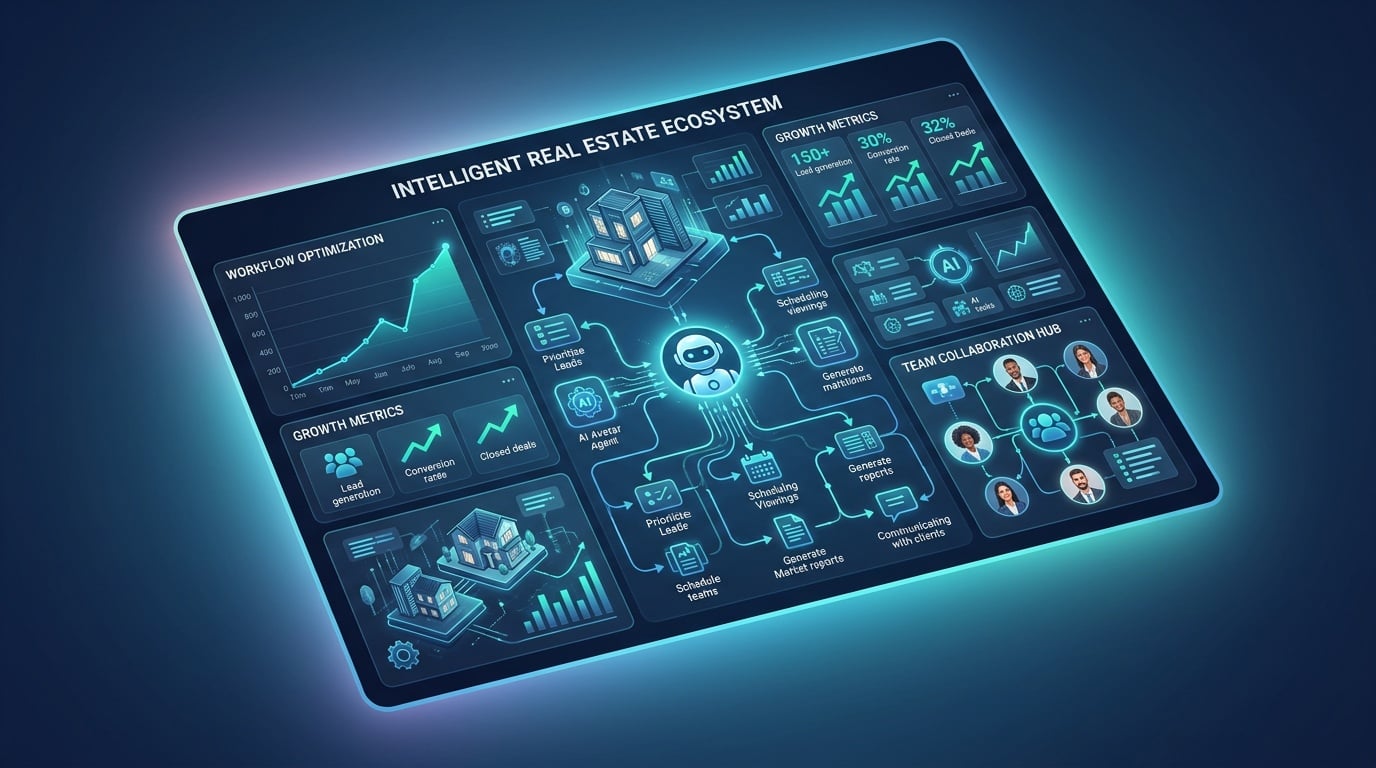
When evaluating the Cheapest agentic systems for real estate CRM automation., looking only at monthly subscription costs is a common mistake. True affordability is determined by the total cost of ownership, which includes setup fees, integration expenses, and the time required to train staff. A low-cost subscription that requires hundreds of hours of custom programming or causes frequent pipeline disruptions is ultimately expensive.
A highly efficient approach involves deploying an agentic layer over your existing CRM rather than migrating to a completely new platform. Replacing a CRM can create operational friction, data loss risks, and extensive retraining costs. By integrating specialized agents directly into platforms you already use, such as HubSpot or Salesforce, you protect your existing software investments while gaining autonomous capabilities. This method provides the benefits of enterprise-grade AI without the associated price tag.
Some agencies attempt to build these systems themselves using open-source tools, custom chatbot development frameworks, or basic API connections. While this DIY path may appear inexpensive initially, it carries hidden pitfalls. Real estate teams can end up managing software bugs, API updates, and security vulnerabilities instead of selling properties. Partnering with a dedicated provider helps keep automation stable, secure, and continuously optimized without draining internal technical resources.
To address this need for affordable, high-performing technology, we developed Agentic Systems for Real Estate. Our solution integrates with your current database, removing the need for a costly software overhaul. With a focus on structured onboarding and plug-and-play compatibility, we provide mid-market agencies with a cost-effective automation framework that delivers measurable business outcomes.
| Acquisition Model | Upfront Cost | Implementation Time | Maintenance Burden | Overall Cost-Effectiveness |
|---|---|---|---|---|
| All-in-One Enterprise CRM | Very High | 3 to 6 Months | Low (Vendor Managed) | Low for Mid-Market |
| DIY / Open-Source Build | Low | Variable (Months) | Extremely High | Unpredictable & Risky |
| Vynta AI Agentic Layer | Moderate | Weeks | None (Fully Managed) | Extremely High |
Essential Agentic Automation Features for Real Estate Success (Without Breaking the Bank)
Implementing the Cheapest agentic systems for real estate CRM automation. does not mean compromising on essential capabilities. To maximize your budget, focus on features that directly impact revenue generation. A top capability is autonomous lead qualification. By engaging prospects quickly across WhatsApp, SMS, email, and website chat, the system converts property inquiries into viewings and sales through instant engagement, intelligent qualification, and personalized follow-up.
Another high-yield feature is intelligent property matching. Instead of manually searching your database to find listings for a new buyer, the system uses matching logic to suggest relevant properties and can send personalized recommendations, including virtual tours. Fast responses align with consumer expectations for immediate information, helping keep buyers engaged with your agency.
Consistent client nurturing can run without manual effort. The system maintains personalized, long-term follow-ups with colder leads, keeping your brand top-of-mind. When a prospect shows renewed buying intent, the agent coordinates calendars, schedules viewings, and sends automated reminders to reduce no-shows. After each viewing, the agent collects feedback and updates the buyer profile to refine future suggestions, creating a continuous optimization loop that supports deal progression.
Key Capabilities of Vynta Agentic Systems
- Instant lead capture across WhatsApp, SMS, email, and web chat.
- Typical inquiry response time in under 60 seconds.
- Matching logic for personalized property recommendations.
- Automated calendar coordination and viewing reminders.
- Post-viewing feedback collection that updates buyer profiles.
Bridging the Gap: Integrating Agentic AI with Your Current CRM Setup
The smartest operational strategy for mid-market agencies is to avoid the “rip and replace” cycle. Completely changing your database infrastructure is disruptive and often unnecessary. With the Cheapest agentic systems for real estate CRM automation., you can add intelligence directly to your existing setup. Preserving current workflows reduces disruption during deployment.
Modern agentic tools connect to your CRM via secure APIs. Once connected, the AI agent works in the background, reading incoming lead data, updating contact records, and triggering communication workflows. Whether you use HubSpot, Salesforce, or an industry-specific database, the agent acts as an automated team member, executing administrative tasks directly within the software your staff already knows.
Data security matters when introducing autonomous workflows. Reliable agentic systems use enterprise-grade encryption and comply with strict data privacy standards. This approach helps protect client information and property records while supporting compliance with local regulations and data protection laws.
Preparing your team for this transition is straightforward. Because the AI integrates into existing systems, staff members do not need to learn a new interface. Instead, they monitor qualified leads and scheduled viewings that appear in familiar workflows, which shortens adoption time and reduces training needs.
Real Estate Teams Winning with Affordable Agentic Automation: Case Studies

Mid-market agencies are achieving strong growth by adopting Agentic Systems for Real Estate. By automating the repetitive front end of lead management, these businesses can scale operations without increasing payroll. The data shows that affordable automation can drive revenue, not only reduce costs.
When analyzing system performance, the financial impact can be clear. Implementing these agents helps businesses handle more properties, convert more leads, and close more deals without expanding their teams or increasing admin costs. In deployments in which administrative workflows are automated at a high rate, teams can save more than 20 hours per week, which supports more client-facing time and more closed deals.
The long-term value of deploying the Cheapest agentic systems for real estate CRM automation. is reflected in client satisfaction and revenue. Reported outcomes include a qualified pipeline increase of 3x and an 85% conversion rate in specific implementations. Additional reported metrics include improved client retention, higher client satisfaction, and more revenue per agent. Treat these figures as benchmarks from observed results rather than universal guarantees, since outcomes depend on lead sources, market conditions, and operational discipline.
Maximizing Operational Efficiency with Agentic CRM Layers
Adopting an agentic CRM layer requires a strategic shift in how brokerages allocate technology budgets. Traditional software upgrades often demand complete system overhauls, which can drain financial resources and disrupt daily sales activities. By contrast, an autonomous agentic layer over your current database infrastructure can deliver advanced capabilities, matching the best business services available, without the premium price of enterprise software suites.
This overlay approach keeps contact records, pipeline stages, and communication histories intact. The autonomous agents function as digital team members, operating within your familiar database environment to execute repetitive administrative duties. This operational fit reduces the learning curve for sales staff and helps limit downtime during onboarding.
By focusing on targeted automation rather than platform replacement, real estate firms can improve their cost-to-benefit ratio. A key financial advantage of this model is the reduction of specialized consulting fees and long custom development cycles. Modern agentic layers can connect through secure application programming interfaces, helping mid-market agencies reach sophisticated workflow automation in days or weeks rather than months.
Implementing Agentic Systems for Real Estate on a Budget
To achieve a strong return on investment, agencies should select technology that addresses the most common bottlenecks in the property sales cycle. The deployment of Agentic Systems for Real Estate targets these inefficiencies by automating the front end of lead management, which typically consumes hours of manual work each week. This targeted approach helps marketing spend translate into qualified viewings.
During implementation, prioritize channels clients already use for day-to-day communication. Integrating autonomous agents with WhatsApp, SMS, email, and website chat increases reach without requiring prospects to download proprietary applications. The agent initiates contact quickly after an inquiry, maintaining a consistent and professional brand voice across touchpoints.
In addition, the system can manage scheduling by coordinating calendars between buyers and agents to arrange property tours. This automation reduces back-and-forth communication that often leads to lost opportunities. By streamlining these administrative tasks, sales teams can dedicate more time to property walkthroughs and negotiations.
Strategic Implementation Milestones
- Secure API connection to your existing CRM database without data migration risks.
- Activation of multichannel communication pathways, including SMS, email, and WhatsApp.
- Configuration of autonomous qualification parameters based on buyer intent and budget.
- Integration of digital calendars for automated viewing coordination and reminder delivery.
- Establishment of post-viewing feedback loops to update client profiles.
Long-Term Financial Impact of Agentic CRM Integration

Investing in the Cheapest agentic systems for real estate CRM automation. can deliver compounding financial benefits over time. By automating the early stages of client engagement, agencies can scale their active listing inventory without a corresponding increase in administrative payroll. This operational advantage can help mid-market firms compete with larger franchises.
The reduction in lead response times correlates with higher conversion rates. Because the autonomous system can engage prospects in under 60 seconds, your agency can capture attention during peak interest. This responsiveness can reduce the likelihood of prospects contacting competing firms, supporting market share growth at a lower customer acquisition cost.
The combination of lower operational overhead, higher agent productivity, and stronger client retention can improve brokerage profitability. Rather than viewing technology as a fixed monthly expense, many operators treat autonomous workflows as revenue support systems tied to measurable pipeline outcomes.
Strategic Synthesis and Future-Proofing Your Real Estate Operations
Adopting the Cheapest agentic systems for real estate CRM automation. is not only a tactical decision to reduce administrative overhead. It can also represent a structural shift in how mid-market agencies run operations. By deploying an intelligent, autonomous layer over existing database structures, agencies avoid the costs and disruption of a full software overhaul. This approach lets teams keep familiar systems while adding automated workflows.
The long-term value of this integration becomes more visible as your database grows. Traditional CRMs can become archives of unaddressed contacts and missed follow-ups. Autonomous agents reduce that decay by scanning pipeline activity, identifying renewed buyer interest, and initiating personalized outreach. That persistence helps historical lead data remain an active asset that can generate transactions without additional marketing spend.
As the real estate market evolves, expectations for immediate communication continue to rise. Agencies that rely on manual processes or rigid rules can struggle to keep up with firms that respond to inquiries in under 60 seconds. Implementing Agentic Systems for Real Estate positions your business to meet those expectations with consistent qualification, fast scheduling, and structured follow-up.
The Path Forward: Verdict and Recommendations
For mid-market real estate agencies seeking to maximize operational efficiency, the most cost-effective approach is often a dedicated autonomous layer integrated into the current CRM. This model can deliver sophisticated capabilities at a lower total cost than a full platform replacement, while keeping implementation practical and measurable.
Agentic Implementation Strategy
Pros
- No required data migration during deployment, which reduces downtime risk.
- Fast response times to client inquiries across WhatsApp, SMS, and email.
- Reduced manual administrative tasks for the sales team.
- Scalable lead qualification that supports high inquiry volumes.
Cons
- Requires initial coordination to define qualification criteria.
- Depends on the API stability of the existing CRM platform.
- Requires staff training focused on monitoring and exception handling.
To begin, automate the highest-friction points in your sales cycle, such as initial lead qualification and viewing coordination. These targeted workflows can reclaim hours for sales staff, allowing more time for negotiations and relationship building. Over time, incremental efficiencies compound into a more responsive and profitable brokerage.
Frequently Asked Questions
What makes agentic systems different from standard CRM automation?
Standard CRM automation relies on rigid rules, such as sending a specific email when a form is submitted. If a client replies with an unexpected question, the system fails. Agentic systems use advanced reasoning to understand the context of client messages, determine the best next step, and execute complex tasks autonomously, such as qualifying a lead or scheduling a viewing.
Is it necessary to replace our current CRM to use agentic automation?
No. A cost-effective approach is to deploy an agentic layer over your existing database. By connecting via secure APIs, these autonomous agents work directly within platforms like HubSpot or Salesforce, protecting your software investments and reducing operational disruption.
How do these systems handle client communications across different channels?
The system engages prospects across multiple channels, including WhatsApp, SMS, email, and website chat. It maintains a consistent, professional brand voice across platforms, and it can address inquiries in under 60 seconds, regardless of the channel used by the client.
What is the typical timeline for implementing an agentic system?
Unlike complex enterprise software overhauls that can take months, deploying a managed agentic layer typically takes a few weeks. The process includes discovery, strategy, and integration with existing systems, allowing teams to begin capturing qualified leads quickly.
How does autonomous automation impact the daily routine of sales agents?
By automating a large share of administrative tasks, the system can save agents significant time each week. Instead of spending time on manual lead qualification and calendar coordination, teams can focus more on property walkthroughs, client consultations, and closing deals.
Are these autonomous systems secure and compliant with data privacy laws?
Reliable agentic systems use enterprise-grade encryption to protect sensitive client data and property records. The AI agent processes information to execute workflows within the existing secure database, supporting compliance with local real estate and data protection regulations.