

product improvement
What Is Product Improvement and Why It’s Your Business’s Growth Engine
Product improvement is the ongoing work of making a product more useful, reliable, and competitive based on real customer needs. It is not limited to adding features; it also includes reducing friction, fixing usability issues, improving performance, and clarifying value. For mid-market teams, it is one of the most consistent ways to protect retention and grow expansion revenue, since small, well-chosen changes can remove the reasons customers hesitate, churn, or downgrade.
Defining Product Improvement: Beyond New Features
A practical definition starts with outcomes: what should a user be able to do faster, more accurately, or with less effort after the change? That lens prevents teams from shipping updates that look impressive but do not move adoption, activation, or satisfaction. In day-to-day operations, product improvement often means simplifying onboarding, refining workflows, removing confusing settings, improving in-app guidance, and addressing recurring support tickets that signal a product gap.
The Tangible Business Outcomes of Continuous Improvement
Continuous improvement works when it is tied to measurable business outcomes. The cleanest chain is: customer evidence → prioritized change → validated lift in a metric that matters (activation, time to value, retention, upsell, or support cost). A useful checkpoint is whether a proposed change makes the user outcome clearer, easier, or more trustworthy. If it does not, it is often noise that increases complexity without delivering value.
Why ‘Good Enough’ Isn’t Good Enough Anymore: The Cost of Stagnation
Stagnation is expensive because competitors keep improving while customer expectations rise. A product that stays still accumulates friction: the interface feels dated, workflows drift away from how teams operate, and support volume increases as edge cases pile up. Over time, the product becomes harder to sell and harder to renew. Teams can avoid that slide by treating improvement as a scheduled operating rhythm, with clear owners, a visible backlog, and a disciplined way to validate impact.
At Vynta AI, the standard is simple: be specific, practical, and honest about trade-offs.
Building a Smarter Product: Data-Driven Strategies for Real-World Impact
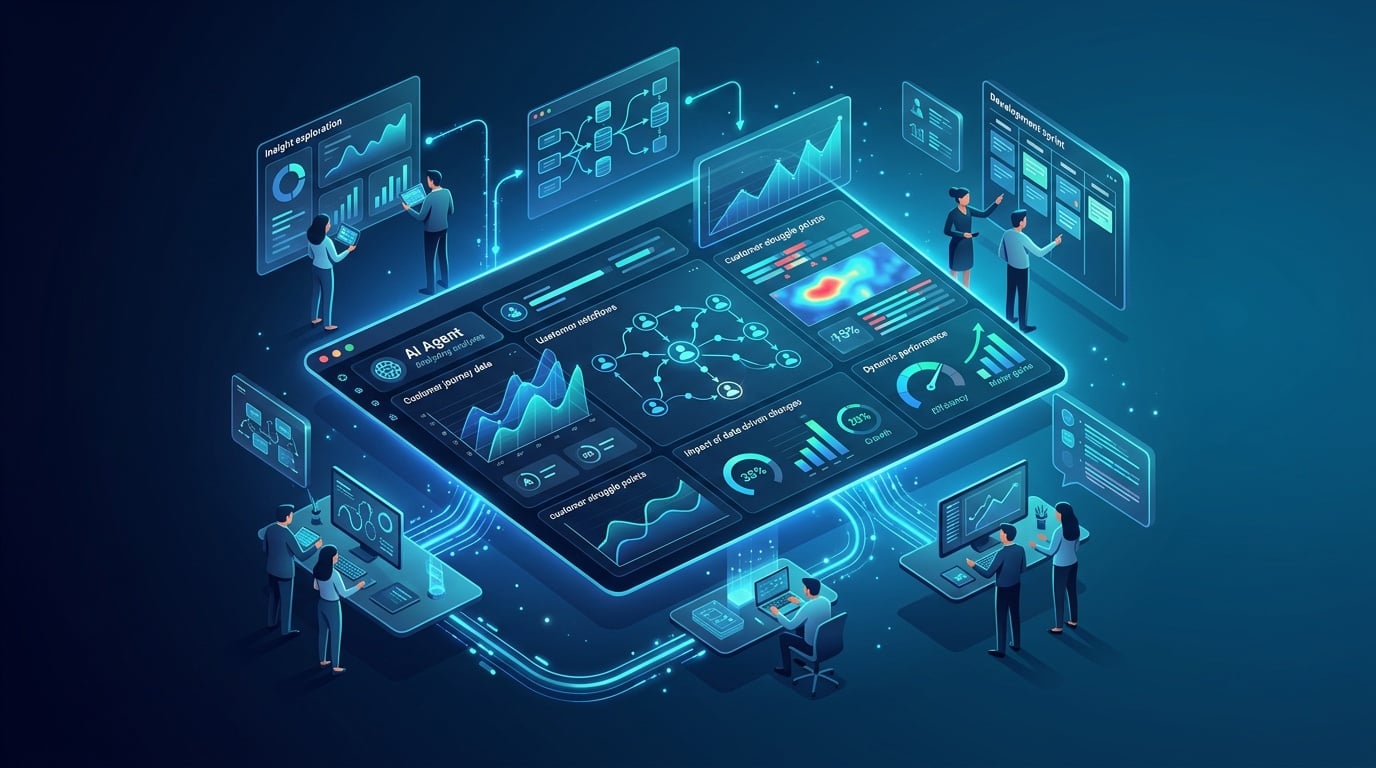
Data-driven work keeps teams from guessing. The goal is to identify where customers struggle, why they struggle, and which changes will produce the largest measurable lift. Done well, product improvement becomes a closed loop: collect signals, rank opportunities, ship a focused change, then measure the outcome. This reduces feature bloat and helps you invest in updates that customers notice and value.
The Foundation: Gathering Actionable Customer Insights
Start with a mix of qualitative and quantitative inputs. Use interviews, support conversations, sales calls, and churn notes to hear the story behind the data. Pair that with funnels, session recordings, feature adoption, and time-to-value metrics to see patterns at scale. The strongest insights show a repeated obstacle, identify which segment is affected, and point to a fix that can be tested in a small release.
Translating Feedback into Prioritized Improvements: Frameworks That Work
Most teams do not fail due to lack of ideas; they fail due to weak prioritization. Use a simple scoring model (reach, impact, confidence, effort) to rank what to do next and document the assumptions behind the score. Tie each item to a target metric and a baseline so you can confirm whether the change worked. This approach also makes stakeholder conversations easier because trade-offs are explicit and consistent.
Beyond Surveys: Using AI for Deeper Customer Understanding
AI can help you analyze unstructured feedback at scale, including tickets, call transcripts, chat logs, and open-ended survey responses. The objective is to find recurring themes, detect sentiment shifts, and surface root causes faster than manual tagging. Treat outputs as decision support, not a substitute for judgment: validate patterns with sampled evidence, then convert the strongest findings into testable hypotheses and small releases you can measure.
At Vynta AI, the standard is simple: be specific, practical, and honest about trade-offs.
Countering Enshittification: Restoring Trust Through Consistent, Customer-Centric Updates
In the current software ecosystem, users often watch favorite platforms slowly deteriorate. This pattern appears when organizations prioritize short-term monetization over user value. To build a sustainable enterprise, your product improvement approach should act as an active defense against that downward spiral, ensuring every update respects the user and builds trust.
The Enshittification Cycle: How Products Degrade Over Time
The degradation cycle often begins after a platform has locked in its user base. When direct competition feels distant, leaders may shift focus from creating value to extracting value. Common symptoms include cluttered interfaces with sponsored placements, previously free features moved behind paywalls, and reduced customer support capacity. This damages brand equity and creates a market opening for competitors that prioritize user experience.
Vynta AI’s Approach: Incremental, Value-Adding Changes as the Antidote
At Vynta AI, our development philosophy centers on continuous, value-driven refinement. A strong product improvement strategy should lower friction and expand user capability over time. Rather than pushing disruptive overhauls, we ship steady, predictable updates that map to real workflows. This disciplined method keeps our AI agents more intuitive release by release while avoiding feature bloat.
Industry-Specific Examples: Real Estate, Recruitment, Fundraising, and Hospitality
In real estate, we refine lead qualification agents so property managers can quickly identify high-intent buyers without sorting through spam. For recruitment agencies, we update candidate screening models to interpret resume context more accurately, reducing the risk that qualified talent is filtered out. In fundraising, our updates help nonprofits segment donor lists with greater precision so outreach feels personal and respectful. In hospitality, we optimize guest communication agents to resolve booking inquiries faster and support occupancy growth.
Transparency in Updates: Communicating Value, Not Just Changes
How you communicate changes matters as much as the changes themselves. Avoid vague release notes that only mention bug fixes and performance improvements. Explain the benefit of each update, including how it saves time, reduces errors, or solves a known issue. This style of communication builds a collaborative relationship with users and turns routine updates into trust-building milestones.
Evaluating Value-Adding Product Updates
Pros
- Builds long-term retention and brand loyalty
- Reduces churn by consistently solving emerging pain points
- Creates natural opportunities for positive word-of-mouth marketing
Cons
- Requires disciplined, ongoing allocation of development resources
- Demands continuous feedback collection and rigorous data analysis
Accessibility as a Competitive Edge: Making Your Product Work for Everyone
Strong product improvement includes building software that works for as many people as possible. Accessibility is not only a compliance task; it is a business decision that widens your market and reduces friction for all users. When you design for diverse physical, cognitive, and sensory abilities, you often end up with clearer interfaces, better defaults, and fewer support issues.
Why Accessibility Isn’t Just Compliance: It’s Smart Business
When accessibility is ignored, a meaningful share of potential customers is excluded. Inclusive design helps you serve more users and improves usability across the board. Features that started as accessibility improvements, such as high-contrast modes, captions, and voice controls, frequently become preferred options for many users. Inclusivity also supports retention: customers who feel supported are less likely to switch.
Practical Accessibility Improvements: From UI Adjustments to Support Options
Start with high-impact basics. Support full keyboard navigation so users do not need a mouse. Improve color-contrast ratios, use clear focus states, and add descriptive alt text for visual elements. Offer multiple support options, including text-based chat and phone support, so users can choose the channel that fits their needs. When you ship these changes, test them with assistive technologies to confirm real-world usability.
The ROI of Inclusivity: Expanding Your Market Reach and Brand Loyalty
Inclusive design can produce measurable outcomes: better conversion, fewer support tickets tied to usability confusion, and lower compliance risk. Accessible pages can also perform better in search due to clearer structure and semantics. The compounding benefit is trust: when users find a product that accommodates their needs with care, they are more likely to stay, recommend it, and expand usage across their team.
Integrating Accessibility into Your Product Improvement Workflow
Make accessibility part of the standard development cycle, not a post-launch checklist. Train design and engineering teams on accessibility guidelines early, build reusable components with accessible defaults, and include checks in code review and QA. Test new features with assistive technologies during prototyping so issues are caught before they ship. This keeps continuous improvement work aligned with real usability, not only internal preferences.
Frequently Asked Questions
What is the meaning of product improvement?
Product improvement is the continuous effort to make a product more useful, reliable, and competitive, driven by actual customer needs. It goes beyond adding new features, focusing instead on reducing friction, solving usability issues, and clarifying the product’s value. For mid-market businesses, this work is a consistent way to protect customer retention and grow revenue.
What is an example of product improvement?
A practical example of product improvement could be simplifying a complex onboarding process to help new users get started faster. Another is refining a workflow within an application to reduce the steps needed for a common task. At Vynta AI, we might refine our lead qualification agents to help property managers identify high-intent buyers more efficiently.
How do teams approach continuous product improvement?
Continuous product improvement follows a closed loop: collect customer signals, rank opportunities based on impact, ship a focused change, then measure the outcome. This data-driven approach ensures that updates address real user struggles and deliver measurable lift in key metrics. It helps teams invest in changes that customers truly notice and value.
Why is continuous product improvement important for business growth?
Continuous product improvement is essential because stagnation is expensive; competitors keep advancing while customer expectations rise. A product that stands still accumulates friction, becoming harder to sell and renew over time. It protects retention and grows expansion revenue by removing reasons customers might hesitate or churn.
How does data help drive effective product improvement?
Data-driven strategies are fundamental to product improvement, preventing teams from guessing what customers need. By analyzing qualitative and quantitative inputs, teams can identify where and why customers struggle. This approach helps prioritize changes that will produce the largest measurable lift in metrics like activation or retention.
What frameworks help prioritize product improvements?
Effective prioritization is key to successful product improvement, as teams often have many ideas but struggle to choose what’s next. Using a simple scoring model, such as considering reach, impact, confidence, and effort, helps rank opportunities. Each prioritized item should be tied to a target metric and a baseline to confirm its effectiveness.
How does product improvement counter 'enshittification'?
‘Enshittification’ describes the degradation of platforms when organizations prioritize short-term monetization over user value, leading to cluttered interfaces or reduced support. Product improvement acts as an active defense against this by ensuring every update respects the user and builds trust. Consistent, value-adding changes restore user confidence and prevent product degradation.