

ai project manager
What an AI Project Manager Actually Does (and Why Most Businesses Don’t Need One)
An ai project manager coordinates artificial intelligence initiatives from planning through deployment, managing data science teams, timelines, and stakeholder communications. But here’s what most guides won’t tell you: hiring an AI project manager often signals you’re approaching automation the hard way.
The Traditional AI Project Manager Role
These professionals coordinate cross-functional teams including data scientists, engineers, and domain experts. They manage project timelines, resource allocation, and risk mitigation for machine learning deployments.
Responsibilities include data governance, model validation oversight, and stakeholder education. They handle technical project coordination while maintaining communication with executives who demand ROI visibility.
Why AI Project Managers Exist: The Complexity Problem
Organizations hire AI project managers to translate algorithmic concepts into business language. They explain how natural language processing improves customer service or how predictive analytics reduces costs.
Key Insight: If you need someone to “translate” your AI solution, the solution is probably too complex for your business needs.
Core Responsibilities in Real-World Applications
AI project managers handle diverse duties spanning strategy and execution. In real estate, they oversee lead-scoring development. For recruitment agencies, they manage agentic systems for recruitment implementations.
Core responsibilities include:
- Defining project scope and success metrics
- Coordinating data collection and preparation workflows
- Managing model development cycles and testing
- Overseeing system integrations
- Establishing monitoring frameworks
- Facilitating user adoption strategies
The role demands technical literacy and business understanding. But most mid-market companies lack the scale to justify this specialized position.
AI Project Management Tools: Why Generic Software Fails
The Asana/Monday.com Problem
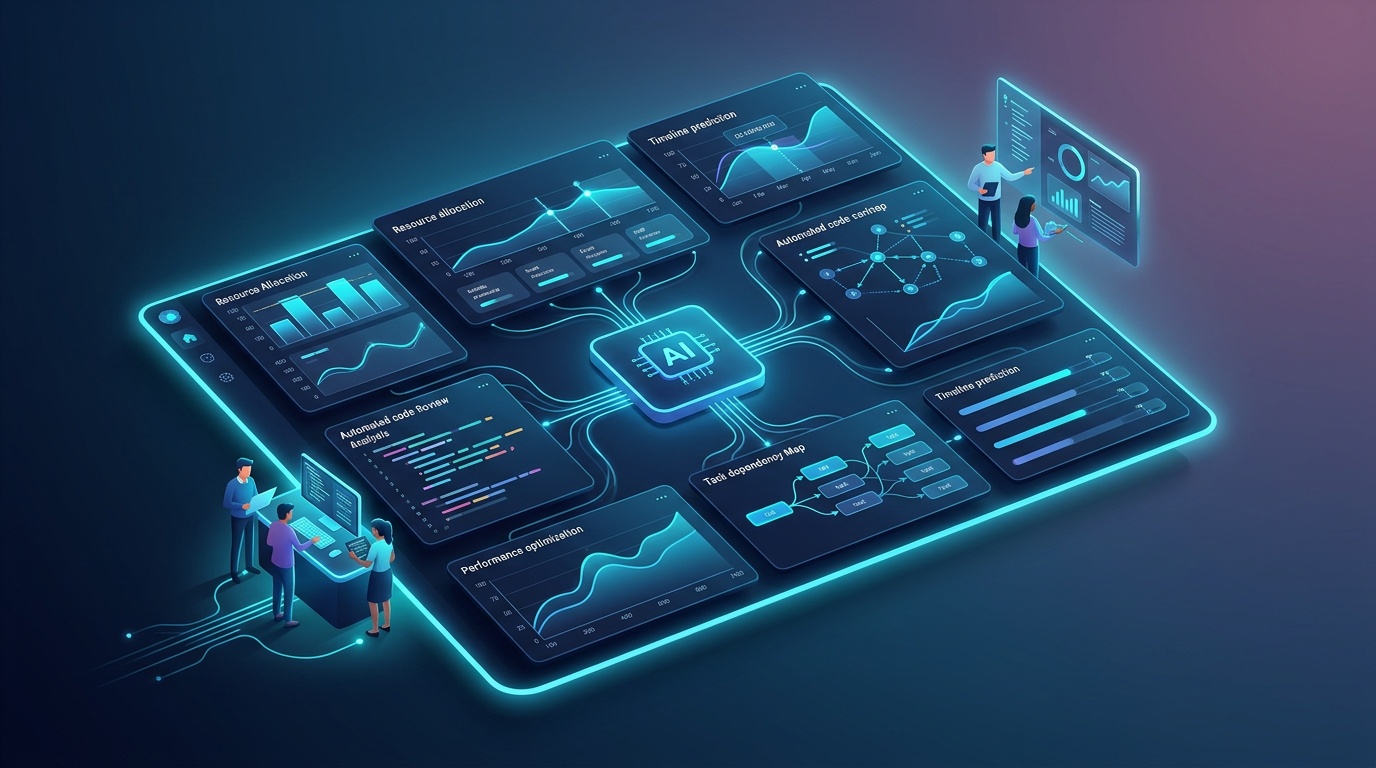
Standard project management platforms handle task tracking and timelines well but lack specialized features for AI complexity. They can’t track data lineage, model versioning, or algorithm performance. Missing the key components that make AI projects different.
These tools treat AI like conventional software development, creating blind spots in oversight and increasing deployment risks.
Enterprise AI Agents: The Strategic Alternative
Instead of managing AI projects, smart businesses deploy AI agents that manage themselves. These systems monitor performance, predict bottlenecks, and adjust based on real-time metrics. Eliminating much of the complexity that creates the need for specialized project managers.
| Feature | Traditional PM Tools | Enterprise AI Agents |
|---|---|---|
| Data Pipeline Monitoring | Manual tracking | Automated anomaly detection |
| Model Performance Tracking | External integrations required | Native MLOps capabilities |
| Stakeholder Communication | Static reports | Dynamic insights generation |
| Risk Assessment | Manual evaluation | Predictive risk modeling |
How Vynta AI Eliminates Project Management Complexity
Our industry-specific automation accounts for domain context without requiring specialized oversight. For agentic systems for real estate, our agents validate lead-scoring accuracy against conversion rates automatically. In recruitment, they monitor candidate-matching for bias without human intervention.
The agents integrate with existing workflows while adding specialized capabilities that traditionally required dedicated project management. They generate progress reports, flag data quality issues, and communicate status in business language. All without the overhead of hiring specialized talent.
Essential Skills vs. Smart Alternatives
The Soft Skills Challenge
Successful ai project manager professionals need emotional intelligence and adaptive communication beyond technical expertise. They navigate organizational resistance, mediate between departments, and maintain morale during lengthy development cycles.
Key capabilities include stakeholder expectation management, cross-functional coordination, and change leadership. They challenge unrealistic AI expectations while building consensus around achievable automation goals.
The Translation Problem
Business executives need ROI narratives, not algorithm explanations. AI project managers spend significant time translating machine learning concepts into business cases.
Communication Strategy: Replace technical jargon with business metrics. Focus on “revenue impact from improved lead qualification” rather than “model accuracy improvements.”
But what if your AI solution spoke business language from the start? That’s the advantage of industry-specific automation. No translation layer required.
Industry-Specific Requirements
Each vertical demands different knowledge. Real estate projects target lead conversion and property valuation. Recruitment focuses on candidate matching and bias reduction.
Fundraising needs solutions that respect donor privacy while improving engagement through AI-powered fundraising platforms. Hospitality targets guest experience and efficiency through Vynta AI agents for hospitality.
- Real estate: Lead scoring, property analysis, market predictions
- Recruitment: Candidate matching, résumé parsing, scheduling
- Fundraising: Donor segmentation, campaign optimization, relationship management
- Hospitality: Revenue management, guest preferences, service automation
The Hidden Costs of AI Project Management
Beyond Salary: The Human Cost
Organizations hiring ai project manager roles underestimate the psychological demands. These professionals address employee fears about job displacement while driving automation initiatives that may reduce workforce needs.
They navigate ethical dilemmas around algorithmic bias, data privacy, and automated decision impacts on people’s lives. This emotional burden goes beyond typical project pressure.
Total Cost of Ownership Reality
Smart organizations look beyond implementation cost. Factor in ongoing training, integration complexity, and long-term maintenance when estimating AI project management investments.
Transparency requirements for regulatory compliance add another layer. Solutions need audit trails, explainability, and monitoring frameworks. All requiring ongoing management.
The Partnership Alternative
Vynta AI eliminates the need for internal AI project management complexity by delivering industry-specific automation that works out of the box. Our enterprise solutions provide value quickly without the learning curve of building custom systems.
Instead of hiring expensive ai project manager talent and building teams, partner with automation experts who understand real estate, recruitment, fundraising, and hospitality constraints. Our agents deliver measurable outcomes with transparent reporting across deployments.
The future belongs to organizations that get intelligent automation without the overhead. Choose simplicity over complexity.
Frequently Asked Questions
Can AI be a project manager?
While AI cannot fully replace the strategic and human elements of a project manager, it significantly augments their capabilities. AI agents, like those at Vynta AI, automate routine tasks, monitor project health, and predict bottlenecks. This allows human AI project managers to focus on strategic oversight and complex problem-solving.
What is the role of an AI project manager?
An AI project manager orchestrates artificial intelligence initiatives from conception to deployment, translating technical complexity into measurable business value. They bridge the gap between data science teams and executive stakeholders, ensuring AI investments deliver clear outcomes. This role involves coordinating cross-functional teams, managing timelines, and overseeing data governance and model validation.
Will AI replace PMP professionals?
AI will not replace the fundamental principles of project management or the need for skilled PMP-certified professionals. Instead, AI tools and agents will transform how project managers operate, especially within AI initiatives. They automate routine tasks and provide deeper insights, allowing project managers to focus on strategic decision-making and complex problem-solving.
What skills are important for an AI project manager?
Beyond technical literacy in machine learning, an AI project manager needs strong business acumen to translate AI concepts into measurable business value. Critical soft skills include emotional intelligence, adaptive communication, and stakeholder expectation management. They must focus on revenue impact, cost reduction, and operational efficiency improvements.
How do AI project management tools differ from traditional software?
Traditional project management software lacks specialized features for the unique complexities of AI initiatives, such as data lineage tracking, model versioning, or algorithm performance monitoring. Enterprise AI agents, like Vynta AI’s, offer intelligent automation orchestration. They monitor project health, predict bottlenecks, and suggest resource reallocation based on real-time performance metrics, providing deeper oversight for AI projects.
Why is the AI project manager role important for businesses?
The AI project manager role is important because it ensures AI investments deliver measurable business outcomes, not just technical solutions. These professionals translate complex AI concepts into clear business value, focusing on ROI, cost reduction, and operational efficiency. They bridge the gap between technical teams and executive stakeholders, making sure AI initiatives solve real business problems.