

ai agents customer service
Understanding AI Agents in Customer Service: Beyond Basic Bots
AI agents for customer service are intelligent automation systems that handle complex inquiries, process transactions, and manage relationships with human-like understanding. Unlike traditional chatbots, these agents grasp context, maintain conversation flow, and integrate with existing business systems to deliver measurable results.
What Exactly Are AI Agents for Customer Service?
Modern AI agents represent a shift from rule-based automation to intelligent conversation management. These systems process natural language, understand intent, and execute complex workflows like lead qualification in real estate, candidate screening in recruitment, donor management in fundraising, and reservation handling in hospitality. They operate within business parameters while maintaining brand voice consistency and integrating with CRM platforms for real-time data synchronization.
The Critical Difference: AI Agents vs. Traditional Chatbots
| Feature | Traditional Chatbots | AI Agents |
|---|---|---|
| Response Intelligence | Pre-scripted responses | Contextual understanding with natural pauses |
| Integration Capability | Basic form collection | Real-time CRM synchronization |
| Personalization | Generic interactions | Profile-based recommendations |
| Escalation Logic | Simple keyword triggers | Complex routing protocols |
| Channel Management | Single platform focus | WhatsApp, SMS, Instagram, and email coordination |
Why Quality Customer Support Drives Revenue Growth
Forward-thinking businesses recognize that ai agents customer service solutions deliver revenue growth alongside operational efficiency. Real estate agencies see 40% faster lead response times. Recruitment firms report 35% improvement in candidate engagement. Fundraising organizations achieve 45% better donor retention. Hospitality venues increase booking conversion by 50% while reducing inquiry abandonment by 60%.
This technology increases average transaction values. Whether that’s property purchases, placement fees, donation amounts, or guest spend. Through intelligent recommendations that respect industry guidelines and client preferences.
Delivering Quality Interactions: AI Agents That Actually Work

Professional Communication Standards Across Industries
Professional ai agents customer service implementation requires rigorous content controls and brand voice training. Our agents undergo extensive customization to match communication styles. From casual startup energy to formal financial services protocols. The system includes conversation monitoring, live takeover capabilities, and strict escalation rules that route complex inquiries to human staff when needed.
Transparent AI Implementation for Mid-Market SMEs
Clients understand they’re interacting with AI agents, yet they still receive value through timely responses, accurate information, and smooth processes. The technology operates under strict data privacy protocols, with NDAs protecting both brand reputation and client information. Multilingual capabilities support inclusive service across diverse customer bases.
Key Insight: Successful ai agents customer service implementation focuses on augmenting human capabilities rather than replacing personal touchpoints. High-value clients always receive human attention through intelligent escalation protocols.
Cross-Industry Performance Metrics
Data-driven implementation across sectors demonstrates consistent performance improvements:
- Real Estate: 40% faster lead response, 28% higher qualification rates
- Recruitment: 35% better candidate engagement, 22% faster time-to-hire
- Fundraising: 45% improved donor retention, 30% increase in average gift size
- Hospitality: 50% booking conversion improvement, 25% higher guest spend
Organizations report 20-30% operational cost reductions while maintaining or improving service quality through intelligent automation.
Industry-Specific AI Agents: Tailored Solutions Across Sectors
Real Estate: Automating Lead Qualification and Property Matching
Property agencies deploy AI agents to handle buyer inquiries, schedule viewings, and qualify prospects based on budget and location preferences. These systems integrate with MLS databases and CRM platforms to provide instant property recommendations while capturing lead information for agent follow-up. Our Agentic Systems for Real Estate handle complex market inquiries and coordinate showing schedules.
Recruitment: Streamlining Candidate Screening and Interview Scheduling
Recruitment firms use intelligent automation for initial candidate interactions, skills assessment coordination, and interview scheduling workflows. The technology processes applications, conducts preliminary screenings, and matches candidates to relevant positions while maintaining human oversight for final placement decisions. Agentic Systems for Recruitment reduce time-to-hire by managing routine interactions.
Fundraising: Optimizing Donor Outreach and Campaign Management
Nonprofit organizations implement intelligent automation to manage donor communications, handle contribution inquiries, and coordinate campaign responses. These systems maintain donor relationship data while personalizing outreach based on giving history and engagement preferences. Our AI-Powered Fundraising Platform improves donor retention through consistent, personalized communication.
Hospitality: Guest Experience and Reservation Management
Hospitality venues benefit from automation that handles reservation inquiries, processes special requests, and manages guest communications across multiple channels. The technology operates during defined business hours with natural response timing that mimics human interaction patterns.
Pros
- Consistent response times across all communication channels
- Real-time CRM integration for data synchronization
- Multilingual support across WhatsApp, SMS, Instagram, and email
- Customizable brand voice and business-rule configuration
Cons
- Requires initial setup and brand voice training period
- Complex inquiries still require human escalation protocols
- Performance depends on quality of CRM data and integration
Building Your AI Agent Strategy: From Implementation to Partnership
Avoiding Common AI Implementation Pitfalls
Successful deployment requires careful planning around operational boundaries and brand protection. Common mistakes include launching without proper escalation protocols, failing to establish clear operating hours, or neglecting multilingual customer bases. Smart operators define strict content controls, implement manual override capabilities, and establish priority routing rules before launching any automation system.
Don’t make these errors:
- Launching without testing escalation workflows
- Ignoring time zone considerations for global clients
- Skipping brand voice training and content review
- Forgetting to integrate with existing CRM systems
The Human-AI Partnership: Doubling Team Productivity
Modern operations thrive when intelligent automation handles routine inquiries while staff focus on high-value interactions. Team members monitor conversations through dashboards, take control when needed, and maintain oversight of complex requests. This collaborative approach preserves service quality while expanding capacity for relationship management.
Staff can now focus on:
- Complex negotiations and closing deals
- Strategic relationship building
- Creative problem-solving for unique situations
- Training and optimizing AI agent performance
Strategic Implementation: Successful organizations start with defined business rules, establish clear escalation pathways, and maintain human oversight for high-value interactions. The technology increases team capacity rather than replacing personal touchpoints.
Vynta AI as Your Strategic Partner
Professional implementation extends beyond basic chatbot deployment to operational transformation. Our approach includes customization for brand voice, integration with existing CRM systems, and ongoing optimization based on performance metrics. Organizations benefit from dedicated support, privacy compliance protocols, and continuous refinement of conversation flows to improve conversion and satisfaction rates.
We provide:
- Industry-specific templates and workflows
- Ongoing performance monitoring and optimization
- Integration support for existing technology stacks
- Compliance guidance for data privacy regulations
Future-Proofing Your Customer Service Strategy
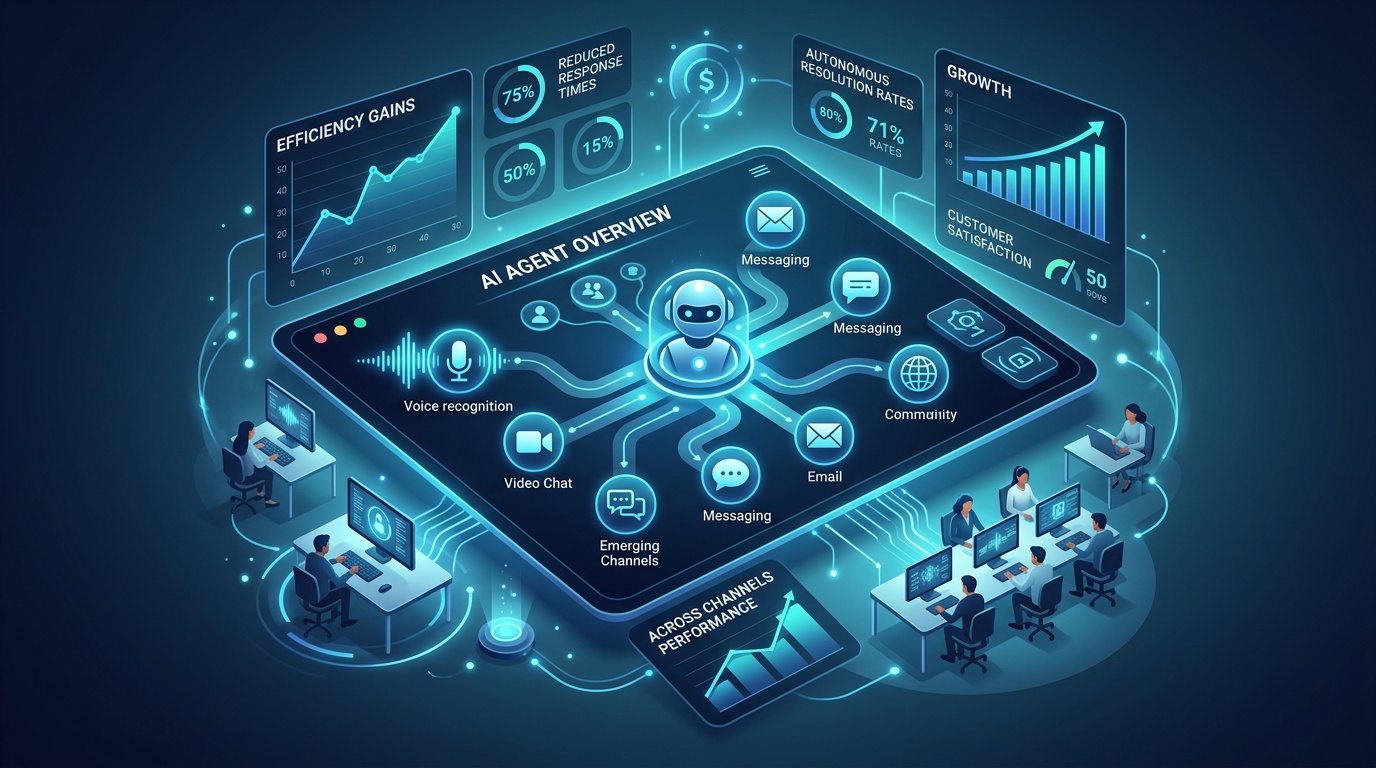
Next-Generation Features and Channel Expansion
The next wave of customer service automation will incorporate voice recognition, video chat capabilities, and predictive preference modeling. Instagram integration continues evolving beyond simple redirect functionality toward full social commerce workflows. Organizations prepare for these advances by establishing flexible technology foundations and maintaining adaptable operational protocols.
Emerging capabilities include:
- Voice-to-text processing for phone interactions
- Predictive analytics for proactive customer outreach
- Video chat integration with human agents
- Advanced sentiment analysis for mood-based responses
Measuring Success and Continuous Optimization
Performance tracking focuses on conversion metrics, response time analytics, and satisfaction scores rather than simple interaction volume. Successful operators monitor completion rates, average transaction values, and escalation frequency to identify optimization opportunities. Regular analysis of conversation patterns informs refinements to automation rules and staff training protocols.
Strategic Recommendations for Business Leaders
Begin with clearly defined objectives tied to revenue growth and operational efficiency. Establish staff training that emphasizes collaboration with automation systems. Prioritize data privacy compliance and brand protection through vendor selection and contract negotiation. Maintain focus on customer experience quality while scaling service capacity through intelligent technology deployment.
Remember: The goal isn’t to replace human interaction. It’s to make every human interaction more valuable.
Frequently Asked Questions
How do modern AI agents elevate customer service beyond basic automation?
Modern AI agents for customer service are sophisticated systems that understand context and manage complex inquiries. They process natural language to understand guest intent and execute workflows like reservation management. This represents a fundamental shift from simple rule-based automation, delivering measurable outcomes for businesses.
What are the key distinctions between AI agents and traditional chatbots in customer interactions?
AI agents offer contextual understanding and maintain conversation flow, unlike traditional chatbots that rely on pre-scripted responses. They integrate in real-time with CRM platforms for personalized interactions and manage complex VIP routing protocols. This enables a more intelligent and tailored customer experience.
How do AI agents contribute to revenue growth and operational efficiency?
Vynta AI Agents can significantly increase booking conversion by 50% and reduce inquiry abandonment by 60%. They also increase average guest spend by up to 25% through intelligent, brand-safe upselling. This transforms customer service into a profit driver while reducing operational costs by 30%.
How do AI agents ensure brand consistency and handle complex customer needs?
Our bespoke AI agents undergo extensive customization to match an establishment’s communication style and brand voice. They operate with strict content controls and escalation rules, routing complex inquiries or VIP guests to human staff when appropriate. This ensures clarity and maintains service quality.
What kind of integration capabilities do AI agents offer with existing business systems?
Vynta AI agents integrate in real-time with CRM platforms such as SevenRooms for seamless data synchronization. This allows for automatic updates of guest data, reservations, and preferences. The system ensures all customer interactions are informed by the most current information.
Beyond hospitality, what other industries benefit from AI agent customer service solutions?
While highly effective in hospitality, AI agents also provide significant value in other sectors. Real estate companies use them for lead qualification and property matching, while recruitment agencies streamline candidate screening. Fundraising teams also optimize donor outreach and management with these intelligent automation systems.
How do AI agents manage customer interactions across different communication channels?
AI agents support multilingual inquiries and personalize responses across various communication channels. This includes WhatsApp, SMS, Instagram, and email. The system ensures consistent brand voice and tailored interactions, regardless of the platform a customer chooses.