

ai fundraising donor outreach
Demystifying AI for Donor Outreach: Driving Smarter Connections
AI fundraising donor outreach transforms how nonprofit organizations connect with supporters by automating prospect research, personalizing communications, and predicting giving patterns. This technology analyzes donor data to identify high-potential supporters, craft targeted messages, and optimize campaign timing for maximum impact.
What is AI Donor Outreach?
AI donor outreach uses machine learning to streamline supporter engagement. The technology processes vast datasets. Giving history, demographics, engagement patterns. To predict donor behavior and personalize communications. Unlike mass appeals, these campaigns deliver relevant messages to specific segments at optimal times.
Beyond the Buzz: Practical Applications for Nonprofits
Modern fundraising platforms apply artificial intelligence across multiple touchpoints. Automated systems identify potential major-gift donors by analyzing wealth indicators and philanthropic patterns. Email sequences nurture relationships through personalized content based on donor interests and giving capacity. Predictive analytics forecast campaign performance and recommend optimal ask amounts for individual supporters.
The AI-Powered Fundraising Platform exemplifies this approach by combining donor intelligence with automated outreach workflows. Development teams can focus on relationship building rather than administrative tasks.
The Core Problem AI Solves in Donor Engagement
Traditional fundraising suffers from inefficient resource allocation and generic messaging that fails to connect with donor motivations. Development professionals spend countless hours on manual prospect research and mass communication creation. There’s little time left for meaningful relationship cultivation.
Smart automation solves this by handling research processes, segmenting audiences intelligently, and generating personalized content at scale. Machine learning algorithms identify the best communication channels, optimal contact frequency, and compelling messaging themes for each donor segment. Organizations looking to implement AI for nonprofits can use these capabilities to enhance their fundraising effectiveness.
Building Trust Through Intelligent Outreach: AI’s Role in Transparency and Authenticity
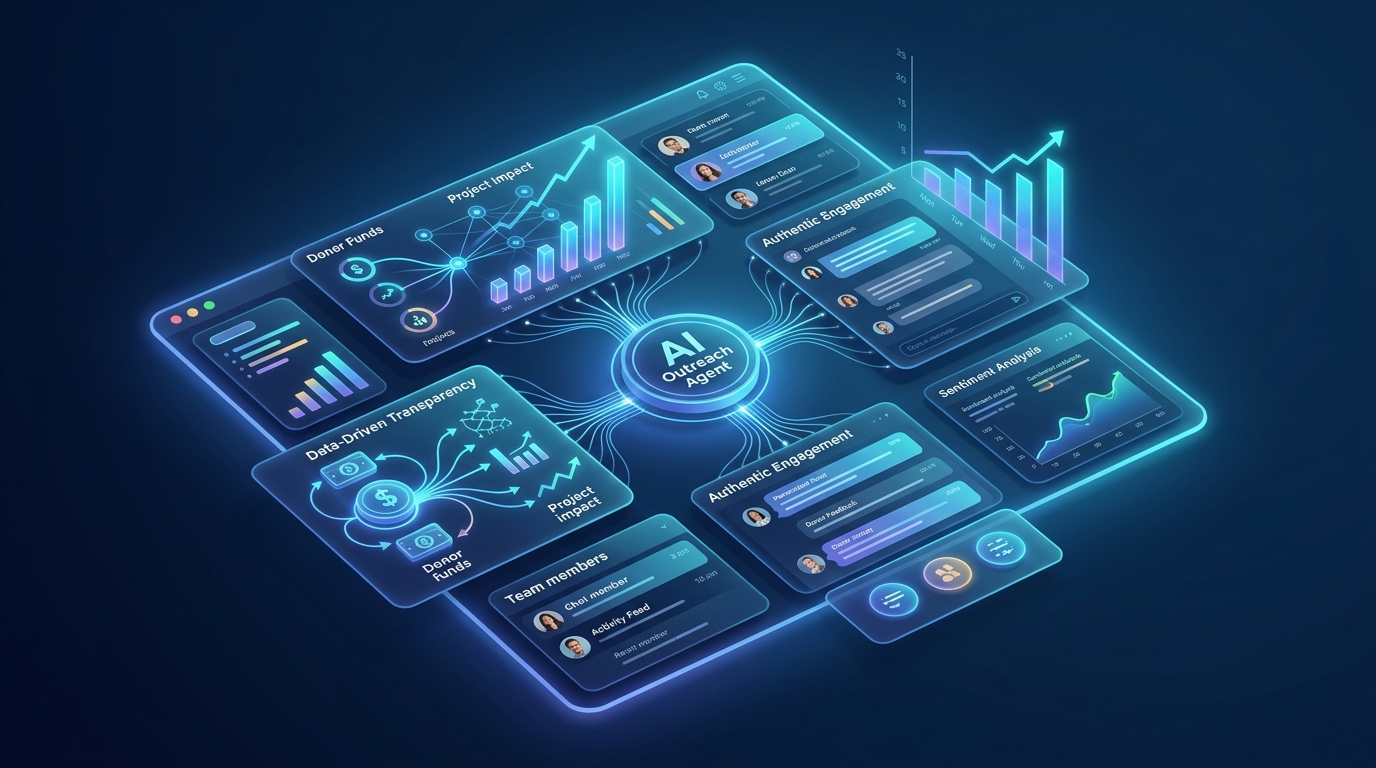
Addressing the “Trust Deficit” in Fundraising
Donor skepticism reaches new heights as supporters question where their contributions go. Recent surveys show 68% of potential donors hesitate to give because they doubt organizational transparency. This trust deficit stems from impersonal mass communications, unclear impact reporting, and generic appeals that feel disconnected from donor values.
Meanwhile, organizations struggle to demonstrate accountability while managing overwhelming administrative demands.
Intelligent automation addresses these concerns by creating transparent, trackable communication pathways. AI systems document every interaction, track engagement patterns, and provide clear attribution for donor stewardship activities. This foundation helps organizations demonstrate genuine commitment to donor relationships through consistent, personalized attention. Some donors prefer to maintain privacy through anonymous donations while still receiving personalized stewardship communications.
AI as an Authentic Relationship Builder: Freeing Up Fundraisers
Professional fundraisers spend 70% of their time on administrative tasks rather than meaningful donor conversations. AI fundraising donor outreach reduces this inefficiency by automating research, scheduling, and follow-up processes. Development staff can focus on strategic relationship building, major-gift cultivation, and program development while technology handles routine communications.
Intelligent automation identifies optimal conversation timing, suggests relevant talking points based on donor interests, and ensures no supporter falls through communication gaps. This systematic approach helps fundraisers stay present and responsive during donor interactions.
How AI Empowers Development Teams and Serves Donors Simultaneously
Consider Maria, a development director managing 500+ donor relationships across multiple campaigns. Traditional methods force an impossible choice: send generic messages to everyone or craft individual communications for a small subset.
The AI-Powered Fundraising Platform solves this dilemma by generating personalized content at scale while keeping messages aligned with donor context.
Donors receive communications aligned with their interests, giving history, and preferred contact methods. Development teams gain donor insights, automated task management, and performance analytics that inform strategic decisions. This dual benefit supports sustainable fundraising operations where both parties see improved outcomes.
Predicting Propensity to Give: AI-Powered Donor Segmentation and Personalization
Identifying High-Potential Donors with Data-Driven Insights
Machine learning algorithms analyze hundreds of data points to predict giving likelihood with remarkable accuracy. Wealth screening, previous donation patterns, event attendance, email engagement rates, and social media activity combine to create comprehensive donor profiles. These predictive models identify prospects most likely to make major gifts, upgrade annual giving, or respond to specific campaign appeals.
Advanced analytics reveal patterns that manual analysis misses entirely. Geographic clustering, seasonal giving trends, cause-specific interests, and communication preferences emerge from data analysis to inform outreach decisions. Organizations can prioritize limited resources on prospects with the highest conversion probability while maintaining broad engagement across their supporter base.
Crafting Personalized Outreach That Connects Without Sounding Robotic
Natural language generation creates personalized messages that feel human while operating at scale. AI systems reference donor interests, acknowledge previous contributions, and connect current campaigns to causes supporters care about. This goes beyond basic mail merge to create contextually relevant communications that reflect understanding of individual motivations.
Content adaptation adjusts tone, length, and complexity based on donor demographics and engagement history. Young professionals receive concise, mobile-optimized messages with clear impact metrics. Established philanthropists receive detailed program information and briefing invitations. Each supporter gets communications aligned with their preferences and capacity.
Beyond Generic Appeals: Tailoring Messages for Maximum Impact
Traditional fundraising relies on broad appeals that aim to attract attention across diverse audiences. AI fundraising donor outreach enables precision targeting instead. Pet lovers receive updates about animal welfare programs, education advocates learn about scholarship initiatives, and environmental supporters get climate action updates.
This personalization drives higher response rates and donor satisfaction.
Dynamic content optimization tests multiple message variations simultaneously, identifying effective subject lines, calls to action, and story frameworks for each donor segment. Real-time performance data supports continuous refinement over time. Organizations can compare different approaches using best fundraising comparison methodologies to optimize their campaigns.
Measuring What Matters: AI for Performance Analysis and Strategic Refinement
AI-Driven Insights for Strategic Assessment
Performance analytics shift fundraising from intuition-based to evidence-driven strategy. AI systems track touchpoints across the donor journey, measuring email open rates, website engagement, event attendance, and conversion metrics. This reveals what actually motivates giving decisions, enabling development teams to make strategic adjustments based on observed results.
Predictive modeling forecasts campaign outcomes before launch, allowing organizations to optimize resource allocation and timeline planning. Machine learning identifies which messaging themes, communication channels, and ask amounts produce strong results for different donor segments. The result? Actionable intelligence for future campaigns.
Optimizing Outreach for Community Building and Revenue Generation
Successful fundraising balances relationship cultivation with revenue goals. AI analytics distinguish between donors motivated by community connection and those driven by impact metrics. This enables dual-track engagement strategies.
Social donors receive invitations to volunteer events and peer networking opportunities. Impact-focused supporters get detailed program reports and outcome measurements.
| Metric Category | Traditional Tracking | AI-Powered Analysis |
|---|---|---|
| Response Rates | Campaign averages | Individual donor predictions |
| Engagement Depth | Open and click tracking | Multichannel behavior mapping |
| Lifetime Value | Historical giving totals | Predictive capacity modeling |
| Retention Risk | Lapsed-donor identification | Early-warning algorithms |
Translating AI Performance Metrics into Tangible Fundraising ROI
Development directors need evidence that technology investments generate measurable returns. AI fundraising donor outreach delivers ROI through higher response rates, reduced staff time requirements, and improved donor retention. Some organizations report 40% to 60% improvement in campaign efficiency within six months of implementation.
Cost-per-acquisition metrics show the impact of intelligent targeting. When AI systems identify high-propensity donors and optimize outreach timing, organizations achieve better results with smaller marketing budgets. The AI automation services track performance improvements and generate board-ready reports that connect technology investment to revenue growth and operational efficiency.
Frequently Asked Questions
How does AI change how nonprofits connect with supporters?
AI fundraising donor outreach fundamentally shifts how nonprofits engage supporters. It automates prospect research, personalizes communications, and predicts giving patterns. This allows organizations to identify high-potential supporters and craft targeted messages for stronger connections.
What are the main ways AI helps fundraisers with their daily work?
AI frees fundraisers from time-consuming administrative tasks like manual prospect research and mass communication creation. It automates these processes, allowing development professionals to focus on meaningful relationship cultivation and strategic major-gift conversations. This smart automation expands reach while maintaining authentic connections.
How does AI contribute to building donor trust and transparency?
Donor skepticism is a significant challenge, with many questioning organizational transparency. AI systems create transparent, trackable communication pathways by documenting every interaction and tracking engagement patterns. This technological foundation helps organizations demonstrate genuine commitment through consistent, personalized attention.
Can AI deliver personalized messages to many donors at once?
Yes, AI-powered fundraising platforms solve the challenge of personalizing communications at scale. They generate personalized content aligned with each donor’s interests, giving history, and preferred contact methods. This means donors receive relevant messages, while development teams gain efficiency and insights.
How do AI systems identify potential major-gift donors?
Machine learning algorithms analyze hundreds of data points to predict giving likelihood with strong accuracy. This includes wealth screening, previous donation history, and philanthropic patterns. By processing vast datasets, AI identifies high-potential supporters, allowing fundraisers to focus their efforts strategically.
What kind of results can nonprofits expect from using AI in donor outreach?
Organizations using AI fundraising donor outreach report significantly higher response rates, often around 35% more than generic campaigns. This technology also drives stronger donor retention through personalized touchpoints and optimized campaign timing. The result is more effective and sustainable fundraising operations.
Does AI replace the human element in donor relationships?
AI does not replace human connection; it amplifies it. By automating administrative tasks, AI frees up fundraisers to focus on strategic relationship building and meaningful conversations. It creates more opportunities for genuine interaction, ensuring fundraisers stay present and responsive with their most important supporters.