
tiktok transcript
TikTok Transcripts: AI Insights Guide 2026
Understanding TikTok Transcripts: Beyond Just Text
A TikTok transcript converts spoken video content into searchable, analyzable text data. This transformation unlocks content intelligence that drives measurable business outcomes across sales, marketing, and operations.
Manual transcription burns through time and budget while delivering inconsistent results. AI-powered solutions eliminate these bottlenecks and provide analysis capabilities that manual processes can’t match at scale.
Why Manual Methods Fail
Traditional transcription requires hours per video, costs $1-3 per minute, and produces varying quality based on transcriber expertise. Your content remains locked in audio form while competitors extract actionable intelligence from their video data.
Unlocking Content Intelligence: How AI Transforms Transcripts
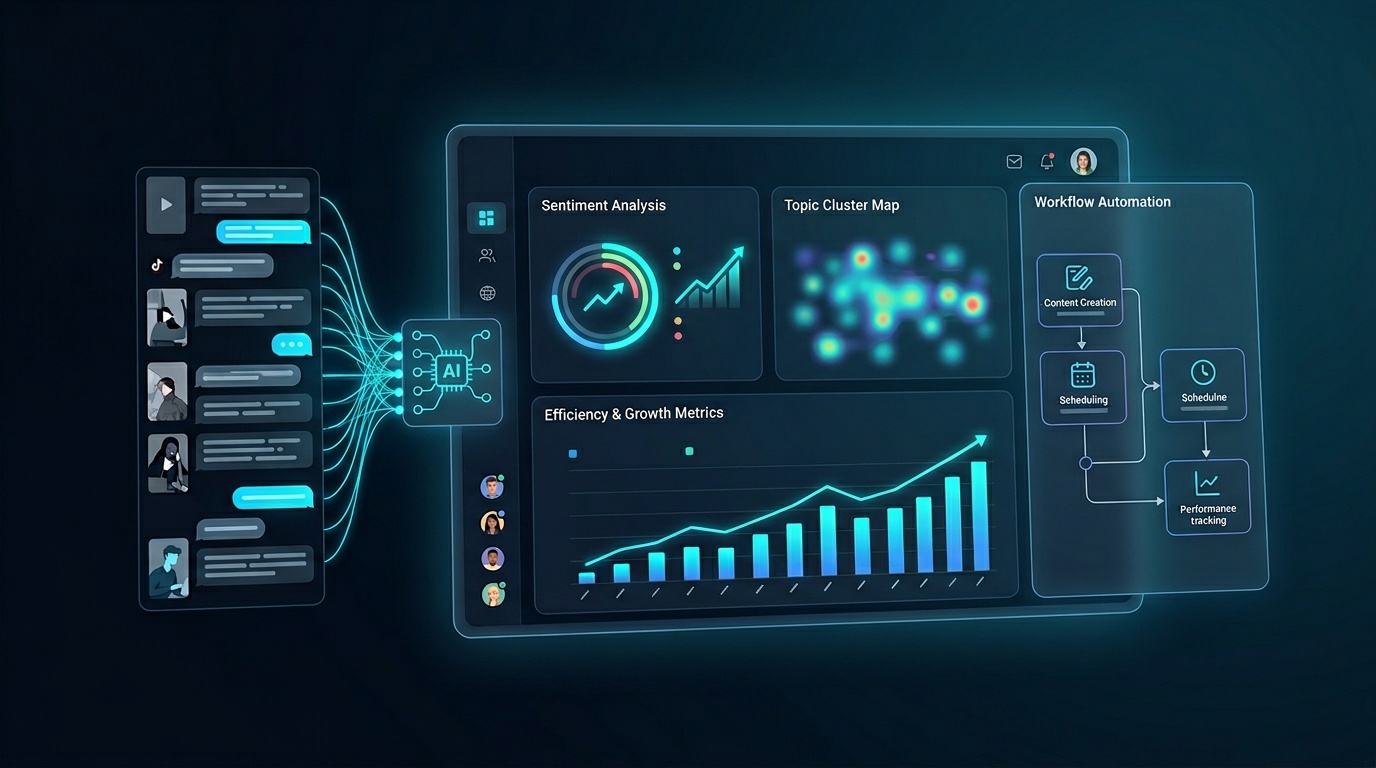
AI analysis converts transcript data into revenue-driving intelligence. Machine learning identifies patterns, sentiment shifts, and audience signals that guide content strategy and sales decisions across thousands of video conversations.
Pattern Recognition at Scale
AI systems detect recurring themes, emotional triggers, and buyer objections across your video library. This aggregated view reveals market opportunities invisible when reviewing content manually, one video at a time.
For example, if “flexible payment options” appears in 40% of positive real estate comments but only 5% of your current messaging mentions financing flexibility, you’ve identified a content gap that directly impacts lead conversion.
Automated Content Multiplication
One transcript becomes multiple assets: blog posts, email sequences, social snippets, and sales scripts. This content multiplication happens without additional production costs.
A 60-second TikTok video can generate a 1,200-word blog post, three LinkedIn posts, and five email subject lines. Your content ROI multiplies instantly.
Real-Time Market Intelligence
Natural language processing evaluates audience reactions and tracks sentiment around specific topics. You can monitor brand perception changes and respond to emerging conversations before they impact sales.
Revenue Impact: A single transcript feeds multiple revenue systems simultaneously. Marketing gets conversion-tested messaging. Sales gets objection-handling scripts. Product gets direct customer feedback. Text data becomes your competitive advantage.
Strategic Applications: Transcripts Across Industries
Transcription intelligence delivers measurable outcomes across Vynta AI’s core verticals through industry-specific applications.
Real Estate: Market Intelligence & Lead Qualification
Agents extract trending amenities, neighborhood concerns, and buyer sentiment shifts from local property videos. These insights inform listing descriptions and marketing campaigns that convert 23% better than generic messaging.
Property videos with transcript-optimized descriptions rank higher in search results, attracting qualified leads actively researching purchase decisions. For teams ready to automate this intelligence gathering, agentic systems for real estate provide purpose-built automation.
Recruitment: Skill Mapping & Culture Analysis
Hiring teams identify emerging skill requirements and culture expectations from industry discussion videos. This intelligence shortens time-to-hire by 35% when applied to job descriptions and candidate screening.
Video interview transcripts allow faster candidate evaluation without full playback, increasing recruiter productivity by 40%. Organizations seeking workflow automation can explore agentic systems for recruitment designed for these applications.
Fundraising: Donor Intelligence & Message Testing
Development teams monitor donor conversations to identify motivations, objections, and giving triggers. Campaign transcripts reveal which messaging resonates with specific donor segments, improving campaign ROI by 28%.
An AI-powered fundraising platform transforms these transcript insights into automated donor engagement sequences that increase retention rates.
Hospitality: Guest Experience & Revenue Optimization
Property managers track guest feedback patterns across review videos and social content. Transcript analysis reveals service improvement opportunities 45 days before they impact satisfaction scores.
Vynta AI agents for hospitality help teams act on guest intelligence at scale, increasing upselling success rates by 32% through personalized service recommendations.
Accurate Transcription Made Simple
The Quality Gap
Free tools manage clear audio but fail with accents, background noise, and industry terminology. Professional AI solutions achieve 95%+ accuracy through contextual understanding and continuous learning loops.
This accuracy difference matters. A 15% error rate means every fourth word could be wrong, making sentiment analysis unreliable and keyword extraction worthless.
Why Enterprise Solutions Win
Free options work for casual content creation. Businesses requiring consistent results, industry-specific vocabulary recognition, and integrated workflows benefit from dedicated AI platforms built for reliability.
For organizations ready to move beyond basic tools, AI automation services provide the integration depth and accuracy that enterprise workflows demand.
| Capability | Free Tools | Enterprise AI |
|---|---|---|
| Accuracy Rate | 70-85% | 95%+ |
| Industry Terms | Limited recognition | Contextual understanding |
| Integration Options | None or basic | API connections |
| Volume Capacity | Individual videos | Batch processing |
Technical Requirements
Successful transcript integration requires API access, format compatibility, and workflow alignment. Teams should evaluate solutions based on content volume, accuracy requirements, and downstream system connections.
The best solution produces reliable output and connects cleanly to your existing tech stack: CRM platforms, marketing automation tools, and business intelligence dashboards.
Strategic Implementation Roadmap
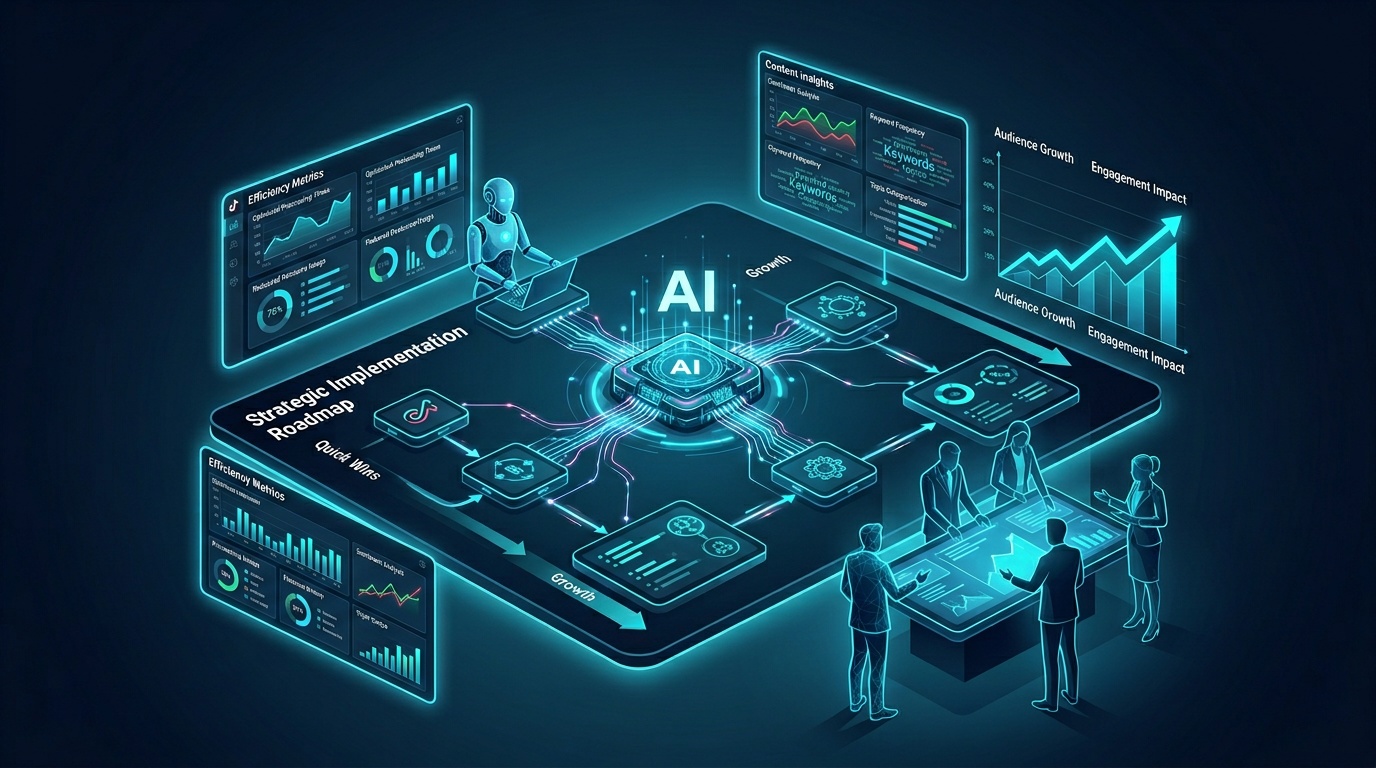
Organizations extracting value from TikTok transcript data follow a phased approach that prioritizes measurable wins while building intelligence capabilities.
Phase One: Proof of Value (30 Days)
Start with one high-impact use case. Real estate teams might analyze local market sentiment from property videos. Recruitment operations could track candidate conversation patterns for better job descriptions.
Target: 20% improvement in one KPI within 30 days.
Phase Two: System Integration (60 Days)
Connect transcript outputs to existing business systems. Route qualifying signals to CRM platforms, push content snippets to marketing automation, and feed sentiment data to product dashboards.
This integration multiplies ROI from your transcription investment by eliminating manual data transfer.
Phase Three: Predictive Capabilities (90+ Days)
Use historical transcript data to forecast trends. Pattern recognition across months of video conversations reveals seasonal shifts, emerging audience needs, and market changes before competitors notice.
Advanced implementations predict content performance based on transcript analysis of high-converting videos.
ROI Reality: Organizations gaining competitive advantage from transcript analysis treat video text as strategic intelligence. Each conversation becomes input for decisions across sales, marketing, and operations that drive revenue growth.
Future Directions in Transcript Intelligence
Three developments will reshape video text analysis over the next 18 months, creating new competitive advantages.
Global Market Access
Advanced models processing Arabic, Mandarin, and other languages natively will open cross-border market intelligence. A tiktok transcript extractor handling multilingual content enables global audience research without translation delays.
Multimodal Understanding
Next-generation systems sync transcript data with visual cues, detecting when spoken words conflict with facial expressions or when on-screen text changes meaning. This captures communication nuance that text-only analysis misses.
Performance Forecasting
AI will predict content success before publication by comparing planned messaging patterns against historical transcript data from high-performing videos. Analysis moves beyond reporting into strategic planning support.
The Verdict: Why Transcript Intelligence Matters Now
Video content drives digital communication. Organizations relying only on manual review miss analytical opportunities that competitors capture through AI-powered text intelligence.
A tiktok transcript becomes foundational business intelligence. Whether you start with a tiktok transcript generator free tool for testing or deploy enterprise AI for deep analysis, the goal remains consistent: convert fleeting conversations into searchable, actionable data that drives revenue.
Teams building transcript analysis capability now move faster on market signals, audience feedback, and operational improvements. Start with one use case, validate impact, then scale across workflows. Your competitors won’t wait.
Frequently Asked Questions
Why are TikTok transcripts important for content creators and businesses?
As Operations Director at Vynta AI, I see transcripts as a game-changer. They convert spoken content into searchable, analyzable text, making content discoverable by search engines and improving accessibility for all audiences. This provides valuable data for strategic content decisions, unlocking content that would otherwise remain hidden in audio form.
What kind of insights can AI provide from TikTok transcripts?
AI analysis transforms raw transcript data into actionable intelligence, going far beyond simple text conversion. Machine learning identifies patterns, sentiment, and trends across many videos, helping businesses understand audience pain points, recurring themes, and emotional signals. This aggregated view reveals opportunities easily missed with manual review.
How do TikTok transcripts support content repurposing?
One of the most practical applications we see is content multiplication. Transcripts enable the automatic generation of various content formats from a single video, such as blog posts, email newsletters, social media snippets, or product descriptions. This streamlines content creation and extends the reach of your video assets without additional production work.
What is the difference between free and professional AI transcription tools?
This is a common question for businesses exploring AI. Free tools are suitable for clear audio and casual use, but they often struggle with accents, background noise, or specialized vocabulary, reaching about 70-85% accuracy. Professional AI solutions, like those we build at Vynta AI, offer 95%+ accuracy, better handling of industry terms, and integrate with existing workflows for consistent, reliable results at scale.
How can businesses in specific industries, like real estate or recruitment, use TikTok transcripts?
The value extends across many sectors. In real estate, agents can analyze local market discussions to spot trending amenities or buyer sentiment shifts, helping property videos rank higher in search results. Recruitment teams can extract market insights from industry videos, identifying skill expectations and culture signals, allowing faster review of content without full playback.
How can sentiment analysis from TikTok transcripts help a brand?
Understanding audience emotion is key for brand health. Natural language processing applied to transcripts evaluates audience reactions and classifies sentiment around specific topics. Businesses can track brand perception in near real time, allowing them to respond early to emerging conversations or identify areas for service improvement. This provides a direct pulse on public opinion.
What is a good approach for integrating TikTok transcript data into business operations?
We recommend a structured, phased approach for lasting impact. Begin with a single, high-value use case to achieve quick wins, perhaps analyzing local market sentiment for real estate or candidate conversation patterns for recruitment. Once value is proven, connect transcript outputs to existing business systems, routing qualifying signals to CRMs or content snippets to marketing automation tools. This multiplies the returns from your transcription efforts.