

Recommended custom AI for bar fraud detection?
Understanding the Unique Fraud Environment for Bars
Recommended custom AI for bar fraud detection? It addresses industry-specific vulnerabilities, including inventory theft, transaction manipulation, fake IDs, and employee collusion. Unlike generic solutions, custom AI analyzes bar-specific data patterns, integrates with POS systems, and identifies fraud vectors unique to hospitality operations.
The Financial Drain: Quantifying Bar Fraud Losses
Bar operators lose 5%-7% of gross revenue annually to fraud. Employee theft alone costs the hospitality industry $50 billion nationwide, with bars experiencing higher rates due to cash transactions, accessible inventory, and complex workflows that create multiple theft opportunities.
Common Fraud Vectors: Beyond Credit Card Fraud
Modern bar fraud goes far beyond payment processing. Staff can manipulate pour counts, void legitimate sales for personal gain, delete transactions after shifts, and exploit manager privileges. Kitchen teams falsify inventory records while bartenders under-ring sales and pocket cash differences.
Internal Networks: When Staff Coordinate Theft
The biggest losses often come from coordinated schemes. Bartenders under-ring sales while servers pocket the difference. Managers delete transactions to cover shortfalls. Kitchen staff manipulate inventory records to hide missing product. These networks operate for months because they understand exactly how to exploit operational blind spots.
Industry Reality Check
Security cameras capture maybe 30% of bar fraud incidents. Most losses happen through digital manipulation that requires transaction analysis and behavioral pattern recognition to detect.
Why Generic AI Falls Short for Bar Fraud Detection

Missing the Bar Context
Off-the-shelf fraud detection treats your bar like a retail store. These systems struggle with split checks, happy-hour pricing, seasonal menu changes, and tip adjustments. They flag normal bar activity as suspicious while missing actual theft because they don’t understand hospitality operations.
The Data Disconnect Problem
Standard AI solutions can’t connect inventory shrinkage to transaction voids or spot suspicious comp patterns. They miss the relationship between over-pouring and POS variance signals. Without hospitality context, these tools create noise instead of actionable insights.
When AI Gets It Wrong
Generic systems generate false positives that waste your team’s time investigating legitimate transactions. Service slows down when payment processes get flagged unnecessarily. Meanwhile, real fraud continues undetected because the system misses industry-specific warning signs.
Recommended Custom AI: Building Your Bar’s Fraud Defense System
Why Custom Beats Generic
Custom AI understands your bar’s specific data relationships. It connects pour variance to sales records, identifies staff behavior anomalies, and separates normal operational variation from activities that warrant investigation. The system learns your business rhythms instead of applying generic retail patterns.
Transaction Pattern Recognition
Advanced models analyze transaction timing, amounts, and modification frequency specific to bar operations. The system identifies your normal operating rhythms across different shifts, seasons, and events. When transactions deviate from these learned baselines, alerts highlight what needs review.
The Vynta AI Approach: Enterprise AI Agents for Hospitality
Vynta AI creates bespoke AI agents designed specifically for luxury hospitality venues including restaurants, premium bars, nightclubs, and beach clubs. Our enterprise agents integrate with POS systems to analyze real-time transaction data alongside inventory movement signals. The platform incorporates computer vision, natural language processing, and predictive analytics to build comprehensive fraud prevention programs.
Real-Time ID and Behavior Analysis
Computer vision analyzes identification documents instantly, detecting common forgery indicators through texture analysis, hologram verification, and photo-to-face matching. The system also monitors operational patterns – repeated drawer opens, abnormal transaction edit sequences, or other behaviors that correlate with elevated risk.
Communication Pattern Analysis
NLP analyzes internal notes, order modifications, and staff interactions for suspicious patterns. The system flags unusual discount requests, repeated comp triggers, or message patterns that match known loss scenarios while maintaining privacy compliance and policy alignment.
Multi-Source Data Intelligence
Effective fraud detection connects point-of-sale events with video timestamps, inventory depletion rates, and staffing schedules. Custom AI correlates these data sources to uncover multi-step schemes that single-source monitoring typically misses.
Implementing Custom AI: A Practical Roadmap for Bars
Current State Assessment
Start with a loss exposure audit and data availability review. Document existing loss patterns, inventory discrepancies, and transaction anomalies. Evaluate POS compatibility, camera coverage quality, and staff access controls to establish performance baselines.
Building the Data Foundation
Clean, consistent datasets drive detection accuracy. Standardize transaction formats, align naming conventions, and implement automated validation checks across POS histories, inventory records, and operational schedules. Data quality directly impacts long-term system reliability.
Controlled Pilot Deployment
Launch Recommended custom AI for bar fraud detection? at one location first. Monitor detection quality, adjust alert thresholds based on operational feedback, and refine the model before expanding. Staged rollouts allow system tuning while minimizing operational disruption.
Implementation Success Metrics
Bars with realistic alert thresholds and consistent response procedures see material loss reductions within 3-6 months while keeping false alerts under 15%. Results depend on data quality, process discipline, and enforcement consistency.
Team Training and Adoption
Train managers to interpret alerts effectively. Show bartenders updated verification procedures. Define clear protocols for alert triage, escalation, and documentation. Focus on operational clarity rather than surveillance to improve staff adoption.
Beyond Detection: Proactive Fraud Prevention with AI
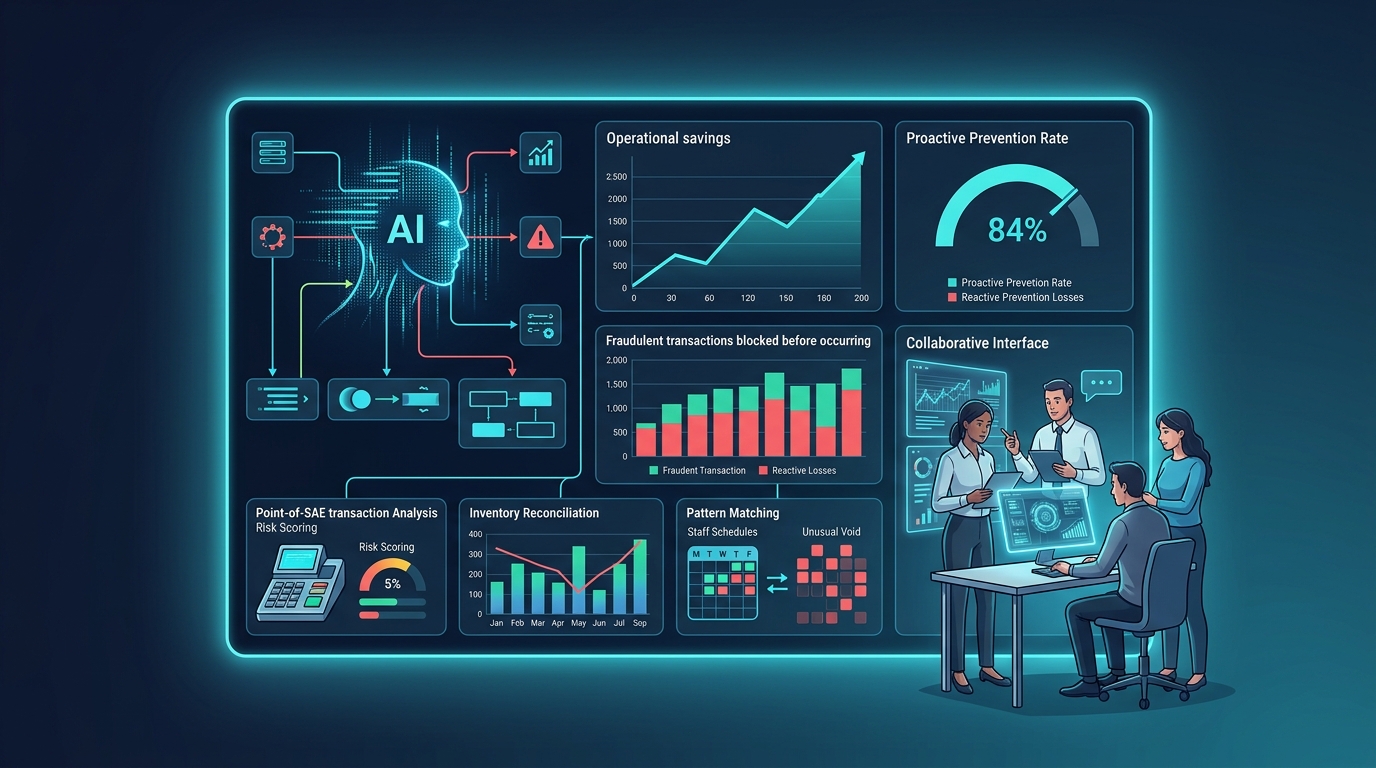
Preventing Losses Before They Accumulate
Advanced models flag higher-risk conditions before significant losses occur. Predictive signals include seasonal volume shifts, staffing changes, unusual inventory-to-sales ratios, or policy modifications in comps and voids. Prevention beats post-incident recovery every time.
Staying Ahead of Evolving Tactics
Machine learning surfaces emerging fraud patterns by analyzing changing behaviors over time. The system adapts to new tactics while incorporating relevant threat intelligence. Updates follow controlled testing protocols to improve detection without creating unnecessary operational friction.
Operational Excellence Through Security
Comprehensive prevention supports stronger margins, smoother operations, and improved guest trust. Venues using Recommended custom AI for bar fraud detection? report clearer operational controls and faster investigation resolution when AI signals combine with consistent enforcement policies.
Maximizing Your AI Investment ROI
Performance Metrics That Matter
Track shrinkage rates, void/comp frequency by staff member, pour-to-sales variance, investigation time per alert, and recovered losses. Most venues see measurable improvement within 90 days, though timeline varies based on data readiness and operational discipline.
Multi-Location Intelligence
Multi-location operators benefit from centralized dashboards comparing venues, shifts, and roles. Custom AI aggregates signals across locations, highlighting cross-venue patterns while preserving each location’s specific operating rules and thresholds.
Integration Considerations for Existing Systems
POS Integration
Most AI platforms connect to major POS providers through standard APIs. Cloud-based deployment reduces on-site hardware requirements while supporting near-real-time monitoring. Integration planning should include access controls, data mapping, and testing phases that protect operational continuity.
Managing Change Effectively
Position AI as operational support, not surveillance. Provide documented alert response protocols. Create consistent accountability across all roles. This approach reduces staff resistance and improves alert follow-through rates.
Best Practice Implementation
Successful teams deploy Recommended custom AI for bar fraud detection? in phases – starting with highest-risk areas and expanding based on measured performance and staff readiness.
Future-Proofing Your Fraud Prevention Strategy
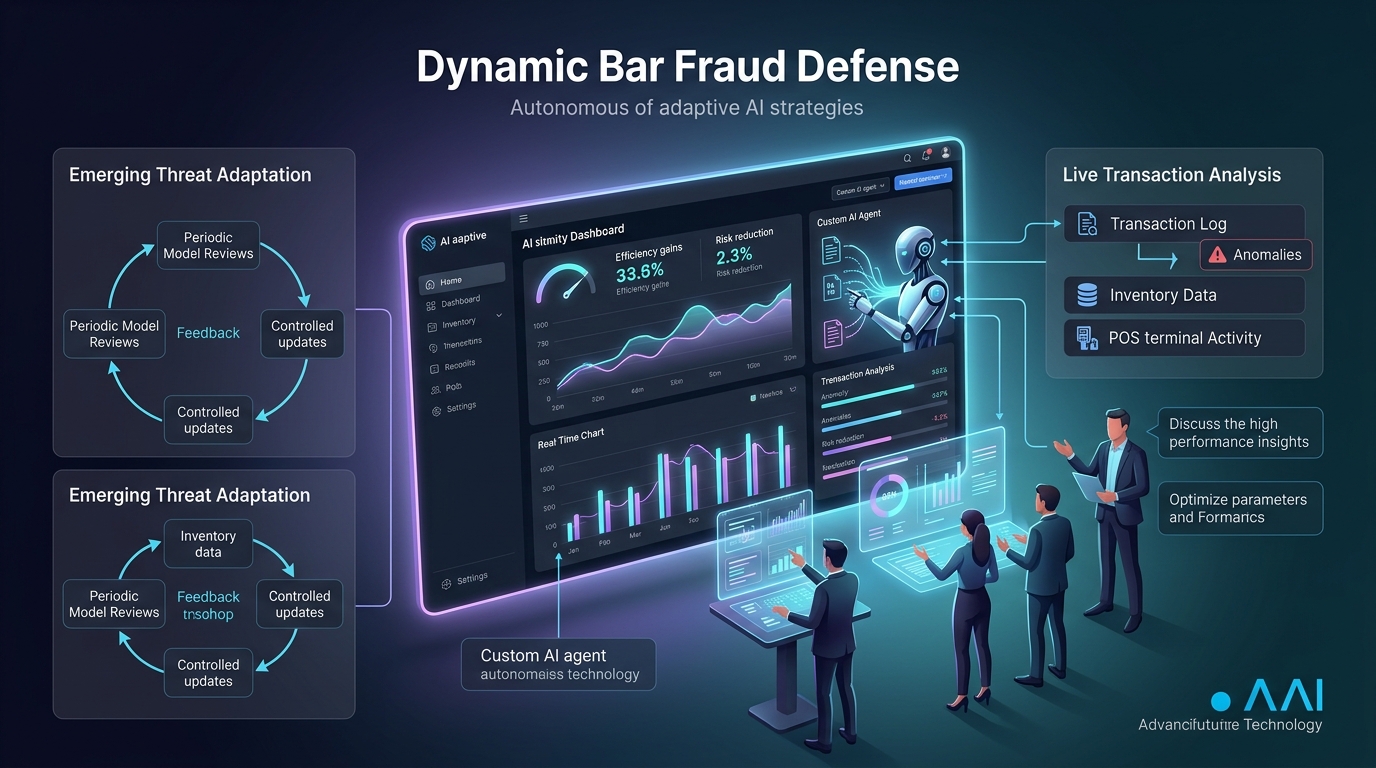
Adapting to New Threats
Fraud patterns evolve constantly. AI programs need periodic reviews, model monitoring, and controlled updates that account for new tactics, menu changes, and policy modifications. Ongoing governance keeps detection aligned with actual operations.
Compliance and Privacy
Custom AI programs must align with privacy and labor requirements through encryption, access controls, audit trails, and retention policies. Automated reporting simplifies documentation during regulatory reviews and compliance audits.
Building Competitive Advantage
Venues that reduce fraud run tighter operations, protect margins, and build stronger guest and partner relationships. Insurance providers often offer better pricing and terms when risk controls are documented and consistently enforced.
Recommended custom AI for bar fraud detection? It’s a practical step for operators who want prevention systems that understand how bars actually operate. The right custom approach connects POS, inventory, and operational signals into actionable intelligence your team can use without drowning managers in false alerts.
Frequently Asked Questions
What makes bar fraud so challenging to detect?
As Operations Director at Vynta AI, I see that bars face unique fraud challenges, including inventory theft, transaction manipulation, and employee collusion. Unlike standard retail, the fast-paced environment with cash transactions and accessible inventory creates specific vulnerabilities. Generic solutions often miss these industry-specific patterns, leading to significant losses.
How does custom AI specifically help bars prevent fraud?
Custom AI models bar-specific relationships in data, analyzing pour variance, connecting inventory to sales, and identifying behavioral anomalies unique to hospitality. This tailored approach distinguishes legitimate operational variations from activities that signal potential fraud. It’s about understanding your business’s rhythm to catch subtle manipulation tactics.
What kinds of fraud schemes can custom AI uncover in a bar?
Custom AI can detect various schemes, from inventory diversion and unauthorized discounts to phantom transactions and register manipulation. It flags suspicious comp patterns, over-pouring through POS-linked variance signals, and even coordinated internal theft. Our goal is to provide deep insights into multi-layered fraud.
Can custom AI work with my bar's existing POS system?
Absolutely. Our Vynta AI agents are designed to integrate with your existing POS systems. This allows for real-time analysis of transaction data alongside inventory movement signals, providing a comprehensive view of your operations. This integration is fundamental for effective fraud detection and operational oversight.
Beyond transactions, what other data does custom AI analyze for fraud?
Custom AI can incorporate computer vision to analyze ID documents for forgery indicators and spot risky operational patterns like repeated drawer opens. Natural Language Processing (NLP) can also analyze internal notes or order modifications for suspicious communication signals. This multi-source data correlation helps uncover complex schemes that single-source monitoring often misses.
What steps are involved in implementing custom AI for fraud detection?
We begin with an audit of your current loss exposure and data readiness, documenting patterns and reviewing POS compatibility. Next, we focus on data collection and preparation, ensuring clean, consistent datasets across transaction histories and inventory records. Finally, we recommend pilot programs for testing and refining your AI model to ensure accuracy and long-term reliability.