

conversational ai chatbot platform
Beyond Basic Chatbots: Understanding Conversational AI Platform Value for Your Business
A conversational AI chatbot platform is an AI-powered system that conducts intelligent, context-aware dialogue across voice and text channels, automating complex business workflows while escalating appropriately to human agents. Unlike rule-based chatbots, these platforms learn from every interaction, improving accuracy and personalization over time.
What Is a Conversational AI Chatbot Platform, Really?
Strip away the marketing language and a conversational AI chatbot platform is a business automation engine built on natural language understanding, machine learning, and workflow orchestration. It interprets intent, not just keywords — which means it handles nuanced requests that rigid script-based bots consistently fail to address.
The Core Components: How Conversational AI Powers Business Automation
Three layers drive real business value: natural language processing (converts unstructured conversation into structured data), dialogue management (maintains context across multi-turn exchanges), and system integration (connects AI responses to your CRM, calendar, or reservation platform). That integration layer is where ROI actually materializes. Isolated AI that can’t act on data delivers little beyond novelty.
Beyond Text: The Evolution of Conversational AI Agents
Modern conversational AI tools have moved from reactive responders to proactive agents. Today’s platforms initiate outreach, qualify leads autonomously, schedule follow-ups, and surface insights to human team members at the right moment. That shift — from reactive to proactive — is the defining characteristic separating enterprise-grade solutions from basic conversational AI apps.
How Conversational AI Platforms Drive Measurable ROI Across Key Verticals
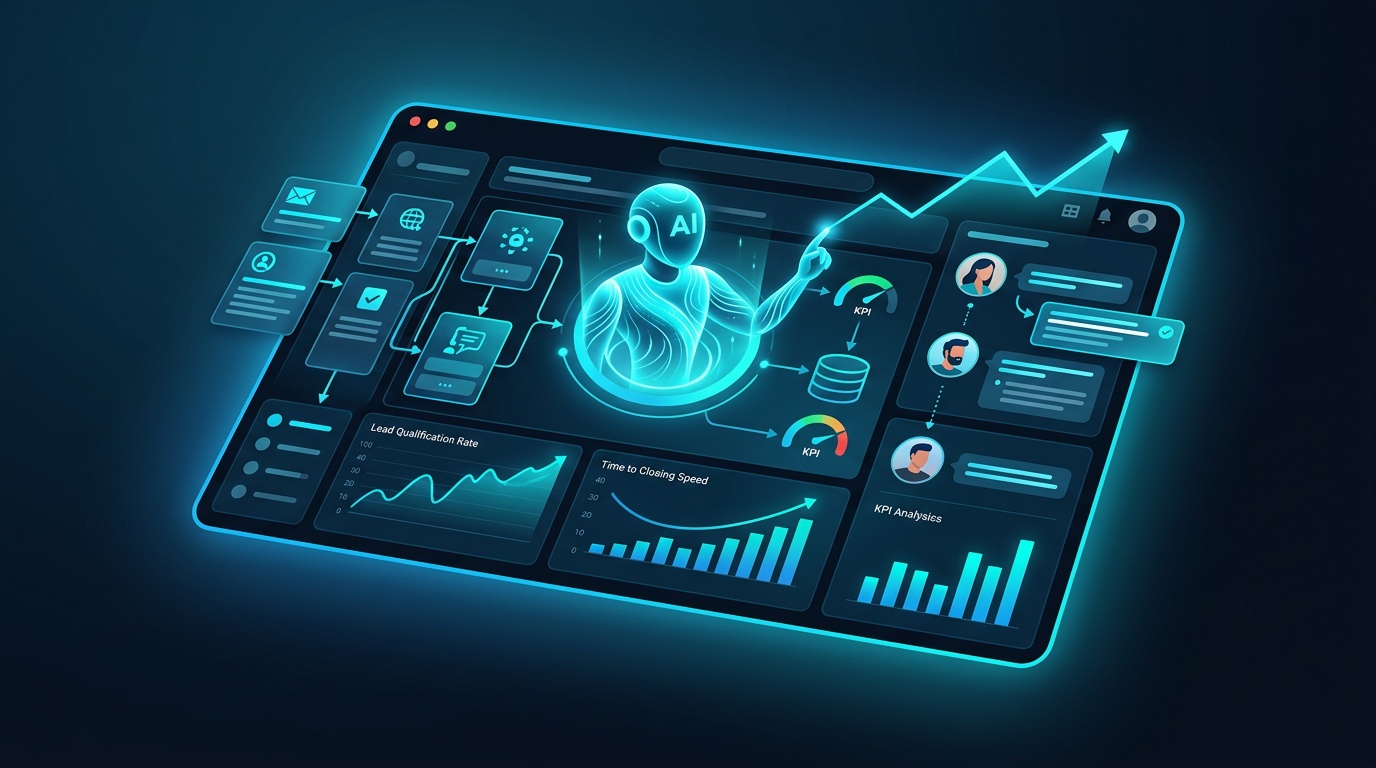
Real Estate: From Lead Qualification to Closing Speed
Property inquiries peak outside business hours. A conversational AI chatbot platform qualifies buyer intent, budget range, and timeline at 2 a.m., routing only sales-ready prospects to agents by morning. Agencies using AI-driven qualification report a 3x increase in qualified pipeline, with response times under 60 seconds and over 30% more deals closed through automated task handling that saves agents more than 20 hours per week. Learn more about how Agentic Systems for Real Estate can transform your sales process.
Recruitment: Streamlining Talent Acquisition for Better Hires
Screening hundreds of applicants manually costs recruiters days. Conversational AI conducts structured preliminary interviews, scores candidates against role criteria, and delivers ranked shortlists — compressing time-to-hire while improving match quality. With candidate matching accuracy at 85% and the hiring cycle reduced by over 60%, recruiters redirect recovered time toward relationship-building with top candidates rather than administrative work. Discover the benefits of our Agentic Systems for Recruitment that streamline your hiring process.
Fundraising: Automating Investor Outreach and Donor Engagement
Consistent, personalized outreach at scale separates high-performing fundraising organizations from those perpetually chasing targets. Vynta AI’s AI-Powered Fundraising Platform automates investor sequencing, tracks engagement signals, and surfaces warm prospects to development teams at optimal moments — replacing manual pipeline management with systematic, data-driven donor engagement that compounds over time.
Hospitality: Improving Guest Experiences and Operational Efficiency
Boutique hospitality venues compete on personalized service, not price. Conversational AI handles reservation confirmations, pre-arrival preference capture, and brand-safe upsell offers automatically, freeing staff to deliver the genuine human moments that generate loyalty and five-star reviews. No-show rates drop when AI manages proactive reminder sequences across SMS and email simultaneously, while VIP guests are always routed to human care through strict escalation rules. See how Vynta AI Agents for Hospitality can improve your guest engagement.
Choosing the Right Conversational AI: Key Features That Matter for Mid-Market SMEs
Scalability Without Headcount Expansion
Mid-market SMEs can’t hire their way to scale. The right conversational AI chatbot platform handles volume spikes — whether a property listing goes viral or a fundraising campaign launches — without proportional cost increases. Evaluate platforms on concurrent conversation capacity and response consistency under load.
Industry-Specific Intelligence vs. Generic Solutions
| Capability | Industry-Specific AI | Generic Solution |
|---|---|---|
| Domain vocabulary | Pre-trained on vertical data | Requires extensive custom training |
| Workflow templates | Ready-made for your use case | Built from scratch |
| Compliance awareness | Industry regulations embedded | Manual configuration required |
| Time to value | Weeks | Months |
Connecting Your Existing Business Systems
Assess any top conversational AI platform against your current tech stack before committing. Native connectors to your CRM, ATS, or property management system eliminate costly custom development. API flexibility matters for long-term adaptability as your systems evolve. For custom automation needs beyond chatbots, AI Automation Services offer tailored solutions that fit AI into your existing workflows.
Human-AI Collaboration: Supporting Your Team, Not Replacing Them
The best implementations define clear handoff protocols. AI handles volume; humans handle judgment. Platforms should surface full conversation context to human agents instantly upon escalation — eliminating the frustrating “please repeat yourself” experience that erodes trust in AI-assisted service.
Beyond the Hype: Practical Implementation and Addressing AI Adoption Concerns
Demystifying Implementation: What to Expect
Realistic implementation follows three phases: discovery and integration (weeks one through three), pilot deployment with a defined use case (weeks four through six), and optimization based on real performance data (ongoing). Avoid any conversational AI platform vendor promising immediate full deployment without a structured discovery phase. ROI projections are developed during discovery and assessment — not guaranteed upfront.
Addressing Common Worries: Data Security, Accuracy, and Ethical AI
Legitimate concerns deserve direct answers. Data encryption in transit and at rest is non-negotiable. Accuracy improves measurably with domain-specific training data. Ethical AI means transparent escalation paths so customers always know they can reach a human. These are selection criteria, not afterthoughts.
Measuring Success: Defining and Tracking Key Performance Indicators
Define KPIs before deployment, not after. Real estate teams track lead-to-appointment conversion rates. Recruitment firms measure time-to-shortlist. Hospitality operators monitor upsell acceptance rates and guest satisfaction scores. Fundraising organizations measure donor response rates and pipeline velocity. A credible conversational AI chatbot platform provides native analytics dashboards covering these metrics — no data science team required.
Your Path Forward with Conversational AI

The conversational AI chatbot platform market has matured past experimentation. Mid-market SMEs across real estate, recruitment, fundraising, and hospitality now deploy these systems as core operational infrastructure — not pilot projects. The question is no longer whether AI automation delivers value; it’s whether your organization captures that value before competitors do.
Three principles separate successful implementations from costly missteps. Start with a single high-volume, high-repetition workflow where AI impact is immediately measurable. Choose industry-specific intelligence over generic flexibility — the time-to-value gap between vertical-trained models and general solutions is substantial. And define your KPIs before deployment so performance data drives optimization from day one, not guesswork.
For fundraising organizations specifically, systematic donor engagement compounds over time in ways that manual outreach simply can’t replicate. Vynta AI’s AI-Powered Fundraising Platform is purpose-built for this effect — automating sequencing and engagement tracking so development teams focus entirely on high-value donor relationships rather than pipeline admin.
Implementation success requires a partner who understands your vertical, not just your technology stack. Evaluate platforms on domain expertise, integration depth, and transparency about realistic timelines. Any vendor promising transformation without structured discovery is selling novelty, not outcomes. The right conversational AI chatbot platform delivers measurable gains in conversion rates, placement speed, donor retention, or guest satisfaction scores — tracked from the first day of optimized deployment.
Frequently Asked Questions
What distinguishes a conversational AI chatbot platform from a basic chatbot?
A conversational AI chatbot platform goes beyond simple rules, using natural language understanding and machine learning to interpret intent and maintain context across conversations. Unlike basic chatbots, these platforms learn from every interaction, continually improving accuracy and personalization. They automate complex workflows and can appropriately escalate to human agents when needed.
How do conversational AI platforms deliver measurable business value and ROI?
Conversational AI platforms drive ROI by automating tasks that consume significant time, such as lead qualification, candidate screening, or reservation management. This automation frees human teams to focus on high-value activities, leading to outcomes like increased qualified pipelines, reduced hiring cycles, and improved guest experiences. The value materializes through seamless integration with existing business systems, allowing the AI to act on data.
What specific benefits does conversational AI offer industries like real estate or recruitment?
In real estate, conversational AI qualifies buyer intent and budget at any hour, routing sales-ready prospects to agents and increasing qualified pipelines. For recruitment, it conducts preliminary interviews and scores candidates, significantly reducing time-to-hire and improving match quality. These platforms transform operational efficiency by automating industry-specific tasks.
What are the most important features mid-market SMEs should consider when selecting a conversational AI platform?
Mid-market SMEs should prioritize platforms that offer scalability without requiring headcount expansion, handling volume spikes efficiently. Industry-specific intelligence is also key, as models pre-trained on vertical data outperform generic solutions. Finally, seamless integration with existing business systems like CRM or ATS is essential to unlock the platform’s full potential.
How does a conversational AI platform work alongside human teams, rather than replacing them?
Conversational AI platforms are designed for human-AI collaboration, automating high-volume, repetitive tasks to free human teams for more complex, judgment-intensive interactions. They handle initial inquiries, qualify leads, or provide routine support, with clear handoff protocols to human agents for VIP guests or nuanced requests. This approach allows humans to focus on building relationships and strategic work.
Can conversational AI platforms integrate with my existing business software?
Absolutely, integration is where the real value of a conversational AI platform becomes apparent. The best platforms offer native connectors to your existing CRM, ATS, or property management systems, eliminating the need for costly custom development. API flexibility is also important, ensuring long-term adaptability as your business systems evolve.
How does conversational AI handle multilingual communication and personalized responses?
Modern conversational AI platforms are built to support multilingual capabilities, tailoring responses across various communication channels. Vynta AI Agents, for example, personalize content to guest profiles and channel specifics, ensuring appropriate and brand-safe communication. They can also be fully customized to your brand tone and business rules, operating within defined hours.