
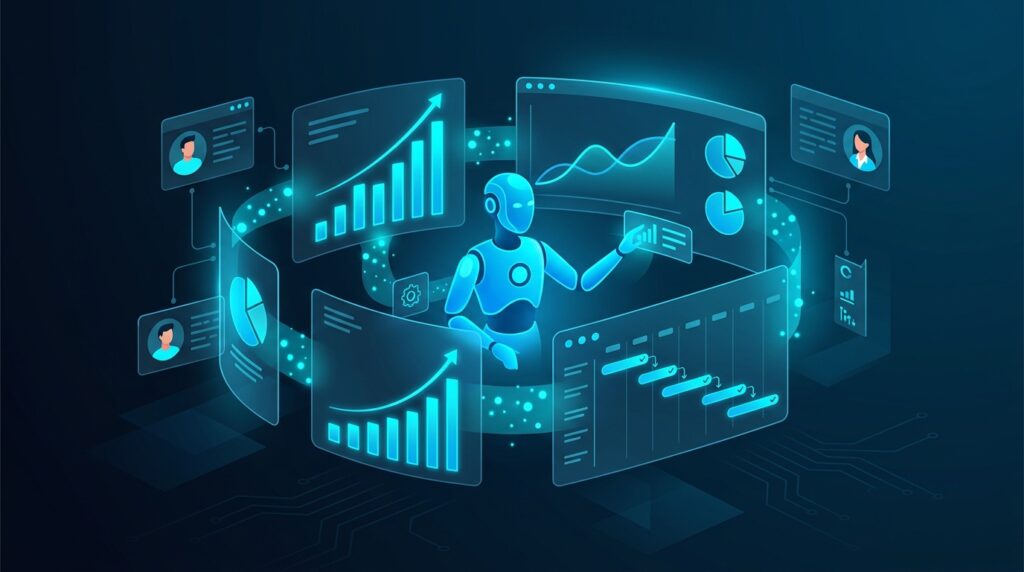
semiconductor
What Exactly Are Semiconductors, and Why Do They Power Our World?
A semiconductor is a material whose electrical conductivity falls between a conductor (like copper) and an insulator (like glass). This controllable conductivity makes semiconductors the foundation of every transistor, chip, and processor driving modern technology.
The Fundamental Building Blocks of Modern Technology
Every digital action–processing a hotel reservation, screening a job candidate, qualifying a real estate lead–runs through a chip. Silicon dominates because it’s abundant and electrically stable, but the real story is what engineers do with those properties: billions of precisely controlled on/off switches, firing in sequence, executing logic faster than any human team can follow.
Beyond Silicon: Understanding Semiconductor Materials
Silicon dominates the industry, but it doesn’t own the future. Gallium nitride (GaN) and silicon carbide (SiC) are gaining ground in power electronics and electric vehicles, offering better heat tolerance at the cost of higher price points. Gallium arsenide handles high-frequency applications like 5G. Each material represents a different trade-off between speed, thermal performance, and cost–trade-offs that ripple through product pricing across every category that depends on chips.
The “Intelligence” Layer: How Semiconductors Enable Automation
Automation isn’t software alone. The AI models that qualify real estate leads, match recruitment candidates, or personalize hotel guest experiences require massive parallel processing power–power that comes from specialized chips: GPUs, TPUs, and custom AI accelerators executing complex algorithms at speeds no human team can replicate. I’ll say it plainly: without continued manufacturing advances, the AI automation tools transforming mid-market businesses simply wouldn’t exist.
The Semiconductor Ecosystem: Who Actually Makes Your Chips
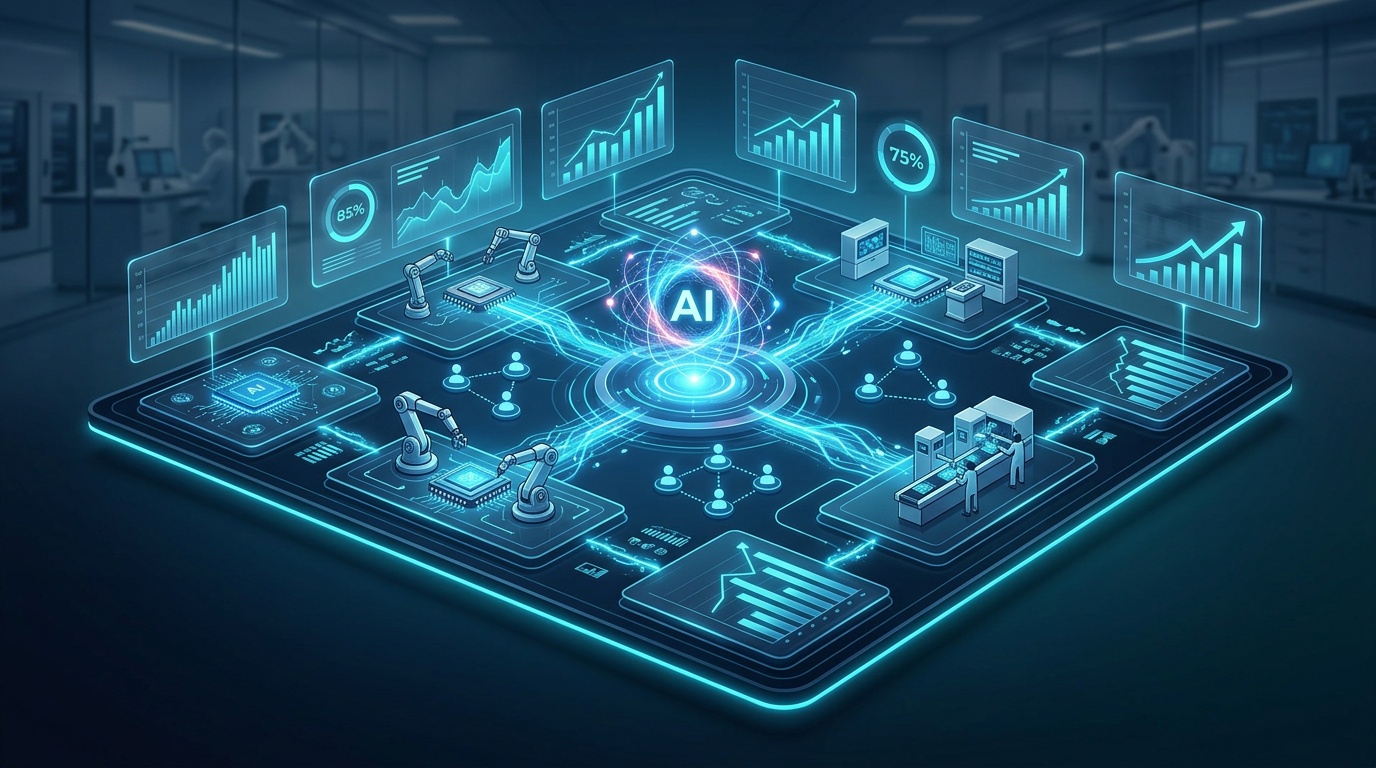
Integrated Device Manufacturers (IDMs): The All-in-One Powerhouses
IDMs design and manufacture their own chips under one roof. That vertical integration gives them tight control over performance and pricing, though it demands enormous capital investment in fabrication facilities. Think of Intel historically, or Samsung’s logic division today.
Fabless Companies: Design First, Manufacturing Outsourced
Fabless companies focus exclusively on chip architecture, outsourcing all fabrication. This model accelerates innovation because design teams concentrate every resource on performance rather than factory operations. Nvidia and Qualcomm are the most recognizable examples.
Foundries: The Manufacturing Backbone
Foundries operate the fabrication plants that fabless companies depend on. Leading-edge production requires billions in equipment investment, which has concentrated global capacity among a handful of players–TSMC and Samsung foremost among them. That concentration is a systemic risk most businesses don’t think about until a shortage hits.
OSATs and Equipment Suppliers: The Supporting Cast
Outsourced Semiconductor Assembly and Test (OSAT) providers handle packaging and quality verification after fabrication. Equipment suppliers produce the precision machinery–photolithography systems chief among them–that makes nanometer-scale production possible. Both segments are essential to every chip that reaches market, and both are frequently overlooked until supply chains break down.
Why This Ecosystem Matters for Business Operations
| Company Type | Core Function | Business Impact |
|---|---|---|
| IDM | Design and manufacture | Stable supply, premium pricing |
| Fabless | Design only | Rapid innovation, flexible sourcing |
| Foundry | Manufacture only | Scale production, capacity constraints |
| OSAT | Assembly and testing | Quality assurance, time-to-market |
Supply chain disruptions in any one segment ripple across the entire industry. Businesses depending on AI-powered tools–including automation platforms for real estate, recruitment, and hospitality–are indirectly exposed to this ecosystem’s vulnerabilities. That’s worth understanding before a shortage makes it obvious.
The High-Tech Journey: How Semiconductor Chips Are Made
From Raw Material to Wafer: The Foundation
Manufacturing starts with silicon refined to 99.9999% purity, grown into cylindrical ingots and sliced into thin wafers. Each wafer serves as the substrate on which thousands of chips are built simultaneously. Wafer diameter matters commercially: larger wafers yield more chips per production run, which pushes per-unit cost down–a detail that eventually shows up in the price of enterprise hardware.
Photolithography: The Art of Circuit Creation
Photolithography transfers circuit patterns onto the wafer using ultraviolet light. A light-sensitive coating called photoresist is applied, exposed through a mask containing the circuit design, then developed to reveal the pattern. Modern extreme ultraviolet (EUV) lithography achieves features measured in nanometers–the technology behind the transistor densities powering today’s AI processors. It’s an extraordinary engineering achievement that most people interact with daily without knowing it exists.
Etching and Doping: Shaping Electrical Properties
Etching removes unwanted material to define circuit structures with precision. Doping introduces controlled impurities–typically phosphorus or boron–into the silicon to modify its conductivity. These two processes repeat dozens of times across multiple layers, building the three-dimensional architecture that gives each chip its specific function. More layers mean more capability; more capability means better AI performance downstream.
Assembly and Testing: Bringing It All Together
After fabrication, wafers are cut into individual dies, packaged in protective casings, and wired to external connectors. Rigorous testing eliminates defective units before shipment. Yield rates–the percentage of functional chips per wafer–directly influence pricing and supply availability. A low-yield production run isn’t just a manufacturing problem; it’s a pricing problem for every product that chip ends up in.
Automation’s Role in Manufacturing
Fabrication plants operate with near-zero human intervention on the production floor. Robotic systems handle wafer transport. Automated optical inspection catches defects invisible to the human eye. AI-driven process control maintains consistency across billions of transistors per wafer. The same principles–continuous monitoring, pattern recognition, and automated response–now power business operations across real estate, recruitment, and hospitality at a fraction of the infrastructure cost.
Semiconductors in Action: Powering Business Transformation Across Industries
The Engine of AI and Data Centers
Data centers running AI workloads consume specialized chips designed for parallel processing. GPUs and custom AI accelerators handle the matrix calculations that underpin machine learning models. Every AI automation platform–including those managing lead qualification and guest personalization–draws its computational power from this infrastructure. The performance improvements we’ve seen in AI agents over the past three years map almost directly to chip generation advances.
Smart Devices and the IoT Revolution
Low-power chips embedded in smart devices collect operational data continuously. In hospitality, smart room sensors optimize energy consumption and track occupancy patterns. In real estate, connected building systems generate data that informs property valuations and maintenance scheduling. The value isn’t in the sensors themselves–it’s in what AI does with the data they produce.
Automotive’s Digital Leap
Modern vehicles contain more than 1,400 chips managing everything from engine control to advanced driver assistance. The automotive sector’s appetite for reliable, high-performance chips has accelerated manufacturing investment across the entire supply chain–investment that benefits enterprise AI hardware as a byproduct.
Consumer Electronics: Constant Innovation
Smartphones, tablets, and laptops compress extraordinary processing power into compact form factors. Each product generation demands more capable chips at lower price points, pushing manufacturers toward more efficient processes. Those efficiency gains eventually reach enterprise automation hardware, making AI tools accessible at price points mid-market firms can actually justify.
How Chip Advances Drive Broader Automation Access
As chips grow more powerful and affordable, AI capabilities that were once reserved for large enterprises become available to mid-market firms. Recruitment agencies, fundraising organizations, and boutique hospitality operators can now deploy intelligent automation that matches candidates, manages donor outreach, and personalizes guest experiences at scale. That democratization is deliberate–and it’s accelerating.
Semiconductor-Driven Automation: What It Means for Your Operations

The Intelligence Behind Your AI Agents: A Vynta AI Perspective
Vynta AI’s agents run on cloud infrastructure powered by the latest chips. That foundation allows our AI to process lead data, candidate profiles, investor records, and guest preferences in real time–delivering recommendations that would require significant manual effort to replicate. We didn’t build the chips, but we’ve designed our entire platform to get the most out of what they make possible.
Real Estate: Automated Lead Qualification and Property Matching
AI agents analyze inbound inquiries, score leads by purchase intent, and match prospects to relevant listings within seconds. Real estate agency owners report significant reductions in time spent on unqualified leads, freeing agents to focus on high-value relationships and closings. That’s the trade we’re making: machine speed on qualification, human judgment on closing. Learn more about our Agentic Systems for Real Estate.
Recruitment: Faster Screening, Smarter Scheduling
Recruitment firms using AI-powered screening reduce time-to-shortlist substantially. Automated systems parse resumes, rank candidates against role requirements, and coordinate interview schedules–without the back-and-forth overhead that consumes recruiters’ days. Directors gain capacity to manage more client accounts without proportional headcount increases. Discover the benefits of our Agentic Systems for Recruitment.
Fundraising: Systematic Investor Outreach and Donor Retention
Outreach automation sequences investor communications based on engagement signals, ensuring no warm prospect falls through the cracks. Fundraising organizations using AI-driven donor management report stronger retention rates because follow-up timing aligns with each donor’s demonstrated engagement patterns–not with whoever happened to have a free hour that week. Explore the advantages of our AI-Powered Fundraising Platform.
Hospitality: Better Guest Experiences Without More Front-Desk Hours
For hospitality managers, AI automation handles reservation confirmations, pre-arrival personalization, and upselling opportunities without adding front-desk workload. Automated guest communication reduces no-shows and increases ancillary revenue per stay–the metrics that matter most to boutique properties. Our Vynta AI Agents for Hospitality are built specifically for this sector.
The Operational Window That’s Open Right Now
Semiconductor advances will keep expanding what AI automation can accomplish for mid-market businesses. The firms that build these capabilities now compound their advantage over time–better data, better models, better outcomes quarter over quarter. The technology foundation is already in place. The question is whether you act before your competitors do.
Frequently Asked Questions
What does a semiconductor do?
From my perspective at Vynta AI, semiconductors are the fundamental materials that allow us to switch electrical signals on and off, making all digital computation possible. Their unique ability to control electricity means they form the core of every chip and processor powering modern technology, including the AI automation tools we build.
What is an example of a semiconductor?
The most common example of a semiconductor material is silicon, which is widely used due to its abundance and stable electrical properties. Other important examples include gallium nitride (GaN) and silicon carbide (SiC) for power electronics, and gallium arsenide for high-frequency applications like 5G. Each material offers specific benefits for different technological needs.
How can I understand what a semiconductor is simply?
Simply put, a semiconductor is a special material that can either conduct electricity or block it, depending on how engineers manipulate it. Think of it as a controllable switch for electricity. This switching ability is what allows computers to perform calculations, making semiconductors the building blocks of all digital technology, including the AI systems we use to transform businesses.
Why is advanced semiconductor manufacturing concentrated globally?
The article explains that advanced semiconductor manufacturing, especially in foundries, demands billions in equipment investment, leading to a concentration of production capacity among a few global players. These specialized foundries are critical for producing the chips that power everything from our phones to sophisticated AI automation platforms.
How do semiconductors enable AI automation?
Semiconductors are absolutely fundamental to AI automation because they provide the massive parallel processing power required by AI models. Specialized chips like GPUs and AI accelerators, built on semiconductor technology, execute complex algorithms at speeds far beyond human capability. Without these advances, the AI automation tools transforming mid-market businesses, like those we develop at Vynta AI, would simply not exist.
What materials are used in semiconductors besides silicon?
While silicon remains the primary material for semiconductors, other materials are gaining importance for specific applications. Gallium nitride (GaN) and silicon carbide (SiC) are increasingly used in power electronics and electric vehicles due to their unique properties. Compound semiconductors, such as gallium arsenide, are preferred for high-frequency applications like 5G communications.
How are semiconductor chips actually made?
The manufacturing of semiconductor chips is a complex, multi-stage process. It begins with purifying silicon into ingots, which are then sliced into thin wafers. Circuit patterns are transferred onto these wafers using photolithography, followed by etching and doping to define and modify the electrical properties of the circuits. Finally, the wafers are cut into individual chips, packaged, and rigorously tested before they reach the market.